
 한국어
 English
 日本語
 中文(简体)
Summary
- Main use
- Treatment of HIV-1 infection
- Who takes it
- Adults · Children
- Adult dose
- Adults Take 1 tablet once daily with food No dose adjustment of this drug is required in adults with an estimated creatinine clearance (estimated CrCl) of 30mL/min or higher. This drug should be discontinued in patients whose estimated creatinine clearance decreases to less than 30 mL/min during treatment. No dose adjustment of this drug is required in adults with end-stage renal disease receiving chronic hemodialysis (estimated creatinine clearance less than 15mL/min). However, this drug should generally not be used, but may be used in patients when the potential benefit outweighs the potential risk. On dialysis days, take this drug after completion of dialysis. The safety of this drug has not been established in patients with an estimated creatinine clearance of 15 mL/min or higher but less than 30 mL/min, or in patients with an estimated creatinine clearance of less than 15 mL/min who are not receiving hemodialysis; therefore, it should not be used in these patients. No dose adjustment of this drug is required in patients with mild or moderate hepatic impairment (Child-Pugh class A or B). As there are no clinical data for this drug in patients with severe hepatic impairment (Child-Pugh class C), its use is not recommended in these patients. No dose adjustment of this drug is required in elderly patients. This drug should be taken orally once daily with food. The film-coated tablet should not be chewed, crushed, or divided. For patients who have difficulty swallowing one whole tablet at a time, the tablet may be divided in half; take the two halves sequentially to complete the total dose. If a dose is missed, if it is within 18 hours of the usual dosing time, take the tablet with food as soon as possible, and take the next dose at the usual time thereafter. If more than 18 hours have passed, skip the missed dose and take the next dose at the usual time. If vomiting occurs within one hour of taking this drug, take an additional 1 tablet.
- Child dose
- Children and adolescents aged 6 years and older (body weight 25kg or more): Take 1 tablet once daily with food Adolescents aged 12 years and older (body weight 35kg or more): No dose adjustment of this medicine is required when the estimated creatinine clearance (estimated CrCl) is 30mL/min or higher. There are no data on the recommended dose of this medicine in children younger than 12 years with renal impairment or in children younger than 18 years with end-stage renal disease. The safety and efficacy of this medicine have not been established in children younger than 6 years or weighing less than 25kg, and no data are available.
Ingredients
- Elvitegravir Micronized150mg / 1 tablet
- Emtricitabine200mg / 1 tablet
- Tenofovir Alafenamide HemiFumarate11.2mg / 1 tablet
- Cobicistat Silicone Dioxide288.5mg / 1 tablet
- Importer
- Gilead
Efficacy & effects
Treatment of HIV-1 infection
- HIV-1 infection
View approved original textHide original text
This medication is used for the treatment of HIV-1 infection in adults and adolescents who have no prior antiretroviral treatment experience or who have shown stable viral suppression on other treatments, as well as children who meet specific criteria. This drug effectively suppresses the replication of the HIV-1 virus, assisting in the treatment of the infection. It is suitable for patients without resistance mutations and can also be applied to pediatric patients for whom other treatments are difficult. This treatment contributes to improving the patient's health status and maintaining stable viral levels.
How to take
Adult dose
Adults Take 1 tablet once daily with food No dose adjustment of this drug is required in adults with an estimated creatinine clearance (estimated CrCl) of 30mL/min or higher. This drug should be discontinued in patients whose estimated creatinine clearance decreases to less than 30 mL/min during treatment. No dose adjustment of this drug is required in adults with end-stage renal disease receiving chronic hemodialysis (estimated creatinine clearance less than 15mL/min). However, this drug should generally not be used, but may be used in patients when the potential benefit outweighs the potential risk. On dialysis days, take this drug after completion of dialysis. The safety of this drug has not been established in patients with an estimated creatinine clearance of 15 mL/min or higher but less than 30 mL/min, or in patients with an estimated creatinine clearance of less than 15 mL/min who are not receiving hemodialysis; therefore, it should not be used in these patients. No dose adjustment of this drug is required in patients with mild or moderate hepatic impairment (Child-Pugh class A or B). As there are no clinical data for this drug in patients with severe hepatic impairment (Child-Pugh class C), its use is not recommended in these patients. No dose adjustment of this drug is required in elderly patients. This drug should be taken orally once daily with food. The film-coated tablet should not be chewed, crushed, or divided. For patients who have difficulty swallowing one whole tablet at a time, the tablet may be divided in half; take the two halves sequentially to complete the total dose. If a dose is missed, if it is within 18 hours of the usual dosing time, take the tablet with food as soon as possible, and take the next dose at the usual time thereafter. If more than 18 hours have passed, skip the missed dose and take the next dose at the usual time. If vomiting occurs within one hour of taking this drug, take an additional 1 tablet.
Child dose
Children and adolescents aged 6 years and older (body weight 25kg or more): Take 1 tablet once daily with food Adolescents aged 12 years and older (body weight 35kg or more): No dose adjustment of this medicine is required when the estimated creatinine clearance (estimated CrCl) is 30mL/min or higher. There are no data on the recommended dose of this medicine in children younger than 12 years with renal impairment or in children younger than 18 years with end-stage renal disease. The safety and efficacy of this medicine have not been established in children younger than 6 years or weighing less than 25kg, and no data are available.
Precautions
Care should be taken when using this drug in patients co-infected with HIV and hepatitis B or C viruses, as this can increase the risk of serious side effects, such as liver dysfunction. Taking it in combination with other antiretrovirals may reduce efficacy or increase the risk of side effects, so it should always be discussed with a healthcare provider. Generally, it is not recommended for patients with end-stage kidney disease undergoing chronic dialysis, but may be used with caution if necessary, with regular kidney function tests required. Patients with allergies to this drug's active ingredients or other components should not take it, and contraindicated drugs should be verified to avoid serious side effects. Common side effects during treatment may include nausea, diarrhea, headache, while rare symptoms can include anemia, depression, rash, and fatigue. Patients with decreased kidney function should have serum creatinine and kidney function regularly monitored before and during treatment. If abnormalities arise, they should immediately consult healthcare professionals. There is a risk of decreased bone density and osteomalacia, hence patients at risk for osteoporosis should monitor their bone health status and consider calcium and vitamin D supplementation if necessary. Women who are pregnant or potentially pregnant should confirm their pregnancy before starting treatment, as taking this drug may risk treatment failure in pregnancy, and alternative therapies should be considered during pregnancy. It is recommended that breastfeeding women do not take this drug, and women with HIV should avoid breastfeeding to prevent transmission to the infant. This drug has multiple interactions with various medications, so if you are taking other medications, be sure to inform your healthcare provider, especially with certain antibiotics, anticonvulsants, anticoagulants, sedatives, and antidepressants. Dizziness and similar symptoms may occur, so caution is advised when driving or operating machinery. In case of overdose, immediately inform healthcare professionals for appropriate actions, and monitoring of side effects is essential.
Side effects
- Nausea
- diarrhea
- headache
- anemia
- abnormal dreams
- suicidal thoughts
- suicide attempts
- depression
- dizziness
- vomiting
Show 121 moreCollapse
- abdominal pain
- bloating
- indigestion
- rash
- angioedema
- itching
- hives
- fatigue
- acute kidney failure
- acute tubular necrosis
- proximal tubular nephropathy
- Fanconi syndrome
- nasopharyngitis
- shingles
- syphilis
- pneumonia
- constipation
- epigastric pain
- abdominal discomfort
- gastroesophageal reflux disease
- abdominal distension
- dental caries
- seborrheic dermatitis
- hair loss
- acne
- itchy rash
- cough
- oropharyngeal pain
- dyspnea
- arthralgia
- hyperlipidemia
- dyslipidemia
- hypertriglyceridemia
- hypercholesterolemia
- fever
- insomnia
- sleep disorders
- elevated alanine aminotransferase
- elevated aspartate aminotransferase
- increased serum creatinine
- genital warts
- renal impairment
- leukocytosis
- palpitations
- abnormal liver function
- hepatitis
- jaundice
- tinnitus
- vertigo
- hyperthyroidism
- pneumonia
- upper respiratory infection
- influenza
- soft tissue infection
- folliculitis
- tonsillitis
- bronchitis
- sinusitis
- furuncle
- infectious diarrhea
- gonorrhea
- colitis
- gastritis
- anal bleeding
- aphthous ulcer
- rectal pain
- lower abdominal pain
- functional gastrointestinal disorder
- oral discomfort
- proctitis
- dermatitis
- eczema
- skin disorders
- skin lesions
- vasculitis
- drug rash
- neurodermatitis
- Stevens-Johnson syndrome
- runny nose
- increased sputum
- allergic rhinitis
- voice disorders
- sputum discoloration
- paresthesia
- sensory loss
- Bell's palsy
- taste disorders
- memory disturbances
- drowsiness
- bursitis
- musculoskeletal chest pain
- temporomandibular joint syndrome
- appetite decrease
- fasting blood sugar disorders
- chest pain
- peripheral edema
- weakness
- pain
- facial edema
- changes in mental state
- nightmares
- sleepwalking
- weight loss
- increased serum creatinine phosphokinase
- reduced renal creatinine clearance
- decreased neutrophil count
- hypertension
- allergic conjunctivitis
- eye inflammation
- keratitis
- vision decline
- frequent urination
- hematuria
- nocturia
- urethral pain
- reduced urinary flow
- genital itching
- drowsiness
- osteoporosis
- diabetes
- ureterolithiasis
Not everyone experiences these, and they can vary from person to person.
Storage
This medication can be sensitive to air and moisture, so it should be stored in a tightly sealed container. The recommended storage temperature is between 1 and 30 degrees Celsius to maintain the drug's effectiveness safely over time.
Appearance and packaging
Appearance
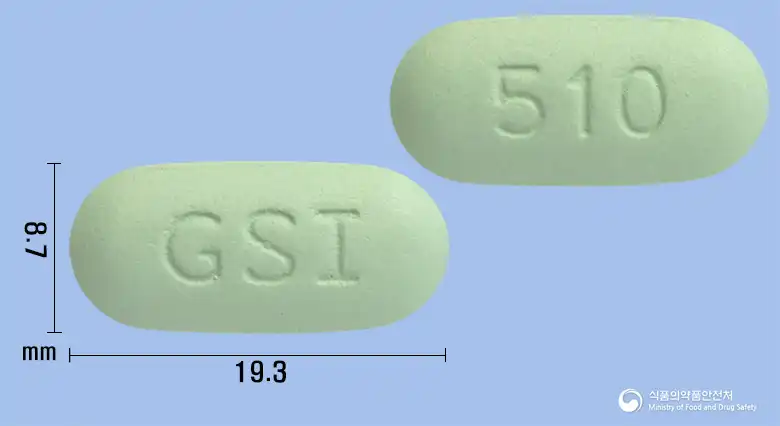
Green rectangular film-coated tablet imprinted with 'GSI' on one side and '510' on the other.
Package unit
30 tablets / bottle
Questions about this medicine
No questions yet.
For anything that needs medical judgment, consult a doctor or pharmacist.