한국어
 English
 日本語
 中文(简体)
 Viewing now
Itobev Tablets 9mg (Inavolisib)
Inavolisib 9mg
Tablet · Prescription medication
Korea Roche Co., Ltd.
MFDS item code 202501959 · Approved 2025.07.29
Combination treatment for advanced HR-positive, HER2-negative, PIK3CA-mutated breast cancer
This medication is used for adults with locally advanced or metastatic breast cancer that is hormone receptor positive, HER2 negative, and has confirmed PIK3CA mutation, which recurred within 12 months after surgery and during or after adjuvant endocrine therapy. It is administered in combination with palbociclib and fulvestrant, and can only be used if the patient has completed previous CDK4/6 inhibitor therapy at least 12 months ago. This allows for a personalized approach in the complex treatment process of breast cancer, enhancing therapeutic effects.
The recommended dose of this medicine is 9 mg orally once daily, with or without food. This medicine should be taken at approximately the same time each day, if possible. It is recommended that treatment with this medicine continue until disease progression or unacceptable toxicity occurs. This medicine should be swallowed whole with water and must not be chewed, crushed, or split. If a dose of this medicine is missed, it may be taken within 9 hours of the usual dosing time. If more than 9 hours have passed, skip the dose for that day and take this medicine at the usual time the following day. If the patient vomits after taking this medicine, an additional dose should not be taken that day, and treatment should resume at the usual time the following day. This medicine should be administered in combination with palbociclib and fulvestrant. The recommended dose of palbociclib is 125 mg orally once daily for 21 consecutive days, followed by 7 days off treatment, in a 28-day cycle. Refer to the prescribing information for the doses of palbociclib and fulvestrant. In premenopausal/perimenopausal women, a luteinizing hormone-releasing hormone (LHRH) agonist should also be administered according to local clinical practice. In men, administration of a luteinizing hormone-releasing hormone (LHRH) agonist should be considered according to local clinical practice. Dose reduction schedule Starting dose: 9 mg once daily First dose reduction: 6 mg once daily Second dose reduction: 3 mg once daily If the patient does not tolerate the 3 mg once-daily dose, treatment with this medicine should be permanently discontinued. Hyperglycemia >ULN–160mg/dL (>ULN-8.9 mmol/L) • No dose adjustment of this medicine is required. • Consider dietary modification and ensure adequate hydration. • For patients with risk factors for hyperglycemiab, consider initiating or intensifying oral antihyperglycemic therapy. >160–250 mg/dL (>8.9–13.9 mmol/L) • Temporarily withhold this medicine until fasting blood glucose decreases to ≤160 mg/dL(≤8.9 mmol/L). • Initiate or intensify antihyperglycemic therapy. • Resume this medicine at the same dose level. • If fasting blood glucose remains >200–250 mg/dL(>11.1–13.9 mmol/L) for 7 days despite appropriate antihyperglycemic therapy, consult a physician experienced in the treatment of hyperglycemia. >250–500 mg/dL (>13.9–27.8 mmol/L) • Temporarily withhold this medicine. • Initiate or intensify antihyperglycemic therapy. • If necessary, ensure adequate hydration. • If fasting blood glucose decreases to ≤160 mg/dL(≤8.9 mmol/L) within 7 days, resume this medicine at the same dose level. • If fasting blood glucose decreases to ≤160 mg/dL(≤8.9 mmol/L) after 8 days, resume this medicine at one lower dose level (see Table 1). • If fasting blood glucose again reaches >250–500 mg/dL(>13.9–27.8 mmol/L) within 30 days, temporarily withhold this medicine until fasting blood glucose decreases to ≤160 mg/dL(≤8.9 mmol/L). Resume this medicine at one lower dose level (see Table 1). >500 mg/dL (>27.8 mmol/L) • Temporarily withhold this medicine. • Initiate or intensify antihyperglycemic therapy. • Assess for volume depletion and ketosis, and ensure adequate hydration. • If fasting blood glucose decreases to ≤160 mg/dL(≤8.9 mmol/L), resume this medicine at one lower dose level (see Table 1). • If fasting blood glucose again reaches > 500 mg/dL(>27.8 mmol/L) within 30 days, permanently discontinue this medicine. Stomatitis Grade 1 No dose adjustment of this medicine is required. Initiate or intensify appropriate treatment as clinically indicated (e.g., mouthwash containing a corticosteroid). Grade 2 Temporarily withhold this medicine until recovery to Grade 1 or lower. Initiate or intensify appropriate treatment. Resume this medicine at the same dose level. If Grade 2 stomatitis recurs, temporarily withhold this medicine until recovery to Grade 1 or lower, then resume this medicine at one lower dose level (see Table 1). Grade 3 Temporarily withhold this medicine until recovery to Grade 1 or lower. Initiate or intensify appropriate treatment. Resume this medicine at one lower dose level (see Table 1). Grade 4 Permanently discontinue this medicine. Diarrhea Grade 1 No dose adjustment of this medicine is required. Initiate appropriate treatment and monitoring as clinically indicated. Grade 2 Temporarily withhold this medicine until recovery to Grade 1 or lower, then resume this medicine at the same dose level. Initiate or intensify appropriate treatment and monitoring as clinically indicated. If Grade 2 diarrhea recurs, temporarily withhold this medicine until recovery to Grade 1 or lower, then resume this medicine at one lower dose level (see Table 1). Grade 3 Temporarily withhold this medicine until recovery to Grade 1 or lower, then resume this medicine at one lower dose level (see Table 1). Initiate or intensify appropriate treatment and monitoring as clinically indicated. Grade 4 Permanently discontinue this medicine. Hematologic abnormalities Grade 1, 2, or 3 No dose adjustment of this medicine is required. Monitor complete blood counts and signs or symptoms of hematologic abnormalities as clinically indicated. Grade 4 Temporarily withhold this medicine until recovery to Grade 2 or lower. Resume this medicine at the same dose level or one lower dose level, as clinically indicated (see Table 1). Other adverse reactions Grade 1 No dose adjustment of this medicine is required. Grade 2 If clinically necessary, consider temporarily withholding this medicine until recovery to Grade 1 or lower. Resume this medicine at the same dose level. Grade 3, first occurrence Temporarily withhold this medicine until recovery to Grade 1 or lower. Resume this medicine at the same dose level or one lower dose level, based on clinical judgment (see Table 1). Grade 3, recurrence Temporarily withhold this medicine until recovery to Grade 1 or lower. Resume this medicine at one lower dose level (see Table 1). Grade 4 Permanently discontinue this medicine.
This medication should not be used by patients who are allergic to this medication or its ingredients. This medication contains lactose, so patients with a genetic disorder that prevents lactose digestion should not take it. This medication is effective only for breast cancer patients with specific genetic mutations, so the presence of such mutations should be confirmed before administration. Hyperglycemia may occur frequently during treatment with this medication, so blood glucose levels should be monitored regularly, and hypoglycemic agents may be used if necessary. Various side effects such as stomatitis, diarrhea, anemia, fatigue, and headache may occur, so patients should consult a physician immediately if they experience any symptoms. Women who are pregnant or may become pregnant should exercise thorough contraception as this medication may harm the fetus. Breastfeeding women should stop breastfeeding during the treatment period and for one week after discontinuation of this medication. Elderly patients may experience more severe side effects, so dosage adjustment or monitoring of side effects may be necessary. Patients with poor kidney or liver function should have their dosage adjusted, and safety in patients with severe liver impairment has not been established. In case of overdose, there is no specific antidote, so immediate medical supervision and treatment are required. This medication should be kept out of the reach of children, and it is safer not to transfer it to other containers. While taking this medication, it may not significantly affect driving or machinery operation, but caution may be needed depending on individual symptoms.
Not everyone experiences these, and they can vary from person to person.
This medication should be stored in a tightly sealed container to prevent air or moisture from entering. It is recommended to maintain a storage temperature between 1 to 30 degrees Celsius at room temperature.
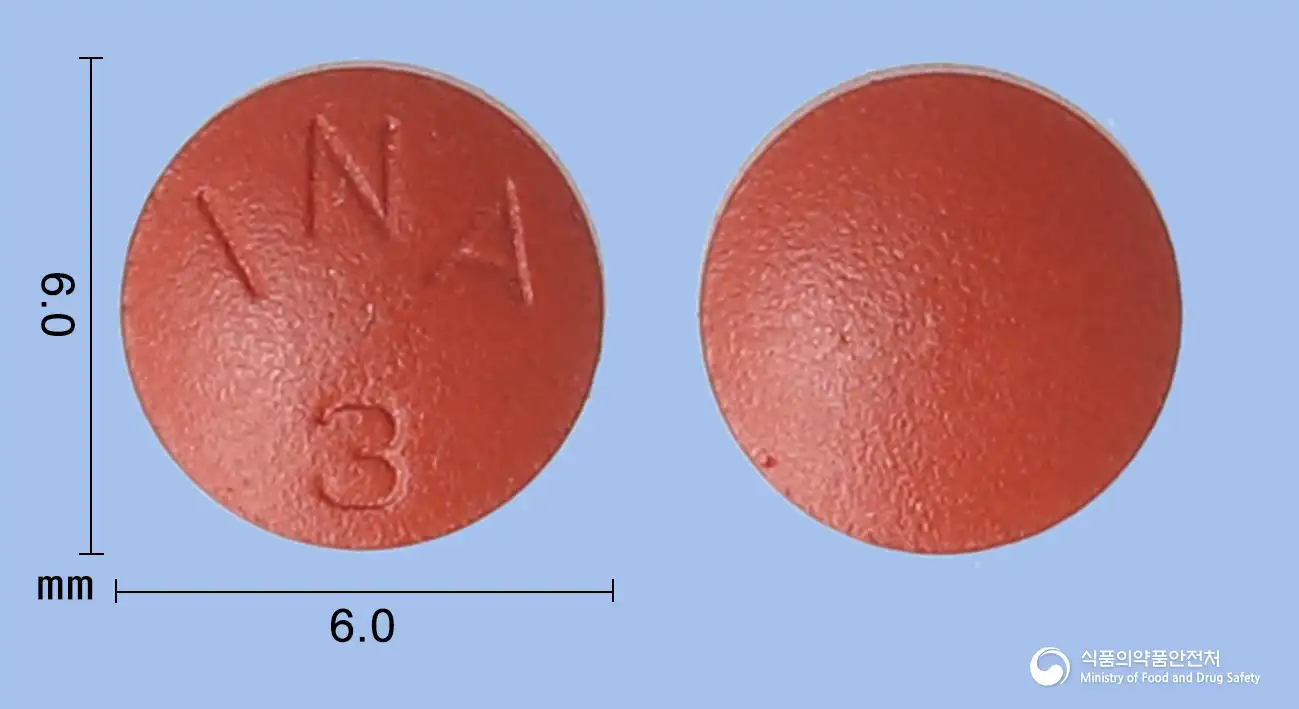
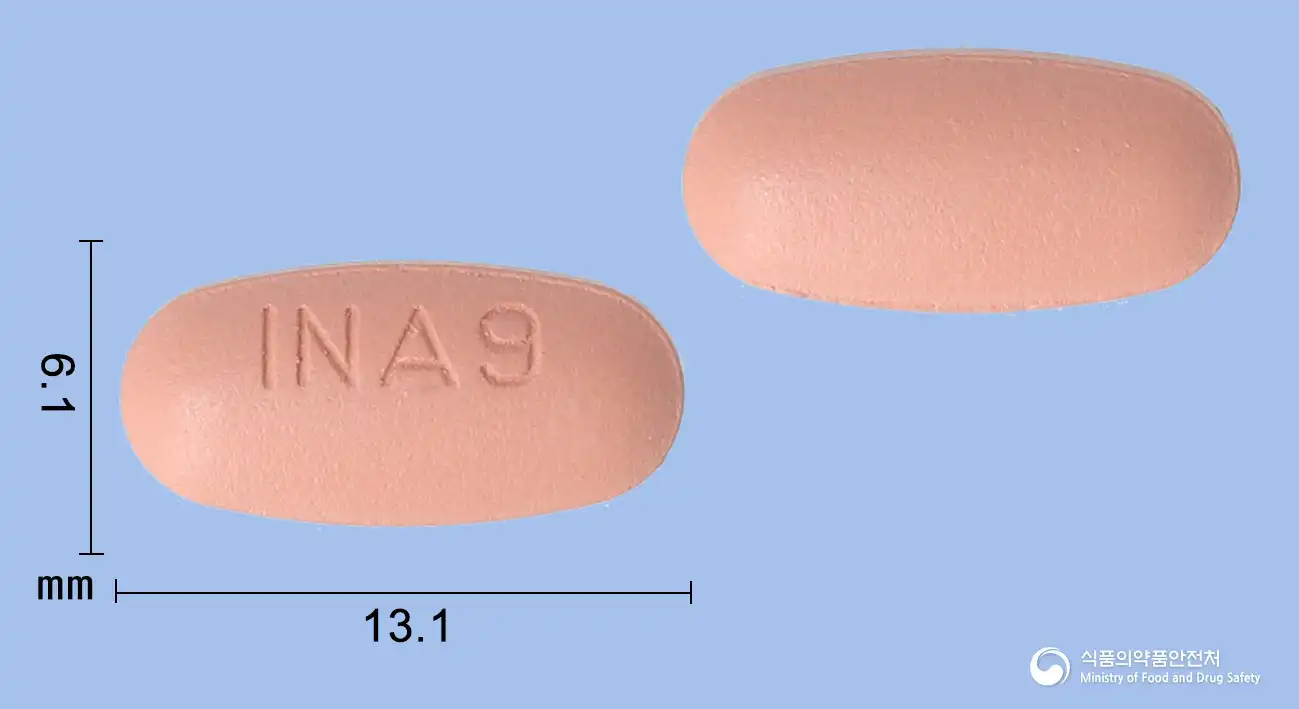
Oval film-coated tablet in light pink to gray-pink color
28 tablets/box [7 tablets/PTP x 4]
Even with the same ingredient, strength, dosage form and how it is taken can differ.
Even with the same ingredient, the dose and directions can differ by strength and dosage form. Talk to a doctor or pharmacist before switching from a medication you are already taking.
No questions yet.
For anything that needs medical judgment, consult a doctor or pharmacist.
This drug information is based on data provided by the Korea Ministry of Food and Drug Safety.
Consult a doctor or pharmacist for accurate dosage, administration, and usage instructions.