
 한국어
 English
 日本語
 中文(简体)
Dosage form image
Viewing nowWegovy Pre-Filled Pen 0.5 (Semaglutide)
Semaglutide 2mg
Prescription medication
Novo Nordisk Pharm Co., Ltd.
MFDS item code 202301387 · Approved 2023.04.27
Treatment of obesity and overweight (weight management, reduction of cardiovascular risk)
This medication helps in weight loss and maintenance in overweight patients with a body mass index (BMI) of 27 or higher with weight-related comorbidities, including prediabetes, hypertension, dyslipidemia, obstructive sleep apnea, or cardiovascular disease, as well as in obese patients with an initial BMI of 30 or greater among adult patients. Additionally, it is used to lower the risk of major cardiovascular events in patients with confirmed cardiovascular disease. In adolescents aged 12 and older, it is also used for weight management if they are classified as obese and weigh over 60 kg; if there is no effect after a certain period of treatment, reevaluation is necessary. It is used as an adjunct to a diet that reduces calorie intake and increases physical activity for effective weight management. This medication contributes to improving the health of patients with obesity and overweight and is used for weight management.
Start with 0.25 mg once a week, escalating to a maintenance dose of 2.4 mg weekly. Gradually increase the dose over 16 weeks, and in case of gastrointestinal symptoms, dosage escalation may be delayed or the previous dose may be lowered. It is not recommended to exceed 2.4 mg once a week. Administered subcutaneously, it can be taken any time of the day regardless of meals. Administered subcutaneously in the abdomen, thigh, or upper arm.
For adolescents aged 12 and older, the same dosage escalation schedule as for adults is applied. Doses should be escalated to a maintenance dose of 2.4 mg or until the maximum tolerated dose is reached, without exceeding 2.4 mg once per week.
This medication should not be used by patients with allergies to the active ingredient or excipients. Caution is needed in dehydrated patients as gastrointestinal side effects may worsen dehydration, and measures should be taken to prevent fluid loss. Due to the risk of acute pancreatitis, the use should be discontinued immediately if symptoms of pancreatitis occur, and it should be used cautiously in patients with a history of pancreatitis. This medication cannot be used as a substitute for insulin and should not be administered in conjunction with other GLP-1 receptor agonists. The risk of hypoglycemia increases when used together with sulfonylureas or insulin; therefore, dosage reductions of these medications may be necessary. Patients with diabetic retinopathy should be closely monitored as their symptoms may worsen with the use of this medication. It is not recommended for weight management or in patients with type 1 diabetes, severe renal and hepatic impairment, or severe heart failure. It should be administered with caution in elderly patients over 65 years, and in patients with liver disease or inflammatory bowel disease, and in those with diabetic gastroparesis. Gastrointestinal side effects such as nausea, vomiting, diarrhea, or constipation may occur during treatment, and patients should consult their healthcare provider if such symptoms arise. Adverse reactions such as acute pancreatitis, cholelithiasis, hair loss, and increased heart rate have also been reported, so immediate reporting of any unusual symptoms is necessary. Caution is required during general anesthesia or deep sedation due to the risk of aspiration from delayed gastric emptying. Mental health changes, including depression or suicidal thoughts, may occur, so any mood changes should be reported to a healthcare provider. This medication may delay drug absorption in the gastrointestinal tract, so care should be taken when taking other oral medications. Women who are pregnant or planning to become pregnant should not use this medication, and nursing mothers should also avoid administration. Patients may experience dizziness; therefore, caution is required while driving or operating machinery. In the case of overdose, dehydration and gastrointestinal symptoms may occur, and immediate medical attention is required. This medication should not be mixed with other drugs and should not be used if it is discolored or frozen. When using for the first time, it should be stored in a refrigerator and used within 6 weeks after opening. This medication is for use by one person only; used needles should be disposed of to reduce the risk of infection.
Not everyone experiences these, and they can vary from person to person.
This medication should be stored in a sealed container to prevent contact with air, and care should be taken to avoid freezing, keeping it refrigerated at a temperature between 2°C and 8°C. Additionally, since the drug may degrade due to light exposure, it is advisable to store it in a dark place, away from direct sunlight.
A transparent, colorless or nearly colorless solution contained in a colorless, transparent cartridge equipped with a dose-controlled pre-filled pen.
1 pre-filled pen/box [pre-filled pen (1.5 mL)]
Even with the same ingredient, strength, dosage form and how it is taken can differ.
Semaglutide 2mg
Prescription medication
Novo Nordisk Pharm Co., Ltd.
Semaglutide 1.34mg
Prescription medication
Novo Nordisk Pharma Co., Ltd.
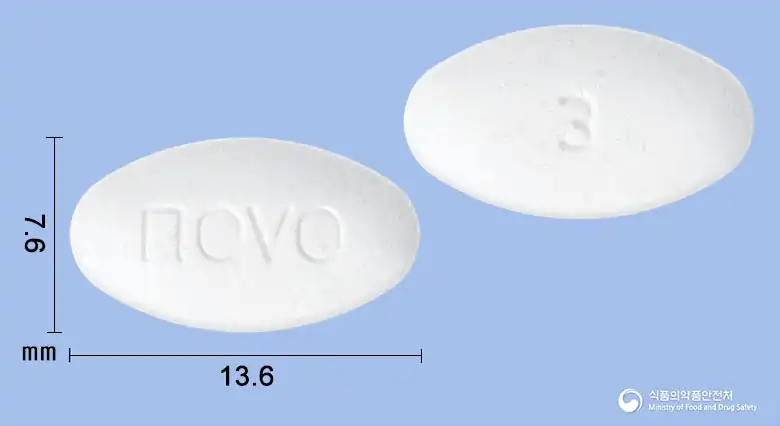
Semaglutide 14mg
Tablet · Prescription medication
Novo Nordisk Pharmaceuticals Ltd.
Semaglutide 9.6mg
Prescription medication
Novo Nordisk Pharma Ltd.
Semaglutide 6.8mg
Prescription medication
Novo Nordisk Pharmaceutical Ltd.
Semaglutide 4mg
Prescription medication
Novo Nordisk Pharmaceutical Co., Ltd.
Semaglutide 2mg
Prescription medication
Novo Nordisk Pharmaceuticals Co., Ltd.
Even with the same ingredient, the dose and directions can differ by strength and dosage form. Talk to a doctor or pharmacist before switching from a medication you are already taking.
No questions yet.
For anything that needs medical judgment, consult a doctor or pharmacist.
This drug information is based on data provided by the Korea Ministry of Food and Drug Safety.
Consult a doctor or pharmacist for accurate dosage, administration, and usage instructions.