
 한국어
 English
 日本語
 中文(简体)
 Viewing now
Fluwin Capsule (Fluconazole)
Fluconazole 50mg
Hard capsule · Prescription medication
Cosmax Pharma Co., Ltd.
MFDS item code 201902198 · Approved 2019.04.10 · Insurance code 055101110
Treatment of candidiasis and cryptococcosis; treatment of dermatomycosis; prevention of fungal infections and recurrence
This medication is used to treat acute or recurrent vaginal candidiasis, mucosal candidiasis such as oral and esophageal candidiasis, invasive candidal infections like systemic candidemia, and cryptococcal meningitis and other infections caused by Cryptococcus. It is also effective in preventing the recurrence of cryptococcosis in AIDS patients and in preventing fungal infections in patients with compromised immune function due to chemotherapy and radiation therapy. It is used to treat various skin fungal infections such as onychomycosis, tinea pedis, and tinea corporis, improving patient symptoms.
The route of administration should be determined according to the patient's clinical condition. Because oral formulations are rapidly and almost completely absorbed, the doses of oral formulations (capsules, dry syrup) and injectable formulations are the same. Vulvovaginal candidiasis: Administer fluconazole 150 mg orally as a single dose. Oropharyngeal candidiasis: The usual dose is 50 mg once daily for 7-14 days; treatment may be extended at the physician's discretion. Chronic atrophic oral candidiasis (oral soreness due to dentures): The usual dose is 50 mg once daily for 14 days; local disinfection of the dentures should also be performed. Other mucosal candidiasis (esophageal candidiasis, noninvasive bronchopulmonary infections, candiduria, mucocutaneous candidiasis, etc., excluding vulvovaginal candidiasis): The usual dose is 50 mg once daily for 14-30 days. For refractory mucosal candidiasis, the dose may be increased to 100 mg once daily. Systemic candidiasis, including candidemia, disseminated candidiasis, and other invasive Candida infections (peritoneal, endocardial, pulmonary, urinary tract, etc.): The usual dose is 400 mg once on the first day, followed by 200 mg once daily from the next day; the dose may be increased to 400 mg once daily according to the patient's response. The duration of treatment should be determined according to clinical response and medical judgment. Cryptococcal meningitis and cryptococcosis at other sites: The usual dose is 400 mg once on the first day, followed by 200-400 mg once daily from the next day. The duration of treatment is determined by clinical and mycological response, but treatment should generally continue for at least 6 ~ 8 weeks. Prevention of relapse of cryptococcal meningitis in patients with AIDS: After completion of initial treatment, administer 200 mg once daily indefinitely. Prevention of fungal infections in immunocompromised patients at risk due to neutropenia caused by cytotoxic chemotherapy, radiation therapy, or bone marrow transplantation: Administer 50-400 mg once daily according to the patient's risk of fungal infection. A dose of 400 mg once daily is recommended for patients at very high risk of systemic fungal infection, such as those with severe neutropenia or an anticipated prolonged period of neutropenia, as in bone marrow transplantation. In such patients, administer 400 mg starting 5-6 days before the anticipated onset of neutropenia, and continue 400 mg for 1 week after the neutrophil count has increased to 1,000 cells/mm3 or more. For onychomycosis, administer 150 mg once weekly until the fingernails or toenails have regrown (until new, uninfected nails have grown). New fingernails usually take 3-6 months to grow, and toenails take 6-12 months; growth rates may vary by individual and age. In some cases, fingernails or toenails may remain damaged after successful long-term treatment. Dermatophyte skin infections, including athlete's foot (tinea pedis), tinea corporis, jock itch (tinea cruris), and cutaneous candidiasis: The usual dose is 50 mg once daily or 150 mg once weekly for 2-4 weeks. However, treatment for athlete's foot may need to continue for 6 weeks depending on the course of the infection. Tinea versicolor: Administer 50 mg once daily for 2-4 weeks. Elderly patients with normal renal function: Administer the usual adult dose. In patients with renal impairment (creatinine clearance 50 mL/min or less), reduce the dose or extend the dosing interval. Patients with renal impairment: No dose adjustment is necessary for a single dose; however, when multiple doses are required, administer the usual dose only on the first day and adjust the dose from the next day as follows: Creatinine clearance > 50 mL/min: 100 % of the usual dose Creatinine clearance ≤50 mL/min (not on dialysis): 50% of the usual dose Patients on hemodialysis: 100% of the usual dose after each hemodialysis session Patients on hemodialysis should receive 100% of the usual dose after each hemodialysis session. On nondialysis days, the dose should be reduced according to creatinine clearance.
Adult dose 100 mg: Pediatric dose 3 mg/kg Adult dose 200 mg: Pediatric dose 6 mg/kg Adult dose 400 mg: Pediatric dose 12 mg/kg Do not exceed 400 mg. The safety and efficacy have not been established in infants younger than 6 months. Oropharyngeal candidiasis: Administer 6 mg/kg on the first day, followed by 3 mg/kg once daily from the next day. Treatment should continue for at least 2 weeks to prevent relapse. Esophageal candidiasis: Administer 6 mg/kg on the first day, followed by 3 mg/kg once daily from the next day. The dose may be increased to 12 mg/kg once daily according to the patient's response. Treatment should continue for at least 3 weeks and for at least 2 weeks after symptoms resolve. Systemic candidiasis, including candidemia, disseminated candidiasis, and other invasive Candida infections (peritoneal, endocardial, pulmonary, urinary tract, etc.): Administer 6-12 mg/kg once daily. The duration of treatment should be determined according to clinical response and medical judgment. Cryptococcal meningitis: Administer 12 mg/kg on the first day, followed by 6 mg/kg once daily from the next day. The dose may be increased to 12 mg/kg once daily according to the patient's response. Treatment should continue for 10-12 weeks after cerebrospinal fluid cultures become negative. Prevention of relapse of cryptococcal meningitis in patients with AIDS: After completion of initial treatment, administer 6 mg/kg once daily. Children with renal impairment should have their dosing intervals extended and doses reduced according to the same criteria as adults with renal impairment, based on the degree of renal impairment. For doses below 10 mg, administer the exact dose orally as syrup or intravenously as an injection, depending on the child's clinical condition.
This medication should not be administered to certain patients. For example, women who are allergic to this drug or other azole medications, those who are pregnant or breastfeeding, and patients taking certain medications should not use this drug. Patients with impaired kidney or liver function, those with heart disease or at risk of arrhythmias, and those with a history of drug hypersensitivity should use this drug with caution. Additionally, this drug may interact with various medications, so if you are taking other drugs, it is essential to consult with your healthcare provider. This drug is generally well tolerated, but in rare cases, side effects such as abnormalities in blood, liver and kidney function, skin rashes, cardiac arrhythmias, and gastrointestinal disorders may occur. It is essential to notify healthcare personnel immediately if any unusual symptoms appear. Pregnant women should avoid this medication, and women of childbearing potential should employ effective contraception. It is also recommended that breastfeeding mothers do not use this medication. For children, especially infants under 6 months old, safety and efficacy have not been adequately established, so it should be used cautiously only if necessary. Caution is needed while driving or operating machinery as this medication may cause dizziness or seizures. In case of overdose, hallucinations or atypical behavior may occur, and immediate medical assistance should be sought for appropriate treatment.
Agranulocytosis, leukopenia, neutropenia, thrombocytopenia, anaphylaxis, angioedema, hypertriglyceridemia, hypercholesterolemia, hypokalemia, insomnia, drowsiness, headache, seizures, dizziness, paresthesia, taste disturbance, tremors, lightheadedness, Torsade de pointes, QT prolongation, abdominal pain, diarrhea, nausea, vomiting, dyspepsia, bloating, dry mouth, increased ALT, increased AST, increased serum alkaline phosphatase, cholestasis, jaundice, increased bilirubin, hepatotoxicity, liver failure, hepatocellular necrosis, hepatitis, hepatocellular damage, rash, itching, urticaria, increased sweating, drug rash, toxic epidermal necrolysis, Stevens-Johnson syndrome, acute generalized exanthematous pustulosis, exfoliative dermatitis, facial edema, alopecia, drug reaction with eosinophilia and systemic symptoms, myalgia, fatigue, malaise, asthenia, fever, adrenal insufficiency, hallucinations, paranoid behavior
Not everyone experiences these, and they can vary from person to person.
This medication may be sensitive to air and moisture, so it should be stored in a tightly sealed container. It is best to maintain storage temperatures between 1 and 30 degrees Celsius.
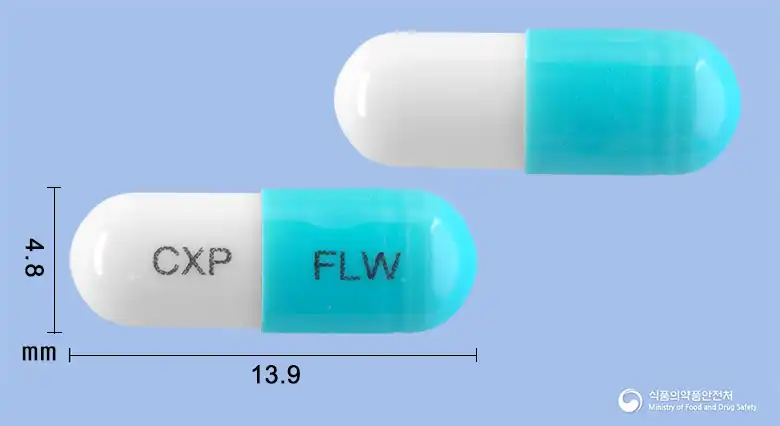
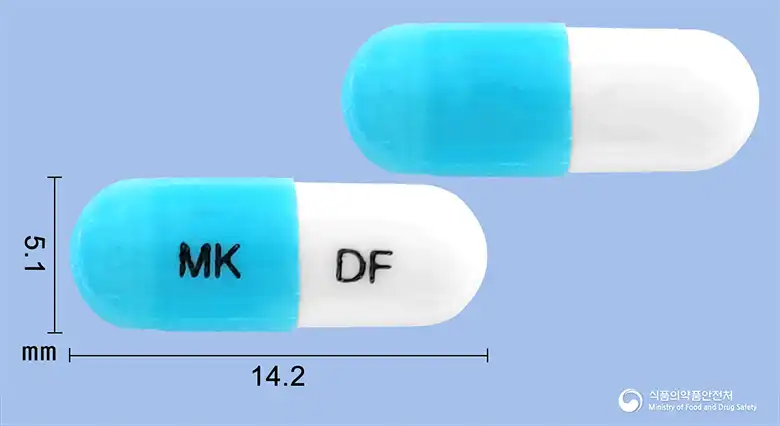
A hard capsule with a light blue upper part and white lower part filled with white powder.
30 capsules/bottle, 100 capsules/bottle
Even with the same ingredient, strength, dosage form and how it is taken can differ.
Viewing nowFluconazole 50mg
Hard capsule · Prescription medication
Cosmax Pharma Co., Ltd.
Fluconazole 50mg
Hard capsule · Prescription medication
JW Pharmaceutical Co., Ltd.
Fluconazole 50mg
Hard capsule · Prescription medication
Daewoong Pharmaceutical Co., Ltd.
Fluconazole 50mg
Hard capsule · Prescription medication
Hanmi Pharmaceutical Co., Ltd.
Fluconazole 2mg
Injections · Prescription medication
JW Pharmaceutical Co., Ltd.
Fluconazole 50mg
Hard capsule · Prescription medication
Medica Korea Co., Ltd.
Fluconazole 2mg
Prescription medication
Pfizer Pharmaceutical Co., Ltd.
Fluconazole 2mg
Injections · Prescription medication
Korea United Pharm, Co., Ltd.
Even with the same ingredient, the dose and directions can differ by strength and dosage form. Talk to a doctor or pharmacist before switching from a medication you are already taking.
No questions yet.
For anything that needs medical judgment, consult a doctor or pharmacist.
This drug information is based on data provided by the Korea Ministry of Food and Drug Safety.
Consult a doctor or pharmacist for accurate dosage, administration, and usage instructions.