
 한국어
 English
 日本語
 中文(简体)
 Viewing nowCombination
Descovy Tablets 200/25 mg
Emtricitabine 200mg · Tenofovir Alafenamide HemiFumarate 28mg
Tablet · Prescription medication · Combination
Gilead Sciences Korea Co., Ltd.
MFDS item code 201701115 · Approved 2017.02.28 · Insurance code 625900100
Treatment of HIV-1 infection in combination with other antiretroviral agents
This medication is used in combination with other antiretroviral agents to treat human immunodeficiency virus type 1 (HIV-1) infection in adults and adolescents (aged 12 years and older, weighing at least 35 kg).
Geriatric patients No dose adjustment of this medicine is necessary in geriatric patients. Renal impairment No dose adjustment of this medicine is necessary in adults with an estimated creatinine clearance (estimated CrCl) of 30 mL/min or greater. If the estimated creatinine clearance decreases to less than 30mL/min during treatment with this medicine, discontinue this medicine. No dose adjustment is necessary in adults with end-stage renal disease receiving chronic hemodialysis (estimated creatinine clearance less than 15mL/min). However, this medicine should not generally be used, and may be used in a patient only when the potential benefit outweighs the potential risk (see “Precautions for Use 4. General Precautions, 9) Onset or Worsening of Renal Impairment”). On dialysis days, take this medicine after dialysis is completed. The safety of this medicine has not been established in patients with an estimated creatinine clearance of 15 mL/min or greater and less than 30mL/min, or in patients with an estimated creatinine clearance less than 15 mL/min who are not receiving hemodialysis; therefore, it should not be used in these patients. There are no data on dose adjustment in patients under 18 years of age with end-stage renal disease. Hepatic impairment No dose adjustment of this medicine is necessary in patients with hepatic impairment. This medicine may be taken orally with or without food. Do not chew, crush, or split the film-coated tablets. If a dose is missed, take this medicine as soon as possible if it is within 18 hours of the usual dosing time, and take the next dose at the usual time. If more than 18 hours have passed, skip the missed dose and resume the usual dosing schedule with the next dose. If vomiting occurs within one hour after taking this medicine, take 1 additional tablet.
Age 12 years or older and body weight 35 kg or greater: This medicine 200/10 mg once daily when administered with atazanavir coadministered with ritonavir or cobicistat, darunavir coadministered with ritonavir or cobicistat, or lopinavir coadministered with ritonavir Age 12 years or older and body weight 35 kg or greater: This medicine 200/25 mg once daily when administered with dolutegravir, efavirenz, maraviroc, nevirapine, rilpivirine, or raltegravir Under 12 years of age: The safety and efficacy of this medicine have not been established. Children weighing less than 35kg: The safety and efficacy of this medicine have not been established.
This medication may cause severe and potentially fatal liver function abnormalities in HIV patients co-infected with chronic hepatitis B or C virus; therefore, it is essential to check for hepatitis B infection before administration. Discontinuing this medication suddenly during treatment may lead to a rapid worsening of hepatitis, so careful monitoring by a physician for at least several months is required upon discontinuation. In the early stages of initiating antiretroviral therapy, inflammatory reactions may occur due to immune recovery, which can lead to severe infections or autoimmune diseases; thus, if symptoms arise, immediate consultation with healthcare professionals is necessary. This medication may have reduced effectiveness or increased side effects when taken with certain anticonvulsants, antituberculosis drugs, and some herbal products, so it is essential to inform healthcare providers of any other medications being taken. This medication should not be used in patients with hypersensitivity to its active ingredients, and common adverse reactions include diarrhea, nausea, headache, rash, and fatigue. Bone-related issues such as decreased bone density or osteonecrosis may occur, so patients at risk of fractures should undergo regular bone density testing. Patients with reduced kidney function should have regular kidney function tests before and during treatment with this medication, and use may be restricted in cases of severe renal impairment. There is insufficient data regarding the safety of this medication during pregnancy, so it should be used cautiously after discussing with a doctor during pregnancy, and breastfeeding while on this medication is not recommended. This medication should not be used in children under the age of 12 years or those weighing less than 35 kg as safety and efficacy have not been established. Dizziness may occur during treatment; caution is advised when driving or operating machinery, and in cases of overdose, vital signs should be monitored and appropriate medical treatment should be provided. Finally, this medication must be stored out of reach of children, in a tightly closed container, protected from moisture and direct sunlight.
Not everyone experiences these, and they can vary from person to person.
This medication should be stored in a tightly closed container to prevent exposure to air or light. The appropriate storage temperature is room temperature between 1°C and 30°C. Storing it this way helps maintain the medication's effectiveness.
A blue, rectangular film-coated tablet that is imprinted with 'GSI' on one side and '225' on the other side.
30 tablets/bottle
Even with the same ingredient, strength, dosage form and how it is taken can differ.
Viewing nowCombinationEmtricitabine 200mg · Tenofovir Alafenamide HemiFumarate 28mg
Tablet · Prescription medication · Combination
Gilead Sciences Korea Co., Ltd.
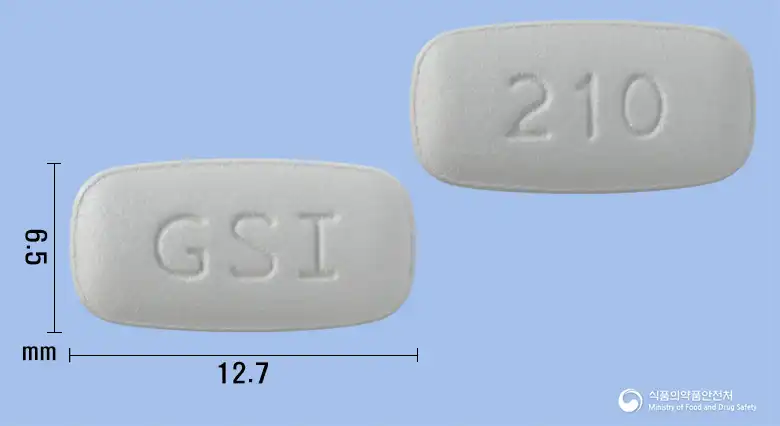 Combination
Emtricitabine 200mg · Tenofovir Alafenamide HemiFumarate 11.2mg
Tablet · Prescription medication · Combination
Gilead Sciences Korea, Ltd.
Even with the same ingredient, the dose and directions can differ by strength and dosage form. Talk to a doctor or pharmacist before switching from a medication you are already taking.
No questions yet.
For anything that needs medical judgment, consult a doctor or pharmacist.
This drug information is based on data provided by the Korea Ministry of Food and Drug Safety.
Consult a doctor or pharmacist for accurate dosage, administration, and usage instructions.