
 한국어
 English
 日本語
 中文(简体)
Dosage form image
Viewing nowBoricoc 200mg (Boricoconazole)
Voriconazole 200mg
Prescription medication
Jongkundang Co., Ltd.
MFDS item code 201605349 · Approved 2016.08.31
Treatment of fungal infections (such as Aspergillus and Candida) and prevention of invasive fungal infections
This medication is used to treat various types of fungal infections. It is effective for the treatment of invasive Aspergillus infections, particularly those caused by Aspergillus fumigatus. It is also used for candidemia and Candida infections of the skin, abdomen, kidney, bladder wall, and wound areas in patients without neutropenia. Additionally, it is employed for severe fungal infections caused by Scedosporium apiospermum and Fusarium species when other treatments are resistant or ineffective. It helps prevent invasive fungal infections following hematopoietic stem cell transplantation in patients with acute leukemia, lymphoma, and chronic myeloid leukemia. This medication is effectively used for the treatment and prevention of various fungal infections.
First dissolve this medicine in Sterile Water for Injection to a concentration of 10 mg/mL, then dilute it to a concentration of 5 mg/mL or lower before administration and administer by intravenous infusion (do not administer as a bolus injection). Administration at a rate of up to 3 mg/kg per hour over 1 hour to 3 hours is recommended. Electrolyte disorders such as hypokalemia, hypomagnesemia, and hypocalcemia should be corrected before starting treatment with this medicine. 1. Administration to adults (18 years and older) and adolescents (adolescents aged 12 to under 15 years weighing 50 kg or more, and adolescents aged 15 to under 18 years of any weight) 1) Invasive Aspergillus infections and severe fungal infections caused by Scedosporium apiospermum (the asexual form of Pseudallescheria boydii) and Fusarium species (including Fusarium solani): Treatment should be initiated with the specified loading dose of the injection on the first day to achieve an adequate plasma concentration. Intravenous administration should continue for at least 7 days before switching to oral therapy. If the patient improves clinically and can tolerate oral therapy, the oral tablets or oral suspension of this medicine may be used. Because this medicine has high oral bioavailability (96%), the injection and oral formulations may be used interchangeably when clinically necessary. If the patient can take oral medication, treatment may be switched to tablets (see the recommended dosage table). 2) Candidemia in patients without neutropenia and the following Candida infections: disseminated skin infections and infections of the abdomen, kidneys, bladder wall, or wound sites (see the recommended dosage table): Treatment should continue for the longer of the following periods: at least 14 days after symptoms resolve, or at least 14 days after the last positive culture result. 3) Prevention of invasive fungal infections in hematopoietic stem cell transplant patients with acute leukemia (acute myeloid leukemia, acute lymphoblastic leukemia, myelodysplastic syndrome), treatment failure of lymphoma, or chronic myeloid leukemia (see the recommended dosage table) Invasive Aspergillus infections and severe fungal infections caused by Scedosporium apiospermum and Fusarium species: Loading dose: injection 6 mg/kg every 12 hours (during the first 24 hours); maintenance dose: injection 4 mg/kg every 12 hours; oral formulation1) 200 mg (5 mL) every 12 hours Candidemia and other deep-tissue Candida infections in patients without neutropenia: Loading dose: injection 6 mg/kg every 12 hours (during the first 24 hours); maintenance dose: injection 3~4 mg/kg every 12 hours2); oral formulation1) 200 mg(5 mL) every 12 hours Prevention of invasive fungal infections in hematopoietic stem cell transplant patients with acute leukemia (acute myeloid leukemia, acute lymphoblastic leukemia, myelodysplastic syndrome), treatment failure of lymphoma, or chronic myeloid leukemia: Loading dose: injection 6 mg/kg every 12 hours (during the first 24 hours); maintenance dose: injection 4 mg/kg every 12 hours; oral formulation1) 200 mg (5 mL) every 12 hours 1) Patients weighing 40 kg or more should receive 200 mg(5 mL) every 12 hours, and patients weighing less than 40 kg should receive 100 mg(2.5 mL) every 12 hours. 2) In clinical trials, patients with candidemia received 3 mg/kg every 12 hours as primary therapy, whereas patients with other deep-tissue Candida infections received 4 mg/kg every 12 hours as salvage therapy. The appropriate dose should be given according to the severity and nature of the infection. <Dose adjustment> If the patient cannot tolerate a dose of 4 mg/kg administered intravenously every 12 hours, reduce the dose to 3 mg/kg every 12 hours. Phenytoin may be coadministered with voriconazole if the maintenance dose is increased to 5 mg/kg every 12 hours. The duration of treatment should be determined according to the patient's medical history, recovery from immunosuppressive therapy, and clinical response. 2. Administration to elderly patients: No dose adjustment is necessary. 3. Administration to patients with hepatic impairment: In clinical trials, patients with liver function test values such as ALT and AST elevated up to 5 times the upper limit of normal were included. No dose adjustment is necessary for patients with this degree of abnormal liver function, but continued monitoring for further increases in liver function test values is recommended. For patients with mild to moderate cirrhosis (Child-Pugh A, B), the standard loading dose and half the standard maintenance dose are recommended. Voriconazole has not been studied in patients with severe cirrhosis (Child-Pugh C), chronic hepatitis B, or chronic hepatitis C. Because voriconazole is associated with elevated liver function test values and clinical signs of liver injury (e.g., jaundice), it should be administered to patients with severe hepatic impairment only when the expected benefit outweighs the anticipated risk. Patients with hepatic impairment should be carefully monitored for drug toxicity. 4. Administration to patients with renal impairment: In patients with moderate to severe renal impairment (creatinine clearance < 50 ml/min), serum creatinine concentrations should be carefully monitored; if serum creatinine concentrations increase, switching to tablets should be considered. Voriconazole is removed at a rate of 121 ml/min during hemodialysis. Hemodialysis over 4 hours does not remove enough voriconazole to require dose adjustment.
Ages 2 to under 12 years: Injectable loading dose (during the first 24 hours): administer 9 mg/kg at 12-hour intervals; a loading dose of the dry syrup formulation is not recommended Ages 2 to under 12 years: Injectable maintenance dose (after the first 24 hours): administer 8 mg/kg 2 times daily Ages 2 to under 12 years: Dry syrup maintenance dose (after the first 24 hours): administer 9 mg/kg 2 times daily (maximum dose: administer 350mg 2 times daily) Adolescents weighing less than 50kg, ages 12 to under 15 years: Injectable loading dose (during the first 24 hours): administer 9 mg/kg at 12-hour intervals; a loading dose of the dry syrup formulation is not recommended Adolescents weighing less than 50kg, ages 12 to under 15 years: Injectable maintenance dose (after the first 24 hours): administer 8 mg/kg 2 times daily Adolescents weighing less than 50kg, ages 12 to under 15 years: Dry syrup maintenance dose (after the first 24 hours): administer 9 mg/kg 2 times daily (maximum dose: administer 350mg 2 times daily) Immunocompromised pediatric patients aged 2 to under 12 years and immunocompromised adolescents aged 12 to under 17 years: Exposure after intravenous administration of 8 mg/kg of the injectable formulation is approximately 2 times greater than exposure after oral administration of 9mg/kg. Children under 2 years of age: Use is not recommended. If the patient's response to treatment is inadequate, an increase of 1mg/kg may be considered. If the patient cannot tolerate treatment, a reduction of 1mg/kg may be considered.
This medication is made from boricoconazole and should not be used in certain patients. Patients allergic to boricoconazole or its excipients should not use this medication. Additionally, concomitant use with certain medications may significantly decrease or increase the blood levels of boricoconazole, which can be dangerous. Caution is required when used with certain antibiotics, antivirals, heart medications, immunosuppressants, analgesics, etc. This medication can affect liver and kidney functions, so regular tests of liver and kidney functions should be conducted before and during administration. Caution should be exercised in patients with heart diseases or electrolyte imbalances, as it can affect heart rhythms. Severe allergic reactions or photosensitivity may occur on the skin, so sunlight exposure should be avoided, and immediate consultation with a doctor should be sought if any skin abnormalities develop. This medication may cause neurological reactions such as visual impairment or taste disturbances, so patients should inform healthcare personnel if symptoms appear. Pediatric patients may experience liver function abnormalities and skin reactions more frequently, so care is necessary. During pregnancy, safety for the fetus has not been established, and it should only be used under medical judgment when absolutely necessary. It is recommended that breastfeeding women discontinue nursing while taking this medication. In the case of overdose, as there is no specific antidote, one should visit a medical institution immediately for appropriate treatment, and blood dialysis may help remove the medication if necessary. Moreover, this medication has many drug interactions; thus, if other medications are being taken, it is crucial to inform healthcare personnel. Finally, it is essential to adhere strictly to the prescribed dosages and administration methods, without randomly discontinuing or altering the doses.
Visual impairment, abnormal liver function tests, fever, rash, vomiting, nausea, diarrhea, headache, peripheral edema, abdominal pain, sinusitis, pseudomembranous colitis, agranulocytosis, pancytopenia, thrombocytopenia, leukopenia, anemia, bone marrow failure, lymphadenopathy, eosinophilia, disseminated intravascular coagulation, hypersensitivity, anaphylactoid reaction, adrenal insufficiency, hypothyroidism, hyperthyroidism, hypoglycemia, hypokalemia, hyponatremia, depression, hallucinations, anxiety, insomnia, agitation, confusion, headache, seizures, syncope, tremors, generalized muscle rigidity, sensory disturbances, drowsiness, dizziness, cerebral edema, encephalopathy, extrapyramidal disorders, peripheral neuropathy, ataxia, sensory impairment, taste abnormalities, hepatic encephalopathy, Guillain-Barré syndrome, eye tremors, retinal hemorrhage, optic nerve disorders, papilledema, ocular movement seizures, diplopia, scleritis, blepharitis, optic atrophy, corneal opacity, hearing loss, vertigo, tinnitus, ventricular arrhythmia, tachycardia, bradycardia, ventricular fibrillation, ventricular ectopic beats, ventricular tachycardia, QT prolongation on electrocardiogram, supraventricular tachycardia, torsades de pointes, complete heart block, block, nodal rhythm, hypotension, phlebitis, thrombophlebitis, lymphangitis, acute respiratory distress syndrome, pulmonary edema, cheilitis, dyspepsia, constipation, gingivitis, peritonitis, pancreatitis, glossitis, duodenitis, gastritis, stomatitis, jaundice, cholestatic jaundice, hepatitis, liver failure, hepatomegaly, cholecystitis, cholelithiasis, exfoliative dermatitis, hair loss, maculopapular rash, pruritus, erythema, Stevens-Johnson syndrome, photosensitivity reaction, purpura, urticaria, maculopapular rash, papular rash, allergic dermatitis, eczema, toxic epidermal necrolysis, angioedema, pseudoporphyria, erythema multiforme, psoriasis, drug rash, actinic keratosis, cutaneous lupus erythematosus, drug reactions with eosinophilia and systemic symptoms, ephelis, melanosis, back pain, arthritis, acute kidney injury, hematuria, acute tubular necrosis, proteinuria, nephritis, chest pain, facial edema, asthenia, chills, injection site reactions, influenza-like illness, increased serum creatinine, increased blood urea nitrogen, increased serum cholesterol, taste disturbances, blurred vision, photophobia, green vision, color vision defects, blue vision, ocular disorders, halos, night blindness, tremor vision, photopsia, scintillating scotoma, decreased vision, increased brightness of vision, visual field deficits, floaters, yellow vision, febrile neutropenia, thrombocytopenic purpura, hypoxic-ischemic encephalopathy, metabolic encephalopathy, akathisia, Parkinsonism, neck stiffness, tetany, persistent optic neuritis, drug-induced liver injury, toxic hepatitis, hepatocellular damage, hepatotoxicity, periorbital edema, lip edema, oral edema, photosensitivity reaction, arrhythmia, pancreatitis, increased serum bilirubin, flushing, sweating, syncope, pruritus, septic shock, sepsis, leukemia, dyspnea, pulmonary pneumonia exacerbation, pulmonary hemorrhage, pneumothorax, sore throat, decreased oxygen saturation, pleural effusion, gastric ulcer, gastric perforation, colitis exacerbation, insomnia, loss of appetite, thrombocytopenia, disseminated intravascular coagulation, lymphocytic leukemia, malignant oropharyngeal neoplasm, rectal cancer exacerbation, graft-versus-host disease, visual field deficits, cerebral hemorrhage, arthritis, pericardial effusion, hearing loss, thrombotic thrombocytopenic purpura, cardiac arrest, atrial fibrillation, cerebral hemorrhage, visual field deficits, papular rash, hyperkalemia, increased serum creatinine, hypokalemia, hyperbilirubinemia, hypertension, acidosis, xerophthalmia, thoracic surgery, abdominal distension, edema, heart failure, malignant oropharyngeal neoplasm, xerosis, visual disturbances, increased serum urea, increased amino acids, lymphocytic leukemia, hypernatremia, tension, generalized seizures, seizures of unknown origin, acute urticaria, dermatitis, acute kidney injury, toxic hepatitis, exacerbation of hepatitis, cardiac arrest, ear discharge
Not everyone experiences these, and they can vary from person to person.
This medication should be stored in a sealed container that prevents air or moisture from entering, preferably at room temperature (below 25 degrees Celsius). Storing it this way helps maintain its effectiveness for a longer duration.
A colorless, transparent vial filled with white or nearly white, lyophilized powder for injection.
4g/vial × 1
Even with the same ingredient, strength, dosage form and how it is taken can differ.
Voriconazole 200mg
Prescription medication
Jongkundang Co., Ltd.
Voriconazole
Prescription medication
Pfizer Korea Co., Ltd.
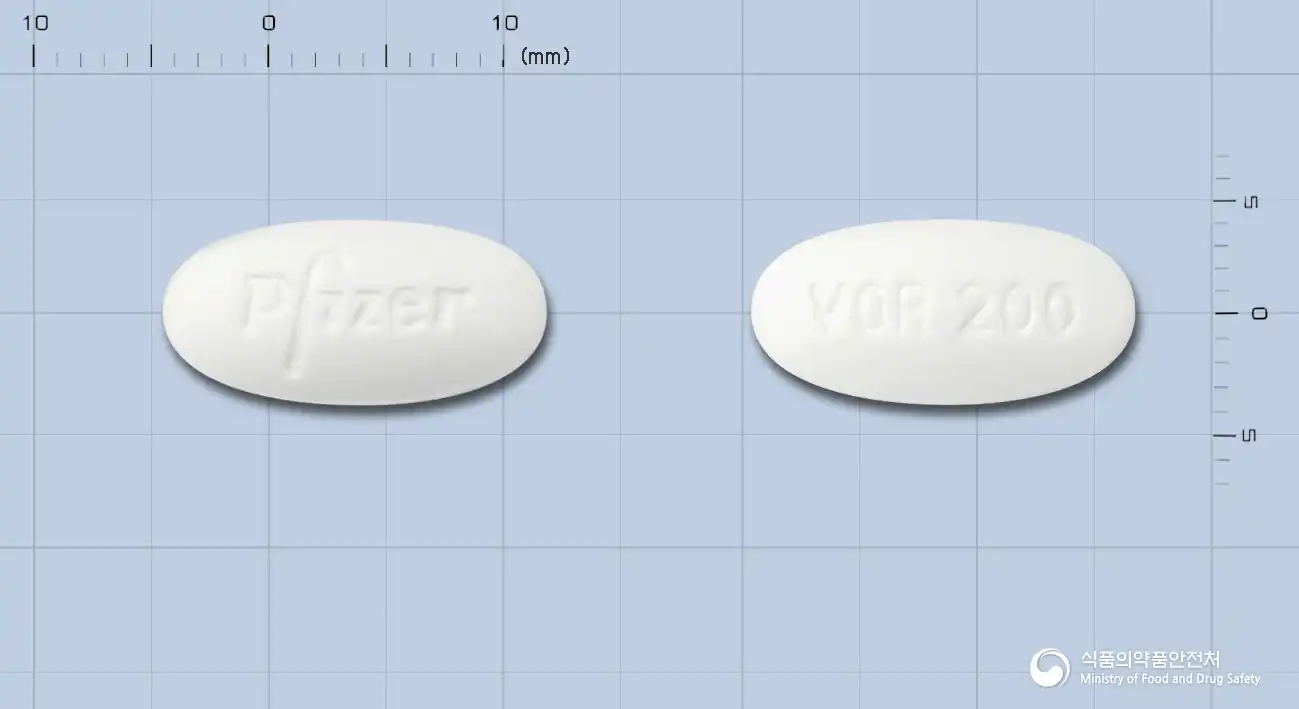
Voriconazole 200mg
Tablet · Prescription medication
Pfizer Korea Co., Ltd.
Voriconazole 200mg
Prescription medication
Pfizer Korea Ltd.
Voriconazole
Prescription medication
Pfizer Korea Co., Ltd.
Even with the same ingredient, the dose and directions can differ by strength and dosage form. Talk to a doctor or pharmacist before switching from a medication you are already taking.
No questions yet.
For anything that needs medical judgment, consult a doctor or pharmacist.
This drug information is based on data provided by the Korea Ministry of Food and Drug Safety.
Consult a doctor or pharmacist for accurate dosage, administration, and usage instructions.