
 한국어
 English
 日本語
 中文(简体)
Summary
- Main use
- Combination treatment of chronic hepatitis C in adults and children aged 12~17 years
- Who takes it
- Adults · Children
- Adult dose
- Adults The recommended dose is 1 tablet of 400 mg orally once daily, with or without food. This medicine must be used in combination with other medicines. Monotherapy with this medicine is not recommended. Patients with chronic hepatitis C genotype 1 or 4, HCV monoinfection: This medicine + ribavirine + peginterferon alfa, 12 weeksa,b Patients with chronic hepatitis C genotype 1 or 4, HCV monoinfection: This medicine + ribavirine, for patients ineligible for or intolerant of peginterferon alfa (see “Precautions for Use, 3. Patients Requiring Caution”), 24 weeksa Patients with chronic hepatitis C genotype 1 or 4, HIV coinfection: This medicine + ribavirine, 24 weeks Patients with chronic hepatitis C genotype 2: This medicine + ribavirine, 12 weeksb,c Patients with chronic hepatitis C genotype 3: This medicine + ribavirine, 24 weeksc Patients with chronic hepatitis C awaiting liver transplantation: This medicine + ribavirine, 48 weeks or until liver transplantation, whichever occurs firstd e When used in combination with ribavirin, administer ribavirin twice daily at a dose adjusted according to body weight. The daily dose is 1000mg for patients weighing <75kg and 1200mg for patients weighing ≥75kg, and it should be taken with food. Dose modification in adults Dose reduction of this medicine is not recommended. If a patient receiving this medicine in combination with peginterferon alfa experiences a serious adverse reaction that may be associated with the medicine, the dose of peginterferon alfa should be reduced or treatment discontinued. Refer to the prescribing information for peginterferon alfa for additional information on peginterferon alfa dose reduction and/or discontinuation. If a patient experiences a serious adverse reaction that may be associated with ribavirin, the dose of ribavirin should be modified or treatment discontinued, if appropriate, until the adverse reaction improves or decreases in severity. Refer to the prescribing information for ribavirin for additional information on dose modification and discontinuation based on the patient’s hemoglobin concentration and cardiac status. Discontinuation of treatment in adults and children If a concomitant medicine used with this medicine is permanently discontinued, this medicine should also be discontinued. Elderly patients No dose adjustment is necessary in elderly patients. Renal impairment No dose adjustment is necessary in patients with mild or moderate renal impairment. The safety and efficacy of this medicine have not been established in patients with severe renal impairment (estimated glomerular filtration rate [eGFR] < 30 mL/min/1.73m2) or end-stage renal disease (ESRD) requiring hemodialysis. When used in combination with peginterferon alfa or ribavirin in patients with creatinine clearance (CrCL) < 50mL/min, refer to the prescribing information for peginterferon and ribavirin for dose and discontinuation instructions. Hepatic impairment No dose adjustment is necessary in patients with mild, moderate, or severe hepatic impairment (Child‑Pugh‑Turcotte [CPT] class A, B, or C). The safety and efficacy of this medicine have not been established in patients with decompensated cirrhosis. Patients awaiting liver transplantation The duration of treatment with this medicine in patients awaiting liver transplantation should be determined based on an assessment of the potential benefits and risks for the individual patient.
- Child dose
- Pediatric patients aged 12 years or older and younger than 18 years: The recommended dose of this medicine is 1 tablet once daily, with or without food. Pediatric patients aged 12 years or older and younger than 18 years with chronic hepatitis C genotype 2: This medicine + ribavirina, 12 weeksb, c Pediatric patients aged 12 years or older and younger than 18 years with chronic hepatitis C genotype 3: This medicine + ribavirina, 24 weeksc Pediatric patients aged 12 years or older and younger than 18 years, body weight 47-49 kg: ribavirin 600 mg/day Pediatric patients aged 12 years or older and younger than 18 years, body weight 50-65 kg: ribavirin 800 mg/day Pediatric patients aged 12 years or older and younger than 18 years, body weight 66-80 kg: ribavirin 1000 mg/day Pediatric patients aged 12 years or older and younger than 18 years, body weight 81 or more: ribavirin 1200 mg/day * Administer ribavirin in 2 divided doses daily with food Dose modification in children Dose reduction of this medicine is not recommended. If a patient experiences a serious adverse reaction that may be associated with ribavirin, the dose of ribavirin should be modified or treatment discontinued, if appropriate, until the adverse reaction improves or decreases in severity. Refer to the prescribing information for ribavirin for additional information on dose modification and discontinuation. The safety and efficacy of this medicine in children younger than 12 years have not been evaluated.
Ingredients
- Importer
- Gilead
Efficacy & effects
Combination treatment of chronic hepatitis C in adults and children aged 12~17 years
- Chronic hepatitis C
View approved original textHide original text
This medication is used in combination with other drugs to treat chronic hepatitis C genotypes 1, 2, 3, and 4 in adults. It is also used to treat chronic hepatitis C genotypes 2 and 3 in pediatric patients aged 12 to under 18 years. Therefore, this drug is effective for the treatment of chronic hepatitis C across various age groups and genotypes.
How to take
Adult dose
Adults The recommended dose is 1 tablet of 400 mg orally once daily, with or without food. This medicine must be used in combination with other medicines. Monotherapy with this medicine is not recommended. Patients with chronic hepatitis C genotype 1 or 4, HCV monoinfection: This medicine + ribavirine + peginterferon alfa, 12 weeksa,b Patients with chronic hepatitis C genotype 1 or 4, HCV monoinfection: This medicine + ribavirine, for patients ineligible for or intolerant of peginterferon alfa (see “Precautions for Use, 3. Patients Requiring Caution”), 24 weeksa Patients with chronic hepatitis C genotype 1 or 4, HIV coinfection: This medicine + ribavirine, 24 weeks Patients with chronic hepatitis C genotype 2: This medicine + ribavirine, 12 weeksb,c Patients with chronic hepatitis C genotype 3: This medicine + ribavirine, 24 weeksc Patients with chronic hepatitis C awaiting liver transplantation: This medicine + ribavirine, 48 weeks or until liver transplantation, whichever occurs firstd e When used in combination with ribavirin, administer ribavirin twice daily at a dose adjusted according to body weight. The daily dose is 1000mg for patients weighing <75kg and 1200mg for patients weighing ≥75kg, and it should be taken with food. Dose modification in adults Dose reduction of this medicine is not recommended. If a patient receiving this medicine in combination with peginterferon alfa experiences a serious adverse reaction that may be associated with the medicine, the dose of peginterferon alfa should be reduced or treatment discontinued. Refer to the prescribing information for peginterferon alfa for additional information on peginterferon alfa dose reduction and/or discontinuation. If a patient experiences a serious adverse reaction that may be associated with ribavirin, the dose of ribavirin should be modified or treatment discontinued, if appropriate, until the adverse reaction improves or decreases in severity. Refer to the prescribing information for ribavirin for additional information on dose modification and discontinuation based on the patient’s hemoglobin concentration and cardiac status. Discontinuation of treatment in adults and children If a concomitant medicine used with this medicine is permanently discontinued, this medicine should also be discontinued. Elderly patients No dose adjustment is necessary in elderly patients. Renal impairment No dose adjustment is necessary in patients with mild or moderate renal impairment. The safety and efficacy of this medicine have not been established in patients with severe renal impairment (estimated glomerular filtration rate [eGFR] < 30 mL/min/1.73m2) or end-stage renal disease (ESRD) requiring hemodialysis. When used in combination with peginterferon alfa or ribavirin in patients with creatinine clearance (CrCL) < 50mL/min, refer to the prescribing information for peginterferon and ribavirin for dose and discontinuation instructions. Hepatic impairment No dose adjustment is necessary in patients with mild, moderate, or severe hepatic impairment (Child‑Pugh‑Turcotte [CPT] class A, B, or C). The safety and efficacy of this medicine have not been established in patients with decompensated cirrhosis. Patients awaiting liver transplantation The duration of treatment with this medicine in patients awaiting liver transplantation should be determined based on an assessment of the potential benefits and risks for the individual patient.
Child dose
Pediatric patients aged 12 years or older and younger than 18 years: The recommended dose of this medicine is 1 tablet once daily, with or without food. Pediatric patients aged 12 years or older and younger than 18 years with chronic hepatitis C genotype 2: This medicine + ribavirina, 12 weeksb, c Pediatric patients aged 12 years or older and younger than 18 years with chronic hepatitis C genotype 3: This medicine + ribavirina, 24 weeksc Pediatric patients aged 12 years or older and younger than 18 years, body weight 47-49 kg: ribavirin 600 mg/day Pediatric patients aged 12 years or older and younger than 18 years, body weight 50-65 kg: ribavirin 800 mg/day Pediatric patients aged 12 years or older and younger than 18 years, body weight 66-80 kg: ribavirin 1000 mg/day Pediatric patients aged 12 years or older and younger than 18 years, body weight 81 or more: ribavirin 1200 mg/day * Administer ribavirin in 2 divided doses daily with food Dose modification in children Dose reduction of this medicine is not recommended. If a patient experiences a serious adverse reaction that may be associated with ribavirin, the dose of ribavirin should be modified or treatment discontinued, if appropriate, until the adverse reaction improves or decreases in severity. Refer to the prescribing information for ribavirin for additional information on dose modification and discontinuation. The safety and efficacy of this medicine in children younger than 12 years have not been evaluated.
Precautions
This drug is used to treat infections caused by the hepatitis C virus (HCV). Before starting this medication, patients must be tested for hepatitis B virus (HBV) infection. Patients with HBV infection are at risk of reactivation of HBV during or after treatment, so liver function and viral load must be monitored regularly. Patients with heart problems, especially those taking the heart medication amiodarone, should be cautious when taking this drug as it may cause a sudden drop in heart rate, necessitating close monitoring by healthcare professionals. This medication should be used in combination with other antiviral agents and is not recommended for monotherapy. Women who are pregnant or of childbearing potential, along with their partners, should use effective contraception if taking this drug in combination with ribavirin, and it is advisable to avoid the use of this drug during pregnancy. Safety has not been established for patients with severely impaired liver or kidney function, so caution is advised. Moreover, the efficacy of this drug may be reduced when taken with strong P-gp inducers (e.g., rifampicin, carbamazepine), so concurrent use is not recommended. During treatment, side effects such as fatigue, headache, nausea, and insomnia may occur, so patients should consult a physician if these symptoms are severe. This medication is not used in children under 12 years of age as safety and efficacy have not been established. Caution is advised when driving or operating machinery, as this drug may affect these activities, and symptoms should be monitored. There is no specific antidote for overdose, so contact a medical facility immediately, and blood dialysis may be performed to remove some components if necessary. Finally, this drug should be kept out of reach of children and stored in its original container.
Side effects
- HBV reactivation
- fulminant hepatitis
- liver failure
- death
- severe bradycardia
- heart block
- fatigue
- headache
- nausea
- insomnia
Show 85 moreCollapse
- nasopharyngitis
- decreased hemoglobin
- anemia
- neutropenia
- lymphocytopenia
- thrombocytopenia
- decreased appetite
- weight loss
- depression
- anxiety disorder
- agitation
- dizziness
- attention disorder
- blurred vision
- dyspnea
- cough
- exertional dyspnea
- diarrhea
- vomiting
- abdominal discomfort
- constipation
- dyspepsia
- dry mouth
- gastroesophageal reflux
- increased bilirubin in the blood
- rash
- itching
- alopecia
- dry skin
- arthralgia
- myalgia
- lower back pain
- muscle cramps
- hyperreactivity
- chills
- influenza-like illness
- pain
- fever
- asthenia
- chest pain
- herpes simplex
- oral herpes
- increased sputum
- wet cough
- flank pain
- muscle weakness
- decreased intake
- sternal fracture
- ureterolithiasis
- bilirubinuria
- benign neoplasm
- palpitations
- tachycardia
- hyperbilirubinemia
- eye fatigue
- goiter
- dizziness
- urticaria
- drug rash
- erythematous rash
- syncope
- migraine
- diabetic neuropathy
- neuralgia
- taste disturbance
- tremors
- chest discomfort
- edema
- heat sensation
- overall health deterioration
- discomfort in the upper abdomen
- irritable bowel syndrome
- gingival swelling
- oral discomfort
- abnormal oral sensations
- sleep disorder
- decreased appetite
- flushing
- dizziness
- rash
- dyspepsia
- lower abdominal pain
- pruritus
- myalgia
- arthralgia
Not everyone experiences these, and they can vary from person to person.
Storage
This medication may be sensitive to air and moisture, so it should be stored in a tightly closed container. It is also recommended to store it at room temperature between 1°C and 30°C. This helps maintain the drug's efficacy over time.
Appearance and packaging
Appearance
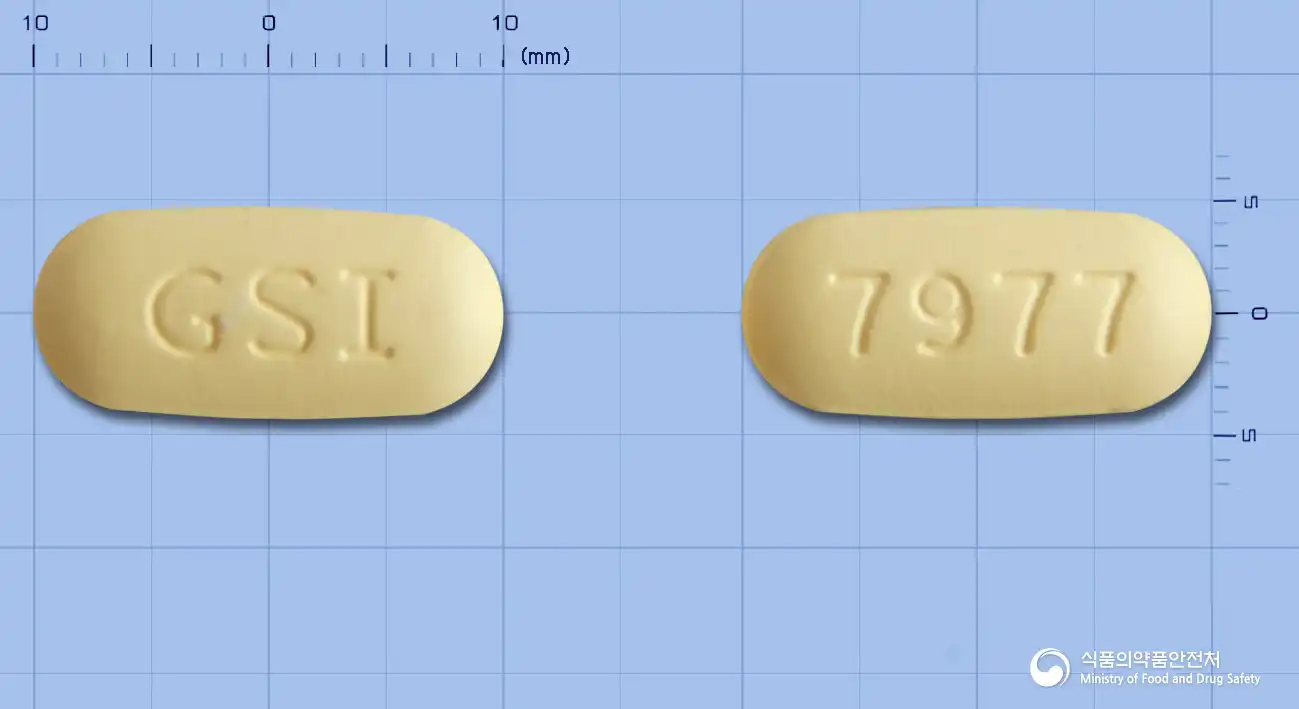
Yellow, oblong film-coated tablet imprinted with 'GSI' on one side and '7977' on the other side
Package unit
28 tablets/bottle
Questions about this medicine
No questions yet.
For anything that needs medical judgment, consult a doctor or pharmacist.