
 한국어
 English
 日本語
 中文(简体)
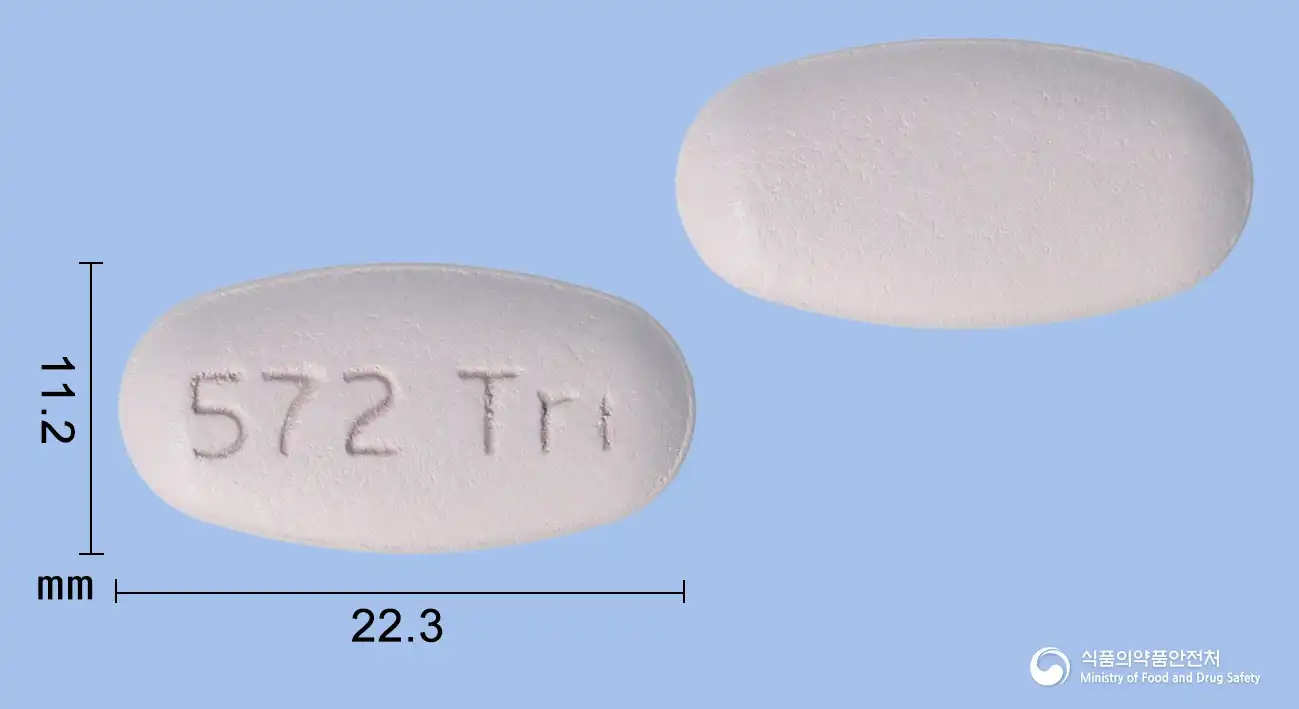
Summary
- Main use
- Treatment of human immunodeficiency virus (HIV) infection
- Who takes it
- Adults · Children
- Adult dose
- This medicine should be prescribed by a physician experienced in the treatment of HIV infection and is administered orally. It may be taken with or without food. Adults (body weight 40kg or more): The recommended dose for adults and adolescents aged 12 years and older is 1 tablet once daily. It should not be administered to adults weighing less than 40kg. This medicine is not recommended in patients with resistance to any of its components. This medicine is a fixed-dose tablet and should not be prescribed to patients who require dose adjustment. If dose adjustment or discontinuation of one of the components is required, dolutegravir, abacavir, or lamivudine may be prescribed individually; in such cases, the physician should refer to the product information for each individual medicine. Dolutegravir may be administered separately if dose adjustment is required because of a drug interaction (see Precautions for Use, 5. Interactions). The recommended dose of dolutegravir for patients with integrase inhibitor resistance is 50mg twice daily; therefore, this medicine is not recommended for patients with integrase inhibitor resistance. If a patient forgets to take this medicine, they should take it as soon as possible if the next dose is due in more than 4 hours. If the next dose is due within 4 hours, they should skip the missed tablet and resume their usual dosing schedule. This medicine is not recommended for patients with creatinine clearance below 30mL/min. Dose reduction of abacavir may be required in patients with mild hepatic impairment (Child-Pugh grade A). Because dose reduction is not possible with this medicine, individual formulations of dolutegravir, abacavir, or lamivudine should be used when considered necessary. This medicine is not recommended for patients with moderate or severe hepatic impairment (Child-Pugh grade B, C).
- Child dose
- Adolescents aged 12 years and older (body weight 40kg or more): The recommended dose for adults and adolescents aged 12 years and older is 1 tablet once daily. It should not be administered to adolescents weighing less than 40kg.
Ingredients
- Dolutegravir Sodium Micronized52.6mg / 1 tablet
- Abacavir Sulfate702mg / 1 tablet
- Lamivudine300mg / 1 tablet
- Importer
- GSK Korea
Efficacy & effects
Treatment of human immunodeficiency virus (HIV) infection
- Human immunodeficiency virus (HIV) infection
View approved original textHide original text
This medication is used for the treatment of human immunodeficiency virus (HIV) infection in adults and adolescents aged 12 years and older, particularly those weighing more than 40 kg. It plays an important role in improving the immune function impairment due to HIV infection, helping individuals lead healthier lives. With continuous use, it aids in suppressing the replication of the virus and strengthening the immune system. Therefore, it is effectively used for the treatment of HIV infection.
How to take
Adult dose
This medicine should be prescribed by a physician experienced in the treatment of HIV infection and is administered orally. It may be taken with or without food. Adults (body weight 40kg or more): The recommended dose for adults and adolescents aged 12 years and older is 1 tablet once daily. It should not be administered to adults weighing less than 40kg. This medicine is not recommended in patients with resistance to any of its components. This medicine is a fixed-dose tablet and should not be prescribed to patients who require dose adjustment. If dose adjustment or discontinuation of one of the components is required, dolutegravir, abacavir, or lamivudine may be prescribed individually; in such cases, the physician should refer to the product information for each individual medicine. Dolutegravir may be administered separately if dose adjustment is required because of a drug interaction (see Precautions for Use, 5. Interactions). The recommended dose of dolutegravir for patients with integrase inhibitor resistance is 50mg twice daily; therefore, this medicine is not recommended for patients with integrase inhibitor resistance. If a patient forgets to take this medicine, they should take it as soon as possible if the next dose is due in more than 4 hours. If the next dose is due within 4 hours, they should skip the missed tablet and resume their usual dosing schedule. This medicine is not recommended for patients with creatinine clearance below 30mL/min. Dose reduction of abacavir may be required in patients with mild hepatic impairment (Child-Pugh grade A). Because dose reduction is not possible with this medicine, individual formulations of dolutegravir, abacavir, or lamivudine should be used when considered necessary. This medicine is not recommended for patients with moderate or severe hepatic impairment (Child-Pugh grade B, C).
Child dose
Adolescents aged 12 years and older (body weight 40kg or more): The recommended dose for adults and adolescents aged 12 years and older is 1 tablet once daily. It should not be administered to adolescents weighing less than 40kg.
Precautions
This medication is used for the treatment of HIV infection. Before taking this drug, you need to be tested for a gene called HLA-B*5701, as patients with this gene may have a severe allergic reaction to the medication and should not take it. This drug contains components abacavir and dolutegravir, which may pose a risk of hypersensitivity reactions. Hypersensitivity reactions can include a variety of symptoms such as fever, rash, and difficulty breathing, and they can be life-threatening; therefore, if such symptoms occur, treatment should be stopped immediately. Severe side effects, such as lactic acidosis, have also been reported, manifesting as nausea, vomiting, abdominal pain, difficulty breathing, and fatigue, which can be associated with liver dysfunction. If you experience such symptoms, consult a physician immediately. This medication should not be administered to patients with severely impaired liver or kidney function, and potential interactions may occur when taken with other specific medications, so you must consult with your doctor or pharmacist. Additionally, women who are pregnant or planning to become pregnant must consult healthcare professionals before taking this medication and must use effective contraception while taking it. During the course of taking this medication, regular check-ups like liver function tests and blood tests are required, and if unusual symptoms appear, you should visit a healthcare facility immediately. Finally, this medication does not cure HIV infection; therefore, regular monitoring and management by healthcare professionals should continue during treatment.
Side effects
Fever, rash, nausea, vomiting, diarrhea, drowsiness, lethargy, headache, dizziness, insomnia, abnormal dreams, depression, anxiety, nightmares, sleep disorders, suicidal ideation or suicide attempts, drowsiness, peripheral neuropathy, abnormal sensation, cough, nasal symptoms, abdominal distension, abdominal pain, upper abdominal pain, abdominal bloating, abdominal discomfort, gastroesophageal reflux disease, indigestion, pancreatitis, hepatitis, acute liver failure, rash, itching, hair loss, erythema multiforme, Stevens-Johnson syndrome, toxic epidermal necrolysis, arthralgia, myalgia, rhabdomyolysis, fatigue, weakness, lethargy, edema, lymphadenopathy, hypotension, conjunctivitis, anaphylaxis, lymphopenia, elevated creatine phosphokinase, elevated ALT/AST, weight gain, elevated amylase, neutropenia, anemia, thrombocytopenia, aplastic anemia of the erythroid series, iron deficiency microcytic anemia, immune reconstitution inflammatory syndrome, oral ulcers, dyspnea, sore throat, adult respiratory distress syndrome, respiratory failure, nausea, constipation, gastritis, acute kidney injury, proteinuria, folliculitis, urticaria, dermatitis, erythema, heat sensation, panic disorder, mood swings, drowsiness
Not everyone experiences these, and they can vary from person to person.
Storage
This medication may be sensitive to air and moisture, so it should be stored in a tightly sealed container. The recommended storage temperature is room temperature, maintained between 1 to 30 degrees Celsius. This helps to safely preserve the medication's efficacy for a longer duration.
Appearance and packaging
Appearance
Purple, oval-shaped, biconvex film-coated tablet
Package unit
30 tablets/bottle
Questions about this medicine
No questions yet.
For anything that needs medical judgment, consult a doctor or pharmacist.