한국어
 English
 日本語
 中文(简体)
 Viewing now
Prezista 400 mg Tablets (Darunavir Ethanolate)
Darunavir Ethanolate 433.64mg
Tablet · Prescription medication
Korea Janssen Co., Ltd.
MFDS item code 201006527 · Approved 2010.10.29 · Insurance code 646901640
Treatment of HIV infection in combination with other antiretroviral agents and ritonavir
This medication is used for the treatment of patients with Human Immunodeficiency Virus (HIV) infection. It is administered in combination with other antiretroviral agents and must be taken with ritonavir 100 mg to be effective. It helps to inhibit the multiplication of the virus and improve immune function. It is included in personalized treatment tailored to the patient's condition to enhance HIV treatment efficacy.
This medicine must be coadministered with a low dose of ritonavir (pharmacokinetic enhancer). Therefore, consult the ritonavir prescribing information before starting coadministration of this medicine and ritonavir. Patients starting treatment with this medicine should not change the dose or discontinue treatment without a physician's instructions. For patients who are antiretroviral treatment-naive, or who have prior experience with antiretroviral treatment but have no darunavir resistance*, administer darunavir 800mg and ritonavir 100mg with food once daily. *Darunavir resistance-associated mutations (DRV-RAMs) : V11I, V32I, L33F, I47V, I50V, I54M, I54L, T74P, L76V, I84V, L89V Genotypic testing is recommended for patients with prior experience with antiretroviral treatment. However, if genotypic testing is not available, once-daily administration of darunavir 800mg/ritonavir 100mg is recommended for patients with no prior experience with protease inhibitors (PIs), and administration of darunavir 600mg/ritonavir 100mg twice daily (1200mg per day) is recommended for patients with prior experience with PIs. The type of food does not affect exposure to this medicine. No dose adjustment is necessary in patients with mild or moderate hepatic impairment. There are no data regarding the use of darunavir/ritonavir in patients with severe hepatic impairment. Therefore, darunavir/ritonavir is not recommended in patients with severe hepatic impairment. No dose adjustment is necessary in patients with moderate renal impairment. There are no pharmacokinetic data in HIV-1-infected patients with severe renal impairment or end-stage renal disease.
The safety and efficacy of darunavir/ritonavir have not been established in pediatric patients.
This medication should not be taken with certain other specific drugs. In particular, patients with liver issues or severely impaired liver function should not use this medication. This medication can put strain on the liver, increasing the risk of hepatitis or liver damage. Therefore, patients with liver diseases must consult a doctor before taking this medication. Children under 3 years old cannot take this medication. Regular check-ups, including liver function tests, are required during treatment, and if liver function worsens or abnormal symptoms appear, inform healthcare providers immediately. This medication must be taken with another drug called ritonavir to increase effectiveness. Taking it alone may reduce its effectiveness. This medication contains sulfonamide components, so caution is needed for patients with sulfonamide allergies. Side effects such as diarrhea, headache, abdominal pain, etc., may appear, and rarely reported serious side effects include severe skin reactions, pancreatitis, and worsening of diabetes. This medication interacts with many other drugs, leading to decreased effectiveness or increased risk of side effects, so always inform your doctor or pharmacist about all medications currently being taken. Particular caution is required when used with heart medications, anticoagulants, antibiotics, antifungals, anticonvulsants, sedatives, steroids, colchicine, and certain contraceptive pills. If pregnant or planning to become pregnant during treatment with this medication, consult healthcare providers, and women are advised to use additional contraceptive methods. Caution is needed while driving or operating machinery due to possible dizziness or drowsiness. Weight gain, changes in blood sugar and lipid levels may occur during treatment, so regular health check-ups and monitoring are necessary. This medication is an HIV treatment drug, and safe sexual practices and preventive measures to prevent HIV transmission should continue during treatment.
Hepatitis, acute hepatitis, cytolytic hepatitis, liver dysfunction, liver damage, diarrhea, headache, abdominal pain, abnormal laboratory findings, nausea, vomiting, angioedema, itching, rash, Stevens-Johnson syndrome, urticaria, myalgia, bone necrosis, appetite loss, diabetes, asthenia, fatigue, drug hypersensitivity reaction, immune reconstitution syndrome, abnormal dreams, acute pancreatitis, pruritus, gynecomastia, hypertriglyceridemia, hypercholesterolemia, hyperglycemia, increased pancreatic enzymes, osteonecrosis, lipodystrophy, rhabdomyolysis, toxic epidermal necrolysis, drug reaction with eosinophilia and systemic symptoms (DRESS), acute generalized exanthematous pustulosis, crystalline renal disease, acute pyelonephritis, pyuria, herpes zoster, urinary tract infection, Pneumocystis pneumonia, pneumonia, loss of consciousness, cognitive impairment, cervical cancer, aspiration pneumonia, oral candidiasis, herpes simplex, tinea, nasopharyngitis, atypical mycobacterial lymphadenitis, upper respiratory infection, urethritis, influenza, stage II syphilis, periodontitis, pigmentation disorder, facial swelling, drug rash, acneiform dermatitis, pressure ulcer, seborrheic dermatitis, alopecia, skin lesions, dermatitis, cough, rhinitis, allergic rhinitis, tremor, peripheral neuropathy, dizziness, back pain, neck pain, rotator cuff syndrome, hyperlipidemia, hyponatremia, hypoalbuminemia, hypophosphatemia, hypokalemia, leukopenia, neutropenia, anal-genital warts, abnormal liver function tests, decreased urine output, anxiety, depression, hypertension, adrenal insufficiency, multiple trauma, hematuria, tachycardia, congestive heart failure, chest discomfort
Not everyone experiences these, and they can vary from person to person.
This medication should be stored in a tightly closed container to prevent exposure to air or moisture. It is best to keep the medication at room temperature between 1 to 30 degrees Celsius.
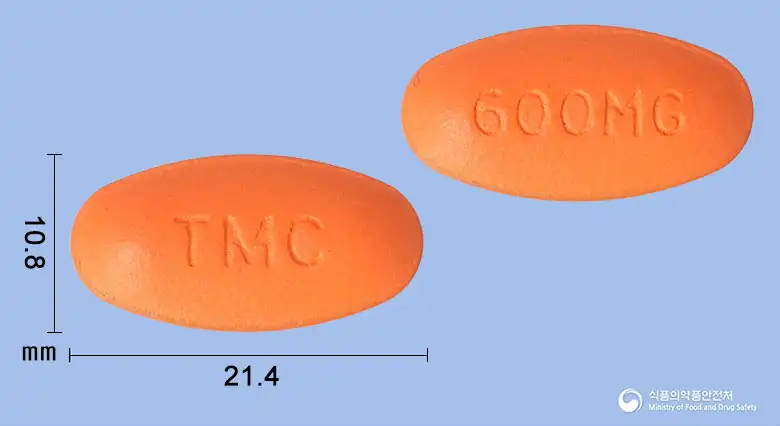
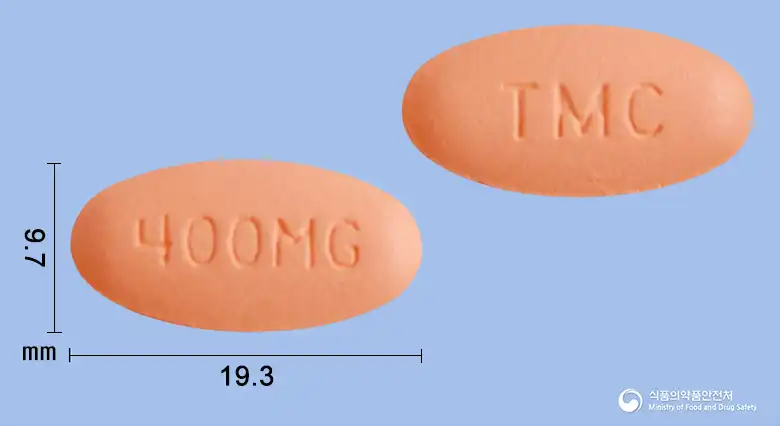
Light orange oval film-coated tablets
60 tablets/bottle
Even with the same ingredient, strength, dosage form and how it is taken can differ.
Even with the same ingredient, the dose and directions can differ by strength and dosage form. Talk to a doctor or pharmacist before switching from a medication you are already taking.
No questions yet.
For anything that needs medical judgment, consult a doctor or pharmacist.
This drug information is based on data provided by the Korea Ministry of Food and Drug Safety.
Consult a doctor or pharmacist for accurate dosage, administration, and usage instructions.