한국어
 English
 日本語
 中文(简体)
 Viewing now
Prezista 600 mg (Darunavir Ethanolate)
Darunavir Ethanolate 650.46mg
Tablet · Prescription medication
Korea Janssen Co., Ltd.
MFDS item code 201006372 · Approved 2010.10.20 · Insurance code 646901650
Combination treatment of HIV infection in adults with prior treatment experience or inadequate response to other treatments
This medication is used in adult HIV-infected patients with prior experience of antiretroviral therapy who have failed to respond to other protease inhibitors. Specifically, it helps to enhance the therapeutic effect when used in combination with other antiretroviral agents. This contributes to reducing viral load and improving the immune function of patients.
This medicine must be administered concomitantly with a low dose of ritonavir (pharmacokinetic enhancer). Therefore, consult the prescribing information for ritonavir before starting concomitant administration of this medicine and ritonavir. Patients starting treatment with this medicine should not change the dose or discontinue treatment without a physician's instructions. Adults: The recommended dose of this medicine is 600mg twice daily, taken with ritonavir 100mg twice daily and food. The type of food does not affect darunavir exposure. Hepatic impairment: No dosage adjustment is necessary in patients with mild or moderate hepatic impairment. There are no data regarding the use of darunavir/ritonavir in patients with severe hepatic impairment. Therefore, darunavir/ritonavir is not recommended in patients with severe hepatic impairment. Renal impairment: No dosage adjustment is necessary in patients with moderate renal impairment. There are no pharmacokinetic data in HIV-1-infected patients with severe renal impairment or end-stage renal disease.
Pediatric patients: The safety and efficacy of darunavir/ritonavir have not been established in pediatric patients.
This medication should not be used in conjunction with certain specific drugs, and it should not be taken by patients with severely impaired liver function or those who are hypersensitive to this drug. Since it can put stress on the liver, patients with chronic hepatitis or liver dysfunction should use it with caution and undergo regular liver function tests before and during treatment. This medication must be taken with the drug ritonavir; taking it alone may reduce its effectiveness. When used in combination with certain drugs, variations in drug concentration may lead to side effects or reduced therapeutic effect, so it is imperative to consult healthcare professionals if other medications are being taken. Common side effects may include diarrhea, headaches, and abdominal pain, while rare but serious adverse reactions such as severe skin rashes, hepatitis, or pancreatitis can also occur. Particular caution is required for patients allergic to sulfonamide derivatives. This medication may alter blood glucose and lipid levels, so patients with diabetes or dyslipidemia should regularly monitor their condition. Immune reconstitution syndrome, an immune system hypersensitivity reaction, may occur, so any unusual symptoms that arise early in treatment should be promptly reported to healthcare professionals. Symptoms such as dizziness may occur during driving or operating machinery, so caution is advised. While this drug is used for the treatment of HIV infection, it cannot completely prevent the transmission of HIV, thus safe lifestyle practices and preventative measures should be observed.
Hepatitis, acute hepatitis, cytolytic hepatitis, liver dysfunction, liver damage, diarrhea, headache, abdominal pain, laboratory abnormalities, nausea, vomiting, angioedema, pruritus, rash, Stevens-Johnson syndrome, urticaria, myalgia, osteonecrosis, decreased appetite, diabetes mellitus, asthenia, fatigue, drug hypersensitivity reaction, immune reconstitution syndrome, abnormal dreams, acute pancreatitis, dyspepsia, bloating, pruritus, gynecomastia, hypertriglyceridemia, hypercholesterolemia, increased liver enzymes, hyperglycemia, increased low-density lipoprotein, increased pancreatic enzymes, toxic epidermal necrolysis, drug reaction with eosinophilia and systemic symptoms (DRESS), acute generalized exanthematous pustulosis, crystalline kidney disease, fat redistribution, rhabdomyolysis, appetite loss, asthenia, fatigue, headache, increased liver enzymes, hypercholesterolemia, hyperglycemia, hypertriglyceridemia, immune reconstitution syndrome, increased low-density lipoprotein, nausea, increased pancreatic enzymes, rash, Stevens-Johnson syndrome, vomiting, osteonecrosis, increased bleeding in hemophilia patients, dizziness
Not everyone experiences these, and they can vary from person to person.
This medication may be sensitive to air or humidity, so it should be stored in a tightly sealed container. The storage temperature should ideally be maintained between 1 and 30 degrees Celsius. This will help maintain the effectiveness of the medication over time.
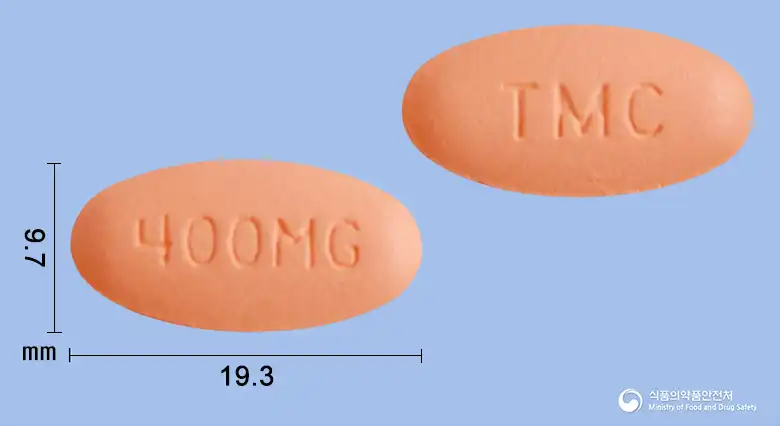
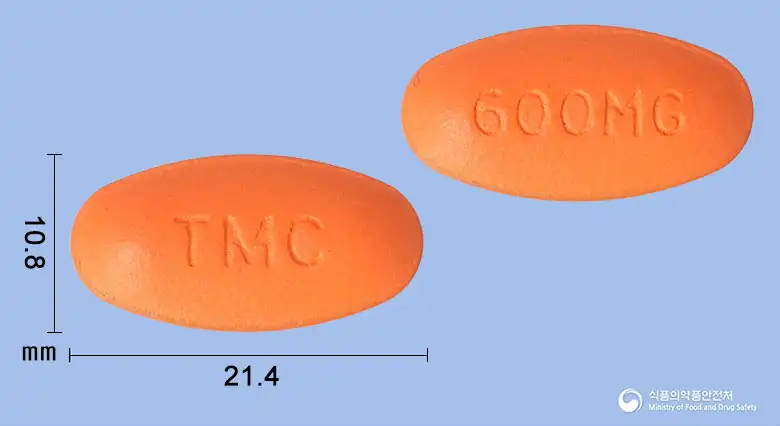
An orange oval film-coated tablet with '600MG' engraved on one side and 'TMC' on the other side
60 tablets/bottle
Even with the same ingredient, strength, dosage form and how it is taken can differ.
Even with the same ingredient, the dose and directions can differ by strength and dosage form. Talk to a doctor or pharmacist before switching from a medication you are already taking.
No questions yet.
For anything that needs medical judgment, consult a doctor or pharmacist.
This drug information is based on data provided by the Korea Ministry of Food and Drug Safety.
Consult a doctor or pharmacist for accurate dosage, administration, and usage instructions.