
 한국어
 English
 日本語
 中文(简体)
Dosage form image
Viewing nowValtabix Tablets (Valaciclovir Hydrochloride Monohydrate)
Valaciclovir Hydrochloride Hydrate
Prescription medication
Yuhan Corporation
MFDS item code 201004582 · Notified 2010.07.20
This product's status changed to Expired on 2023.04.01. It may no longer be sold, so consult a doctor or pharmacist before taking it.
Treatment of herpes and varicella; suppression of recurrence and transmission of genital herpes; prevention of CMV after kidney transplantation
This medication is used for the treatment of herpes zoster and initial and recurrent genital herpes infections. It is also used as a suppressive therapy to reduce the transmission of genital herpes when practiced in conjunction with safe sexual practices. It is applicable for the prevention of cytomegalovirus infection after kidney transplantation and for the treatment of herpes labialis. It is effective for the treatment of chickenpox in children aged 2 years and older with normal immune function. It provides treatment and preventive effects for various viral infectious diseases.
1. Adults 1) Herpes zoster Administer 1,000 mg of valacyclovir orally 3 times daily for 7 days. 2) Genital herpes infection Administer 500 mg of this product 2 times daily. For recurrent infection, administer for 5 days; for an initial episode, treatment may be continued for up to 10 days if symptoms are severe. Treatment should be started as soon as possible. For recurrent herpes simplex, treatment is most effective when started as soon as prodromal symptoms or signs/symptoms first appear. Administration of this product when signs/symptoms of recurrent genital herpes first appear may prevent progression of the lesions. 3) Suppression of recurrent genital herpes infection (1) Patients with normal immune function: The total daily dose is 500 mg of this product; 250 mg may be administered 2 times daily. Administration of 500mg once daily is also effective, particularly in patients with fewer than 10 recurrences per year. Some patients with 10 or more recurrences per year without treatment may obtain additional benefit when 250 mg of this product is administered in divided doses 2 times daily (total daily dose 500 mg). Treatment should be reassessed after 6 to 12 months of administration. (2) Patients with impaired immune function: Administer 500 mg of this product 2 times daily. 4) Reduction of transmission of genital herpes Immunocompetent heterosexual adults with 9 or fewer recurrences per year: The infected sexual partner should take 500 mg of this product once daily to reduce transmission to a sexual partner who is negative for Herpes Simplex Virus-2 (HSV-2) antibodies. Safer sex practices (especially condom use) should be maintained, and sexual contact should be avoided when lesions are present. 5) Prevention of cytomegalovirus infection Administer 2,000 mg of this product 4 times daily, starting within 72 hours after transplantation or as soon as administration is possible. The dose should be reduced according to creatinine clearance. The duration of administration is usually 90 days, but may need to be extended in high-risk patients. 6) Cold sores The recommended dose of this product for the treatment of cold sores is 2,000 mg per dose, administered 2 times daily at 12-hour intervals for 1 day. Treatment should be started as soon as the initial signs of a cold sore (e.g., tingling, itching, burning) appear. The efficacy of this product when administered after clinical signs of a cold sore (e.g., papules, vesicles, ulcers) have appeared has not been established. 3. Older adults 1) Increased exposure to acyclovir, the active metabolite of this product, may increase the risk of neuropsychiatric symptoms or renal impairment. In patients with renal impairment or decreased renal function, and in older adults, adjust the dosing interval and dose of this product and administer it cautiously while monitoring the patient's clinical status. 2) No dose adjustment is necessary except in cases of significant renal impairment. Adequate hydration should be maintained. 4. Patients with renal impairment In patients with significant renal impairment, adjust the dose as follows. Adequate hydration should be maintained. For patients undergoing hemodialysis, administer the dose after hemodialysis is completed. During periods of rapidly changing renal function (e.g., immediately after transplantation or kidney transplantation), creatinine clearance should be monitored frequently, and the dose of this product should be adjusted appropriately according to creatinine clearance. Indication / Creatinine clearance (mL/min) / Dosage Herpes zoster / 50 or higher / 1,000 mg per dose 3 times daily Herpes zoster / 30 or higher to less than 50 / 1,000 mg per dose 2 times daily Herpes zoster / 10 or higher to less than 30 / 1,000 mg per dose once daily Herpes zoster / Less than 10 / 500 mg per dose once daily Genital herpes / 30 or higher / 500 mg per dose 2 times daily Genital herpes / Less than 30 / 500 mg per dose once daily Genital herpes suppression - normal immune function / 30 or higher / 500 mg per dose once daily* Genital herpes suppression - normal immune function / Less than 30 / 250 mg per dose once daily Genital herpes suppression - impaired immune function / 30 or higher / 500 mg per dose 2 times daily Genital herpes suppression - impaired immune function / Less than 30 / 500 mg per dose once daily Cytomegalovirus prevention / 75 or higher / 2,000 mg per dose 4 times daily Cytomegalovirus prevention / 50 or higher to less than 75 / 1,500 mg per dose 4 times daily Cytomegalovirus prevention / 25 or higher to less than 50 / 1,500 mg per dose 3 times daily Cytomegalovirus prevention / 10 or higher to less than 25 / 1,500 mg per dose 2 times daily Cytomegalovirus prevention / Less than 10 or on dialysis / 1,500 mg per dose once daily Cold sores / 50 or higher / 2,000 mg per dose 2 times daily Cold sores / 30 or higher to 49 inclusive / 1,000 mg per dose 2 times daily Cold sores / 10 or higher to less than 30 / 500 mg per dose 2 times daily Cold sores / Less than 10 / 500 mg per dose once daily *Some patients with 10 or more recurrences per year without treatment may obtain additional benefit when 250 mg of this product is administered in divided doses 2 times daily (total daily dose 500 mg). 5. Patients undergoing peritoneal dialysis There is no information on the administration of this product in patients undergoing peritoneal dialysis. The effects of continuous ambulatory peritoneal dialysis (CAPD) and continuous arteriovenous hemodiafiltration/dialysis (CAVHD) on the pharmacokinetics of acyclovir have been studied. Elimination of acyclovir after CAPD and CAVHD was found to be lower than that during hemodialysis, and the pharmacokinetic parameters were very similar to those observed in patients with end-stage renal disease who were not receiving hemodialysis. Therefore, supplemental dosing of this product is not necessary after CAPD or CAVHD (see the section 'Administration with caution in the following patients'). 6. Patients with hepatic impairment No dose adjustment is necessary in patients with mild to moderate cirrhosis (patients with normal hepatic synthetic function). For patients with severe cirrhosis (patients with hepatic synthetic dysfunction or signs of portosystemic shunting), hemodynamic data indicate that no dose adjustment is necessary; however, clinical experience is insufficient. Therefore, this product should be administered cautiously at high doses to patients with hepatic impairment (see the section 'Administration with caution in the following patients').
1) Prevention of cytomegalovirus infection (age 12 years and older) Take 2,000 mg of this medicine per dose 4 times daily, starting within 72 hours after transplantation or as soon as oral administration is possible. The dose should be reduced according to creatinine clearance. Treatment usually lasts 90 days, but may need to be extended in high-risk patients. 2) Cold sores (age 12 years and older) The recommended dose for treatment of cold sores is 2,000 mg of this medicine per dose twice daily, 12 hours apart, for 1 day. Start treatment as soon as the initial signs of cold sores appear (e.g., tingling, itching, burning). Efficacy has not been established when this medicine is administered after clinical signs of cold sores (e.g., papules, vesicles, ulcers) have appeared. 3) Chickenpox in children aged 2 years to under 18 years: Administer 20 mg of this medicine per kg of body weight per dose 3 times daily for 5 days. The total dose must not exceed 1,000 mg per dose, 3 times daily. Treatment should begin as soon as the initial signs or symptoms appear. Based on efficacy data from clinical trials of oral acyclovir, treatment should begin within 24 hours after the rash starts.
This medication may cause serious blood disorders such as thrombotic thrombocytopenic purpura or hemolytic uremic syndrome when administered in high doses (8g per day) to patients with progressive HIV or those undergoing allogeneic bone marrow and kidney transplantation. Therefore, caution is required. Patients with allergies to this medication, acyclovir, or its components should not use this medication. Patients who are dehydrated or elderly require adequate hydration, and those with impaired kidney function should use a reduced dosage. The safety of high-dose administration has not been established in patients with poor liver function, so use should be cautious. Even when using this medication for the prevention of genital herpes, it does not completely eliminate the treatment or transmission risks of genital herpes, so safe sexual practices, such as condom use, are recommended. Special precautions are needed when this medication is used by pregnant women, women who may become pregnant, nursing mothers, and the elderly. This medication can cause gastrointestinal symptoms such as nausea, vomiting, and diarrhea, and rarely may cause allergic reactions such as thrombocytopenia, skin rashes, itching, hives, and shortness of breath. Acute renal failure may occur due to impaired kidney function, so adequate fluid intake is important, and if renal failure develops, dialysis may be necessary. Neurological symptoms such as headaches, dizziness, confusion, hallucinations, and seizures may occur, particularly in patients with decreased kidney function, so careful observation is necessary. Overdosing this medication can result in severe neurological symptoms, such as renal failure, confusion, hallucinations, and seizures; therefore, the dosage should be strictly observed, and dialysis may be helpful in cases of overdose. This medication should be stored out of reach of children, and precautions should be taken as transferring it to another container may lead to accidents or quality degradation. Care should be taken when performing activities requiring judgment and cognitive capacity, such as driving or operating machinery, considering the potential effects from the medication's side effects. There is insufficient safety data regarding use during pregnancy, so it should only be used if the therapeutic benefits outweigh the risks, and it should be used cautiously during breastfeeding. This medication is recommended only for children aged 12 years and older, and safety and efficacy have not been established for children under 12 or for specific infections. Elderly patients have a higher risk of impaired kidney function and central nervous system reactions, so dosage adjustment and patient condition monitoring are required.
Thrombotic thrombocytopenic purpura, hemolytic uremic syndrome, hypersensitivity reaction, nausea, abdominal discomfort, vomiting, diarrhea, thrombocytopenia, rash including photosensitivity reactions, itching, hives, angioedema, dyspnea, anaphylaxis, kidney damage, acute renal failure, renal colic, elevated liver function tests, headache, dizziness, confusion, hallucinations, decreased consciousness, tremor, ataxia, stuttering, seizures, encephalopathy, coma, facial swelling, convulsions, erythema multiforme, dysmenorrhea, depression, arthralgia, rhinitis, upper respiratory infection, fever, dehydration, herpes simplex, rhinorrhea, hypertension, tachycardia, aggressive behavior, anxiety, coma, mania, delusions, paralysis, decreased consciousness, auditory hallucinations, visual hallucinations, seizures, visual disturbances, hepatitis, jaundice, liver dysfunction, elevated creatinine, interstitial nephritis, aplastic anemia, leukocytoclastic vasculitis, pancytopenia, agranulocytosis, disseminated intravascular coagulation syndrome, thrombocytopenic purpura, leukopenia, hair loss, toxic epidermal necrolysis, Stevens-Johnson syndrome, drug reactions, interstitial pneumonia, acute pancreatitis, elevated BUN, dyspepsia, hiccups, anxiety, hallucinations, confusion, incoherence, seizures, encephalopathy
Not everyone experiences these, and they can vary from person to person.
This medication should be stored in a tightly closed container to protect it from air and moisture. It is best to maintain a storage temperature between 1 and 30 degrees Celsius.
Biconvex white oblong film-coated tablet
10 tablets/PTP
Even with the same ingredient, strength, dosage form and how it is taken can differ.
Valaciclovir Hydrochloride Hydrate
Prescription medication
Yuhan Corporation
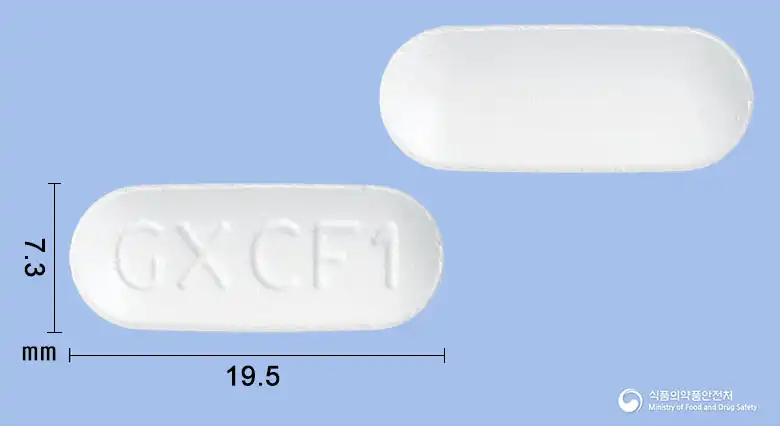
Valaciclovir Hydrochloride 556mg
Tablet · Prescription medication
GlaxoSmithKline Co., Ltd.
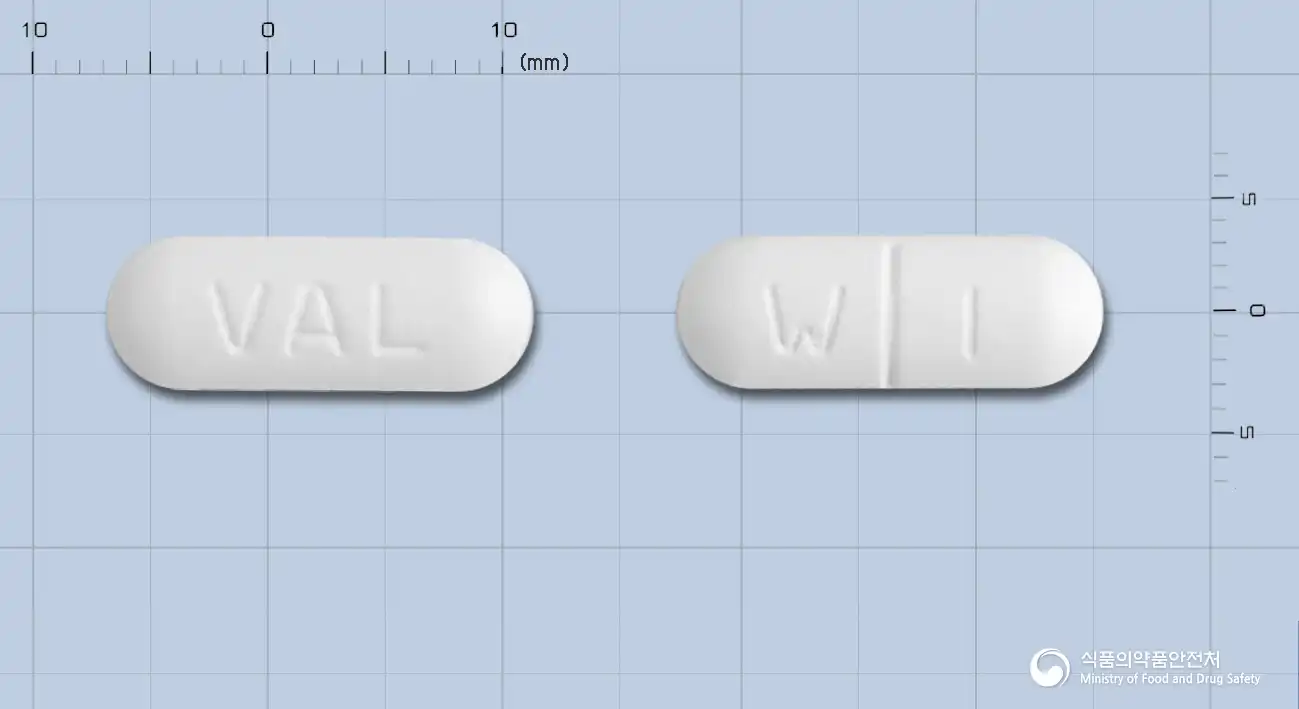
Valaciclovir Hydrochloride Hydrate 597.8mg
Tablet · Prescription medication
Hanmi Pharmaceutical Co., Ltd.
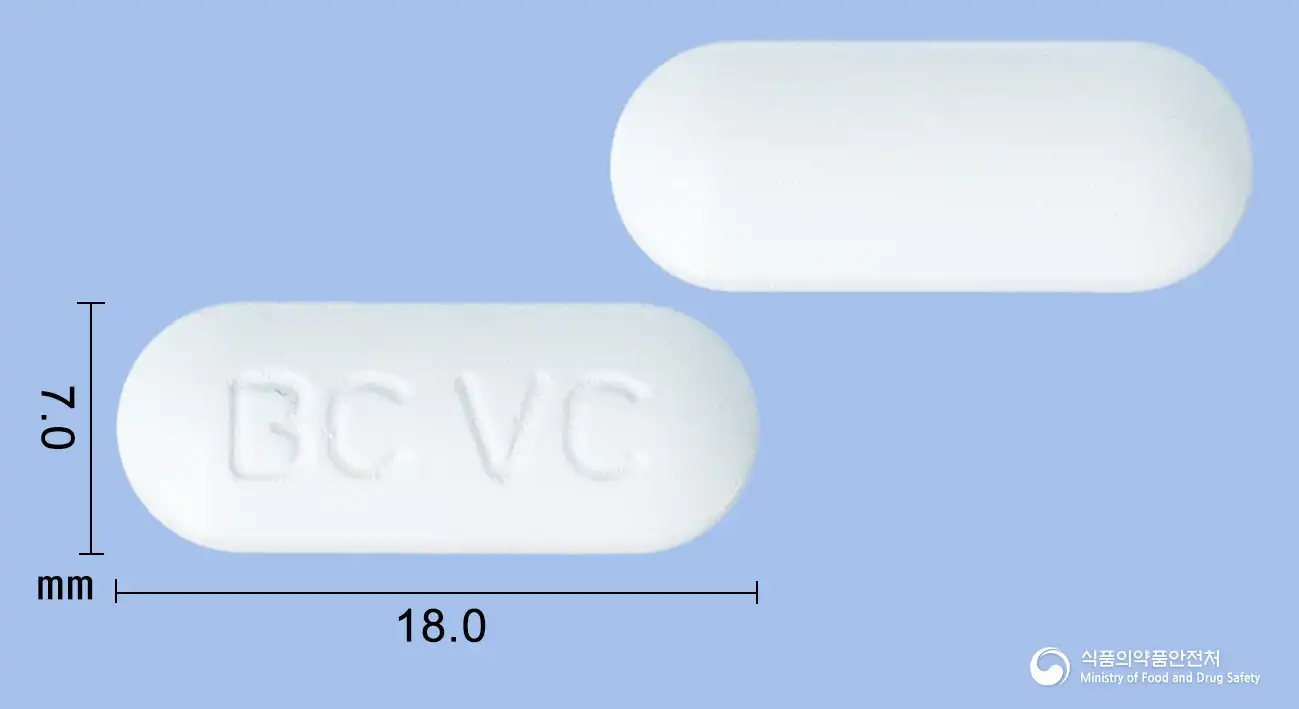
Valaciclovir Hydrochloride
Tablet · Prescription medication
BC World Pharmaceutical Co., Ltd.
Valaciclovir Hydrochloride Hydrate 597.8mg
Tablet · Prescription medication
Youngjin Pharmaceutical Co., Ltd.

Valaciclovir Hydrochloride 556mg
Tablet · Prescription medication
Hanmi Pharmaceutical Co., Ltd.

Valaciclovir Hydrochloride 556mg
Tablet · Prescription medication
Korea Prime Pharmaceutical Co., Ltd.
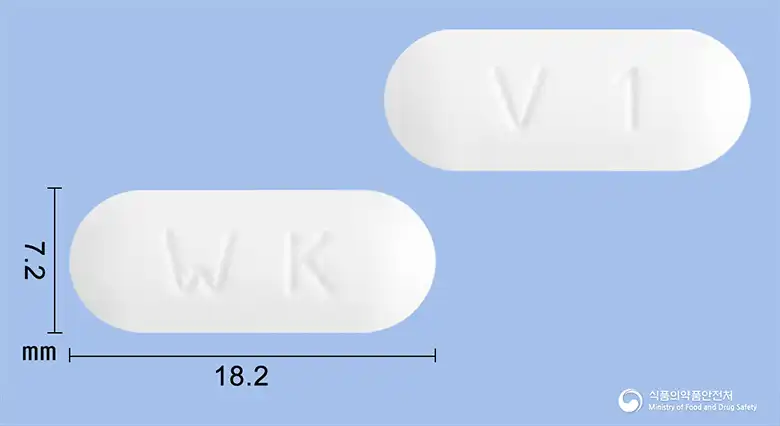
Valaciclovir Hydrochloride 556mg
Tablet · Prescription medication
Austin Pharmaceutical Co., Ltd.
Even with the same ingredient, the dose and directions can differ by strength and dosage form. Talk to a doctor or pharmacist before switching from a medication you are already taking.
No questions yet.
For anything that needs medical judgment, consult a doctor or pharmacist.
This drug information is based on data provided by the Korea Ministry of Food and Drug Safety.
Consult a doctor or pharmacist for accurate dosage, administration, and usage instructions.