
 한국어
 English
 日本語
 中文(简体)
Summary
- Main use
- Treatment of HIV-1 infection and pre-exposure prophylaxis against HIV-1 infection in high-risk individuals
- Who takes it
- Adults · Children
- Adult dose
- Recommended dosage for the treatment of HIV-1 infection: The recommended dosage of this drug in adults is 1 tablet once daily (containing emtricitabine 200 mg and tenofovir disoproxil fumarate 300 mg), taken orally with or without food. Recommended dosage to reduce the risk of HIV-1 infection before exposure in HIV-1-uninfected individuals at high risk: The dosage of this drug for HIV-1-uninfected adults is 1 tablet once daily (containing emtricitabine 200mg and tenofovir disoproxil fumarate 300mg), taken orally with or without food. Adult patients being treated for HIV-1 infection: Creatinine clearance ≥50 mL/min, every 24 hours; creatinine clearance 30-49 mL/min, every 48 hours; creatinine clearance <30 (including patients requiring hemodialysis), do not administer this drug. Reduction of the risk of HIV-1 infection before exposure in HIV-1-uninfected individuals at high risk: This drug should not be used in patients with an estimated creatinine clearance of less than 60 mL/min.
- Child dose
- Adolescents aged 12 years or older and weighing 35 kg or more: 1 tablet once daily (containing emtricitabine 200 mg and tenofovir disoproxil fumarate 300 mg), taken orally with or without food.
Ingredients
- Importer
- Gilead
Efficacy & effects
Treatment of HIV-1 infection and pre-exposure prophylaxis against HIV-1 infection in high-risk individuals
- HIV-1 infection
- risk of pre-exposure to HIV-1 infection
- sexually transmitted infections
- syphilis
- gonorrhea
View approved original textHide original text
This medication is used for the treatment of HIV-1 infection. It is effectively used to treat HIV-1 infection in adult and adolescent patients aged 12 years and older and weighing over 35 kg, in combination with other antiretroviral agents. Additionally, it is used as pre-exposure prophylaxis (PrEP) to reduce the risk of infection in high-risk HIV-1 negative individuals. Particularly, it is recommended to take this medication along with safe sex practices during sexual intercourse with partners at high risk of HIV-1 infection or in areas with high prevalence, thereby lowering the risk of infection. This medication plays a crucial role in the treatment and prevention of HIV-1 infection.
How to take
Adult dose
Recommended dosage for the treatment of HIV-1 infection: The recommended dosage of this drug in adults is 1 tablet once daily (containing emtricitabine 200 mg and tenofovir disoproxil fumarate 300 mg), taken orally with or without food. Recommended dosage to reduce the risk of HIV-1 infection before exposure in HIV-1-uninfected individuals at high risk: The dosage of this drug for HIV-1-uninfected adults is 1 tablet once daily (containing emtricitabine 200mg and tenofovir disoproxil fumarate 300mg), taken orally with or without food. Adult patients being treated for HIV-1 infection: Creatinine clearance ≥50 mL/min, every 24 hours; creatinine clearance 30-49 mL/min, every 48 hours; creatinine clearance <30 (including patients requiring hemodialysis), do not administer this drug. Reduction of the risk of HIV-1 infection before exposure in HIV-1-uninfected individuals at high risk: This drug should not be used in patients with an estimated creatinine clearance of less than 60 mL/min.
Child dose
Adolescents aged 12 years or older and weighing 35 kg or more: 1 tablet once daily (containing emtricitabine 200 mg and tenofovir disoproxil fumarate 300 mg), taken orally with or without food.
Precautions
This medication can cause serious issues with the liver, therefore patients with liver disease or suspected liver dysfunction should take special caution. This medication is not approved for the treatment of chronic Hepatitis B, and there is a risk of exacerbation of hepatitis if this medication is discontinued in patients co-infected with Hepatitis B and HIV-1. This medication should only be used to reduce the risk of HIV-1 infection, and high-risk individuals must strictly adhere to safe sex practices, such as using condoms. This medication should not be administered to patients with certain genetic disorders or who have hypersensitivity to this drug. Patients with impaired kidney function should have their kidney function monitored periodically while taking this medication, and adjust dosing intervals as necessary. This medication should not be used in conjunction with certain other antiviral agents, as combining them may increase the risk of adverse drug interactions. During treatment, there may be a decrease in bone mineral density, and patients at risk for osteoporosis should consider bone density testing and may benefit from calcium and vitamin D supplementation. This medication should only be used during pregnancy when absolutely necessary, and nursing mothers should avoid breastfeeding while taking this medication. This medication should only be administered to adolescents above a certain weight threshold, and caution should be exercised when prescribing it to children or the elderly. During treatment, regular tests such as liver function, kidney function, and blood tests should be conducted to monitor for adverse reactions. In case of overdose, the patient should be carefully monitored, and appropriate treatment should be provided as necessary. This medication should be stored away from direct sunlight and kept at room temperature, securely locked away from children.
Side effects
Severe liver enlargement accompanied by steatosis, liver dysfunction, liver failure, diarrhea, vomiting, fatigue, headache, dizziness, depression, insomnia, abnormal dreams, rash, skin depigmentation, anxiety, arthralgia, increased coughing, indigestion, fever, myalgia, pain, abdominal pain, low back pain, paresthesia, peripheral neuropathy, pneumonia, rhinitis, anemia, pigmentation, pharyngitis, urethritis, urinary tract infection, syphilis, secondary syphilis, anal genital warts, low back pain, headache, depression, anxiety, genital ulcers, weight loss, osteoporosis, eczema, allergic reaction, angioedema, hypokalemia, hypophosphatemia, dyspnea, pancreatitis, increased amylase, abdominal pain, fatty liver disease, hepatitis, increased liver enzymes, rash, rhabdomyolysis, osteomalacia, muscle weakness, myopathy, acute renal failure, renal failure, acute tubular necrosis, Fanconi syndrome, proximal tubular acidosis, interstitial nephritis, nephrogenic diabetes insipidus, increased creatinine, proteinuria, polyuria, asthenia
Not everyone experiences these, and they can vary from person to person.
Storage
This medication should be stored in a tightly sealed container to protect it from air or moisture. It is important to maintain a storage temperature between 1 degree and 30 degrees Celsius. Therefore, it should be kept away from direct sunlight and not placed in excessively hot or cold locations.
Appearance and packaging
Appearance
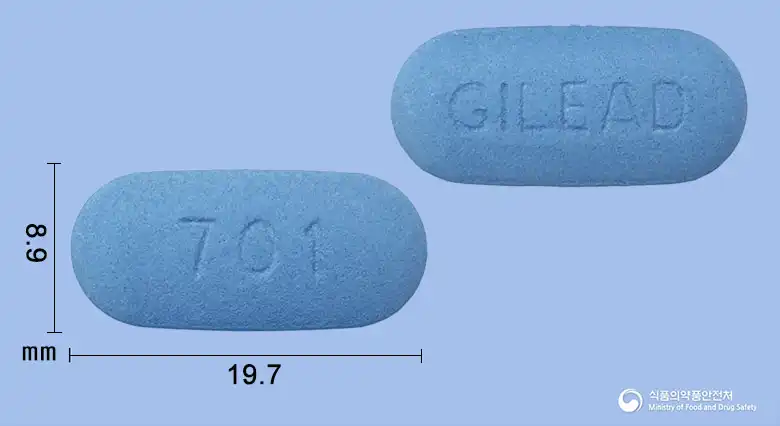
A blue, rectangular film-coated tablet with “GILEAD” embossed on one side and “701” on the other side.
Package unit
30 tablets/bottle
Questions about this medicine
No questions yet.
For anything that needs medical judgment, consult a doctor or pharmacist.