
 한국어
 English
 日本語
 中文(简体)
Summary
- Main use
- Treatment of chronic hepatitis B with viral replication and signs of active hepatitis
- Who takes it
- Adults
- Adult dose
- Patients 16 years of age and older For patients with chronic hepatitis B, administer 600mg orally once daily, with or without food. When initiating treatment with this medicine, carefully consider the following: ①HBeAg-positive patients: Administer this medicine to patients with a baseline HBV DNA level below 9log10 copies/mL and a baseline ALT level at least 2 times the upper limit of normal (ULN). ②HBeAg-negative patients: Administer this medicine to patients with a baseline HBV DNA level below 7log10 copies/mL. The optimal duration of treatment has not been established. Patients with renal impairment/renal failure No dose adjustment is necessary in patients with creatinine clearance ≥50 mL/min. Creatinine clearance (mL/min) / Dose ≥50 / 600mg once daily 30-49 / 600mg once every 48 hours <30 (not receiving dialysis) / 600mg once every 72 hours End-stage renal disease / 600mg once every 96 hours In patients with end-stage renal disease, this medicine should be administered after hemodialysis. Patients with hepatic impairment No dose adjustment is necessary when administering this medicine to patients with hepatic impairment.
Ingredients
- Importer
- BUKWANG PHARM. CO., LTD.
Efficacy & effects
Treatment of chronic hepatitis B with viral replication and signs of active hepatitis
- Viral replication
- signs of active hepatitis
View approved original textHide original text
This medication prevents deterioration of liver function in patients with chronic hepatitis B by suppressing viral replication. It is especially used when symptoms of active hepatitis are observed to reduce liver tissue damage and improve chronic hepatitis symptoms. This drug is effective for the treatment of chronic hepatitis B and helps stabilize the patient's health status.
How to take
Adult dose
Patients 16 years of age and older For patients with chronic hepatitis B, administer 600mg orally once daily, with or without food. When initiating treatment with this medicine, carefully consider the following: ①HBeAg-positive patients: Administer this medicine to patients with a baseline HBV DNA level below 9log10 copies/mL and a baseline ALT level at least 2 times the upper limit of normal (ULN). ②HBeAg-negative patients: Administer this medicine to patients with a baseline HBV DNA level below 7log10 copies/mL. The optimal duration of treatment has not been established. Patients with renal impairment/renal failure No dose adjustment is necessary in patients with creatinine clearance ≥50 mL/min. Creatinine clearance (mL/min) / Dose ≥50 / 600mg once daily 30-49 / 600mg once every 48 hours <30 (not receiving dialysis) / 600mg once every 72 hours End-stage renal disease / 600mg once every 96 hours In patients with end-stage renal disease, this medicine should be administered after hemodialysis. Patients with hepatic impairment No dose adjustment is necessary when administering this medicine to patients with hepatic impairment.
Precautions
This drug can significantly impact liver function, particularly increasing the risk of hepatomegaly associated with lactic acidosis and steatosis. Women, obese individuals, and those taking this medication for a long time may be at higher risk. Patients with liver disease or risk factors should exercise caution while using this drug, and if liver dysfunction is suspected, they should immediately discontinue use. If this drug is suddenly stopped during the treatment of chronic hepatitis B, hepatitis may worsen rapidly; therefore, during the cessation of treatment, liver function should be closely monitored for at least several months, following the physician's instructions. This drug should not be used in children under the age of 16, individuals allergic to this drug or its components, or patients undergoing interferon-alpha therapy. Patients with decreased kidney function may experience delayed excretion of this drug, so the dosage or administration interval should be adjusted. Liver transplant patients, patients with nonalcoholic cirrhosis, and elderly patients should also use this drug with caution. This drug has a low potential for interactions with other medications; however, monitoring changes in blood concentration is necessary when taken with medications that affect kidney function. Pregnant women have a relatively low risk of fetal harm due to the use of this drug, but it should always be administered after consulting with a physician. It is advisable not to take this drug while breastfeeding. While taking this medication, symptoms such as muscle pain, muscle weakness, fatigue, headache, gastrointestinal disturbances may occur, and if these symptoms persist, report to a physician immediately for evaluation. In case of overdose, discontinue use immediately and seek necessary treatment; it is important to keep this medication out of the reach of children. This drug does not reduce the risk of hepatitis B virus infection; therefore, additional preventive measures should also be implemented.
Side effects
- Lactic acidosis
- steatosis
- hepatomegaly
- rhabdomyolysis
- myopathy
- myositis
- peripheral neuropathy
- upper respiratory infection
- nasopharyngitis
- fatigue
Show 34 moreCollapse
- headache
- dizziness
- diarrhea
- increased lipase
- nausea
- rash
- arthralgia
- myalgia
- malaise
- increased serum creatine phosphokinase
- increased alanine aminotransferase
- increased serum amylase
- increased aspartate aminotransferase
- myalgia
- myopathy
- malignant hepatic tumors
- increased hepatitis B virus DNA
- abdominal pain
- hepatic encephalopathy
- cirrhosis
- drowsiness
- gallbladder polyps
- nausea
- bacterial peritonitis
- peripheral edema
- weight loss
- pruritus
- musculoskeletal pain
- limb pain
- renal dysfunction
- abdominal discomfort
- asthenia
- chest pain
- chest discomfort
Not everyone experiences these, and they can vary from person to person.
Storage
This medication may be sensitive to air and moisture; therefore, it should be stored in a sealed container. It is important to maintain a storage temperature between 1 and 30 degrees Celsius to preserve the drug's effectiveness for a long time.
Appearance and packaging
Appearance
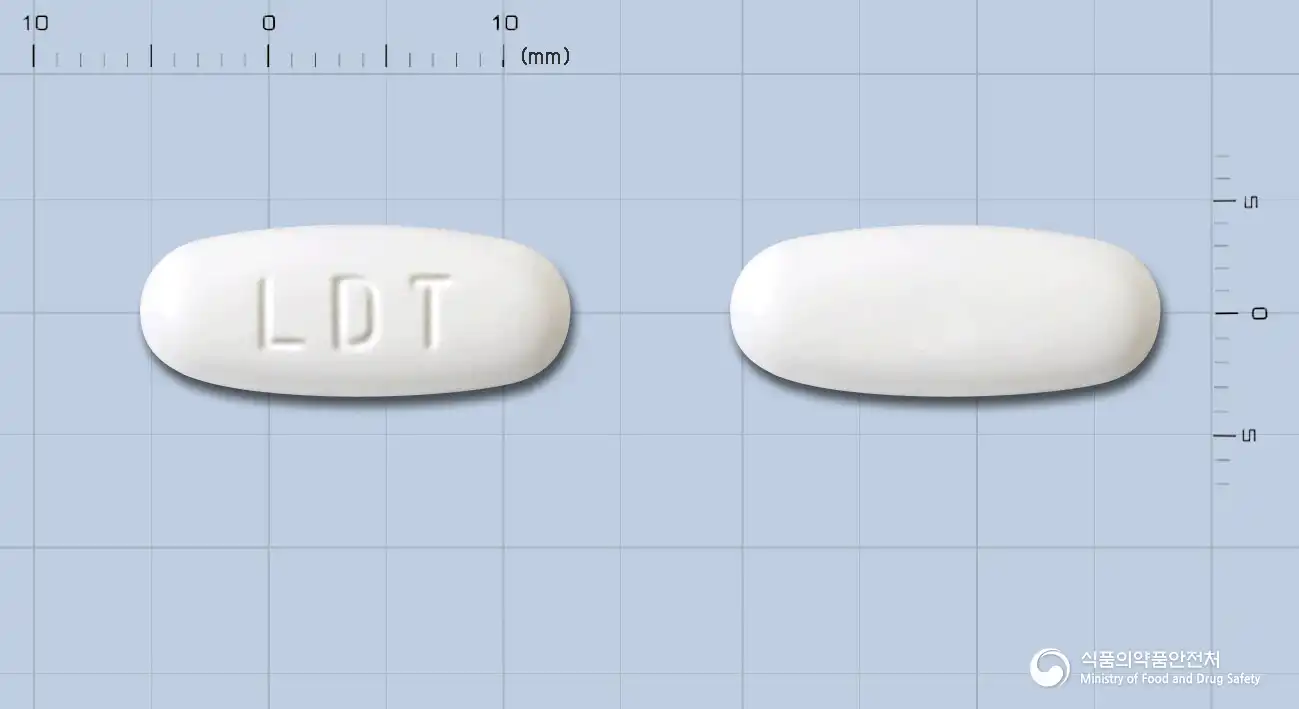
Slightly yellowish oval film-coated tablet with 'LDT' engraved on one side and beveled edges
Package unit
28 tablets (14 tablets/PTP packaging x 2)
Questions about this medicine
No questions yet.
For anything that needs medical judgment, consult a doctor or pharmacist.