
 한국어
 English
 日本語
 中文(简体)
 Viewing now
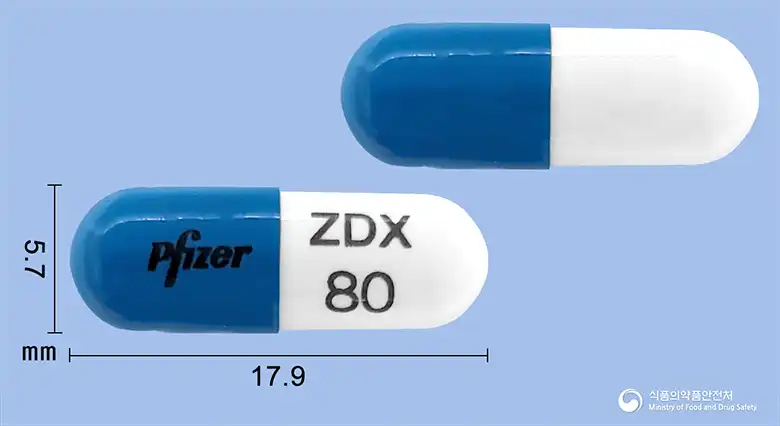
Zeldox Capsule 80 mg (Ziprasidone Hydrochloride Monohydrate)
Ziprasidone Hydrochloride Monohydrate 90.6mg
Hard capsule · Prescription medication
Viatris Korea Co., Ltd.
MFDS item code 200511056 · Approved 2005.04.12 · Insurance code 073400110
Treatment of schizophrenia and bipolar I disorder
This medication is used to treat schizophrenia. It is also effective for acute treatment of mania or mixed episodes in patients with type 1 bipolar disorder, and can be used as an adjunct therapy during the maintenance phase of treatment. It helps stabilize symptoms and prevent relapse. This medication is useful in improving symptoms and preventing symptom exacerbation.
Take this medicine with food. Swallow the dosage form whole; do not chew, crush, or open the capsule. Schizophrenia: The recommended dosage regimen for acute treatment is 40 mg per dose twice daily with food. The daily dose may then be adjusted, based on the individual's clinical condition, up to a maximum of 80 mg per dose twice daily. If dose adjustment is needed based on signs of illness, doses should generally be adjusted at intervals of at least 2 days. The maximum recommended dose (80 mg twice daily) may be reached as early as the third day of treatment. For maintenance therapy, patients should take the minimum effective dose; 20 mg per dose twice daily is often sufficient. Acute treatment of manic or mixed episodes associated with bipolar I disorder—initial treatment: The initial daily dose is 40 mg per dose twice daily with food. The dose per administration is then increased to 60 mg or 80 mg on day 2, taken twice daily; thereafter, adjust the dose per administration within the range of 40 ~ 80 mg twice daily according to tolerability and efficacy. In clinical trials using flexible dosing, the mean daily dose was approximately 120 mg. Acute treatment of manic or mixed episodes associated with bipolar I disorder—maintenance treatment: There are no data from controlled clinical trials to guide physicians in long-term treatment of patients whose symptoms improved during acute treatment of mania with ziprasidone alone. Adjunctive treatment with a mood stabilizer (lithium or valproate) for maintenance treatment of bipolar I disorder: Continue treatment at the same dose at which the patient was stabilized during initial treatment, within the range of 40-80mg twice daily with food. Patients should be reassessed regularly to determine the need for this maintenance treatment. No dose adjustment is required in older adults aged 65 years or older. No dose adjustment is required in patients with renal impairment. In patients with mild to moderate hepatic impairment due to cirrhosis (Child-Pugh A or B), serum drug concentrations after oral administration were 30% higher and the terminal half-life was approximately 2 hours longer than in patients with normal hepatic function. Therefore, ziprasidone should be used with caution in patients with hepatic impairment. No dose adjustment is required for smokers.
Under 18 years: The safety and efficacy of ziprasidone have not been established.
This drug may prolong the QT interval, which can increase the risk of heart rhythm disturbances and sudden death. Therefore, patients with heart disease or electrolyte imbalances should consult a doctor before use and undergo regular electrocardiogram checks. Additionally, although rare, serious symptoms called neuroleptic malignant syndrome may occur; if symptoms such as high fever, muscle rigidity, or altered consciousness appear, medical personnel should be notified immediately. Severe skin rashes or allergic reactions may occur; if these symptoms arise, stop using the medication and visit a hospital. Prolonged use may cause movement abnormalities, so consult a doctor if symptoms occur. This medication may cause dizziness, drowsiness, or orthostatic hypotension, increasing the risk of falls; caution is especially needed for the elderly or those with impaired balance. It is advisable not to use this drug in elderly patients with dementia, and patients at risk of cerebrovascular disease should be administered with care. Due to the risk of thrombosis, careful monitoring is necessary in patients with thrombotic risk factors before and after administration. This drug should not be used in patients with a history of allergic reactions, recent myocardial infarction, heart failure, prolonged QT interval, or certain genetic conditions. Women who are pregnant or breastfeeding must consult a doctor before using this medication, and women of childbearing potential are advised to use appropriate contraception. Safety and efficacy in children and adolescents under 18 years have not been established, so caution is required for use. In case of overdose, immediate medical intervention is necessary, and since there is no specific antidote, treatment should be symptomatic. This medication should be stored at room temperature in a tightly closed container, away from air and moisture, and should not be transferred to another container.
Not everyone experiences these, and they can vary from person to person.
This medication is sensitive to air and moisture, so it must be stored in a closed container. It is advisable to maintain a storage temperature between 1 degree and 30 degrees Celsius to preserve the drug's efficacy and safety for a long time.
A hard capsule with a blue upper part and a white lower part containing white or light gray powder.
30 capsules (10 capsules/blister x 3)
Even with the same ingredient, strength, dosage form and how it is taken can differ.
Viewing nowZiprasidone Hydrochloride Monohydrate 90.6mg
Hard capsule · Prescription medication
Viatris Korea Co., Ltd.
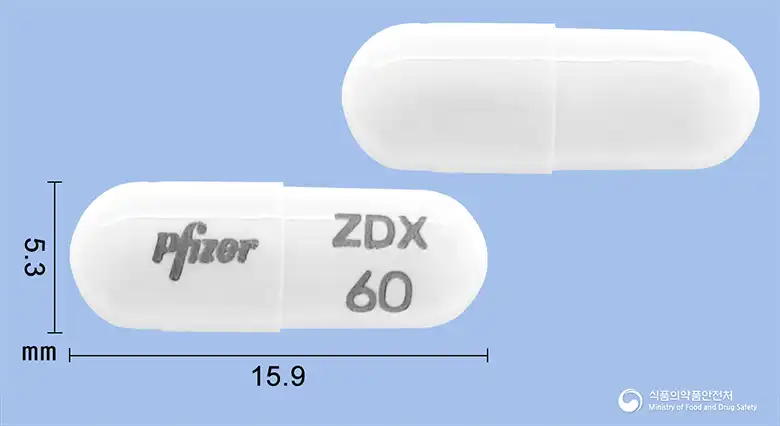
Ziprasidone Hydrochloride Monohydrate 67.95mg
Hard capsule · Prescription medication
Viatris Korea Co., Ltd.
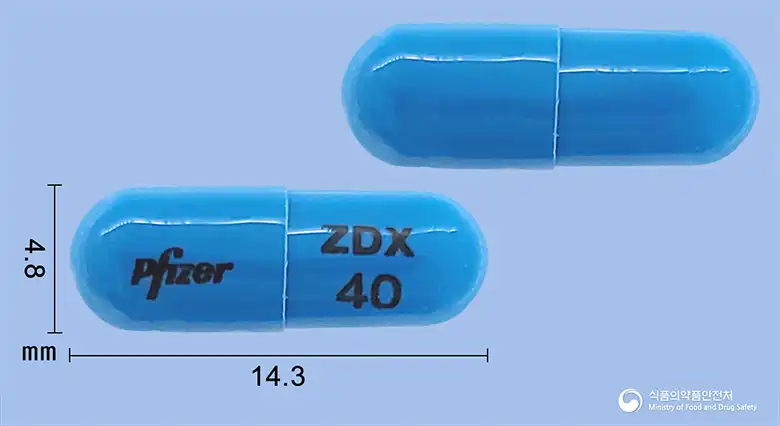
Ziprasidone Hydrochloride Monohydrate 45.3mg
Hard capsule · Prescription medication
Viatris Korea Co., Ltd.
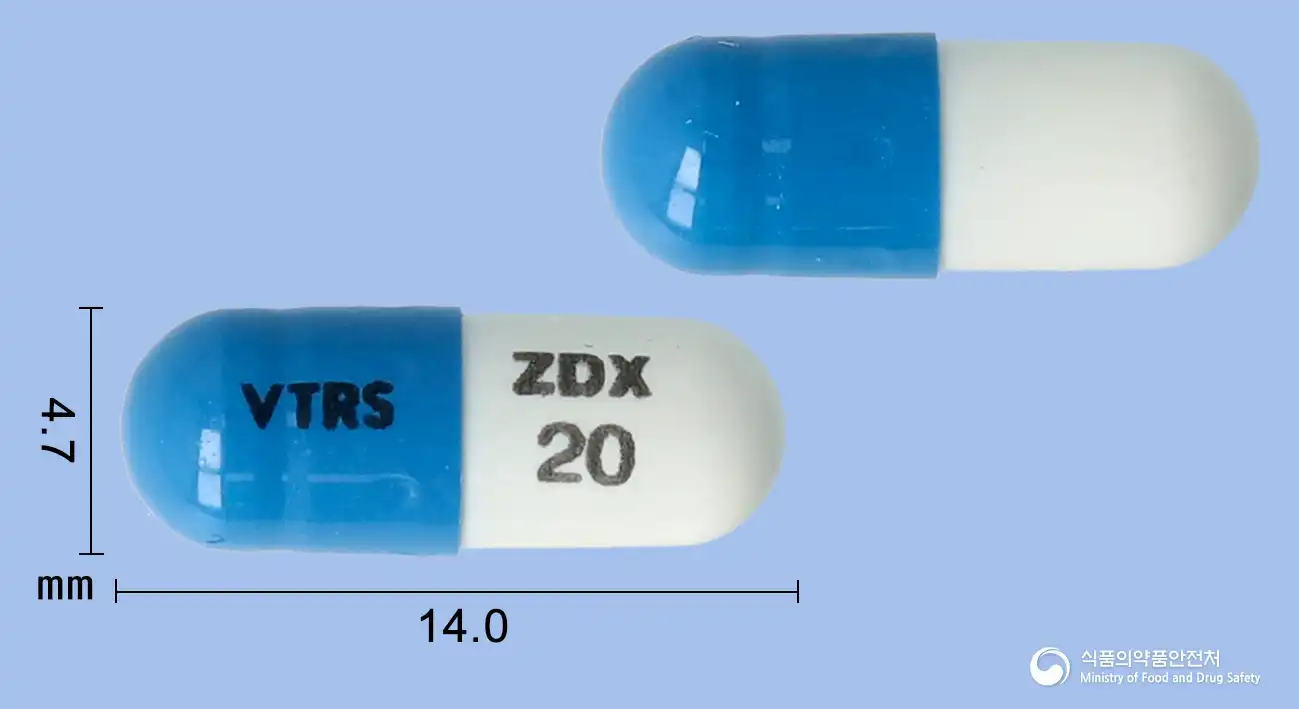
Ziprasidone Hydrochloride Monohydrate 22.65mg
Hard capsule · Prescription medication
Viatrex Korea Co., Ltd.
Even with the same ingredient, the dose and directions can differ by strength and dosage form. Talk to a doctor or pharmacist before switching from a medication you are already taking.
No questions yet.
For anything that needs medical judgment, consult a doctor or pharmacist.
This drug information is based on data provided by the Korea Ministry of Food and Drug Safety.
Consult a doctor or pharmacist for accurate dosage, administration, and usage instructions.