
 한국어
 English
 日本語
 中文(简体)
 Viewing now
Curasil Tablet 125 mg (Terbinafine Hydrochloride)
Terbinafine Hydrochloride 140.625mg
Tablet · Prescription medication
Yuhan Corporation
MFDS item code 200300413 · Approved 2003.09.09 · Insurance code 642102340
Treatment of onychomycosis, dermatomycosis (tinea pedis, tinea corporis, etc.), and tinea capitis
This medication is used for the treatment of dermatophytosis caused by dermatophytes such as tinea pedis, tinea corporis, and tinea cruris in adults, as well as for the treatment of tinea capitis in children.
Administer terbinafine 125 mg per dose twice daily or 250 mg per dose once daily. The duration of administration according to condition is as follows. 1) Dermatophytosis Tinea pedis (interdigital, plantar/moccasin type): 2~6 weeks Tinea corporis: 2∼4 weeks Tinea cruris: 2~4 weeks 2) Onychomycosis Usually administer for 6 weeks~3 months. The treatment period may be shortened to 3 months or less for infections of the fingernails or relatively small toes, or in younger patients. For treatment of toenail infections, 3 months is usually sufficient, but some patients may require 6 months or longer. The treatment period may be longer in patients with slow nail growth. For patients with creatinine clearance below 50 mL per minute, reduce the daily dose by 1/2.
Administer to children aged 2 years and older. Administration is not recommended for children under 2 years of age because there is no experience with use in this age group. Tinea capitis: 4 weeks Tinea capitis occurs mainly in children. To prevent recurrence of infection, treatment should be given regularly for an appropriate, prescribed duration. Body weight below 20 kg (under 5 years): Administer 62.5 mg per dose once daily. Because experience with use is limited, the decision to administer should be based on consideration of the benefits and risks of treatment. Body weight 20~40 kg (5~12 years): Administer 125 mg per dose once daily. Body weight above 40 kg (over 12 years): Administer 250 mg per dose once daily.
This medication should generally not be used in patients with chronic liver disease or active liver disease. Liver function tests must be performed before administration, and regular liver function tests should be conducted during treatment. If symptoms of liver dysfunction appear, stop taking this medication immediately and consult a physician. It is not recommended for patients with blood disorders, severe renal impairment, nursing women, or infants under 2 years of age. Use with caution in patients with decreased renal function, elderly patients, or underweight children. Discontinue use immediately if severe rash or allergic reactions occur. This medication may affect the liver and kidneys, so regular liver function and blood tests should be performed while on this medication. Dizziness or drowsiness may occur with this medication, so caution should be taken when driving or operating machinery. Interactions with other medications may occur, so be sure to inform your doctor or pharmacist about any other medications you are taking. Women who are pregnant or could become pregnant should consult a physician before taking this medication. Nursing women should discontinue breastfeeding while on this medication. Safety in children, particularly infants under 2 years of age, has not been established, and therefore it is not recommended. In the case of overdose, symptoms such as headache, nausea, abdominal pain, and dizziness may occur, and prompt medical attention should be sought. Store this medication out of the reach of children and keep it in a closed container away from direct sunlight at room temperature.
Liver and biliary tract failure, hepatitis, cholestasis, jaundice, rash, skin itching, fever, nausea, vomiting, loss of appetite, malaise, raised γ-GTP, elevated AST/ALT, increased LDH, elevated ALP, neutropenia, pancytopenia, agranulocytosis, thrombocytopenia, pharyngitis, fever, lymphadenopathy, purpura, subcutaneous hemorrhage, leukopenia, anemia, rash, itching, photosensitivity reaction, Stevens-Johnson syndrome, toxic epidermal necrolysis, acute generalized exanthematous pustulosis, erythema multiforme, toxic skin rash, exfoliative dermatitis, blistering dermatitis, psoriasis-like rash, exacerbation of psoriasis, hair loss, musculoskeletal reaction, arthralgia, myalgia, weakness, elevated CPK, increased blood myoglobin, elevated urinary myoglobin, hypotension, dyspnea, chest tightness, urticaria, erythema, facial swelling, lymphangiectasia, abdominal distension, decreased appetite, dyspepsia, mild abdominal pain, diarrhea, upper abdominal discomfort, thirst, vomiting, glossitis, depression, anxiety, headache, taste disorder, dizziness, drowsiness, paresthesia, sensory impairment, decreased attention span, insomnia, elevated BUN, frequent urination, visual impairment, tinnitus, anaphylactic reaction, angioedema, systemic lupus erythematosus, elevated total cholesterol, increased triglycerides, malaise, tongue discoloration, palpitations, edema, menstrual irregularities, paralysis, systemic disorders, fever, fatigue, weight loss, anaphylactic reaction, serum sickness-like reaction, blurred vision, decreased vision, hearing loss, auditory impairment, vasculitis, permanent anosmia, hyposmia, eosinophilia accompanied by systemic symptoms and drug-induced rash, pancreatitis, rhabdomyolysis, influenza-like illness, increased blood creatine phosphokinase, headache, nausea, upper abdominal pain, dizziness
Not everyone experiences these, and they can vary from person to person.
Store this medication in a sealed container to avoid exposure to air or moisture. It is important to maintain a storage temperature between 1°C and 30°C. Proper storage will help preserve the effectiveness of the medication.
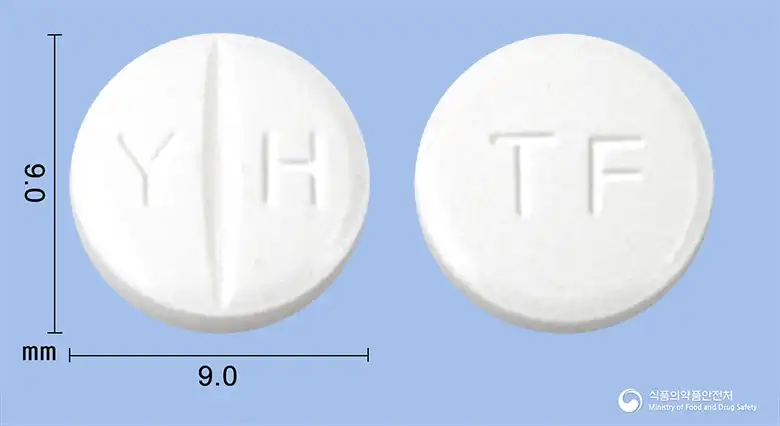
White to off-white round tablets
30 tablets/bottle
Even with the same ingredient, strength, dosage form and how it is taken can differ.
Viewing nowTerbinafine Hydrochloride 140.625mg
Tablet · Prescription medication
Yuhan Corporation
Terbinafine Hydrochloride 10mg
Cream · OTC medication
GP Therapeutics Korea Co., Ltd.
Terbinafine Hydrochloride 10mg
Cream · OTC medication
Korea Hutex Pharmaceutical Co., Ltd.
Terbinafine Hydrochloride 10mg
Cream · OTC medication
Anguk Pharmaceutical Co., Ltd.
Terbinafine Hydrochloride 10mg
Cream · OTC medication
Medica Korea Co., Ltd.
Terbinafine Hydrochloride 10mg
Cream · OTC medication
Gyeongnam Pharmaceutical Co., Ltd.
Terbinafine Hydrochloride 10mg
Cream · OTC medication
Daehwa Pharmaceutical Co., Ltd.
Terbinafine Hydrochloride 10mg
Cream · OTC medication
Korea Pharmaceutical Co., Ltd.
Even with the same ingredient, the dose and directions can differ by strength and dosage form. Talk to a doctor or pharmacist before switching from a medication you are already taking.
No questions yet.
For anything that needs medical judgment, consult a doctor or pharmacist.
This drug information is based on data provided by the Korea Ministry of Food and Drug Safety.
Consult a doctor or pharmacist for accurate dosage, administration, and usage instructions.