
 한국어
 English
 日本語
 中文(简体)
Summary
- Main use
- Treatment of angina pectoris and myocardial ischemia; perioperative blood pressure control; treatment of congestive heart failure
- Who uses it
- Adults
- Adult dosage
- (Oral: tablets) 1. For an acute angina attack, dissolve 0.3㎎ or 0.6㎎ of nitroglycerin under the tongue or in the mouth per dose. 2. The dose may be repeated every 5 minutes until symptoms are relieved. If pain persists after 3 doses (15 minutes), inform a physician. 3. For prevention, the dose may be taken 5-10 minutes before performing an activity that may trigger an acute angina attack. The dose may be adjusted according to the patient's age and symptoms. (Injection) ○ Myungmoon: Nitro Injection The appropriate dose of this medicine varies from person to person; adjust it according to the patient's condition while monitoring hemodynamic parameters. The usual recommended dose is 10-200㎍/min of nitroglycerin, and may be increased to 400㎍/min as needed. 1. Perioperative blood pressure control: For treatment of intraoperative hypertension or induced hypotension, administer an initial dose of 25㎍/min, then repeat 25㎍/min doses at 5-minute intervals until blood pressure stabilizes. For myocardial ischemia, administer an initial dose of 15-20㎍/min, then repeat doses of 10-15㎍/min until an effect is observed. 2. Congestive heart failure: Administer an initial dose of 20-25㎍/min, then repeat doses of 10㎍/min or 20-25㎍/min at intervals of 15-30 minutes, according to the patient's condition. 3. Angina: Administer an initial dose of 10㎍/min, then repeat doses of 10㎍/min at 30-minute intervals, according to the patient's condition. ※ Method of administration Administer this medicine diluted with normal saline injection or dextrose injection, etc., or undiluted (only applicable to Nitro Injection 10㎎/10㎖), by slow intravenous infusion using a syringe. When diluting, calculate the required amount of this medicine based on the actual volume to be infused. For example, to prepare a diluted solution of this medicine at a concentration of 100㎍/㎖, mix 10㎖ or 50㎖ of this injection (50㎎ of nitroglycerin) with 490㎖ or 450㎖ of diluent, respectively, to make a total volume of 500㎖. The dose may be adjusted according to the patient's age and symptoms. The exact dilution method, dose, and corresponding infusion rate are shown in the following table (Table 1). ○ Abbott: Abbott Nitroglycerin Injection; Yuyu: Nitro-Bid Injection 1. Do not inject the undiluted solution directly intravenously. This medicine is a potent concentrate and must be diluted with 5% dextrose injection or 0.9% normal saline injection before injection. Do not administer this medicine mixed with other medicines. 2. Dilution: Carefully determine the required amount of diluent and the time required for infusion to suit the patient (Table 2: Yuyu Nitro-Bid Injection; Table 3: Abbott Nitroglycerin Injection). 3. Dosage: The dose is affected by the type of infusion set used. In clinical studies using PVC infusion sets, the usual initial dose for adults is 25㎍/min or more. Reduce the dose when using a non-adsorptive infusion set. The appropriate dose of this medicine varies from person to person; adjust it according to the patient's condition while monitoring hemodynamic parameters (blood pressure, heart rate, pulmonary capillary wedge pressure, etc.). Begin infusion of this medicine at 5㎍/min using an infusion pump that delivers the medicine accurately and continuously. Use particular caution when increasing the dose, as this may result in an unstable response. Increase the initial dose by 5㎍/min every 3-5 minutes until a response occurs. If there is no response at 20㎍/min, an additional 10㎍/min may be given, followed by a further 20㎍/min. Once a partial blood pressure response occurs, reduce the increments and extend the intervals between additional infusions. Patients with normal or low left ventricular pressure or pulmonary capillary pressure (patients with uncomplicated angina) are sensitive to the effects of this medicine and may respond adequately even to a low dose of 5㎍/min. In these patients, administer cautiously according to their response. The dose may be adjusted according to the patient's age and symptoms. ○ Dong-A: Millisrol Injection This medicine is administered by intravenous infusion as a 0.005-0.05% solution (50-500㎍ per 1㎖) of nitroglycerin, either as the injection solution itself or diluted with normal saline injection, 5% dextrose injection, lactated Ringer's solution, etc. 1. Perioperative blood pressure control: To maintain hypotension during surgery, start at 1-5㎍/min per ㎏ of body weight; for emergency treatment of severe hypertension during surgery, start at 0.5-5㎍/min per ㎏ of body weight. Lower blood pressure to the target level, then adjust the infusion rate while monitoring blood pressure. 2. Congestive heart failure: Start at 0.05-0.1㎍/min per ㎏ of body weight. Increase by 0.1-0.2㎍/min per ㎏ of body weight every 5-15 minutes while monitoring circulatory parameters, such as blood pressure and left ventricular filling pressure, until the desired hemodynamic status is achieved, then maintain the optimal infusion rate. 3. Angina: Start at a dose of 0.1-0.2㎍/min per ㎏ of body weight. Increase by 0.1-0.2㎍/min per ㎏ of body weight approximately every 5 minutes while monitoring the course of the attack and blood pressure, and maintain at 1-2㎍/min per ㎏ of body weight. If no effect is observed, use an intravenous injection of 20-40㎍/min per ㎏ of body weight every hour concomitantly. When administering by intravenous injection, give it slowly over 1-3 minutes. The dose may be adjusted according to the patient's age and symptoms. (Transdermal patch) 1. Adults: Apply 1 patch per dose (containing 5-10㎎ of nitroglycerin/24 hours). 2. Apply directly to a hairless area of skin, such as the chest, upper abdomen, back, upper arm, or thigh. Shave hairy areas before application. 3. Do not apply to peripheral areas of the body or to areas that move excessively, such as the limbs. 4. Change the application site each time to reduce skin irritation. 5. If the patch is loosely attached or comes off, replace it with a new one. 6. Determine the optimal dose based on clinical effects, adverse effects, blood pressure, and heart rate. 7. It is preferable to start with the small patch that releases 5㎎/24 hours; if a higher dose is needed, use the large patch that releases 10㎎/24 hours.
Ingredients
- Manufacturer
- Hana Pharmaceutical Co., Ltd.
Efficacy & effects
Treatment of angina pectoris and myocardial ischemia; perioperative blood pressure control; treatment of congestive heart failure
- Angina pectoris
- hypertension
- hypotension
- myocardial ischemia
- congestive heart failure
- acute exacerbations of chronic heart failure
- unstable angina.
View approved original textHide original text
This medication is used in various forms, with oral tablets and transdermal absorptions for the treatment of angina pectoris. The injectable form is effective for blood pressure control before and after surgery and for treating myocardial ischemia during or after cardiovascular surgeries. It can also be used during acute exacerbations of congestive heart failure associated with acute myocardial infarction. It is also used as an injection for unstable angina or angina not controlled by existing treatment. This medication helps improve various heart-related conditions.
Dosage and Administration
Adult dosage
(Oral: tablets) 1. For an acute angina attack, dissolve 0.3㎎ or 0.6㎎ of nitroglycerin under the tongue or in the mouth per dose. 2. The dose may be repeated every 5 minutes until symptoms are relieved. If pain persists after 3 doses (15 minutes), inform a physician. 3. For prevention, the dose may be taken 5-10 minutes before performing an activity that may trigger an acute angina attack. The dose may be adjusted according to the patient's age and symptoms. (Injection) ○ Myungmoon: Nitro Injection The appropriate dose of this medicine varies from person to person; adjust it according to the patient's condition while monitoring hemodynamic parameters. The usual recommended dose is 10-200㎍/min of nitroglycerin, and may be increased to 400㎍/min as needed. 1. Perioperative blood pressure control: For treatment of intraoperative hypertension or induced hypotension, administer an initial dose of 25㎍/min, then repeat 25㎍/min doses at 5-minute intervals until blood pressure stabilizes. For myocardial ischemia, administer an initial dose of 15-20㎍/min, then repeat doses of 10-15㎍/min until an effect is observed. 2. Congestive heart failure: Administer an initial dose of 20-25㎍/min, then repeat doses of 10㎍/min or 20-25㎍/min at intervals of 15-30 minutes, according to the patient's condition. 3. Angina: Administer an initial dose of 10㎍/min, then repeat doses of 10㎍/min at 30-minute intervals, according to the patient's condition. ※ Method of administration Administer this medicine diluted with normal saline injection or dextrose injection, etc., or undiluted (only applicable to Nitro Injection 10㎎/10㎖), by slow intravenous infusion using a syringe. When diluting, calculate the required amount of this medicine based on the actual volume to be infused. For example, to prepare a diluted solution of this medicine at a concentration of 100㎍/㎖, mix 10㎖ or 50㎖ of this injection (50㎎ of nitroglycerin) with 490㎖ or 450㎖ of diluent, respectively, to make a total volume of 500㎖. The dose may be adjusted according to the patient's age and symptoms. The exact dilution method, dose, and corresponding infusion rate are shown in the following table (Table 1). ○ Abbott: Abbott Nitroglycerin Injection; Yuyu: Nitro-Bid Injection 1. Do not inject the undiluted solution directly intravenously. This medicine is a potent concentrate and must be diluted with 5% dextrose injection or 0.9% normal saline injection before injection. Do not administer this medicine mixed with other medicines. 2. Dilution: Carefully determine the required amount of diluent and the time required for infusion to suit the patient (Table 2: Yuyu Nitro-Bid Injection; Table 3: Abbott Nitroglycerin Injection). 3. Dosage: The dose is affected by the type of infusion set used. In clinical studies using PVC infusion sets, the usual initial dose for adults is 25㎍/min or more. Reduce the dose when using a non-adsorptive infusion set. The appropriate dose of this medicine varies from person to person; adjust it according to the patient's condition while monitoring hemodynamic parameters (blood pressure, heart rate, pulmonary capillary wedge pressure, etc.). Begin infusion of this medicine at 5㎍/min using an infusion pump that delivers the medicine accurately and continuously. Use particular caution when increasing the dose, as this may result in an unstable response. Increase the initial dose by 5㎍/min every 3-5 minutes until a response occurs. If there is no response at 20㎍/min, an additional 10㎍/min may be given, followed by a further 20㎍/min. Once a partial blood pressure response occurs, reduce the increments and extend the intervals between additional infusions. Patients with normal or low left ventricular pressure or pulmonary capillary pressure (patients with uncomplicated angina) are sensitive to the effects of this medicine and may respond adequately even to a low dose of 5㎍/min. In these patients, administer cautiously according to their response. The dose may be adjusted according to the patient's age and symptoms. ○ Dong-A: Millisrol Injection This medicine is administered by intravenous infusion as a 0.005-0.05% solution (50-500㎍ per 1㎖) of nitroglycerin, either as the injection solution itself or diluted with normal saline injection, 5% dextrose injection, lactated Ringer's solution, etc. 1. Perioperative blood pressure control: To maintain hypotension during surgery, start at 1-5㎍/min per ㎏ of body weight; for emergency treatment of severe hypertension during surgery, start at 0.5-5㎍/min per ㎏ of body weight. Lower blood pressure to the target level, then adjust the infusion rate while monitoring blood pressure. 2. Congestive heart failure: Start at 0.05-0.1㎍/min per ㎏ of body weight. Increase by 0.1-0.2㎍/min per ㎏ of body weight every 5-15 minutes while monitoring circulatory parameters, such as blood pressure and left ventricular filling pressure, until the desired hemodynamic status is achieved, then maintain the optimal infusion rate. 3. Angina: Start at a dose of 0.1-0.2㎍/min per ㎏ of body weight. Increase by 0.1-0.2㎍/min per ㎏ of body weight approximately every 5 minutes while monitoring the course of the attack and blood pressure, and maintain at 1-2㎍/min per ㎏ of body weight. If no effect is observed, use an intravenous injection of 20-40㎍/min per ㎏ of body weight every hour concomitantly. When administering by intravenous injection, give it slowly over 1-3 minutes. The dose may be adjusted according to the patient's age and symptoms. (Transdermal patch) 1. Adults: Apply 1 patch per dose (containing 5-10㎎ of nitroglycerin/24 hours). 2. Apply directly to a hairless area of skin, such as the chest, upper abdomen, back, upper arm, or thigh. Shave hairy areas before application. 3. Do not apply to peripheral areas of the body or to areas that move excessively, such as the limbs. 4. Change the application site each time to reduce skin irritation. 5. If the patch is loosely attached or comes off, replace it with a new one. 6. Determine the optimal dose based on clinical effects, adverse effects, blood pressure, and heart rate. 7. It is preferable to start with the small patch that releases 5㎎/24 hours; if a higher dose is needed, use the large patch that releases 10㎎/24 hours.
Precautions
This drug should not be used in certain patients. For instance, in individuals with an allergy to nitrate preparations or those with head trauma or cerebral hemorrhage, its use may raise intracranial pressure. Patients with severe anemia or acute myocardial infarction, glaucoma, or acute circulatory disorders should also avoid this drug. This medication can interact with certain components, so patients taking PDE-5 inhibitors or sGC stimulators should not use it. Since it contains lactose, patients with lactose intolerance or related genetic conditions should avoid taking it. Caution should be exercised when this drug is prescribed to patients with hypotension. This medication may lower blood pressure, and symptoms such as facial flushing, palpitations, and dizziness may occur. Gastrointestinal symptoms such as headaches or nausea and vomiting may also arise, with rare events of sweating, urinary incontinence, or bowel movement disturbances. When taking it, dizziness may occur due to orthostatic hypotension, so care should be taken when standing up or moving suddenly. Headaches may occur when first taking the medication, but they usually improve within a few days. Placing it under the tongue for rapid absorption is recommended, and should dizziness or dry mouth symptoms worsen during use, the medication should be discontinued. Additionally, care should be taken not to stop the medication abruptly, with sitting during intake being safer. In patients with heart disorders or fluid depletion, blood pressure may drop sharply, so extra caution is advised. Caution should also be taken when taken with other antihypertensive medications or alcohol, as the blood pressure-lowering effect may be enhanced. Especially when taken with PDE-5 inhibitors or sGC stimulators, this may be dangerous, so a doctor should be consulted. Pregnant women or those who may become pregnant should only use this drug when absolutely necessary under a doctor's judgment, as its safety has not been established. For breastfeeding mothers, since it is uncertain whether this drug passes into breast milk, it should be avoided if possible, or breastfeeding should be discontinued. Safety in pediatric patients has not been established, and caution is needed in elderly patients due to possible elevated drug concentrations from decreased liver function. In case of overdose, severe headaches, vomiting, hypotension, cyanosis, etc. may occur, and in severe cases, bradycardia, respiratory depression, or mental disturbances may occur, requiring immediate emergency treatment. This medication may affect certain blood test results, so it is necessary to inform about its use before any examinations. Finally, this medication's effectiveness may decrease over time, so it should be used appropriately as directed by a physician and stored in a safe place out of children's reach.
Side effects
- anemia
- hypotension
- warmth
- flushing
- palpitations
- orthostatic hypotension
- dizziness
- headache
- weakness
- syncope
Show 14 moreCollapse
- nausea
- vomiting
- sweating
- urinary incontinence
- fecal incontinence
- dry mouth
- pallor
- asthenia
- cyanosis
- methemoglobinemia
- anxiety
- bradycardia
- respiratory depression
- psychosis
Not everyone experiences these, and they can vary from person to person.
Storage
This medication is sensitive to light, so it should be stored in a container that does not allow light to enter. Additionally, it is important to store it at a cool temperature below 20 degrees to keep the medication fresh.
Appearance and packaging
Appearance
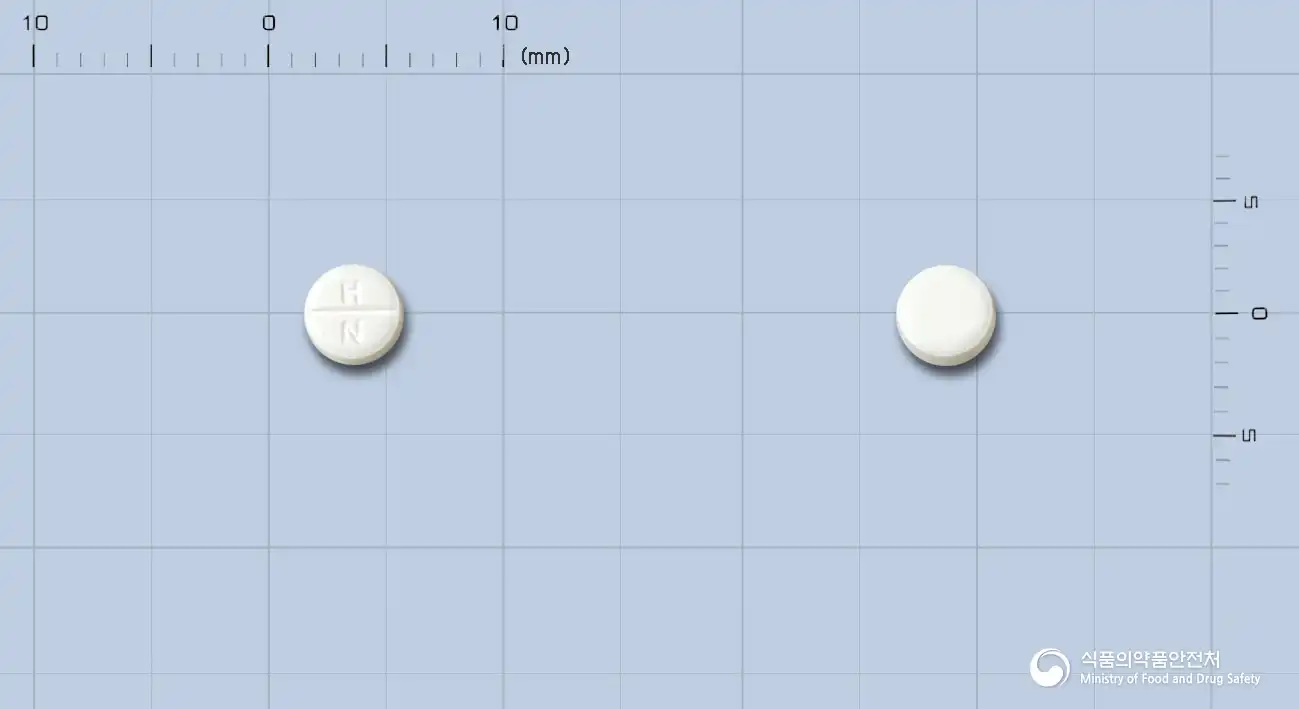
White round tablet
Package unit
100 tablets/bottle
Questions about this medicine
No questions yet.
For anything that needs medical judgment, consult a doctor or pharmacist.