
 한국어
 English
 日本語
 中文(简体)
 Viewing now
Biramid Capsule 100 mg (Ribavirin)
Ribavirin 100mg
Hard capsule · Prescription medication
Ilsung IS Co., Ltd.
MFDS item code 198200958 · Notified 1982.09.09 · Insurance code 655400430
Adjunctive treatment of chronic hepatitis C; treatment of RSV lower respiratory tract infection in infants and children
This medication is used in combination with interferon alpha-2b or peginterferon alpha-2a, -2b injections in the treatment of chronic Hepatitis C. In addition, inhalants are used to treat lower respiratory infections caused by respiratory syncytial virus (RSV) in infants and children. These medications are effective in treating chronic Hepatitis C and RSV infections.
(Capsules, syrup) 1. Adults: Administer orally twice daily, adjusting the dose according to body weight. 1) Less than 65 kg: 800 mg per day (400 mg in the morning, 400 mg in the evening) 2) 65∼85 kg: 1000 mg per day (400 mg in the morning, 600 mg in the evening) 3) More than 85 kg: 1200 mg per day (600 mg in the morning, 600 mg in the evening) 2. Reduce the dose to 600 mg per day in patients with a hemoglobin level below 10 g/dL, and discontinue treatment in patients with a level below 8.5 g/dL. 3. In patients with a history of stable cardiovascular disease, if the hemoglobin level decreases by 2 g/dL or more within 4 weeks at any time during treatment, reduce the dose to 600 mg per day; discontinue treatment if the level remains below 12 g/dL after 4 weeks of taking the reduced dose. 4. Do not administer to patients with a creatinine clearance below 50 mL per minute. (Inhalation formulation) Administer using an aerosol generator continuously for 12~18 hours per day for 3~7 days. The appropriate solution concentration is 20 mg/mL; when administered for an average of 12 hours, the ribavirin concentration in the air reaches approximately 190 ㎍/Lr (0.19 mg/mL). Treatment should be started as soon as possible, within 3 days of lower respiratory tract infection caused by RSV. Prompt administration is necessary to effectively treat severe lower respiratory tract infection.
Infants who are not receiving mechanical ventilation should receive the medication through an oxygen hood. If an oxygen hood is unavailable, it may be administered through a mask or oxygen tent. However, if the volume or concentration range of the oxygen tent is large, the drug delivery kinetics may change.
This medication should never be administered to pregnant women or women who could become pregnant, as well as their partners. It may cause serious malformations or fetal toxicity. It should also not be used in patients with unstable heart disease, as it can induce hemolytic anemia, which may worsen existing heart disease or lead to serious issues such as myocardial infarction. Patients with hypersensitivity, autoimmune hepatitis, severe liver or kidney dysfunction, hemoglobinopathy, and children or adolescents with severe mental disorders should also not be treated with this medication. Patients with a history of anemia or mental disorders, those with a history of gout, and elderly patients should use this medication cautiously, including blood tests and monitoring of mental status during treatment. While taking this medication, symptoms such as headaches, fatigue, depression, insomnia, shortness of breath, and visual disturbances may occur, so if any of these symptoms arise, consultation with a physician is required. Women who may become pregnant must ensure effective contraception during and for a period after treatment, and male patients must also ensure thorough contraception with their partners during and for a period after treatment. Women who are breastfeeding must discontinue breastfeeding while taking this medication, as it can be transmitted in breast milk and harm the infant. This medication may interact with certain drugs, so if you are taking other medications, it is important to inform your doctor or pharmacist. There is no specific antidote for overdose, and treatment should be based on symptoms, therefore care must be taken to avoid overdose. Lastly, the safety and efficacy of this medication in children under 18 years of age have not been sufficiently established, so it should be used cautiously in pediatric patients.
Not everyone experiences these, and they can vary from person to person.
This medication may be sensitive to air and moisture, so it should be stored in a tightly sealed container at room temperature. Proper storage will help maintain the effectiveness of the medication for a longer period.
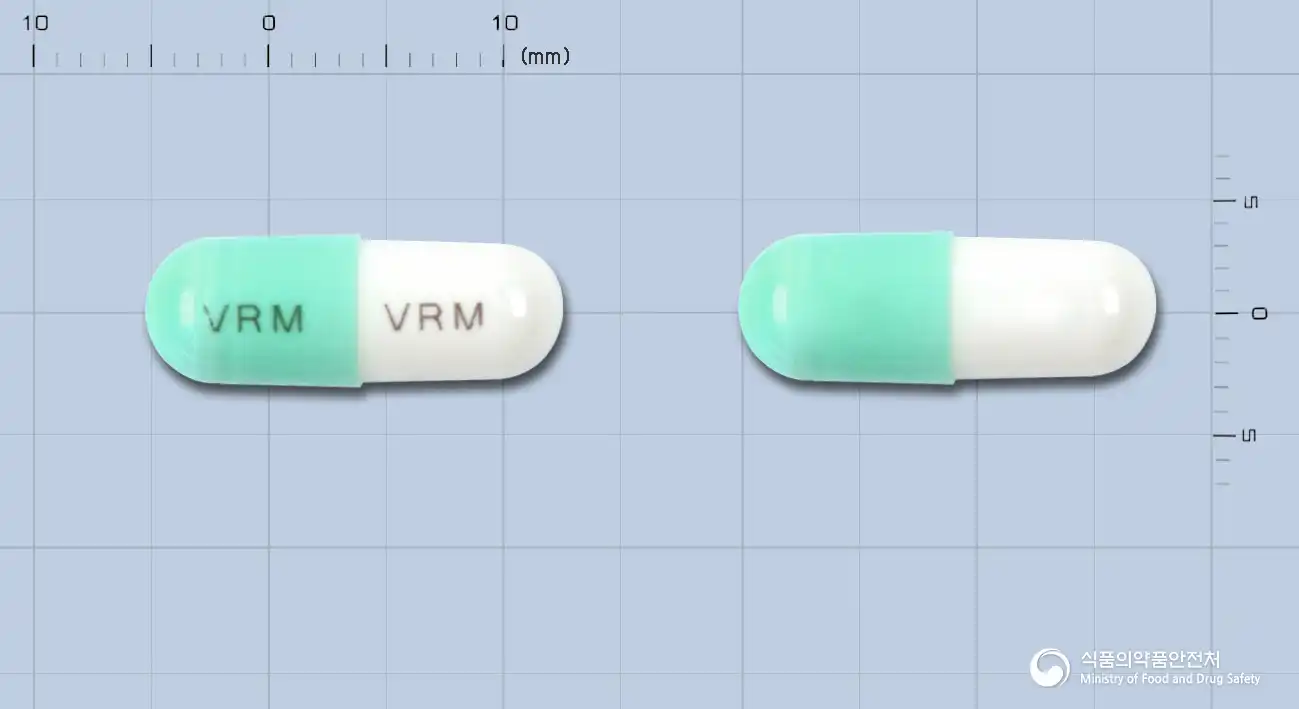
Soft gelatin capsules with an upper light blue and lower white color containing white powder
30 capsules/bottle, 100 capsules/bottle
Even with the same ingredient, strength, dosage form and how it is taken can differ.
Viewing nowRibavirin 100mg
Hard capsule · Prescription medication
Ilsung IS Co., Ltd.
Ribavirin
Prescription medication
Donggu Bio Pharmaceutical Co., Ltd.
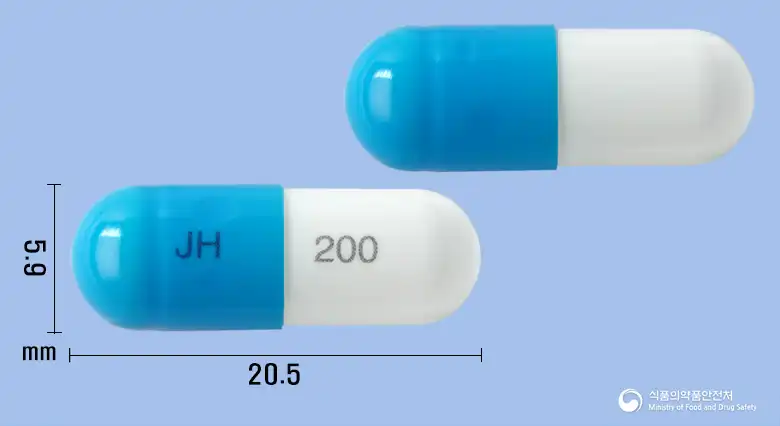
Ribavirin 200mg
Hard capsule · Prescription medication
Jungheon Pharmaceutical Co., Ltd.
Even with the same ingredient, the dose and directions can differ by strength and dosage form. Talk to a doctor or pharmacist before switching from a medication you are already taking.
No questions yet.
For anything that needs medical judgment, consult a doctor or pharmacist.
This drug information is based on data provided by the Korea Ministry of Food and Drug Safety.
Consult a doctor or pharmacist for accurate dosage, administration, and usage instructions.