
 한국어
 English
 日本語
 中文(简体)
 Viewing now
Cephalexin Capsule 250mg (Cephalexin Hydrate)
Cefaclor Hydrate 250mg
Hard capsule · Prescription medication
Intro Bio Pharma Co., Ltd.
MFDS item code 201603867 · Approved 2016.06.24 · Insurance code 052400290
Treatment of respiratory and otorhinolaryngological infections, urinary tract infections, and skin and soft tissue infections
This medication is used to treat various bacterial infections. It is effective for respiratory infections such as otitis media, pneumonia, pharyngitis, tonsillitis, and bronchitis. It is also used for urinary tract infections such as pyelonephritis, cystitis, and gonococcal urethritis. It helps in treating skin and soft tissue infections including boils, abscesses, folliculitis, soft tissue infections, infected ulcers, subcutaneous abscesses, eczema, and wound infections. This drug is effective against various bacteria such as Streptococcus pneumoniae, Haemophilus influenzae, and Staphylococcus, making it useful for several infectious diseases.
Adults: Administer cefaclor hydrate 250mg (potency) orally every 8 hours. For severe infections (e.g., pneumonia) and infections caused by less susceptible organisms, the dose may be doubled. For acute gonococcal urethritis, administer a single dose of this medication 3g with probenecid 1g. Patients with impaired renal function: This medication may be administered without dose adjustment. Treatment of beta-hemolytic streptococcal infections should continue for at least 10 days.
Children: Administer 20mg (potency) per Kg of body weight per day in divided doses every 8 hours. For severe infections, otitis media, and infections caused by less susceptible organisms, 40mg (potency) per Kg of body weight per day may be administered. The maximum dose is 1g (potency) per day.
This medication works by binding to certain proteins to disrupt bacterial cell wall synthesis, killing the bacteria. This drug should not be used in patients who have previously experienced severe allergic reactions or shock as a result of this drug. Patients with allergic reactions to this drug or cephalosporin antibiotics should also not be administered this drug. This drug contains lactose, so it should not be given to patients with a genetic disorder that prevents them from digesting lactose. Careful use is required in patients who are allergic to penicillins or have tendencies for allergic symptoms such as asthma, rash, or urticaria. Patients with severe renal impairment, those unable to take oral medications, elderly patients, or those with poor overall health should be administered this drug with caution. Patients with a history of gastrointestinal disease, particularly colitis, should also use it carefully. This drug can rarely cause serious reactions such as shock or anaphylaxis, so symptoms should be monitored closely during administration. Serious skin reactions can occur, so if symptoms such as rash, blisters, or peeling skin appear, administration should be stopped immediately. Blood tests may show abnormalities such as leukopenia, anemia, and thrombocytopenia, so regular testing is necessary. Liver dysfunction or renal impairment may occur, so it is important to monitor liver and kidney conditions regularly. Gastrointestinal side effects such as diarrhea, nausea, vomiting, and abdominal pain may rarely occur, and if severe diarrhea or bloody stools appear, immediate consultation with healthcare personnel is necessary. Respiratory symptoms such as interstitial pneumonia or eosinophilic pulmonary infiltration may occur, so if there is difficulty breathing, administration should be stopped immediately. Central nervous system side effects such as anxiety, restlessness, insomnia, dizziness, and hallucinations may rarely occur. This drug can cause candida overgrowth in the oral cavity. Symptoms of vitamin K deficiency may appear, so caution is necessary if there are tendencies for bleeding or symptoms of vitamin deficiency. When using this medication, it is important to perform susceptibility testing to prevent the development of resistant bacteria and to administer it for the minimum required duration. Interactions with other medications may occur, so careful monitoring and adjustments are needed, especially when used with drugs that affect the kidneys or anticoagulants. Pregnant or nursing women should only use this drug when its safety is not fully established and is necessary, and nursing mothers should use it cautiously as the drug may be present in breast milk in small amounts. It is not recommended to use this drug in infants under 1 month of age as its safety and efficacy have not been confirmed. Elderly patients may experience side effects more readily due to declining physical functions, so careful observation of dosage and administration intervals is required. Administration of this drug may affect the results of some tests, so caution is needed when interpreting test results.
Not everyone experiences these, and they can vary from person to person.
This drug should be stored in a tightly closed container that blocks light, at room temperature between 1 to 30 degrees Celsius. Proper storage will help maintain the drug's effectiveness and prevent degradation.
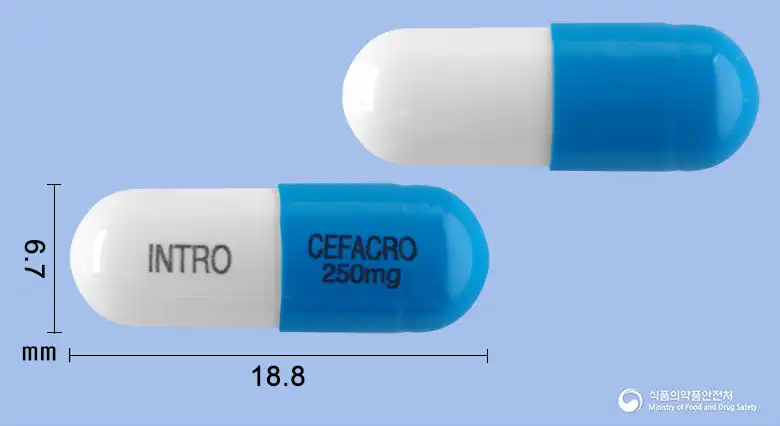
A blue opaque hard capsule with a light yellow powder inside, and a white opaque lower part.
30 capsules/bottle, 300 capsules/bottle
Even with the same ingredient, strength, dosage form and how it is taken can differ.
Viewing nowCefaclor Hydrate 250mg
Hard capsule · Prescription medication
Intro Bio Pharma Co., Ltd.

Cefaclor Hydrate 250mg
Hard capsule · Prescription medication
Ildong Pharmaceutical Co., Ltd.

Cefaclor Hydrate 250mg
Hard capsule · Prescription medication
Kolon Pharmaceutical Co., Ltd.
Cefaclor Hydrate 3.75g
Syrup · Prescription medication
Youngjin Pharmaceutical Co., Ltd.

Cefaclor Hydrate 250mg
Hard capsule · Prescription medication
Shinil Pharmaceutical Co., Ltd.
Cefaclor Hydrate 250mg
Hard capsule · Prescription medication
Hanmi Pharmaceutical Co., Ltd.
Cefaclor Hydrate 2.5g
Syrup · Prescription medication
Hanmi Pharmaceutical Co., Ltd.
Cefaclor Hydrate 3.75g
Syrup · Prescription medication
Shinpoong Pharmaceutical Co., Ltd.
Even with the same ingredient, the dose and directions can differ by strength and dosage form. Talk to a doctor or pharmacist before switching from a medication you are already taking.
No questions yet.
For anything that needs medical judgment, consult a doctor or pharmacist.
This drug information is based on data provided by the Korea Ministry of Food and Drug Safety.
Consult a doctor or pharmacist for accurate dosage, administration, and usage instructions.