
 한국어
 English
 日本語
 中文(简体)
 Viewing now
Avelox Tablet 400 mg (Moxifloxacin Hydrochloride)
Moxifloxacin Hydrochloride 436.8mg
Tablet · Prescription medication
Bayer Korea Co., Ltd.
MFDS item code 199906848 · Approved 1999.11.18 · Insurance code 641100230
Treatment of respiratory tract infections, skin and soft tissue infections, and complicated intra-abdominal and uncomplicated pelvic infections
This medication is effective against a variety of bacteria. It is particularly used for respiratory infections such as acute sinusitis, acute exacerbation of chronic bronchitis, and community-acquired pneumonia. It is also effective for skin and soft tissue infections, intra-abdominal infections, and simple pelvic infections. However, as a fluoroquinolone, it carries a risk of serious adverse reactions, so it should only be used when there are no other treatment options for acute bacterial sinusitis and acute exacerbation of chronic bronchitis. This drug has a broad antibacterial action against various gram-positive and gram-negative bacteria, atypical bacteria, and anaerobes, helping to improve infection symptoms.
Adults: Administer moxifloxacin 400 mg once daily as a whole tablet with plenty of water, with or without food. Patients with renal impairment: No dosage adjustment is required. Duration of treatment The duration of treatment should be determined according to the severity of the infection or the clinical response. The recommended durations are as follows. Acute sinusitis: 7 days Acute exacerbation of chronic bronchitis: 5 days Community-acquired pneumonia: 10 days Uncomplicated skin and soft tissue infections: 7 days Total duration of sequential therapy (intravenous/oral) for complicated skin and soft tissue infections: 7 ∼ 21 days Total duration of sequential therapy (intravenous/oral) for complicated intra-abdominal infections: 5 ∼ 14 days Uncomplicated pelvic infections: 14 days If a dose is missed, it should be taken as soon as possible if more than 8 hours remain until the next scheduled dose. If less than 8 hours remain until the next dose, skip the missed dose and continue with the next scheduled dose as prescribed. Do not take a double dose to make up for a missed dose.
This medication is used as a fluoroquinolone antibiotic for bacterial infections. Care is needed when using this drug, as serious side effects may occur such as tendonitis or tendon rupture, peripheral neuropathy, central nervous system effects, and exacerbation of myasthenia gravis. If any of these serious adverse reactions occur, stop taking the medication immediately and consult a physician. Patients with a history of severe myasthenia gravis should not use this medication, and it should only be used for limited indications such as acute bacterial sinusitis, acute exacerbation of chronic bronchitis, and uncomplicated urinary tract infections when there are no alternative treatments available. Additionally, this drug can increase the risk of tendonitis or tendon rupture, so care should be taken especially in the elderly, patients using corticosteroids, and patients with kidney, heart, or lung transplants. If pain or inflammation occurs in the tendon, use should be stopped immediately, and rest should be taken. This medication can affect the central nervous system and may cause seizures or psychiatric adverse reactions, so use with caution in patients with a history of seizures or mental illness. In cases of liver function abnormalities, serious liver diseases such as fulminant hepatitis may occur, so if symptoms of liver damage appear, stop taking the medication immediately and consult a healthcare professional. This drug should not be administered to patients with specific heart conditions, electrolyte imbalances, and those at risk of QT interval prolongation, and caution is needed when used with various heart-related medications. It is not administered to pregnant or breastfeeding women, children under 18, and adolescents in growth, as safety has not been established. It is advisable to avoid exposure to ultraviolet light during treatment, and if severe diarrhea symptoms develop, the physician should be notified immediately. It may affect blood sugar control, so diabetic patients should monitor their blood sugar closely, and if hypoglycemic symptoms occur, treatment should be sought immediately. In cases of overdose, heart function should be monitored, and necessary treatment should be received, and it should be kept out of reach of children. This drug can interact with several medications, so if other medications are being taken, it is essential to inform the healthcare provider. If unusual symptoms or side effects occur while taking this medication, consult a physician or pharmacist immediately for appropriate action.
Tendinitis, tendon rupture, peripheral neuropathy, central nervous system effects, exacerbation of myasthenia gravis, fungal superinfection, anemia, leukopenia, neutropenia, thrombocytopenia, thrombocytosis, prolonged prothrombin time, increased INR, abnormal thromboplastin levels, increased prothrombin levels, decreased INR, abnormal prothrombin levels, pancytopenia, allergic reactions, pruritus, rash, urticaria, eosinophilia, anaphylaxis, anaphylactoid reactions, allergic edema, angioedema, anaphylactic shock, hyperlipidemia, hyperglycemia, hyperuricemia, hypoglycemia, anxiety reactions, psychomotor agitation, restlessness, emotional lability, depression, hallucinations, depersonalization, psychotic reactions, headache, dizziness, sensory disturbances, taste disorders, confusion, disorientation, sleep disorders, tremor, dizziness, drowsiness, sensory loss, olfactory disorders, bizarre dreams, gait disturbances due to dizziness or vertigo, seizures, attention deficits, speech impairments, amnesia, polyneuropathy, hypersensitivity, visual impairments, transient vision loss, tinnitus, hearing loss, auditory disturbances, QT prolongation in patients with hypokalemia, QT prolongation, palpitations, tachycardia, vasodilation, ventricular tachyarrhythmias, syncope, hypertension, hypotension, unspecified arrhythmias, torsades de pointes, cardiac arrest, dyspnea, nausea, vomiting, gastrointestinal and abdominal pain, diarrhea, reduced appetite and food intake, constipation, dyspepsia, bloating, gastritis, increased amylase, dysphagia, stomatitis, antibiotic-associated colitis, increased amino transferases, liver dysfunction, elevated bilirubin, increased gamma-glutamyl transferase, increased serum alkaline phosphatase, jaundice, hepatitis, fulminant hepatitis, Stevens-Johnson syndrome, toxic epidermal necrolysis, arthralgia, myalgia, increased muscle tension and cramps, muscle weakness, arthritis, gait disturbances, dehydration, kidney dysfunction, renal failure, injection or infusion site reactions, discomfort, unexplained pain, sweating, infusion site phlebitis, edema, syndrome of inappropriate antidiuretic hormone secretion
Not everyone experiences these, and they can vary from person to person.
This medication should be kept in a tightly closed container to protect it from air and moisture. It is best to maintain the storage temperature between 1 and 25 degrees Celsius to preserve the effectiveness of the drug.
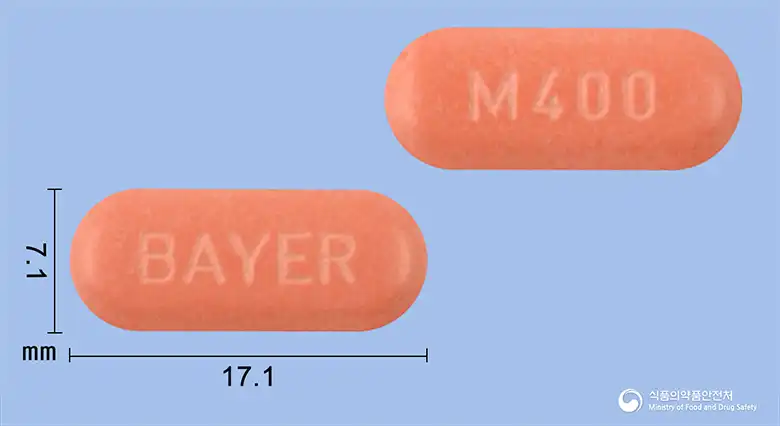
Deep pink, oblong film-coated tablet
30 tablets/box [10 tablets/PTP packaging x3], 10 tablets/box [PTP packaging]
Even with the same ingredient, strength, dosage form and how it is taken can differ.
Viewing nowMoxifloxacin Hydrochloride 436.8mg
Tablet · Prescription medication
Bayer Korea Co., Ltd.
Moxifloxacin Hydrochloride 1.744mg
Injections · Prescription medication
Bayer Korea Co., Ltd.
Moxifloxacin Hydrochloride 5.45mg
Eye drops · Prescription medication
Novartis Korea Co., Ltd.
Moxifloxacin Hydrochloride 5.45mg
Eye drops · Prescription medication
Samchundang Pharmaceutical Co., Ltd.
Moxifloxacin Hydrochloride 5.45mg
Eye drops · Prescription medication
Samil Pharmaceutical Co., Ltd.
Moxifloxacin Hydrochloride 5.45mg
Eye drops · Prescription medication
Optus Pharmaceutical Co., Ltd.
Moxifloxacin Hydrochloride 5.45mg
Eye drops · Prescription medication
Hankook Hyutecs Pharmaceutical Co., Ltd.
Moxifloxacin Hydrochloride 5.45mg
Eye drops · Prescription medication
Daehwa Pharmaceutical Co., Ltd.
Even with the same ingredient, the dose and directions can differ by strength and dosage form. Talk to a doctor or pharmacist before switching from a medication you are already taking.
No questions yet.
For anything that needs medical judgment, consult a doctor or pharmacist.
This drug information is based on data provided by the Korea Ministry of Food and Drug Safety.
Consult a doctor or pharmacist for accurate dosage, administration, and usage instructions.