
 한국어
한국어 English
 日本語
日本語 中文(简体)
 Viewing now
Avelox Tablet 400 mg (Moxifloxacin Hydrochloride)
Moxifloxacin Hydrochloride 436.8mg
Tablet · Prescription medication
Bayer Korea Co., Ltd.
MFDS item code 199906848 · Approved 1999.11.18 · Insurance code 641100230
Treatment effect for respiratory infections (acute sinusitis, exacerbation of chronic bronchitis) and skin infections
This medication is effective against a variety of bacteria. It is particularly used for respiratory infections such as acute sinusitis, acute exacerbation of chronic bronchitis, and community-acquired pneumonia. It is also effective for skin and soft tissue infections, intra-abdominal infections, and simple pelvic infections. However, as a fluoroquinolone, it carries a risk of serious adverse reactions, so it should only be used when there are no other treatment options for acute bacterial sinusitis and acute exacerbation of chronic bronchitis. This drug has a broad antibacterial action against various gram-positive and gram-negative bacteria, atypical bacteria, and anaerobes, helping to improve infection symptoms.
As moxifloxacin, administer 400 mg once daily, taken whole with sufficient water, regardless of meals. No dose adjustment is necessary for patients with renal impairment. The duration of treatment should be determined based on the severity of the infection or clinical response, with recommended durations as follows: 7 days for acute sinusitis, 5 days for acute exacerbation of chronic bronchitis, 10 days for community-acquired pneumonia, 7 days for uncomplicated skin and soft tissue infections, and a total treatment duration of 7 to 21 days for complicated skin and soft tissue infections (IV/oral), and 5 to 14 days for complicated intra-abdominal infections (IV/oral), and 14 days for uncomplicated pelvic infections. If a dose is missed and there is more than 8 hours remaining until the next scheduled dose, take it right away. If there is less than 8 hours until the next dose, do not take the missed dose and continue with the next scheduled dose as prescribed. Do not double the dose to compensate for a forgotten dose.
This medication is used as a fluoroquinolone antibiotic for bacterial infections. Care is needed when using this drug, as serious side effects may occur such as tendonitis or tendon rupture, peripheral neuropathy, central nervous system effects, and exacerbation of myasthenia gravis. If any of these serious adverse reactions occur, stop taking the medication immediately and consult a physician. Patients with a history of severe myasthenia gravis should not use this medication, and it should only be used for limited indications such as acute bacterial sinusitis, acute exacerbation of chronic bronchitis, and uncomplicated urinary tract infections when there are no alternative treatments available. Additionally, this drug can increase the risk of tendonitis or tendon rupture, so care should be taken especially in the elderly, patients using corticosteroids, and patients with kidney, heart, or lung transplants. If pain or inflammation occurs in the tendon, use should be stopped immediately, and rest should be taken. This medication can affect the central nervous system and may cause seizures or psychiatric adverse reactions, so use with caution in patients with a history of seizures or mental illness. In cases of liver function abnormalities, serious liver diseases such as fulminant hepatitis may occur, so if symptoms of liver damage appear, stop taking the medication immediately and consult a healthcare professional. This drug should not be administered to patients with specific heart conditions, electrolyte imbalances, and those at risk of QT interval prolongation, and caution is needed when used with various heart-related medications. It is not administered to pregnant or breastfeeding women, children under 18, and adolescents in growth, as safety has not been established. It is advisable to avoid exposure to ultraviolet light during treatment, and if severe diarrhea symptoms develop, the physician should be notified immediately. It may affect blood sugar control, so diabetic patients should monitor their blood sugar closely, and if hypoglycemic symptoms occur, treatment should be sought immediately. In cases of overdose, heart function should be monitored, and necessary treatment should be received, and it should be kept out of reach of children. This drug can interact with several medications, so if other medications are being taken, it is essential to inform the healthcare provider. If unusual symptoms or side effects occur while taking this medication, consult a physician or pharmacist immediately for appropriate action.
Urticaria, severe swelling (angioedema), tightness in the chest, difficulty breathing, cold sweat, pallor, severe rash with high fever, blisters, skin sloughing, pain in oral/ocular mucosa, difficulty breathing or shortness of breath, asthma attack, respiratory difficulty coupled with cough and fever, jaundice (yellowing of skin or eyes), profound malaise, sudden and severe headache, lightning headache, seizures, confusion, visual disturbances, paralysis, urination
Not everyone experiences these, and they can vary from person to person.
This medication should be kept in a tightly closed container to protect it from air and moisture. It is best to maintain the storage temperature between 1 and 25 degrees Celsius to preserve the effectiveness of the drug.
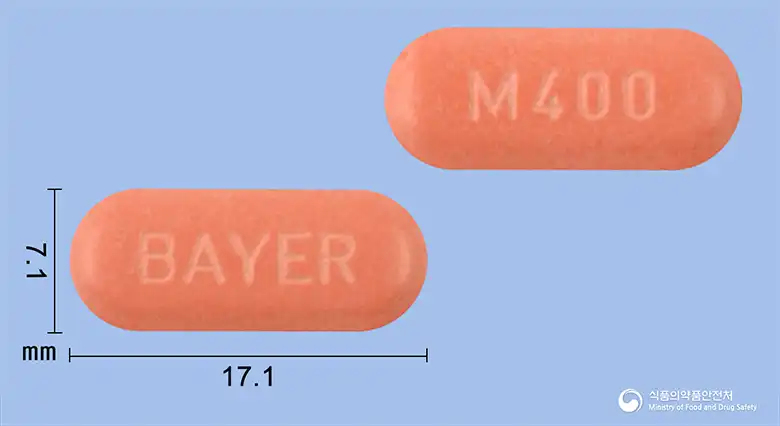
Deep pink, oblong film-coated tablet
30 tablets/box [10 tablets/PTP packaging x3], 10 tablets/box [PTP packaging]
Even with the same ingredient, strength, dosage form and how it is taken can differ.
Viewing nowMoxifloxacin Hydrochloride 436.8mg
Tablet · Prescription medication
Bayer Korea Co., Ltd.
Moxifloxacin Hydrochloride 1.744mg
Injections · Prescription medication
Bayer Korea Co., Ltd.
Moxifloxacin Hydrochloride 5.45mg
Eye drops · Prescription medication
Novartis Korea Co., Ltd.
Moxifloxacin Hydrochloride 5.45mg
Eye drops · Prescription medication
Samchundang Pharmaceutical Co., Ltd.
Moxifloxacin Hydrochloride 5.45mg
Eye drops · Prescription medication
Samil Pharmaceutical Co., Ltd.
Moxifloxacin Hydrochloride 5.45mg
Eye drops · Prescription medication
Optus Pharmaceutical Co., Ltd.
Moxifloxacin Hydrochloride 5.45mg
Eye drops · Prescription medication
Hankook Hyutecs Pharmaceutical Co., Ltd.
Moxifloxacin Hydrochloride 5.45mg
Eye drops · Prescription medication
Daehwa Pharmaceutical Co., Ltd.
Even with the same ingredient, the dose and directions can differ by strength and dosage form. Talk to a doctor or pharmacist before switching from a medication you are already taking.
No questions yet.
For anything that needs medical judgment, consult a doctor or pharmacist.
This drug information is based on data provided by the Korea Ministry of Food and Drug Safety.
Consult a doctor or pharmacist for accurate dosage, administration, and usage instructions.