한국어
 English
 日本語
 中文(简体)
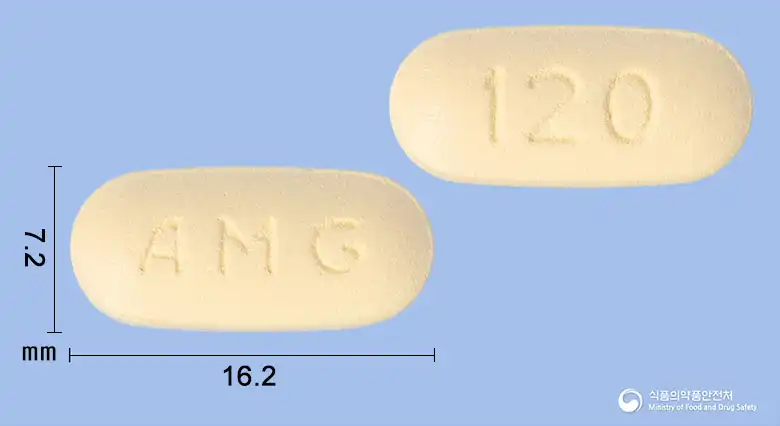
Dosage form image
Viewing nowLUMACRAS 240 mg Tablets (Sotorasib)
Sotorasib 240mg
Tablet · Prescription medication
Amgen Korea Co., Ltd.
MFDS item code 202600376 · Approved 2026.02.10
Treatment of KRAS G12C-mutated non-small cell lung cancer in adults who have received prior treatment
This medication is used for the treatment of adult patients with locally advanced or metastatic non-small cell lung cancer (NSCLC) harboring the KRAS G12C mutation who have received at least one prior therapy. The therapeutic effect of this drug is primarily based on the rate of tumor reduction and its duration, but there is currently no definitive clinical data showing direct extension of survival. Thus, this drug helps effectively manage the cancer in those patients and is used in the treatment of non-small cell lung cancer.
Administer 960 mg once daily (four 240 mg tablets or eight 120 mg tablets) orally until disease progression or unacceptable toxicity occurs. Take this medicine at the same time each day, with or without food. Swallow the tablets whole. Do not chew, crush, or split the tablets. If a dose is missed by more than 6 hours, take the next dose as prescribed the following day. Do not take 2 doses at the same time to make up for a missed dose. If vomiting occurs after taking this medicine, do not take an additional dose. Take the next dose as prescribed the following day. Without crushing the tablet, place it in 120 mL of room-temperature water and disperse it. Do not use any other liquid. Stir until the tablet forms small particles (the tablet will not dissolve completely), then drink immediately or within 2 hours. The mixture will be pale yellow to bright yellow. Drink the dispersed tablet solution. Do not chew the tablet pieces in the dispersed solution. Rinse the container with an additional 120 mL of water and drink. If the mixture cannot be consumed immediately, stir it again to redisperse the tablet. If adverse reactions occur, up to 2 dose reductions are permitted. Discontinue this medicine if the patient cannot tolerate even the minimum dose of 240 mg once daily. 480 mg (two 240 mg tablets or four 120 mg tablets) once daily 240 mg (one 240 mg tablet or two 120 mg tablets) once daily For symptomatic AST or ALT > 3 x and up to 5 x ULN (or > 3 x and up to 5 x baseline, if baseline is abnormal), or AST or ALT > 5 x ULN (or > 5 x baseline, if baseline is abnormal): Withhold this medicine until levels recover to ≤ 3 x ULN or ≤ 3 x baseline (if baseline is abnormal). Then resume treatment with this medicine at the next lower dose level. AST or ALT > 3 × ULN and total bilirubin > 2 × ULN: Permanently discontinue this medicine unless another cause is identified. If another cause is identified, do not resume this medicine until AST/ALT/bilirubin have returned to baseline. All grades: If ILD/pneumonitis is suspected, withhold this medicine. If ILD/pneumonitis is confirmed, permanently discontinue this medicine. Grade 3 ~ 4: Withhold this medicine until recovery to grade 1 or lower or baseline grade. Then resume treatment with this medicine at the next lower dose level. Grade 3 ~ 4: Withhold this medicine until recovery to grade 1 or lower or baseline grade. Then resume treatment with this medicine at the next lower dose level. Grade 3 ~ 4: Withhold this medicine until recovery to grade 1 or lower or baseline grade. Then resume treatment with this medicine at the next lower dose level. Avoid concomitant administration of this medicine with proton pump inhibitors and H2-receptor antagonists. If antacid treatment cannot be avoided, administer this medicine 4 hours before or 10 hours after a locally acting antacid.
This drug may cause interstitial lung disease or interstitial pneumonia, and if symptoms like difficulty breathing, cough, or fever appear, discontinue use immediately and consult a doctor. It should not be used by those who are allergic to any component of this drug or have certain genetic disorders such as lactose intolerance. It may affect liver function, leading to elevated liver enzyme levels or signs of hepatitis, so regular liver function tests are required, and if abnormalities are found, dose adjustment or discontinuation may be necessary. While on this medication, diarrhea, muscle pain, fatigue, and cough may commonly occur, and serious side effects such as hepatotoxicity or pneumonia may also occur, so notify healthcare personnel if symptoms worsen. This medication may have reduced efficacy or increased side effects if taken with antacids that reduce stomach acid, or with drugs that activate or inhibit specific liver metabolic enzymes, so consult with your doctor or pharmacist if you are taking other medications. Safety during pregnancy has not been established, so use should be avoided, and it is recommended to discontinue breastfeeding during the period of drug use and for one week afterward. Safety and efficacy have not been established in children, and it can be used in elderly patients without special dose adjustments but caution should be exercised due to the risk of side effects. In patients with severely impaired kidney function, safety has not been established and caution is needed, while patients with severely poor liver function are at high risk for side effects and require regular testing. This medication should be stored out of reach of children and should not be transferred to other containers to maintain safety and quality.
Not everyone experiences these, and they can vary from person to person.
This medication should be stored in a tightly sealed container to prevent exposure to air or moisture. It is recommended to maintain a storage temperature between 1 degree and 30 degrees Celsius at room temperature. Proper storage will help maintain the medication's efficacy for a longer period.
Yellow oval film-coated tablets
120 tablets/box [8 tablets/PTP x 15]
Even with the same ingredient, strength, dosage form and how it is taken can differ.
Even with the same ingredient, the dose and directions can differ by strength and dosage form. Talk to a doctor or pharmacist before switching from a medication you are already taking.
No questions yet.
For anything that needs medical judgment, consult a doctor or pharmacist.
This drug information is based on data provided by the Korea Ministry of Food and Drug Safety.
Consult a doctor or pharmacist for accurate dosage, administration, and usage instructions.