
 한국어
 English
 日本語
 中文(简体)
Summary
- Main use
- Adjunctive treatment of uncontrolled partial-onset seizures in adults with epilepsy
- Who takes it
- Adults
- Adult dose
- Take this medicine once daily with or without food. The recommended starting dose is 12.5mg once daily, and it may be increased to the recommended maintenance dose of 200mg once daily. If necessary, based on the patient's clinical response and tolerability, the dose may be increased to a maximum of 400mg once daily. The recommended titration schedule is as follows. Do not exceed the recommended dose and titration range, as serious adverse reactions may occur. Starting dose Weeks 1 and 2 12.5mg once daily Titration schedule Weeks 3 and 4 25mg once daily Weeks 5 and 6 50mg once daily Weeks 7 and 8 100mg once daily Weeks 9 and 10 150mg once daily Maintenance dose Week 11 and onward 200mg once daily Maximum dose If necessary, based on the patient's clinical response and tolerability, doses above 200mg may be increased by 50mg once daily every 2 weeks, up to 400mg. 400mg once daily Patients with hepatic impairment The maximum recommended dose is 200mg once daily in patients with mild to moderate hepatic impairment. Administration is not recommended in patients with severe hepatic impairment. This medicine may be taken as a tablet or crushed. The crushed tablet may be mixed with water to form a suspension for oral or nasogastric tube administration. Oral administration of a suspension prepared by crushing the tablet 1. Crush the appropriate number of tablets for the prescribed dose. 2. Place the crushed tablets and 25mL of water in a cup. 3. Swirl the cup to mix the crushed tablets and water thoroughly into a suspension. 4. Drink the suspension immediately. Do not store the tablet-and-water suspension for later use. 5. Rinse the cup with 25mL of water and drink it again to ensure no crushed tablet residue remains in the cup. 6. Visually check that no particles remain in the cup. If any remain, repeat step 5. Administration through a nasogastric tube after crushing the tablet 1. Crush the appropriate number of tablets for the prescribed dose. 2. Place the crushed tablets and 25mL of water in an appropriate container. 3. Swirl the container to mix the tablets and water thoroughly into a suspension. 4. After confirming that no particles remain in the container, use a syringe to administer the suspension through the nasogastric tube. 5. Refill the catheter-tip syringe with 10mL of water, shake gently, and administer. 6. Visually check that no particles remain in the syringe. If any remain, repeat step 5. Discontinuation of treatment Unless abrupt discontinuation is necessary for safety reasons, gradually reduce the dose over at least 2 weeks when discontinuing this medicine.
Ingredients
- Manufacturer
- Dong-A ST Co., Ltd.
Efficacy & effects
Adjunctive treatment of uncontrolled partial-onset seizures in adults with epilepsy
- Epilepsy
- secondary generalized seizures
- focal seizures
View approved original textHide original text
This medication is used in adult epilepsy patients whose symptoms are not well controlled with existing anticonvulsant drugs. It particularly helps in the treatment of focal seizures with or without secondary generalized seizures. In other words, it is described as being used to reduce the frequency and intensity of seizures in addition to existing therapies. This drug effectively improves epilepsy symptoms and contributes to enhancing the quality of life of patients. Therefore, it is used as an adjunctive therapy for the treatment of focal seizures.
How to take
Adult dose
Take this medicine once daily with or without food. The recommended starting dose is 12.5mg once daily, and it may be increased to the recommended maintenance dose of 200mg once daily. If necessary, based on the patient's clinical response and tolerability, the dose may be increased to a maximum of 400mg once daily. The recommended titration schedule is as follows. Do not exceed the recommended dose and titration range, as serious adverse reactions may occur. Starting dose Weeks 1 and 2 12.5mg once daily Titration schedule Weeks 3 and 4 25mg once daily Weeks 5 and 6 50mg once daily Weeks 7 and 8 100mg once daily Weeks 9 and 10 150mg once daily Maintenance dose Week 11 and onward 200mg once daily Maximum dose If necessary, based on the patient's clinical response and tolerability, doses above 200mg may be increased by 50mg once daily every 2 weeks, up to 400mg. 400mg once daily Patients with hepatic impairment The maximum recommended dose is 200mg once daily in patients with mild to moderate hepatic impairment. Administration is not recommended in patients with severe hepatic impairment. This medicine may be taken as a tablet or crushed. The crushed tablet may be mixed with water to form a suspension for oral or nasogastric tube administration. Oral administration of a suspension prepared by crushing the tablet 1. Crush the appropriate number of tablets for the prescribed dose. 2. Place the crushed tablets and 25mL of water in a cup. 3. Swirl the cup to mix the crushed tablets and water thoroughly into a suspension. 4. Drink the suspension immediately. Do not store the tablet-and-water suspension for later use. 5. Rinse the cup with 25mL of water and drink it again to ensure no crushed tablet residue remains in the cup. 6. Visually check that no particles remain in the cup. If any remain, repeat step 5. Administration through a nasogastric tube after crushing the tablet 1. Crush the appropriate number of tablets for the prescribed dose. 2. Place the crushed tablets and 25mL of water in an appropriate container. 3. Swirl the container to mix the tablets and water thoroughly into a suspension. 4. After confirming that no particles remain in the container, use a syringe to administer the suspension through the nasogastric tube. 5. Refill the catheter-tip syringe with 10mL of water, shake gently, and administer. 6. Visually check that no particles remain in the syringe. If any remain, repeat step 5. Discontinuation of treatment Unless abrupt discontinuation is necessary for safety reasons, gradually reduce the dose over at least 2 weeks when discontinuing this medicine.
Precautions
This medication is used for the treatment of epilepsy and may lead to suicidal thoughts or behaviors during treatment, so patients and caregivers must carefully observe for these symptoms. Starting with high doses initially or rapidly increasing the dosage may cause serious allergic reactions known as DRESS, so if symptoms such as skin rash or fever occur, immediately inform healthcare professionals. Patients with genetic disorders that prevent the digestion of lactose should not take this medication, and it should also not be administered to those with hypersensitivity to the drug's components. Patients with impaired liver or kidney function should use this drug cautiously, and dosage adjustments might be required in some cases. Common side effects like drowsiness, dizziness, fatigue, diplopia, headaches may occur, so caution is advised when driving or operating machinery. If symptoms indicating liver dysfunction occur, immediate medical examinations should be undertaken, and if liver damage is suspected, the drug should be discontinued. Interactions with other drugs may occur while on this medication, so if other medications are being taken, it is essential to inform healthcare professionals. In particular, the effects of oral contraceptives may be reduced, thus additional contraceptive methods are recommended. Women who are pregnant or may become pregnant should avoid using this medication and consult with healthcare professionals if planning a pregnancy. If breastfeeding, it is recommended to discontinue breastfeeding as this medication may be excreted in breast milk. Safety and efficacy in pediatric patients have not been sufficiently established, so it should be administered cautiously in children. Elderly individuals may have reduced liver, kidney, and heart function, thus it is advisable to start from a low dose. In the case of overdose, there is no specific antidote, so immediate emergency treatment at a medical institution is necessary, and the medication should be kept out of reach of children.
Side effects
suicidal thoughts, suicidal behavior, drug reaction with eosinophilia and systemic symptoms (DRESS), palpitations, dizziness, diplopia, blurred vision, nausea, constipation, diarrhea, vomiting, dry mouth, abdominal pain, indigestion, nasopharyngitis, pharyngitis, urinary tract infection, head injury, increased alanine aminotransferase, increased aspartate aminotransferase, weight loss, decreased appetite, back pain, musculoskeletal chest pain, drowsiness, dizziness, fatigue, headache, balance disorder, gait disorder, speech disorder, nystagmus, ataxia, aphasia, weakness, altered taste, memory impairment, migraine, sedation, tremor, confusional state, euphoria, irritability, suicidal thoughts, frequent urination, dysmenorrhea, hiccups, shortness of breath, pruritus, papular rash
Not everyone experiences these, and they can vary from person to person.
Storage
This medication should be stored in a tightly closed container to prevent exposure to air or moisture, and it should be kept at room temperature between 1 to 30 degrees Celsius for safety. Storing it this way will help maintain the drug's effectiveness for a long time.
Appearance and packaging
Appearance
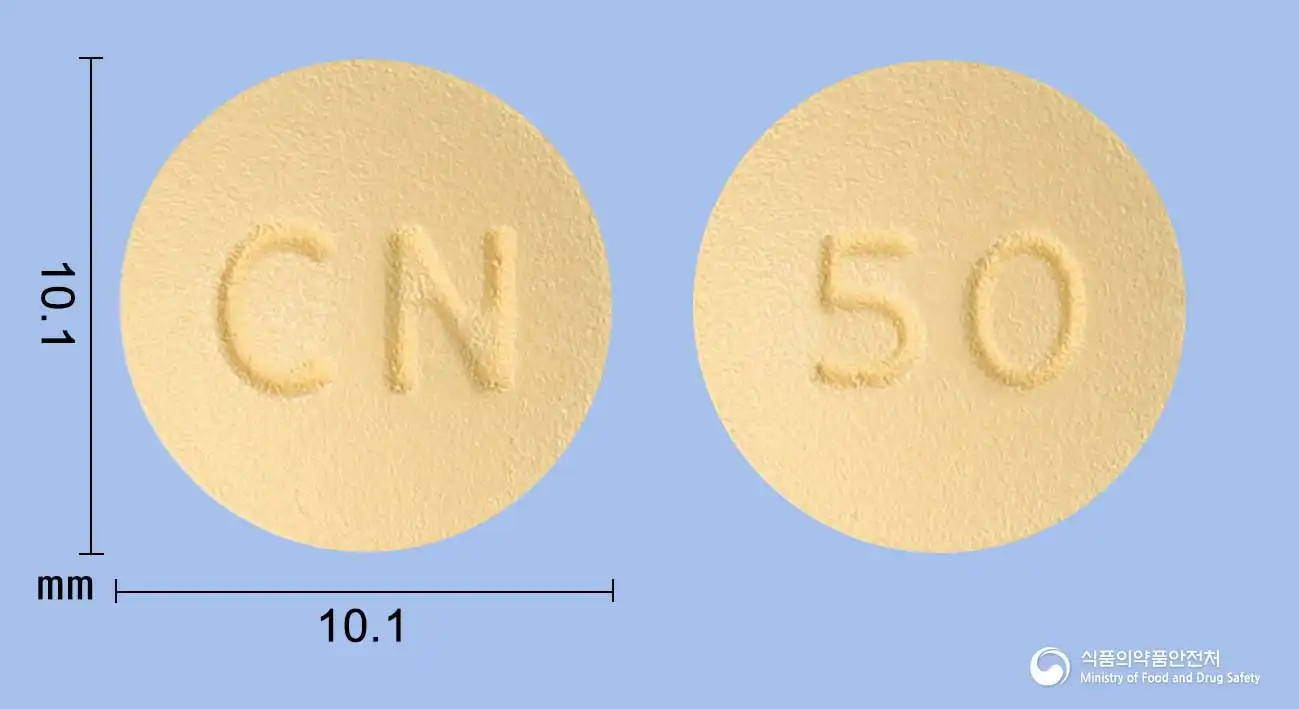
12.5mg: white to almost white round tablets 25mg: brown round film-coated tablets 50mg: yellow round film-coated tablets 100mg: brown round film-coated tablets 150mg: bright orange
Package unit
12.5mg - 14 tablets/box [(7 tablets/PTP X 2)], 25mg - 14 tablets/box [(7 tablets/PTP X 2)], 50mg - 14 tablets/box [(7 tablets/PTP X 2)], 100mg - 14 tablets/box [(7 tablets/PTP X 2)], 150mg - 14 tablets/box [(7 tablets/PTP X 2)], 200mg - 14 tablets/box [(7 tablets/PTP X 2)]
Questions about this medicine
No questions yet.
For anything that needs medical judgment, consult a doctor or pharmacist.