
 한국어
한국어 English
 日本語
日本語 中文(简体)
 Viewing now
Minoxidil Tablet (Minoxidil)
Minoxidil 5mg
Tablet · Prescription medication
Teragen Etex Co., Ltd.
MFDS item code 202501471 · Approved 2025.06.17
Treatment of hypertension (symptomatic, resistant)
This medication is used to treat symptomatic hypertension, which occurs due to specific symptoms or target organ damage, and for resistant hypertension that does not respond to diuretics and two types of antihypertensive agents.
As Minoxidil, administer 5 mg orally once daily as an initial dose, and for maintenance dosage, administer 10 - 40 mg per day divided into one or several doses. The maximum daily dose can be up to 100 mg. The frequency of administration may vary according to changes in daily arterial blood pressure. If the reduction in coordinate expansion pressure is less than 30 mmHg, administer once daily; if it is 30 mmHg or more, administer divided doses twice daily. The dosages may vary according to the patient's condition.
For initial dosing, administer 0.2 mg per kg of body weight once daily, with the possibility of increasing the dose by 50 - 100 % until blood pressure is optimally adjusted. For maintenance dose, administer 0.25 mg - 1.0 mg per kg of body weight once daily.
This medication should not be used in certain patients. For example, patients with a tumor known as pheochromocytoma may be at risk as this medication lowers blood pressure and may stimulate the secretion of catecholamines from the tumor. Patients with pulmonary hypertension due to mitral stenosis, patients who have had an acute myocardial infarction, and those who have had allergic reactions to this medication should also avoid its use. When using this medication, special caution is required for patients with chronic congestive heart failure, weak cardiac function, or severely impaired kidney function, as well as those with angina. Side effects may include hirsutism or thickening of hair, which can occur in approximately 80% of patients. This phenomenon usually appears within 3 to 6 weeks after starting treatment and may begin primarily on the face before spreading to the rest of the body. If this medication is discontinued, new hair growth will stop, but it may take several months to return to the original state. Particularly, children and women should be adequately informed about these side effects in advance. In addition, rash or vesicles may occur on the skin, and in severe cases, hypersensitivity reactions such as Stevens-Johnson syndrome may appear. Blood tests may show a decrease in platelet or white blood cell counts, and changes in blood components may be observed. Electrocardiograms may show changes in electrical signals of the heart in about 60% of patients, but generally, this does not cause significant clinical problems, and stopping the medication will usually lead to recovery. Rarely, pericardial effusion may occur, particularly in patients with poor kidney function, requiring caution. In such cases, echocardiography may be needed to confirm the condition and additional treatment may be required if necessary. Other side effects may include weight gain, swelling of hands and feet, increased heart rate, transient elevations in kidney function tests, gastrointestinal disturbances, rash, breast pain, and gynecomastia. When using this medication, diuretics are often used in combination to prevent fluid retention and heart failure, and weight and fluid status should be monitored frequently. Additionally, because this medication dilates blood vessels, it may cause an increased heart rate or symptoms of angina, and to prevent these symptoms, beta-blocking agents may be used in conjunction. Patients with reduced kidney function or on dialysis may need dosage adjustments, and treatment should only be administered after stabilization in patients who have had a myocardial infarction. During the initial administration phase, regular monitoring of urinalysis, kidney function tests, electrocardiograms, chest X-rays, and echocardiograms should be performed to check for abnormalities. This medication may interact with other drugs, so caution is necessary. For example, when used with guanethidine, severe orthostatic hypotension may occur, so preferably discontinuation of guanethidine should occur, or administration should begin under hospitalization. Some antidepressants or antipsychotics may increase the risk of hypotension when used with this medication. Using corticosteroids or tetracosactide together may exacerbate fluid retention, and combination with anti-inflammatory analgesics may reduce blood pressure-lowering efficacy, so caution is advised. The safety of this medication during pregnancy is uncertain, so use during pregnancy should be avoided; and during breastfeeding, administration should be avoided or breastfeeding should be stopped if necessary. Experience with the use of this medication in children, especially in newborns, is limited, so it should be administered cautiously. In case of overdose, blood pressure may drop too low, requiring immediate medical attention for proper treatment, including maintenance of blood pressure with saline infusion and the use of specific medications if necessary.
Exudative rash due to hypersensitivity, vesicular lesions, and skin-mucous membrane syndrome (Stevens-Johnson syndrome), pericardial effusion and cardiac tamponade, thrombocytopenia, leukopenia (WBC <3000/mm2), severe edema
Hirsutism, weight gain, peripheral edema, increased heart rate, elevated creatinine levels, elevated BUN, gastrointestinal disturbances, rash, breast pain, gynecomastia, hemolytic anemia, pulmonary infiltration, antinuclear antibodies (ANA), headache, intermittent claudication, frequent menstruation, nausea, vomiting, electrocardiogram abnormalities (changes in T-wave direction and amplitude, large negative amplitude)
Not everyone experiences these, and they can vary from person to person.
This medication should be stored in a tightly closed container to avoid exposure to air or moisture. Additionally, it is best to store the medication at room temperature between 1 to 30 degrees Celsius. Storing the medication this way will help preserve its efficacy.
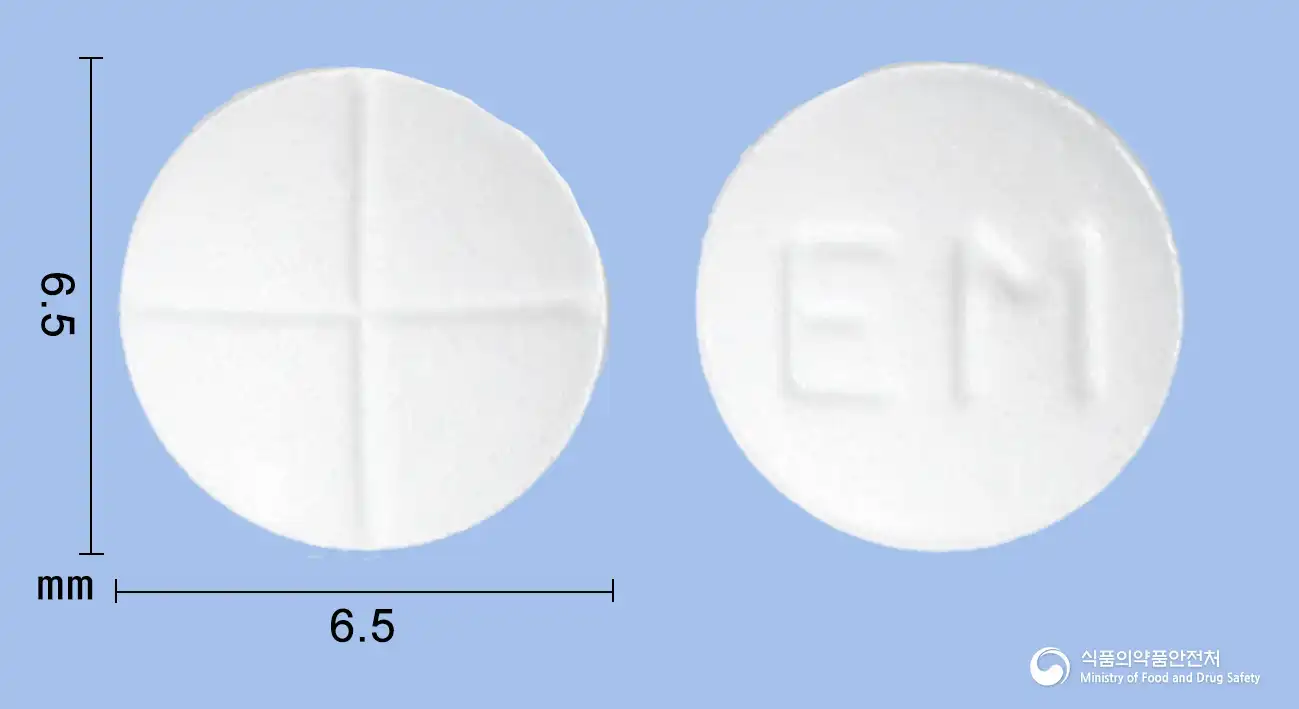
White round tablet
30 tablets/bottle, 500 tablets/bottle
Even with the same ingredient, strength, dosage form and how it is taken can differ.
Viewing nowMinoxidil 5mg
Tablet · Prescription medication
Teragen Etex Co., Ltd.
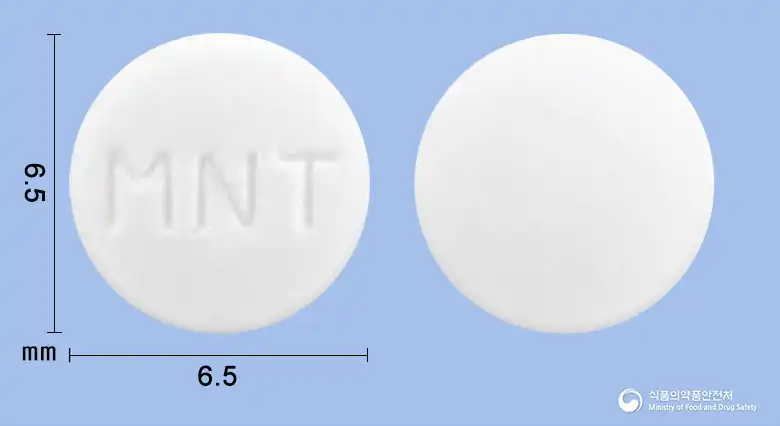
Minoxidil 5mg
Tablet · Prescription medication
Hyundai Pharmaceutical Co., Ltd.
Minoxidil 3g
OTC medication
Hyundai Pharmaceutical Co., Ltd.
Minoxidil 5g
OTC medication
Hyundai Pharmaceutical Co., Ltd.
Minoxidil 5g
OTC medication
Hanmi Pharmaceutical Co., Ltd.
Minoxidil 5g
Solution · OTC medication
JW Pharmaceutical Corp.
Minoxidil 3g
Solution · OTC medication
Haitai HTB Co., Ltd.
Minoxidil 5g
Solution · OTC medication
Ilhwa Co., Ltd.
Even with the same ingredient, the dose and directions can differ by strength and dosage form. Talk to a doctor or pharmacist before switching from a medication you are already taking.
No questions yet.
For anything that needs medical judgment, consult a doctor or pharmacist.
This drug information is based on data provided by the Korea Ministry of Food and Drug Safety.
Consult a doctor or pharmacist for accurate dosage, administration, and usage instructions.