
 한국어
 English
 日本語
 中文(简体)
 Viewing now
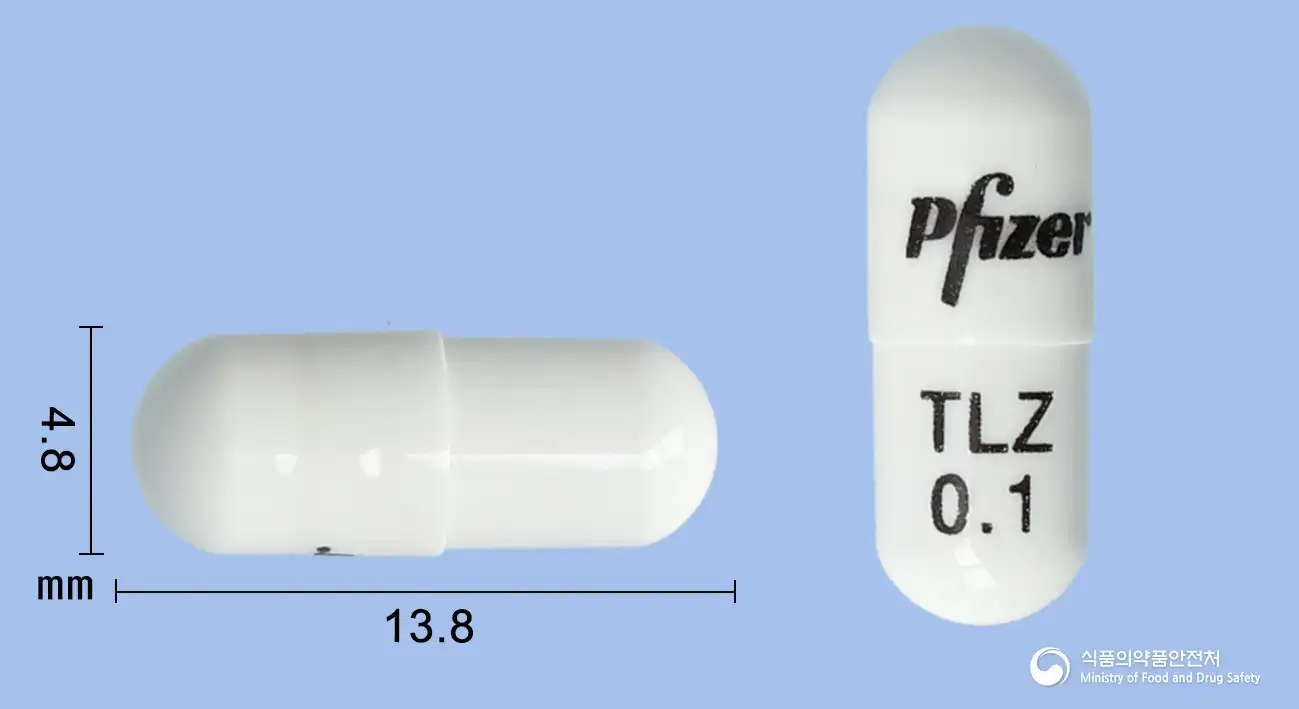
Talzenna Capsule 0.1 mg (Talazoparib Tosylate)
Talazoparib Tosylate
Hard capsule · Prescription medication
Pfizer Pharmaceuticals Korea Co., Ltd.
MFDS item code 202501456 · Approved 2025.06.13
Treatment of gBRCA-mutated breast cancer and HRR-mutated prostate cancer
This medication is used in the treatment of breast cancer and prostate cancer. First, for breast cancer, it is administered alone to patients with progressive or metastatic breast cancer who have a genetic mutation (gBRCA) and HER2 negative status and have prior chemotherapy experience. It may also be used for patients who have received neoadjuvant or adjuvant chemotherapy or radiation therapy. For prostate cancer, it is used in combination with enzalutamide in patients with metastatic castration-resistant prostate cancer who have no prior chemotherapy experience and have specific gene mutations (HRR). This drug provides an effective treatment option for these two types of cancer.
This medicine is for oral use. Swallow the capsule whole to avoid contact with its contents; do not open or dissolve the capsule. This medicine may be taken with or without food. Administer this medicine orally at a dose of 1 mg once daily. Continue treatment until disease progression or unacceptable toxicity occurs. The recommended dose of this medicine is 0.5 mg, administered orally once daily with enzalutamide 160mg. Patients should continue treatment until disease progression or unacceptable toxicity occurs. Medical castration with a luteinizing hormone-releasing hormone (LHRH) analog should be continued during treatment in patients who have not undergone surgical castration. If the patient vomits or misses a dose, do not administer an additional dose. Take the next prescribed dose at the scheduled time. Hemoglobin < 8 g/dL: Interrupt treatment with this medicine until recovery to ≥ 9 g/dL, then resume treatment at a reduced dose Platelet count < 50,000/μL: Interrupt treatment with this medicine until recovery to ≥ 75,000/μL, then resume treatment at a reduced dose Neutrophil count < 1,000/μL: Interrupt treatment with this medicine until recovery to ≥ 1,500/µL, then resume treatment at a reduced dose Grade 3 or 4 nonhematologic adverse reaction: Interrupt treatment with this medicine until recovery to ≤ Grade 1, then resume at a reduced dose or discontinue treatment Dose reduction when this medicine is used as monotherapy (breast cancer) Recommended starting dose: 1 mg once daily First dose reduction: 0.75 mg once daily Second dose reduction: 0.5 mg once daily Third dose reduction: 0.25 mg once daily Dose reduction when this medicine is administered with enzalutamide (prostate cancer) Recommended starting dose: 0.5 mg once daily First dose reduction: 0.35 mg once daily Second dose reduction: 0.25 mg once daily Third dose reduction: 0.1 mg once daily No dose adjustment is necessary in patients with mild renal impairment (60 mL/min≤creatinine clearance [CrCl]<90 mL/min). The recommended starting dose of this medicine in patients with moderate renal impairment (30 mL/min≤CrCl<60 mL/min) is 0.75 mg once daily. The recommended starting dose in patients with severe renal impairment (15 mL/min<CrCl<30 mL/min) is 0.5 mg once daily. This medicine has not been studied in patients with CrCl<15 mL/min or in patients requiring hemodialysis (see Pharmacokinetic Properties). No dose adjustment is necessary in patients with mild renal impairment (60 mL/min≤creatinine clearance [CrCL]<90 mL/min). The recommended starting dose in patients with moderate renal impairment (30 mL/min≤CrCL<60 mL/min) is 0.35mg of this medicine orally once daily in combination with enzalutamide. The recommended starting dose in patients with severe renal impairment (15mL/min≤CrCL<30mL/min) is 0.25mg of this medicine once daily in combination with enzalutamide. This medicine has not been studied in patients with CrCL <15 mL/min or in patients requiring hemodialysis (see Pharmacokinetic Properties). No dose adjustment is necessary in patients with mild hepatic impairment (total bilirubin≤1×upper limit of normal [ULN] and aspartate aminotransferase (AST)>ULN, or total bilirubin>1.0-1.5×ULN and any AST), moderate hepatic impairment (total bilirubin>1.5-3.0×ULN and any AST), or severe hepatic impairment (total bilirubin>3.0×ULN and any AST) (see Pharmacokinetic Properties).
This drug may cause serious blood cancers such as myelodysplastic syndrome or acute myeloid leukemia, so blood tests should be conducted thoroughly before and during administration to monitor blood status. Women of childbearing potential must not become pregnant while taking this medication and must test for pregnancy prior to starting the drug. During and for some time after taking this drug, effective contraception must be used, and for breast cancer patients, it is particularly recommended to use non-hormonal methods rather than hormonal contraception. This medication should not be used by individuals with allergies to any components or excipients and by nursing women. Common side effects may include fatigue, nausea, vomiting, and decreased blood cell counts, so if symptoms are severe or persistent, medical advice should be sought. Bone marrow suppression side effects may frequently result in decreased blood cell counts such as anemia, leukopenia, and thrombocytopenia, making regular blood tests necessary. If these side effects occur, dose adjustments or temporary cessation may be required. Fatigue or dizziness may occur during driving or operating machinery, so caution is advised. This medication may interact with other drugs, so it should be reported to healthcare providers especially when taken with certain antibiotics, antivirals, or medications such as enzalutamide, as dose adjustments may be needed. Pregnant women or those who may become pregnant should not take this medication, and nursing mothers should avoid it as well. Safety for children or the elderly has not been sufficiently verified, however, elderly patients do not require separate dose adjustments. In case of overdose, stop taking the medication immediately and obtain appropriate medical care, which may include emergency treatment such as gastric lavage. This drug must be kept out of reach of children and stored in its original container to prevent misuse or degradation of quality.
Not everyone experiences these, and they can vary from person to person.
This medication may be sensitive to air or moisture, so it must be stored in a tightly sealed container. It is recommended to maintain a storage temperature between 1 and 30 degrees Celsius. This will help retain the drug's efficacy and safety over time.
An opaque hard capsule with a white to off-white powder of yellowish hue in the upper part and white in the lower part.
30 capsules/bottle
Even with the same ingredient, strength, dosage form and how it is taken can differ.
Viewing nowTalazoparib Tosylate
Hard capsule · Prescription medication
Pfizer Pharmaceuticals Korea Co., Ltd.
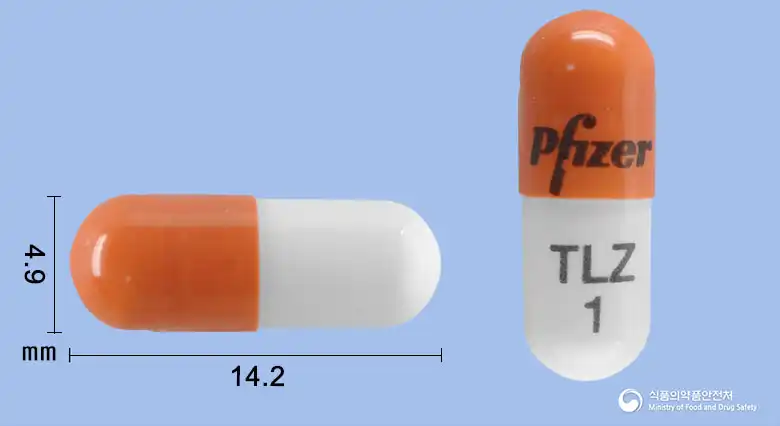
Talazoparib Tosylate
Prescription medication
Pfizer Korea Co., Ltd.
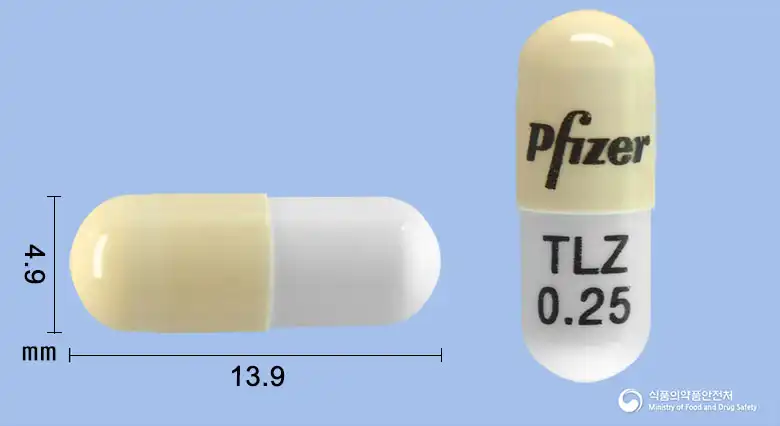
Talazoparib Tosylate
Hard capsule · Prescription medication
Pfizer Pharmaceuticals Korea Co., Ltd.
Even with the same ingredient, the dose and directions can differ by strength and dosage form. Talk to a doctor or pharmacist before switching from a medication you are already taking.
No questions yet.
For anything that needs medical judgment, consult a doctor or pharmacist.
This drug information is based on data provided by the Korea Ministry of Food and Drug Safety.
Consult a doctor or pharmacist for accurate dosage, administration, and usage instructions.