한국어
 English
 日本語
 中文(简体)
 Viewing now
Octairo Capsule 40 mg (Repotrectinib)
Repotrectinib 40mg
Hard capsule · Prescription medication
HanKook BMS Pharmaceutical Co., Ltd.
MFDS item code 202501383 · Approved 2025.06.05
Treatment of ROS1-positive non-small cell lung cancer and NTRK fusion-positive solid tumors
This medication is used in the treatment of patients with ROS1 positive locally advanced or metastatic non-small cell lung cancer and solid tumors in adults and children aged 12 years and older with NTRK gene fusion. It is particularly applicable for locally advanced or metastatic solid tumors that have not responded to existing therapies or have no suitable treatment options. The effectiveness of this drug is based on the overall response rate of the disease, and there are no studies confirming clinical benefits such as prolonged survival. Therefore, this drug serves as a treatment option for cancer patients with specific genetic mutations.
The recommended dose of this medicine in adults is 160mg once daily for the first 14 days, followed by 160mg twice daily, orally, with or without food. Continue treatment until disease progression or unacceptable toxicity. Swallow the capsules whole at the same time each day. Do not open, crush, chew, or dissolve the capsules. If a dose is missed or the patient vomits after taking the medicine, take the next dose at the scheduled time. Do not take two doses at the same time. Recommended dose reductions of this medicine for management of adverse reactions are shown in Table 1. Table 1: Recommended dose reductions for adverse reactions Dose Dose reduction 1st 2nd 160 mg once daily 120 mg once daily 80 mg once daily 160 mg twice daily 120 mg twice daily 80 mg twice daily Recommended dose modifications of this medicine for management of adverse reactions are shown in Table 2. Table 2: Recommended dose modifications for adverse reactions Adverse reaction Severity* Dose modification Central nervous system effects (see 3. General precautions) Intolerable Grade 2 Temporarily withhold this medicine until recovery to Grade 1 or lower or baseline. Resume treatment at the same or a reduced dose, as clinically indicated. Grade 3 Temporarily withhold this medicine until recovery to Grade 1 or lower or baseline. Resume treatment at a reduced dose. Grade 4 Permanently discontinue this medicine. Interstitial lung disease (ILD)/pneumonitis (see 3. General precautions) All grades Temporarily withhold this medicine if ILD/pneumonitis is suspected. Permanently discontinue this medicine if ILD/pneumonitis is confirmed. Hepatotoxicity (see 3. General precautions) Grade 3 Temporarily withhold this medicine until recovery to Grade 1 or lower or baseline. If recovery occurs within 4 weeks, resume treatment at the same dose. For recurrent Grade 3 events that recover within 4 weeks, resume treatment at a reduced dose. Grade 4 Temporarily withhold this medicine until recovery to Grade 1 or lower or baseline. If the adverse reaction does not recover within 4 weeks, permanently discontinue treatment. Permanently discontinue treatment for recurrent Grade 4 events. If ALT or AST is greater than 3 times the upper limit of normal (ULN) and total bilirubin is greater than 1.5 times the upper limit of normal (ULN) (in the absence of cholestasis or hemolysis) Permanently discontinue this medicine. Creatine phosphokinase (CPK) elevation (see 3. General precautions) CPK elevation greater than 5 times the ULN Temporarily withhold this medicine until recovery to Grade 1 or lower or baseline. Resume treatment at the same dose. CPK elevation greater than 10 times the ULN, or a second occurrence of CPK elevation greater than 5 times the ULN Temporarily withhold this medicine until recovery to Grade 1 or lower or baseline. Resume treatment at a reduced dose. Hyperuricemia (see 3. General precautions) Grade 3 or Grade 4 Temporarily withhold this medicine until symptoms or signs improve. Resume treatment at the same or a reduced dose. Other clinically significant adverse reactions (see 2. Adverse reactions) Intolerable Grade 2 or Grade 3 or Grade 4 Temporarily withhold this medicine until recovery to Grade 1 or lower or baseline. If recovery occurs within 4 weeks, resume treatment at the same or a reduced dose. If the adverse reaction does not recover within 4 weeks, permanently discontinue treatment. Permanently discontinue treatment for recurrent Grade 4 events. * Severity as defined by the Common Terminology Criteria for Adverse Events v4.03
Children 12 years and older: The recommended dose of this medicine is 160mg once daily for the first 14 days, followed by 160mg twice daily, orally, with or without food. Continue treatment until disease progression or unacceptable toxicity.
This medication should not be administered to patients who are allergic to the active ingredient or additives. Caution is necessary as serious side effects such as pneumonia, respiratory distress, pleural effusion, and hypoxia may occur when taking this medication. Various side effects, including dizziness, taste disturbances, peripheral neuropathy, constipation, fatigue, and muscle weakness, may be common. It may affect the central nervous system, leading to symptoms such as dizziness, motor coordination disorders, and memory decline, so caution is advised when driving or operating machinery. If symptoms such as respiratory distress, cough, or chest pain occur, there may be a risk of interstitial lung disease or pulmonary inflammation, and immediate consultation with medical professionals is necessary. Regular liver function tests should be performed as liver function abnormalities may occur, and if any abnormalities are detected, the treatment may be paused or adjusted accordingly. Symptoms such as muscle pain or weakness may occur, so these should be reported to a healthcare provider, and blood tests may check for muscle damage. Uric acid levels in the blood may increase, so a uric acid level test is necessary, and if needed, medications to lower uric acid may be taken together. There may be an increased risk of fractures, so any changes in pain or movement should be reported immediately. Women who are pregnant or may become pregnant should verify their pregnancy status before taking this medication as it may pose risks to the fetus, and effective non-hormonal contraception should be used during treatment. This medication may reduce the effectiveness of some hormonal contraceptives, so alternatives should be chosen instead of hormonal methods. Care must be taken due to numerous potential drug interactions, especially with CYP3A inhibitors or inducers and P-gp inhibitors. Regular check-ups and monitoring for adverse symptoms are crucial while taking this medication.
Pneumonia, dyspnea, pleural effusion, hypoxemia, aspiration pneumonia, cardiac arrest, acute cardiac death, heart failure, respiratory failure, tremors, disseminated intravascular coagulation, dizziness, muscle weakness, ataxia, peripheral neuropathy, anemia, vomiting, taste disturbance, constipation, fatigue, cognitive impairment, nausea, headache, cough, edema, decreased appetite, myalgia, weight gain, visual impairment, fever, falls, decreased hemoglobin, decreased lymphocyte count, decreased neutrophil count, increased activated partial thromboplastin time, increased international normalized ratio, increased creatine phosphokinase, increased gamma-glutamyl transferase, increased aspartate aminotransferase, increased alanine aminotransferase, increased sodium, increased alkaline phosphatase, increased glucose, increased uric acid, decreased phosphate, increased potassium, decreased glucose, sleep disorders, mood disorders, insomnia, hypersomnia, interstitial lung disease (ILD), pulmonary inflammation, hyperuricemia, fractures, memory impairment, attention deficit, confusion, anxiety, drowsiness, aphasia, disorientation, decreased level of consciousness, hallucinations, changes in mental state, neurological deficit, drowsiness, insomnia, hypersomnia, aspiration pneumonia, lower respiratory tract infection, viral pneumonia, bacterial pneumonia, Klebsiella pneumonia, systemic edema, periocular edema, localized edema, facial edema, peripheral edema, ocular edema, scrotal edema, myositis, musculoskeletal discomfort, musculoskeletal pain, visual decline, dry eyes, visual impairment, visual field defect, cataract, conjunctivitis, eye pain, glare, photophobia, visual loss, vitreous floaters, blepharospasm, color blindness, diplopia, eye hematoma, eye swelling, eyelid disorders, eyelid injury, eyelid pruritus, glaucoma, night blindness, ocular shingles, infection, blood and lymphatic system disorders, increased appetite, hyperkalemia, paresthesia, headache, peripheral sensory neuropathy, blurred vision, eye pain, homonymous hemianopia, glare, visual damage, ankle fracture, foot fracture, fatigue fracture, calf fracture, tibial fracture, arthralgia, abdominal pain, oral paresthesia, fever, decreased white blood cell count, injury, toxicity and procedural complications
Not everyone experiences these, and they can vary from person to person.
This medication should be stored in a tightly sealed container to prevent air exposure, and it is recommended to keep it at room temperature between 1 to 30 degrees Celsius. Storing it this way helps maintain the drug's effectiveness for a long time.
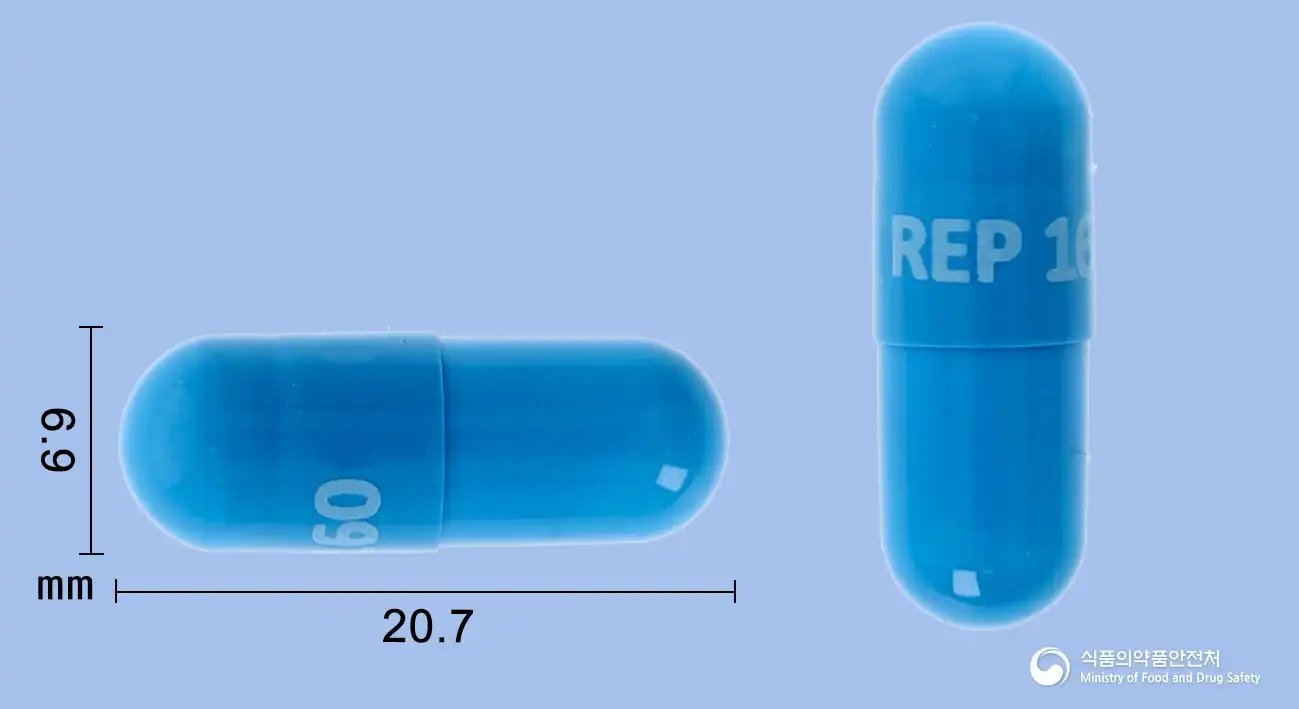
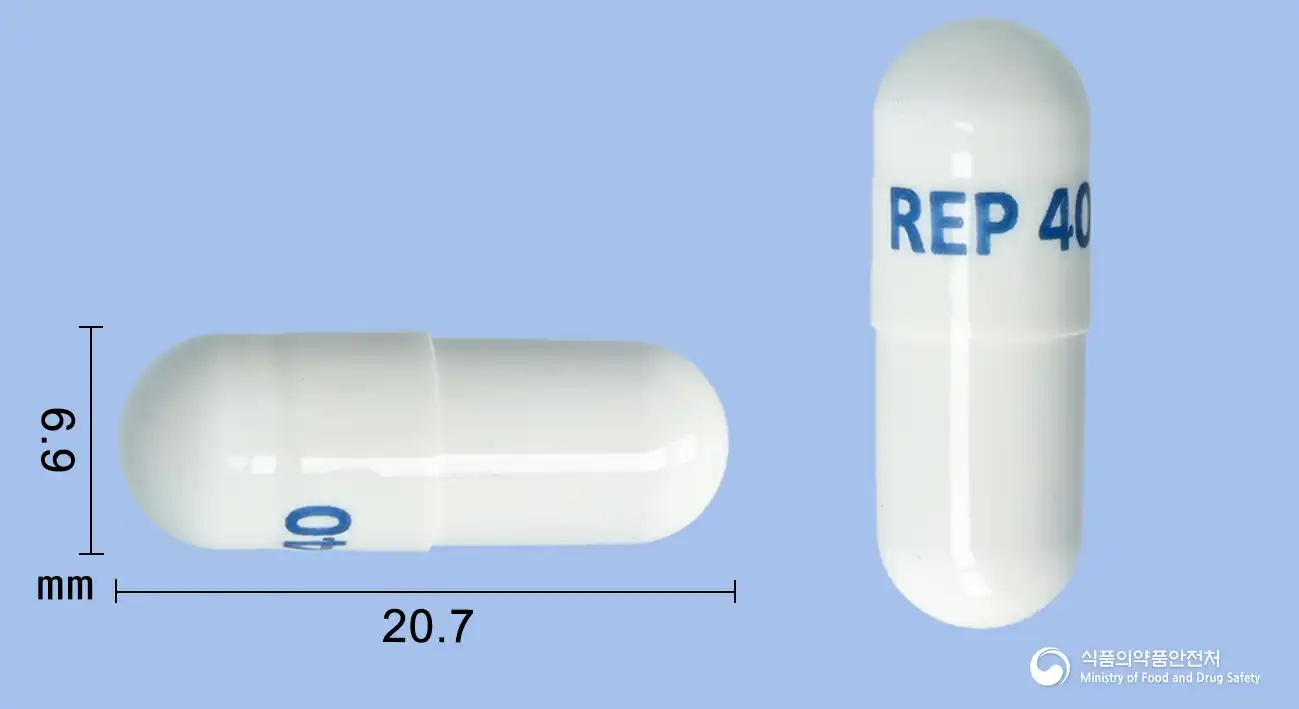
A hard capsule with a white to almost white powder that may appear as clumps, filled with the capsule in a white upper and lower part.
60 capsules/bottle, 120 capsules/bottle
Even with the same ingredient, strength, dosage form and how it is taken can differ.
Even with the same ingredient, the dose and directions can differ by strength and dosage form. Talk to a doctor or pharmacist before switching from a medication you are already taking.
No questions yet.
For anything that needs medical judgment, consult a doctor or pharmacist.
This drug information is based on data provided by the Korea Ministry of Food and Drug Safety.
Consult a doctor or pharmacist for accurate dosage, administration, and usage instructions.