한국어
 English
 日本語
 中文(简体)
 Viewing now
Fruzakura Capsule 5mg (Fruquintinib)
Fruquintinib 5mg
Hard capsule · Prescription medication
Takeda Pharmaceutical Company Limited
MFDS item code 202500505 · Approved 2025.03.06
Treatment of metastatic colorectal cancer in adults previously treated with anticancer therapy
These drugs are used for the treatment of relapsed or progressed metastatic colorectal cancer patients who have previously received chemotherapy, including fluoropyrimidine, oxaliplatin, and irinotecan, combined with anti-VEGF and anti-EGFR agents. Anti-EGFR therapies are particularly effective in RAS wild-type patients. This treatment helps to inhibit the growth of cancer cells and effectively manage metastatic colorectal cancer. It contributes to the comprehensive control of cancer and prolongation of survival based on the patient's condition. Therefore, this treatment is used to improve metastatic colorectal cancer.
1. Recommended Dosage and Administration This medicine is administered in 28-day cycles: 5mg orally once daily for 21 consecutive days, followed by 7 days off treatment. Continue taking this medicine until disease progression or unacceptable toxicity occurs in the patient. Take this medicine with water at the same time each day, with or without food. Swallow this medicine whole; do not chew or dissolve it, or open the capsule. If less than 12 hours have passed since a dose was missed, take the missed dose immediately, and take the prescribed dose at the next scheduled time. If 12 hours or more have passed, skip the missed dose and take the prescribed dose at the next scheduled time. If vomiting occurs after taking a dose, do not take an additional dose; take the prescribed dose the following day. 2. Dosage Modification Depending on individual safety and tolerability, this medicine may be withheld, the dose may be reduced, or treatment may be permanently discontinued. If an adverse reaction occurs, withhold this medicine until the reaction resolves to Grade 1 or baseline, and modify the dose in a stepwise manner as shown in Table 1. If the adverse reaction persists at a dose of 3mg once daily, permanently discontinue this medicine. Table 1. Recommended Dose Reduction Levels Dose reduction level Dosage and administration First dose reduction 4mg once daily (equivalent to four 1mg capsules) Second dose reduction 3mg once daily (equivalent to three 1mg capsules) Recommended dosage modifications for adverse reactions are shown in Table 2. Table 2. Dosage Modification of This Medicine for Adverse Reactions Adverse reaction Severity¹ Dosage modification Hypertension Grade 3 • If Grade 3 hypertension persists despite initiation or adjustment of antihypertensive treatment, withhold treatment. • When hypertension resolves to Grade 1 or baseline, resume treatment at a reduced dose as shown in Table 1. If Grade 3 hypertension continues to occur at a dose of 3mg once daily, permanently discontinue this medicine. Grade 4 Permanently discontinue this medicine. Hemorrhage Grade 2 • Withhold treatment until the hemorrhage has completely resolved or improves to Grade 1. • Resume treatment at a reduced dose as shown in Table 1. If Grade 2 hemorrhage continues to occur at a dose of 3mg once daily, permanently discontinue this medicine. Grade 3 or higher Permanently discontinue this medicine. Proteinuria ≥2g/24 hours • Withhold treatment until proteinuria has completely resolved or is less than 1g/24 hours (Grade 1). • Resume treatment at a reduced dose as shown in Table 1. If proteinuria continues to exceed 2g/24 hours at a dose of 3mg once daily, permanently discontinue this medicine. Permanently discontinue this medicine if nephrotic syndrome occurs. Abnormal liver function tests Grade 2 or Grade 3 abnormal liver function tests • Withhold treatment until the tests improve to Grade 1 or baseline. • Resume treatment at a reduced dose as shown in Table 1. If Grade 2 or Grade 3 abnormal liver function tests continue to occur at a dose of 3mg once daily, permanently discontinue this medicine. Elevation of alanine aminotransferase (ALT) or aspartate aminotransferase (AST) to Grade 2 or higher (> 3 x ULN), with concurrent elevation of total bilirubin to > 2 x ULN in the absence of cholestasis; Grade 4 abnormal liver function tests Permanently discontinue this medicine. Palmar-plantar erythrodysesthesia syndrome (PPES) Grade 2 • Provide supportive care. • Withhold treatment until PPES resolves to Grade 1 or baseline. • Resume treatment at the same dose. Grade 3 • Provide supportive care. • Withhold treatment until PPES resolves to Grade 1 or baseline. • Resume treatment at a reduced dose as shown in Table 1. If Grade 3 PPES continues to occur at a dose of 3mg once daily, permanently discontinue this medicine. Other adverse reactions Grade 3 • Withhold treatment until the reaction resolves to Grade 1 or baseline. • Resume treatment at a reduced dose as shown in Table 1. If other Grade 3 adverse reactions continue to occur at a dose of 3mg once daily, permanently discontinue this medicine. Grade 4 Discontinue this medicine. If the toxicity resolves to Grade 1 or baseline and the potential benefit of treatment outweighs the risk, consider resuming treatment at a reduced dose as shown in Table 1. ¹According to the National Cancer Institute Common Terminology Criteria for Adverse Events, Version 5.0 (NCI CTCAE v5)
This drug should not be used in patients with allergies to the active substance or additives. Patients with hypertension or high bleeding risk, severe liver dysfunction, or end-stage renal dysfunction should use this drug with caution. Patients at high risk of infections or with a history of thromboembolism, patients at risk of gastrointestinal perforation, pregnant women, or women of childbearing age should also be cautious. Patients with a history of allergy to certain pigment ingredients should use this drug carefully. Various adverse reactions, such as hypertension, bleeding, gastrointestinal perforation, proteinuria, skin reactions, and neurological issues may occur during administration, necessitating regular monitoring. Hypertension is frequently observed shortly after starting this medication, requiring appropriate treatment and dosage adjustment. Gastrointestinal bleeding is the most common, and if severe bleeding occurs, treatment should be stopped immediately. If symptoms suggesting gastrointestinal perforation arise, the drug should be discontinued immediately, and a doctor's consultation should be sought. Proteinuria should be monitored through urine tests before and during treatment, and treatment may need to be discontinued in severe cases. Hand-foot erythrodysesthesia syndrome may appear on the skin, and if symptoms worsen, dosage adjustment or discontinuation may be necessary. Rarely, reversible posterior leukoencephalopathy syndrome can occur; if headaches, seizures, or changes in consciousness occur, immediate medical attention is required. This drug can affect wound healing; thus, it should be discontinued for a period before and after surgery. Patients with a recent history of thromboembolism or stroke are recommended not to use this drug. There may be interactions with other drugs, particularly avoiding concurrent use with CYP3A inducers. Women of childbearing age must ensure effective contraception during and for at least 2 weeks after taking this drug, as use during pregnancy may pose risks to the fetus. Lactating women must discontinue breastfeeding during and for at least 2 weeks after taking this drug. The safety and efficacy in children under 18 years have not been established. Elderly patients over 65 or those with mild to moderate liver or kidney impairment do not require dose adjustment, but severe liver impairment patients are recommended not to use this drug. This drug should be stored in its original container to protect it from moisture and kept out of reach of children. Fatigue may occur during treatment with this drug; caution is required during driving or operating machinery.
Hypertension, appetite loss, proteinuria, palmoplantar erythrodysesthesia syndrome, hypothyroidism, dysphonia, diarrhea, asthenia, pneumonia, upper respiratory tract infection, bacterial infection, thrombocytopenia, leukopenia, neutropenia, hypokalemia, reversible posterior leukoencephalopathy syndrome, epistaxis, sore throat, stomatitis, gastrointestinal bleeding, gastrointestinal perforation, increased pancreatic enzymes, oral pain, pancreatitis, increased aspartate aminotransferase, increased total bilirubin, increased alanine aminotransferase, cholecystitis, rash, musculoskeletal discomfort, arthralgia, asthenia, fatigue, mucosal inflammation, impaired wound healing, aortic dissection, hypertensive crisis, fatal bleeding, fatal gastrointestinal perforation, fatal infection, fatal liver function test abnormalities
Not everyone experiences these, and they can vary from person to person.
This drug is sensitive to air and moisture, so it must be stored in a tightly sealed container. The recommended storage temperature is between 1°C and 30°C to maintain the drug's effectiveness for an extended period.
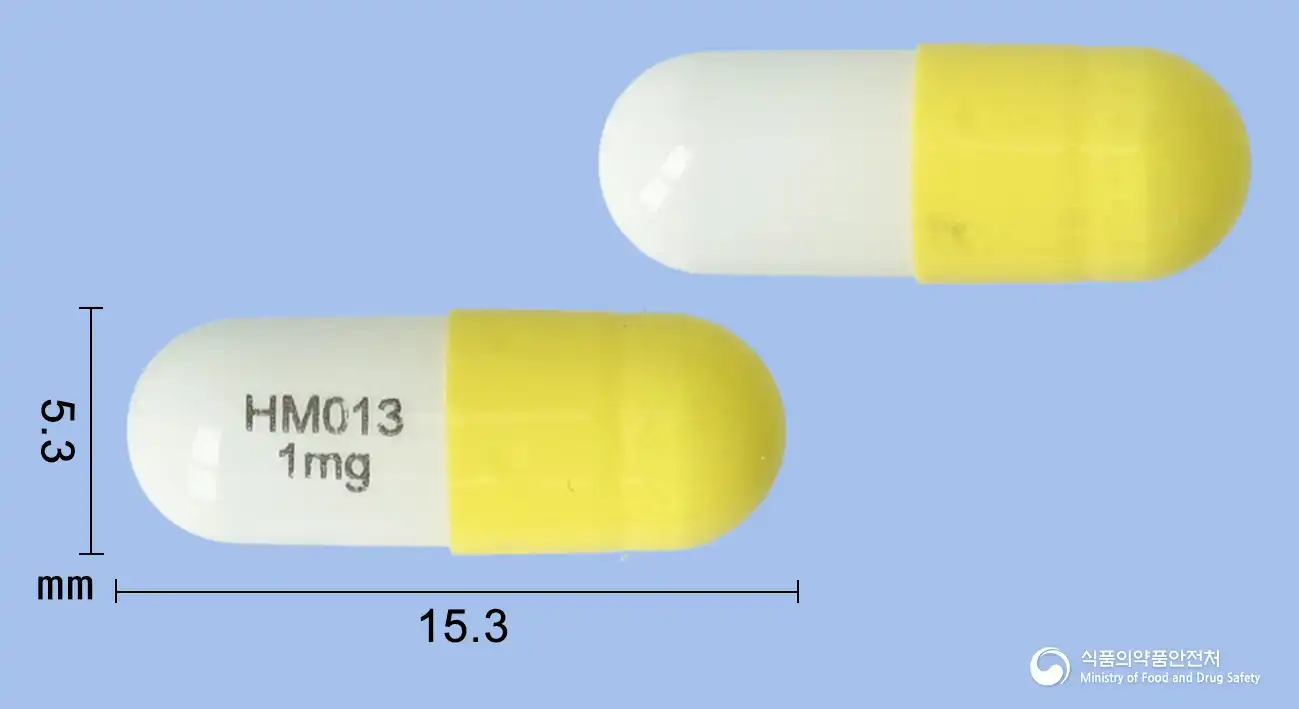
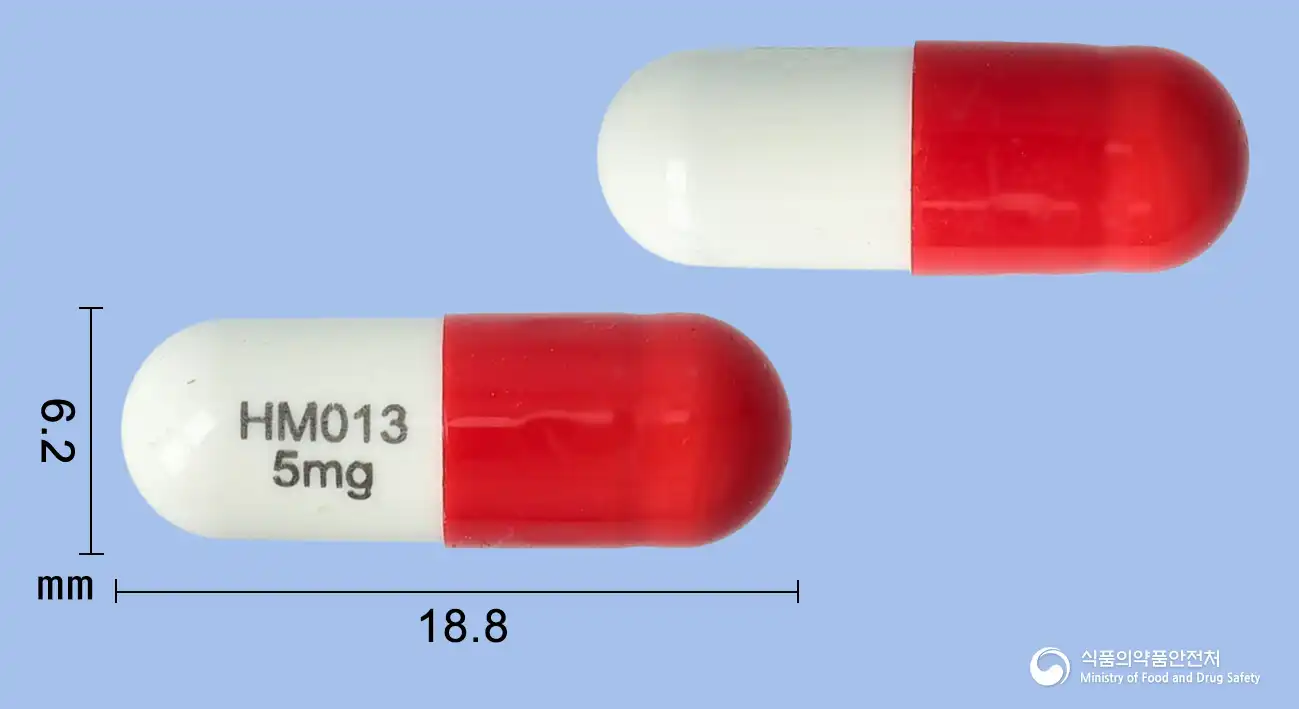
A hard capsule with a red upper part and a white lower part containing a white to whitish powder.
21 capsules/bottle
Even with the same ingredient, strength, dosage form and how it is taken can differ.
Even with the same ingredient, the dose and directions can differ by strength and dosage form. Talk to a doctor or pharmacist before switching from a medication you are already taking.
No questions yet.
For anything that needs medical judgment, consult a doctor or pharmacist.
This drug information is based on data provided by the Korea Ministry of Food and Drug Safety.
Consult a doctor or pharmacist for accurate dosage, administration, and usage instructions.