
 한국어
 English
 日本語
 中文(简体)
 Viewing now
Agotin Tablets 25 mg (Agomelatine)
Agomelatine 25mg
Tablet · Prescription medication
HanIn Pharmaceutical Co., Ltd.
MFDS item code 202403080 · Approved 2024.12.26 · Insurance code 657204230
Treatment of major depressive disorder and generalized anxiety disorder
This medicine is used for major depressive disorder and generalized anxiety disorder.
The recommended dose of this medicine is 25 mg, administered once daily at bedtime. - If symptoms do not improve after 2 weeks of treatment in patients with major depressive disorder, the dose may be increased to 50 mg (two 25mg tablets) once daily. - If symptoms do not improve after 4 weeks of treatment in patients with generalized anxiety disorder, the dose may be increased to 50 mg (two 25mg tablets) once daily. Do not exceed the maximum recommended dose. The decision to increase the dose should take into account the risk of elevated transaminases. Increasing the dose to 50mg must be done based on the benefit/risk for each individual patient, under strict monitoring of liver function tests. Liver function tests must be performed in all patients before starting treatment. Treatment must not be initiated if transaminase levels exceed 3 times the upper limit of normal. During treatment, transaminase levels should also be monitored at approximately 3 weeks, 6 weeks (end of the acute phase), 12 weeks, 24 weeks (end of the maintenance phase), and as clinically indicated. Treatment must be discontinued if transaminase levels exceed 3 times the upper limit of normal. When increasing the dose, liver function tests must be repeated at the same frequency as when starting treatment. Patients with depression and generalized anxiety disorder should be treated for a sufficient period of at least 6 months to achieve symptom resolution. Patients may experience withdrawal symptoms when discontinuing SSRI/SNRI antidepressants. To prevent these symptoms, refer to the prescribing information for the relevant product when discontinuing SSRI/SNRI treatment. Agomelatine can be started immediately while the SSRI or SNRI dose is being gradually reduced (tapered). The safety and efficacy of this medicine (25 ~ 50mg/day) have been established in elderly patients with depression (under 75 years of age). This medicine must not be administered to patients aged 75 years or older. No dose adjustment is needed based on age. Because experience with this medicine (25-50mg/day) in elderly patients with generalized anxiety disorder is limited, it is not recommended for the treatment of generalized anxiety disorder in patients aged 65 years or older. The pharmacokinetic parameters of this medicine are not significantly altered in patients with severe renal impairment. However, clinical data in patients with severe or moderate renal impairment are limited; therefore, caution should be exercised when administering this medicine. This medicine must not be administered to patients with hepatic impairment. There is no need to gradually reduce the dose when discontinuing treatment. This medicine may be taken with or without food.
The safety and efficacy of this medicine have not been established in children and adolescents under 18 years of age.
This drug is used for the treatment of depression and generalized anxiety disorder. There may be thoughts of suicide or self-harm while taking this medication, so patients should be monitored carefully, especially during the first few weeks of treatment. Patients with a history of suicide attempts or severe suicidal thoughts require even closer supervision. Patients who cannot take this medication include those who are allergic to this drug or its ingredients, or those with severely impaired liver function. Moreover, it should not be taken with certain strong drugs, and patients with genetic issues such as lactose intolerance should also avoid it. Mild side effects such as headache, nausea, and dizziness may occur initially, but these are mostly temporary. Since this medication can affect liver function, liver function tests should be conducted regularly before and during treatment, and the medication should be stopped immediately if signs of liver damage occur. This drug is not recommended for individuals under 18 years of age or those over 75 years old, and for patients with dementia. Patients with a history of bipolar disorder or mania should be cautious as symptoms may worsen during treatment with this medication. This drug may interact with certain medications, so if you are taking other drugs, consult your doctor or pharmacist. Pregnant or breastfeeding women should avoid this medication, and consult a specialist if necessary. In case of overdose, symptoms such as drowsiness, dizziness, and abdominal pain may occur, and immediate medical attention should be sought. Dizziness or drowsiness may occur, so caution is needed when driving or operating machinery. This medication should be kept out of reach of children, and it is advisable to avoid transferring it to other containers.
Suicidal thoughts or behaviors, anxiety, abnormal dreams, restlessness and related symptoms, aggression, nightmares, mania/hypomania, confusion, hallucinations, headache, dizziness, drowsiness, insomnia, sensory disturbances, restless legs syndrome, migraine, akathisia, blurred vision, tinnitus, nausea, diarrhea, constipation, abdominal pain, vomiting, increased ALT and/or AST, increased GGT, hepatitis, increased alkaline phosphatase, liver failure, jaundice, sweating, eczema, itching, hives, erythematous rash, facial swelling and angioedema, low back pain, myalgia, urinary stasis, fatigue, weight gain, weight loss, dyspepsia, edema, asthenia, unusual feelings, sedation, flexibility, movement disorders, stupor, atrial fibrillation, bipolar disorder, daydreaming, social anxiety disorder, dry mouth, herpes zoster lesions, intoxication and procedural complications, concussion, complications of sedative administration, decreased appetite, hyponatremia, increased appetite, musculoskeletal rigidity, dry eyes, benign prostatic hyperplasia, epigastric pain, drowsiness, fatigue, restlessness, anxiety, tension, cyanosis, malaise
Not everyone experiences these, and they can vary from person to person.
This medication may be sensitive to air or moisture, so it should be stored in a tightly sealed container. Additionally, it is best to store the medication at room temperature between 1 and 30 degrees Celsius. Proper storage can help maintain the medication's effectiveness for a long time.
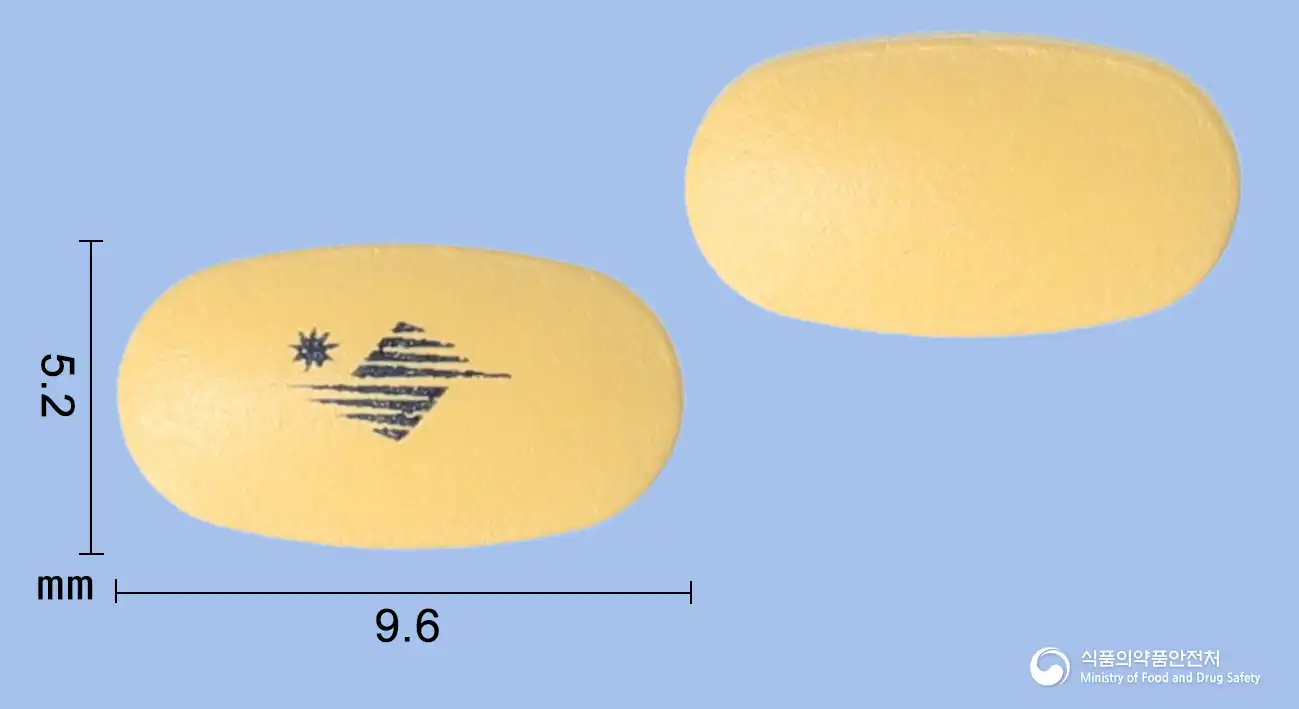
A film-coated tablet in a rectangular shape, yellow in color with a blue company logo on one side (refer to the characteristics of medicinal substances).
30 tablets/bottle, 100 tablets/bottle
Even with the same ingredient, strength, dosage form and how it is taken can differ.
Even with the same ingredient, the dose and directions can differ by strength and dosage form. Talk to a doctor or pharmacist before switching from a medication you are already taking.
No questions yet.
For anything that needs medical judgment, consult a doctor or pharmacist.
This drug information is based on data provided by the Korea Ministry of Food and Drug Safety.
Consult a doctor or pharmacist for accurate dosage, administration, and usage instructions.