
 한국어
 English
 日本語
 中文(简体)
Summary
- Main use
- Treatment of severe alopecia areata in adults and adolescents aged 12 years and older
- Who takes it
- Adults
- Adult dose
- 1. Recommended assessments and vaccinations before starting treatment Perform the following assessments before starting treatment with this medication: • Assess for tuberculosis (TB) infection: This medication is not recommended for patients with active TB. For patients with latent TB or patients at high risk of TB who have a negative latent TB test, initiate prophylactic treatment for latent TB before starting this medication. • Screen for viral hepatitis according to clinical guidelines: This medication is not recommended for patients with hepatitis B or hepatitis C. • Do not administer this medication to patients with an absolute lymphocyte count (ALC) below 500/mm3 or a platelet count below 100,000/mm3. • Administer vaccinations according to current vaccination guidelines. 2. Recommended dosage The recommended dosage is 50 mg orally once daily, regardless of food intake. Swallow the capsule whole. Do not crush, split, or chew the capsules. If a dose is missed, take it as soon as possible if there are at least 8 hours remaining until the next dose; if less than 8 hours remain, skip the missed dose. Thereafter, resume dosing at the regularly scheduled time. 3. Patients with hepatic impairment No dose adjustment is required in patients with mild (Child-Pugh A) or moderate (Child-Pugh B) hepatic impairment. Administration of this medication is not recommended in patients with severe (Child-Pugh C) hepatic impairment. 4. Patients with renal impairment No dose adjustment is required in patients with mild (eGFR 60 - less than 90mL/min), moderate (eGFR 30 - less than 60mL/min), or severe (eGFR less than 30mL/min) renal impairment. Administration of this medication is not recommended in patients with end-stage renal disease (ESRD) or kidney transplant recipients. 5. Temporary interruption or discontinuation of treatment If temporary interruption of treatment is necessary, a temporary interruption of less than 6 weeks is not expected to result in significant loss of regrown scalp hair. 1) Hematologic abnormalities Recommendations for temporary interruption or discontinuation of this medication due to hematologic abnormalities are summarized in Table 1. Table 1. Laboratory test monitoring guidelines Laboratory test Recommendations Platelet count Discontinue treatment if the platelet count is below 50,000/mm3. Lymphocytes Temporarily interrupt treatment if the ALC (absolute lymphocyte count) is below 500/mm3; treatment may be resumed when the ALC recovers to at least this level. It is recommended that ALC and platelet count be measured before starting treatment, 4 weeks after starting treatment, and thereafter as part of routine patient care.
Ingredients
- Importer
- Pfizer Pharmaceuticals Korea Limited
Efficacy & effects
Treatment of severe alopecia areata in adults and adolescents aged 12 years and older
- Severe alopecia areata
View approved original textHide original text
This medication is used for the treatment of severe alopecia areata in adults and adolescents aged 12 and older. Alopecia areata is a condition characterized by round patches of hair loss, and this drug helps improve symptoms by promoting hair regrowth in the affected areas. Consistent use can be expected to restore hair.
How to take
Adult dose
1. Recommended assessments and vaccinations before starting treatment Perform the following assessments before starting treatment with this medication: • Assess for tuberculosis (TB) infection: This medication is not recommended for patients with active TB. For patients with latent TB or patients at high risk of TB who have a negative latent TB test, initiate prophylactic treatment for latent TB before starting this medication. • Screen for viral hepatitis according to clinical guidelines: This medication is not recommended for patients with hepatitis B or hepatitis C. • Do not administer this medication to patients with an absolute lymphocyte count (ALC) below 500/mm3 or a platelet count below 100,000/mm3. • Administer vaccinations according to current vaccination guidelines. 2. Recommended dosage The recommended dosage is 50 mg orally once daily, regardless of food intake. Swallow the capsule whole. Do not crush, split, or chew the capsules. If a dose is missed, take it as soon as possible if there are at least 8 hours remaining until the next dose; if less than 8 hours remain, skip the missed dose. Thereafter, resume dosing at the regularly scheduled time. 3. Patients with hepatic impairment No dose adjustment is required in patients with mild (Child-Pugh A) or moderate (Child-Pugh B) hepatic impairment. Administration of this medication is not recommended in patients with severe (Child-Pugh C) hepatic impairment. 4. Patients with renal impairment No dose adjustment is required in patients with mild (eGFR 60 - less than 90mL/min), moderate (eGFR 30 - less than 60mL/min), or severe (eGFR less than 30mL/min) renal impairment. Administration of this medication is not recommended in patients with end-stage renal disease (ESRD) or kidney transplant recipients. 5. Temporary interruption or discontinuation of treatment If temporary interruption of treatment is necessary, a temporary interruption of less than 6 weeks is not expected to result in significant loss of regrown scalp hair. 1) Hematologic abnormalities Recommendations for temporary interruption or discontinuation of this medication due to hematologic abnormalities are summarized in Table 1. Table 1. Laboratory test monitoring guidelines Laboratory test Recommendations Platelet count Discontinue treatment if the platelet count is below 50,000/mm3. Lymphocytes Temporarily interrupt treatment if the ALC (absolute lymphocyte count) is below 500/mm3; treatment may be resumed when the ALC recovers to at least this level. It is recommended that ALC and platelet count be measured before starting treatment, 4 weeks after starting treatment, and thereafter as part of routine patient care.
Precautions
This medication may increase the risk of serious infections, so thorough screening and monitoring for tuberculosis and other infections should be conducted before and during treatment. It should not be administered to patients with active tuberculosis and should only be started after treating latent tuberculosis. If any signs of infection appear, medical personnel should be notified immediately, and the drug may be discontinued until the infection is controlled. This medication may increase mortality and the risk of cardiovascular adverse reactions in patients over the age of 50 who have cardiovascular disease, so the individual risks and benefits should be carefully evaluated before administration. There may also be an increased risk of malignant tumors, and regular skin checks and cancer screenings are required, especially for smokers and the elderly. Due to the risk of thrombosis, administration should be immediately stopped and evaluated if any thrombosis symptoms occur. Patients who have allergies to this drug or its components, those with very low blood cell counts, pregnant or potentially pregnant women, and breastfeeding mothers should not receive this medication. Caution should be exercised when administering to patients with chronic infections or a history of tuberculosis exposure, severely impaired liver or kidney function, and the elderly. While on treatment, various adverse reactions such as headache, diarrhea, skin rashes, shingles, and changes in blood counts may occur, so symptoms should be monitored. This drug has immunosuppressive effects, so live vaccinations should be avoided, and immunizations should preferably be completed before administration. The risk of side effects may increase when combined with other immunosuppressants, and administration should be stopped if neurological symptoms occur. This drug can inhibit specific liver metabolic enzymes, leading to increased blood concentrations of other medications, thus requiring monitoring and dosage adjustments of concomitant medications. There is a lack of safety data during pregnancy, so women planning pregnancy should ensure effective contraception during and for a certain period after treatment. During breastfeeding, this medication may pass to the baby through breast milk, so it is recommended to avoid breastfeeding during the treatment period and for a certain time afterward. Use is only recommended for children age 12 and older, as safety and efficacy in children under 12 have not been established. Generally, dose adjustments are not needed for the elderly, but caution is necessary due to a higher risk of infections. Blood tests should be conducted before and during treatment to check lymphocyte and platelet counts, and liver function tests should be performed regularly. There is no specific antidote for overdose, so symptomatic treatment and monitoring based on symptoms are necessary. This medication should be stored out of reach of children and kept in its original container.
Side effects
- serious infections
- active tuberculosis
- invasive fungal infections
- bacterial infections
- shingles
- viral infections
- opportunistic infections
- malignant tumors
- non-melanoma skin cancer
- lymphoma
Show 31 moreCollapse
- lung cancer
- major cardiovascular adverse reactions
- cardiovascular death
- myocardial infarction
- stroke
- pulmonary embolism
- retinal artery occlusion
- headache
- diarrhea
- acne
- rash
- hives
- folliculitis
- fever
- atopic dermatitis
- dizziness
- increased serum creatine phosphokinase
- decreased red blood cell count
- stomatitis
- appendicitis
- COVID-19 infection
- sepsis
- herpes zoster in multiple skin lesions
- malignant tumors (breast cancer)
- acute myocardial infarction
- anaphylactic reaction
- neuroaxonal dystrophy
- decreased lymphocyte count
- decreased platelet count
- elevated liver enzymes
- increased creatine phosphokinase
Not everyone experiences these, and they can vary from person to person.
Storage
This medication should be stored in a tightly closed container to protect it from air and moisture. It is important to maintain a storage temperature between 1°C and 25°C.
Appearance and packaging
Appearance
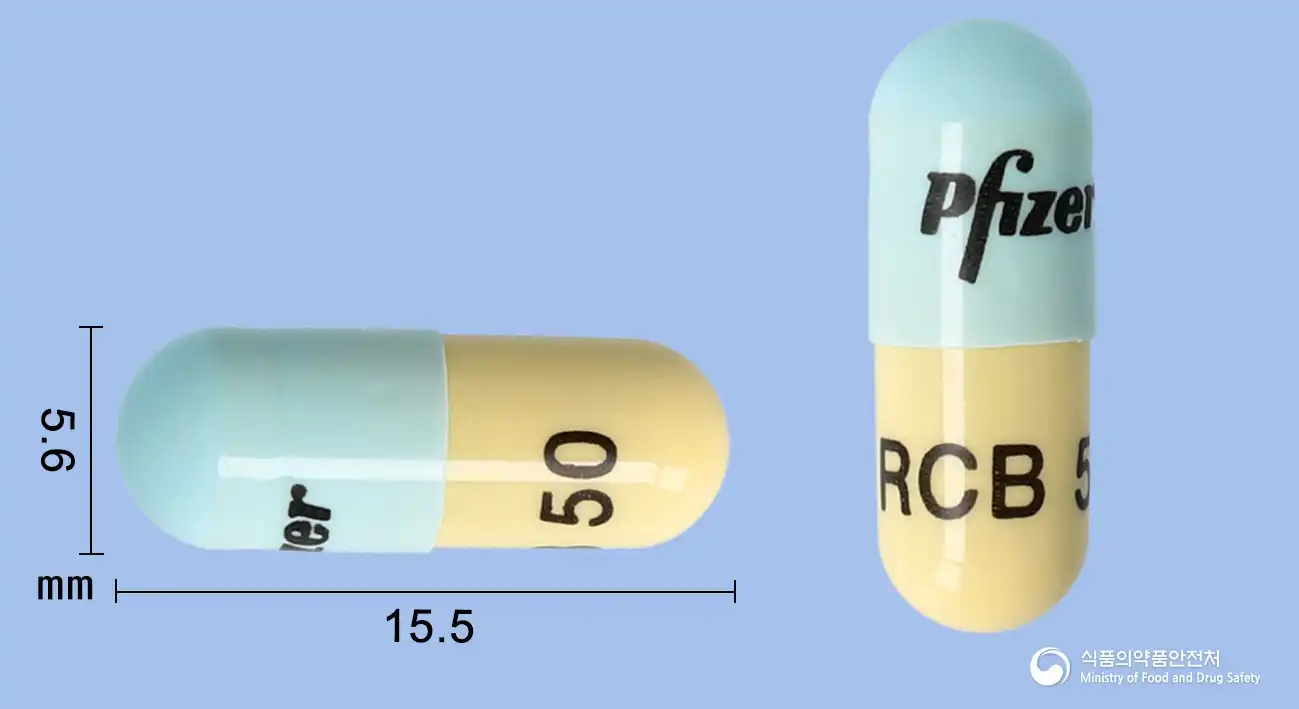
An opaque capsule with a yellow upper half and a blue lower half containing a white, grayish, or light pink powder.
Package unit
28 capsules/bottle
Questions about this medicine
No questions yet.
For anything that needs medical judgment, consult a doctor or pharmacist.