한국어
 English
 日本語
 中文(简体)
 Viewing now
Badanemjeong 150 mg (Bada Dustart)
Vadadustat 150mg
Tablet · Prescription medication
Tanabe Pharma Korea Co., Ltd.
MFDS item code 202300885 · Approved 2023.03.13
Treatment of symptomatic anemia in adult patients with chronic kidney disease on dialysis
Used for the treatment of symptomatic anemia in adult patients with chronic kidney disease undergoing dialysis.
Adults Treatment with this drug should be initiated by a physician experienced in the diagnosis and treatment of anemia. Before deciding to initiate treatment with this drug or increase the dose, evaluate other causes of anemia. Ensure adequate iron stores when initiating treatment with this drug, and check transferrin saturation (TSAT) and ferritin levels. For patients not previously treated with erythropoiesis-stimulating agents (ESA), the criterion for initiating this drug is a hemoglobin (Hb) level below 10 g/dL. Patients receiving erythropoiesis-stimulating agents (ESA) may be switched to this drug. During treatment with this drug, individualize the dose according to the patient's condition to achieve and maintain a hemoglobin (Hb) level of 11 ± 1 g/dL. Initial dose Administer vadadustat orally at a starting dose of 300 mg once daily. Dose adjustment and maintenance dose After starting treatment, increase or decrease the dose as appropriate according to the patient's condition. The maximum dose is 600 mg once daily. Monitor hemoglobin (Hb) levels every 2 weeks until the target is reached and maintained, and thereafter every 4 weeks or as clinically indicated. If dose adjustment is needed, increase or decrease the dose by one step at a time, referring to Tables 1 and 2. When increasing the dose, the increment is 150 mg, with at least 4 weeks between increases. Do not adjust the dose of this drug more often than every 4 weeks. As an exception, if hemoglobin (Hb) levels rise rapidly (e.g., > 1 g/dL within 2 weeks or > 2 g/dL within 4 weeks) or exceed 12 g/dL, take appropriate measures, such as promptly reducing the dose or temporarily interrupting treatment. When resuming treatment after an interruption, restart at a dose at least one step lower than the dose before the interruption. Table 1. Dose adjustment steps and sequence Step 1 2 (initial dose) 3 4 (maximum dose) Dose of this drug 150 mg 300 mg 450 mg 600mg Table 2. Dose adjustment table Recent Hb change Current Hb level < 10 g/dL 10 - 12 g/dL 12 - 12.9 g/dL ≥ 13 g/dL No increase of 2 g/dL or more over 4 weeks Increase by 150 mg if the dose has not been increased in the past 4 weeks Maintain current dose Reduce by 150 mg Discontinue this drug until Hb is 12 g/dL or lower, then restart at a dose 150 mg lower than the previous dose. If the patient was taking 150 mg immediately before discontinuation, restart at 150 mg. Increase of 2 g/dL or more over 4 weeks Reduce by 150 mg or maintain the current dose* Reduce by 150 mg or maintain the current dose* Reduce by 150 mg * A dose reduction may not be necessary for a transient Hb fluctuation. Missed dose If a dose is missed, take it as soon as remembered on the same day. On the day after a missed dose, skip the missed dose and take the scheduled dose at the usual time. Do not take 2 doses at once. Patients with hepatic impairment Use of this drug is not recommended in patients with moderate hepatic impairment at the start of treatment or in patients with elevated aminotransferase levels (ALT or AST at least 2 times the upper limit of normal). Monitoring of liver enzymes is recommended in all patients before starting therapy with this drug and periodically thereafter.
This medication should be administered at the minimum dose necessary to maintain hemoglobin levels within the recommended target range. During administration, hemoglobin levels should be regularly monitored to prevent excessive hematopoietic activity. There is a risk of serious vascular issues such as thromboembolism occurring with this medication, therefore the patient's risk of thromboembolism should be assessed carefully before administration. Patients should be closely monitored during treatment, and they should be instructed to seek immediate medical attention if symptoms such as stroke, myocardial infarction, or thromboembolism occur. Since liver dysfunction may occur, regular liver function tests are important. Patients who are allergic to any components of this medication or have severe liver impairment, uncontrolled hypertension, pregnant women or those who may become pregnant, and nursing mothers should not use this medication. Patients with a history of thromboembolism or those with hypertension, malignancies, specific eye diseases, severe infections, polycystic kidney disease, or heart failure history should use this medication cautiously. Blood pressure may rise while using this medication; thus, it should be monitored and managed regularly. As an erythropoiesis stimulating agent, iron supplementation may be needed, and if iron levels are low, it is advisable to take iron supplements as well. This medication may interact with other drugs, so patients taking certain lipid-lowering agents or diuretics should consult a healthcare professional. It is safest for pregnant or nursing women not to use this medication. Safety and efficacy in pediatric patients have not been sufficiently established, so caution is advised when using it in this population. In case of overdose, hemoglobin levels can become excessively high, leading to dangerous complications; thus, exact dosages should be strictly adhered to. This medication is not removed by dialysis, so immediate medical intervention is necessary in case of an overdose. When taking this medication, the packaged tablet should be removed and taken, and care should be taken not to swallow the packaging sheet. It should be stored safely out of reach of children, and transferring it to another container should be avoided.
Not everyone experiences these, and they can vary from person to person.
This medication should be stored in a tightly closed container to protect it from air and moisture. It is best to maintain a storage temperature between 1 and 30 degrees Celsius at room temperature to ensure the medication's effectiveness is preserved for a longer time.
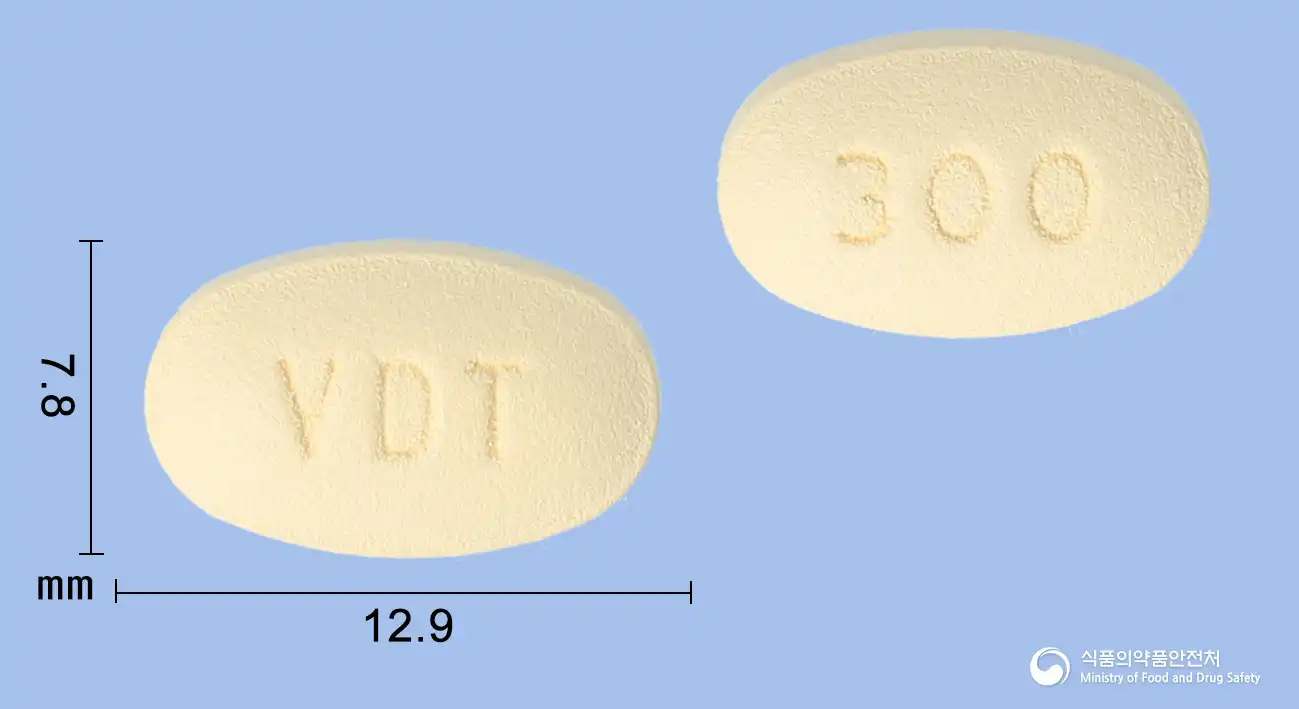
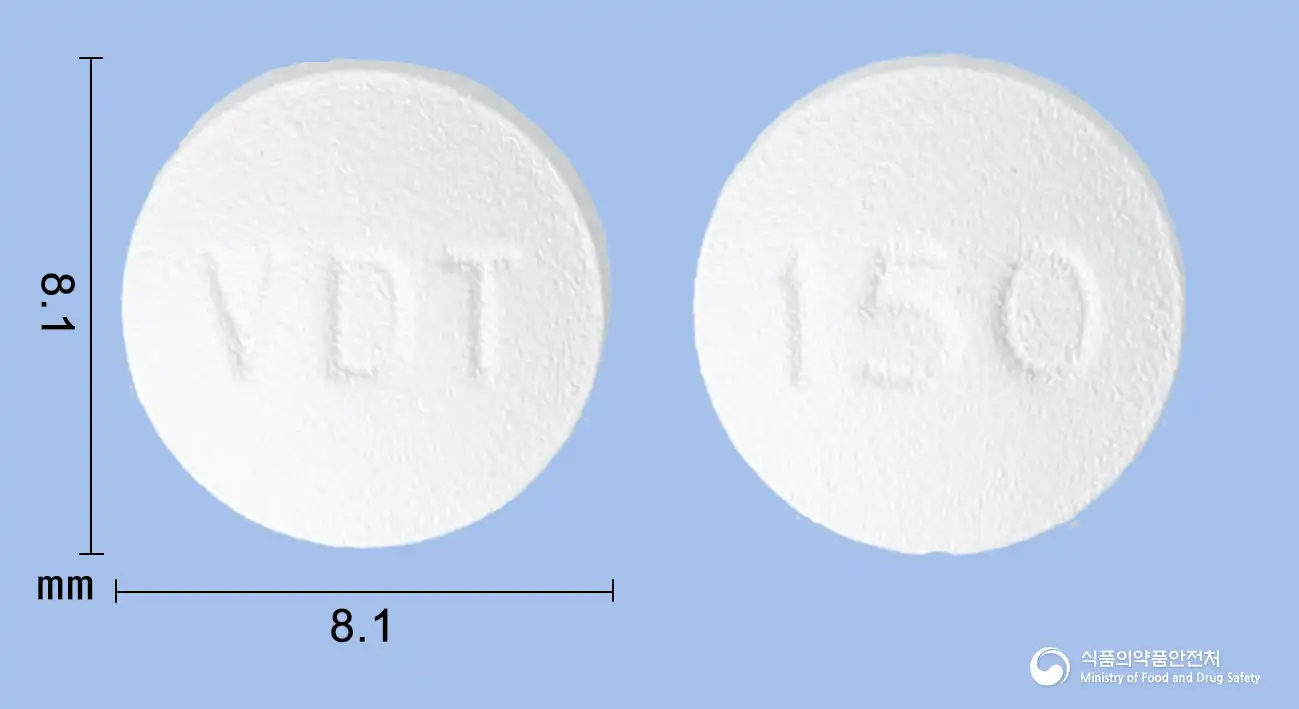
White round film-coated tablet
PTP - 10 tablets/PTP [100 tablets [10 tablets (PTP) x 10]]
Even with the same ingredient, strength, dosage form and how it is taken can differ.
Even with the same ingredient, the dose and directions can differ by strength and dosage form. Talk to a doctor or pharmacist before switching from a medication you are already taking.
No questions yet.
For anything that needs medical judgment, consult a doctor or pharmacist.
This drug information is based on data provided by the Korea Ministry of Food and Drug Safety.
Consult a doctor or pharmacist for accurate dosage, administration, and usage instructions.