
 한국어
 English
 日本語
 中文(简体)
 Viewing now
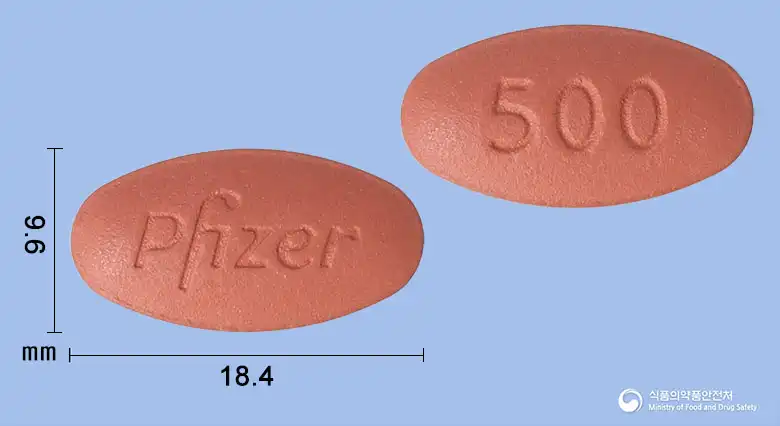
Bosulif 500 mg (Bosutinib Hydrate)
Bosutinib Monohydrate 516.98mg
Tablet · Prescription medication
Pfizer Korea Ltd.
MFDS item code 202300246 · Approved 2023.01.12 · Insurance code 648903790
Treatment of Philadelphia chromosome-positive chronic myeloid leukemia in adults
This medication is used for the treatment of patients with Philadelphia chromosome positive chronic myeloid leukemia (Ph+ CML) in chronic phase, accelerated phase, or acute phase. It is particularly effective for newly diagnosed patients as well as those with resistance or intolerance to prior therapy. This medicine plays a crucial role in managing blood cancers and aiding patient treatment.
1. Recommended dosage This medicine is administered orally once daily with food. The tablets must be swallowed whole and must not be crushed or cut. Continue treatment with this medicine until disease progression or intolerance to treatment occurs. If a dose of this medicine is missed by more than 12 hours, the patient should skip that dose and take the prescribed dose the following day. 1) Newly diagnosed chronic-phase Philadelphia chromosome-positive chronic myeloid leukemia (CP Ph+ CML) The recommended dosage of this medicine is 400 mg of bosutinib once daily, administered orally with food. 2) Chronic-, accelerated-, or blast-phase Philadelphia chromosome-positive chronic myeloid leukemia with resistance or intolerance to prior therapy (CP, AP, BP Ph+ CML) The recommended dosage of this medicine is 500 mg of bosutinib once daily, administered orally with food. 2. Dose escalation In clinical studies in adult patients with Philadelphia chromosome-positive chronic myeloid leukemia (Ph+ CML), the dose could be increased by 100 mg once daily, up to a maximum of 600 mg once daily, in patients who did not achieve or maintain a hematologic, cytogenetic, or molecular response and who had no Grade 3 or higher adverse reactions at the recommended starting dose. 3. Dose adjustment for nonhematologic adverse reactions 1) Elevated liver aminotransferases: If liver aminotransferases rise to more than 5 times the upper limit of normal, temporarily withhold treatment until levels recover to 2.5 times the upper limit of normal or lower, then resume treatment at 400 mg once daily. Discontinue treatment if recovery takes more than 4 weeks. If aminotransferases rise to 3 times or more the upper limit of normal, with a concurrent bilirubin elevation to more than 2 times the upper limit of normal and alkaline phosphatase elevation to less than 2 times the upper limit of normal (Hy’s law case), discontinue treatment. 2) Diarrhea: For Grade 3-4 diarrhea according to NCI CTCAE* (an increase of 7 or more bowel movements per day compared with before treatment/baseline), temporarily withhold this medicine until it recovers to Grade 1 or lower. Treatment with this medicine may be resumed at 400 mg once daily. (* National Cancer Institute Common Terminology Criteria for Adverse Events) 3) For clinically significant, moderate, or severe nonhematologic toxicity, temporarily withhold treatment until the toxicity resolves, then consider resuming treatment once daily at a dose reduced by 100 mg. If clinically appropriate, consider re-escalating to the starting dose. Doses below 300 mg/day have been used in patients, but efficacy has not been established. 4. Dose adjustment for myelosuppression Dose adjustments for severe or persistent neutropenia and thrombocytopenia are shown in Table 1 below. [Table 1] Dose adjustment for neutropenia and thrombocytopenia Absolute neutrophil count (ANC) less than 1000x106/L or Platelets less than 50,000x106/L Temporarily withhold this medicine until the ANC is at least 1,000×106/L and the platelet count is at least 50,000×106/L. If recovery occurs within 2 weeks, resume treatment at the same dose. If blood cell counts remain low for more than 2 weeks, resume treatment at a dose reduced by 100 mg upon recovery. If cytopenia recurs, reduce the dose by an additional 100 mg and resume treatment. Doses below 300 mg/day have been used in patients, but efficacy has not been established. 5. Dose adjustment for renal impairment Patients with serum creatinine levels greater than 1.5 times the upper limit of normal were excluded from chronic myeloid leukemia studies. Increased exposure (AUC) was observed in patients with moderate and severe renal impairment during the study period. 1) Newly diagnosed chronic-phase (CP) Philadelphia chromosome-positive chronic myeloid leukemia (Ph+ CML) For patients with moderate renal impairment (creatinine clearance [CLcr] 30-50mL/min, estimated by Cockcroft-Gault (C-G)), the recommended dosage of this medicine is 300mg once daily, administered with food. For patients with severe renal impairment (CLCr < 30mL/min, estimated by C-G), the recommended dosage of this medicine is 200mg once daily, administered with food. If there are no severe or persistent moderate adverse reactions and an adequate hematologic, cytogenetic, or molecular response has not been achieved, dose escalation may be considered to 400mg once daily with food for patients with moderate renal impairment and to 300mg once daily for patients with severe renal impairment. 2) Chronic-, accelerated-phase (AP), or blast-phase (BP) Philadelphia chromosome-positive chronic myeloid leukemia with resistance or intolerance to prior therapy (Ph+ CML) For patients with moderate renal impairment (CLCr 30~50mL/min, estimated by C-G), the recommended dosage of this medicine is 400mg daily. For patients with severe renal impairment (CLCr < 30mL/min, estimated by C-G), the recommended dosage of this medicine is 300mg once daily. If there are no severe or persistent moderate adverse reactions and an adequate hematologic, cytogenetic, or molecular response has not been achieved, dose escalation may be considered to 500mg once daily for patients with moderate renal impairment and to 400mg once daily for patients with severe renal impairment.
This medication should not be used in patients who have shown allergic reactions to it in the past, as it can potentially cause serious allergic reactions such as anaphylaxis. Additionally, patients with liver function impairment should not be administered this medicine. In patients with mild liver dysfunction, this medication should be given with caution, and liver function tests must be conducted monthly for the first 3 months to carefully monitor liver health. Patients with decreased kidney function or those at risk of kidney issues should closely monitor kidney function before using this medication, and extra caution is advised if they are on other drugs that may affect the kidneys. Patients with a history of hepatitis B virus infection must undergo testing before treatment, and if infection is confirmed, treatment should proceed only after consultation with a specialist. Continuous observation for viral reactivation is necessary during therapy. Patients at high risk of bleeding should exercise caution when taking this medication concurrently with drugs that inhibit platelet function or interfere with blood clotting. Patients with a history of heart disease or at risk of heart failure should be especially careful when administering this medication, and electrolyte abnormalities such as hypokalemia or hypomagnesemia must be corrected before treatment. Patients with gastrointestinal disorders or those who have recently experienced severe gastrointestinal problems should carefully consider the decision to use this medication. This medication may commonly cause gastrointestinal side effects, such as diarrhea, nausea, vomiting, and abdominal pain; hence, monitoring patient status is essential, and appropriate treatment should be administered as necessary. Blood cell counts may decrease, so during the first month, blood tests should be performed weekly, followed by regular monitoring. Liver function abnormalities may occur, so liver enzyme levels should be frequently checked at the beginning of treatment to observe liver status closely. Cardiovascular side effects such as heart failure or cardiac ischemia can occur, so any cardiac symptoms must be reported to healthcare personnel immediately. Fluid retention may occur, presenting symptoms such as pericarditis, pleural effusion, pulmonary edema, and peripheral edema, thus requiring careful monitoring of fluid status. Kidney function impairment may arise, necessitating regular evaluation of kidney function before and during treatment, considering dosage adjustment as needed. During pregnancy, this medication can harm the fetus, so pregnant women should not take it, and women of childbearing potential should use effective contraception for at least 2 weeks during and after treatment. Breastfeeding women are advised to avoid breastfeeding for at least 2 weeks during and after treatment with this medication. This medication has not established safety and efficacy in children; therefore, it should not be used in patients under 18 years of age. No significant safety differences have been reported in older adults, but caution is advised as some elderly patients may be more sensitive to the medication. In case of overdose, immediate medical attention should be sought for appropriate supportive care; while severe adverse reactions from overdose are rare, they should be treated with caution. This medication may interact with other drugs, particularly those that inhibit or induce CYP3A enzymes in the liver, so caution is warranted when taking such medications together. Co-administration with certain antacids may reduce the drug's effect, hence adjusting the interval of consumption is necessary. Serious skin reactions may occur during treatment, so any skin abnormalities should be reported to healthcare personnel immediately. This medication should be stored out of reach of children, kept in its original container, and care should be taken to avoid touching broken or damaged tablets.
Not everyone experiences these, and they can vary from person to person.
This medication must be stored in a tightly sealed container to protect it from air and moisture. It is safest to store it at room temperature between 1 and 30 degrees Celsius, avoiding extremes of temperature.
Red, biconvex, oval film-coated tablets
28 tablets/box [14 tablets/blister x 2]
Even with the same ingredient, strength, dosage form and how it is taken can differ.
Viewing nowBosutinib Monohydrate 516.98mg
Tablet · Prescription medication
Pfizer Korea Ltd.
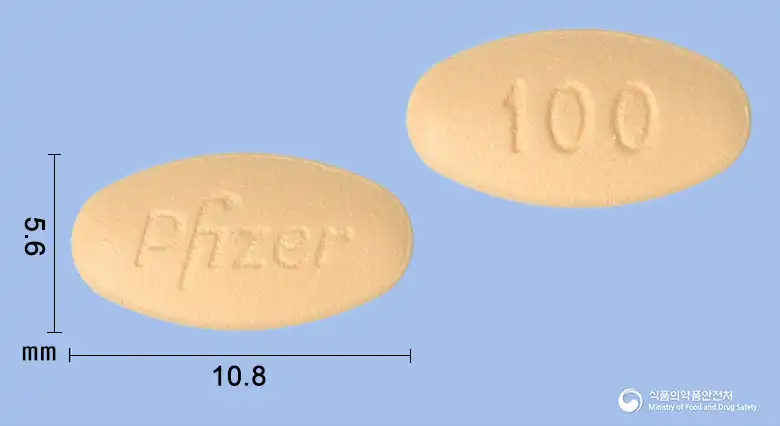
Bosutinib Monohydrate 103.4mg
Tablet · Prescription medication
Pfizer Korea Co., Ltd.
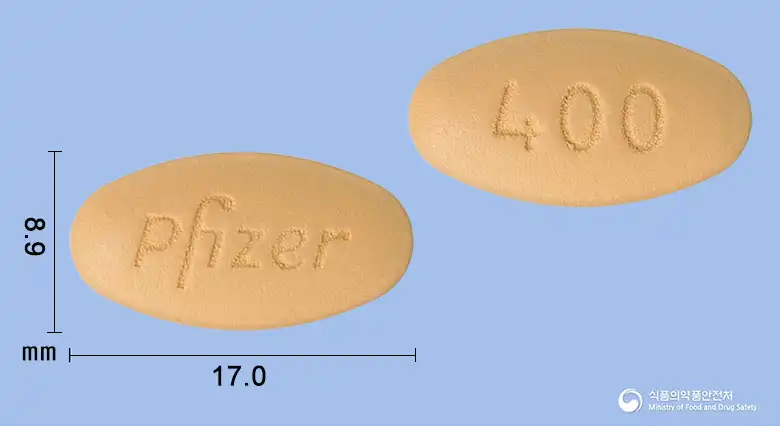
Bosutinib Monohydrate 413.6mg
Tablet · Prescription medication
Pfizer Pharmaceuticals Korea Co., Ltd.
Even with the same ingredient, the dose and directions can differ by strength and dosage form. Talk to a doctor or pharmacist before switching from a medication you are already taking.
No questions yet.
For anything that needs medical judgment, consult a doctor or pharmacist.
This drug information is based on data provided by the Korea Ministry of Food and Drug Safety.
Consult a doctor or pharmacist for accurate dosage, administration, and usage instructions.