
 한국어
 English
 日本語
 中文(简体)
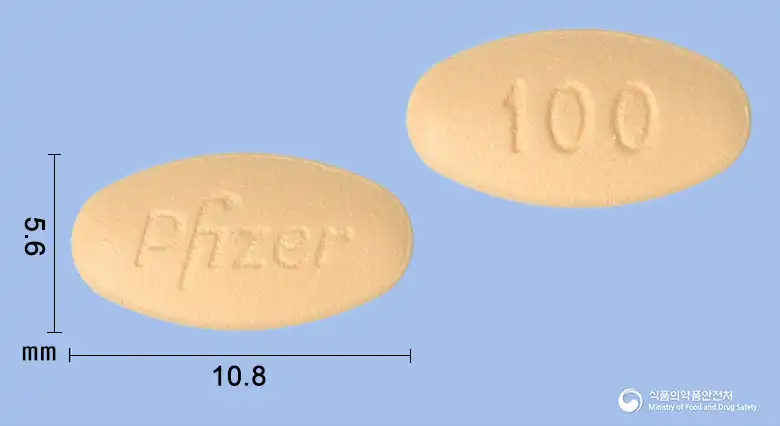 Viewing now
BOSULIF 100 mg (Bosutinib Hydrate)
Bosutinib Monohydrate 103.4mg
Tablet · Prescription medication
Pfizer Korea Co., Ltd.
MFDS item code 202300244 · Approved 2023.01.12 · Insurance code 648903800
Treatment of Philadelphia chromosome-positive chronic myeloid leukemia in adults
This medication is used for the treatment of chronic phase, accelerated phase, or acute phase Philadelphia chromosome-positive chronic myeloid leukemia (Ph+ CML) in adult patients. It is used effectively not only in newly diagnosed chronic phase patients but also in cases where there is resistance or intolerance to previous therapies, aiding in the improvement of the patient's condition.
This medicine is administered orally once daily with food. Tablets must be swallowed whole and must not be crushed or cut. Continue treatment with this medicine until disease progression or intolerable toxicity occurs. If a dose is missed by 12 hours or more, the patient should skip that dose and take the prescribed dose the following day. Newly diagnosed chronic-phase Philadelphia chromosome-positive chronic myeloid leukemia (CP Ph+ CML): The recommended dose of this medicine is 400 mg of bosutinib once daily, taken orally with food. Chronic-, accelerated-, or blast-phase Philadelphia chromosome-positive chronic myeloid leukemia (CP, AP, BP Ph+ CML) resistant or intolerant to prior therapy: The recommended dose of this medicine is 500 mg of bosutinib once daily, taken orally with food. In clinical trials in adult patients with Philadelphia chromosome-positive chronic myeloid leukemia (Ph+ CML), a dose increase of 100 mg once daily, up to a maximum of 600 mg once daily, was permitted for patients who did not achieve or maintain a hematologic, cytogenetic, or molecular response and who had no Grade 3 or higher adverse reactions at the recommended starting dose. Elevated liver aminotransferases: If liver aminotransferase levels rise to more than 5 times the upper limit of normal, temporarily interrupt treatment until levels recover to 2.5 times the upper limit of normal or lower, then resume treatment at 400 mg once daily. Discontinue treatment if recovery takes more than 4 weeks. If an aminotransferase level of 3 times the upper limit of normal or higher occurs concurrently with a bilirubin level greater than 2 times the upper limit of normal and an alkaline phosphatase level below 2 times the upper limit of normal (Hy’s law case), discontinue treatment. Diarrhea: For Grade 3-4 diarrhea according to NCI CTCAE* (an increase of 7 or more stools per day compared with pretreatment/baseline), temporarily interrupt treatment with this medicine until recovery to Grade 1 or lower. Treatment with this medicine may be resumed at 400 mg once daily. (* National Cancer Institute Common Terminology Criteria for Adverse Events) For clinically significant, moderate, or severe nonhematologic toxicity, consider temporarily interrupting treatment until the toxicity resolves, then resuming treatment once daily at a dose reduced by 100 mg. If clinically appropriate, consider increasing the dose again to the starting dose. Doses below 300 mg/day have been used in patients, but efficacy has not been established. Dose modifications for severe or persistent neutropenia and thrombocytopenia are shown in Table 1 below. Absolute neutrophil count (ANC) below 1000x106/L or platelets below 50,000x106/L: Temporarily interrupt treatment with this medicine until ANC is at least 1,000×106/L and platelets are at least 50,000×106/L. If recovery occurs within 2 weeks, resume treatment at the same dose. If blood counts remain low for more than 2 weeks, reduce the dose by 100 mg upon recovery and resume treatment. If cytopenia recurs, reduce the dose by an additional 100 mg and resume treatment. Doses below 300 mg/day have been used in patients, but efficacy has not been established. Patients with serum creatinine levels greater than 1.5 times the upper limit of normal were excluded from chronic myeloid leukemia clinical trials. Increased exposure (AUC) was observed in patients with moderate and severe renal impairment during the study. Newly diagnosed chronic-phase (CP) Philadelphia chromosome-positive chronic myeloid leukemia (Ph+ CML): In patients with moderate renal impairment (creatinine clearance [CLcr] 30-50mL/min, estimated by Cockcroft-Gault (C-G)), the recommended dose of this medicine is 300mg once daily, taken with food. In patients with severe renal impairment (CLCr < 30mL/min, estimated by C-G), the recommended dose of this medicine is 200mg once daily, taken with food. If there are no severe or persistent moderate adverse reactions and an adequate hematologic, cytogenetic, or molecular response has not been achieved, consider increasing the dose to 400mg once daily with food in patients with moderate renal impairment and to 300mg once daily in patients with severe renal impairment. Chronic-, accelerated-phase (AP), or blast-phase (BP) Philadelphia chromosome-positive chronic myeloid leukemia (Ph+ CML) resistant or intolerant to prior therapy: In patients with moderate renal impairment (CLCr 30~50mL/min, estimated by C-G), the recommended dose of this medicine is 400mg daily. In patients with severe renal impairment (CLCr < 30mL/min, estimated by C-G), the recommended dose of this medicine is 300mg once daily. If there are no severe or persistent moderate adverse reactions and an adequate hematologic, cytogenetic, or molecular response has not been achieved, consider increasing the dose to 500mg once daily in patients with moderate renal impairment and to 400mg once daily in patients with severe renal impairment.
This medication should not be administered to certain patients. For example, patients who have shown allergic reactions to this drug or have severely impaired liver function should not use it. Patients with mild liver dysfunction should undergo liver function tests monthly while using this drug to carefully monitor for liver damage. Patients with reduced kidney function or those taking other medications that may burden the kidneys should closely monitor kidney function and use this medication cautiously. Patients with a history of hepatitis B virus infection should be tested for their infection status before starting this drug and periodically during treatment to check for reactivation of the infection. Patients at high risk of bleeding should be cautious when using this medication in conjunction with drugs affecting blood coagulation. Patients with a history of heart disease or unstable cardiac function should closely monitor their cardiac condition when using this medication, and if hypokalemia or hypomagnesemia is present, it should be corrected first. Patients with severe gastrointestinal disorders should be cautious, as this medication may worsen diarrhea, nausea, or vomiting. Common side effects of this drug include diarrhea, rash, nausea, abdominal pain, vomiting, fatigue, liver function impairment, respiratory infections, fever, and headache. Blood tests may reveal various abnormalities such as increased creatinine, decreased blood cell counts, increased liver enzymes, decreased calcium, and increased glucose, necessitating regular testing. This drug may cause gastrointestinal toxicity, so proper treatment and monitoring are required in case of diarrhea, vomiting, or abdominal pain. Bone marrow suppression may lead to decreased platelets, anemia, and neutropenia, so regular blood tests should be performed initially. Liver toxicity may occur, so liver function tests should be conducted monthly for the first 3 months after initiation, and dose adjustments or discontinuation should be considered if abnormalities are noted. Cardiovascular side effects, such as heart failure, myocardial ischemia, and left ventricular dysfunction, may occur, so continuous monitoring of cardiac status is necessary. Fluid retention may present as symptoms such as swelling, pleural effusion, or pulmonary edema, and immediate consultation with medical personnel is required if these occur. Kidney function may decline, so regular kidney function testing is necessary, and dose adjustments should be made as needed. During pregnancy, this drug may harm the fetus, hence women of childbearing potential should use effective contraception throughout and for at least 2 weeks after treatment. Lactating women are advised to avoid breastfeeding during the course of treatment and for at least 2 weeks afterward. This medication may interact with other drugs, particularly those metabolized in the liver or with proton pump inhibitors, CYP3A inhibitors, or inducers, so caution is needed. Elderly patients may use this drug, but some may be more sensitive to side effects, requiring careful monitoring. In case of overdose, no specific antidote exists, so immediate observation and appropriate supportive treatment in a medical facility are necessary. The safety and efficacy of this medication in children have not been established; therefore, it is not used in patients under 18 years old. This medication should be stored out of reach of children, kept in its original container, and care should be taken to properly dispose of damaged medications.
Not everyone experiences these, and they can vary from person to person.
This medication must be stored in a tightly sealed container to protect it from exposure to air or moisture. It is important to maintain storage temperatures between 1 to 30 degrees Celsius.
Yellow, round, biconvex film-coated tablets
28 tablets/box [14 tablets/blister x2], 112 tablets/box [14 tablets/blister x8]
Even with the same ingredient, strength, dosage form and how it is taken can differ.
Viewing nowBosutinib Monohydrate 103.4mg
Tablet · Prescription medication
Pfizer Korea Co., Ltd.
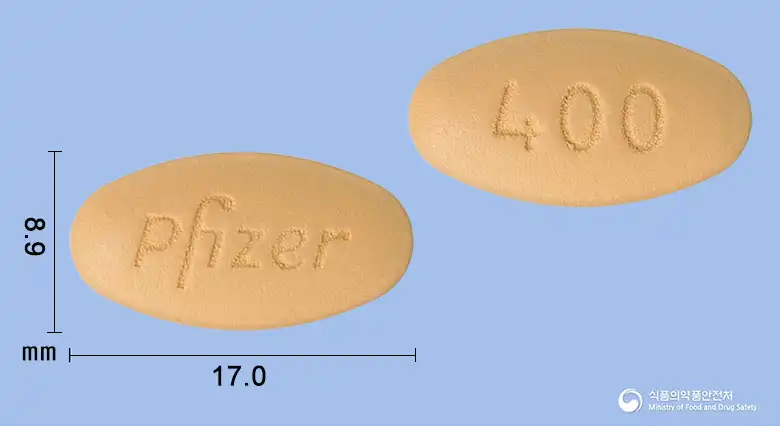
Bosutinib Monohydrate 413.6mg
Tablet · Prescription medication
Pfizer Pharmaceuticals Korea Co., Ltd.
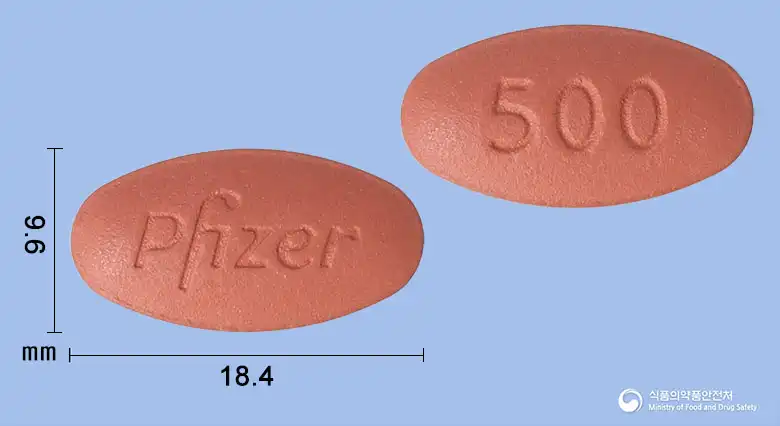
Bosutinib Monohydrate 516.98mg
Tablet · Prescription medication
Pfizer Korea Ltd.
Even with the same ingredient, the dose and directions can differ by strength and dosage form. Talk to a doctor or pharmacist before switching from a medication you are already taking.
No questions yet.
For anything that needs medical judgment, consult a doctor or pharmacist.
This drug information is based on data provided by the Korea Ministry of Food and Drug Safety.
Consult a doctor or pharmacist for accurate dosage, administration, and usage instructions.