
 한국어
 English
 日本語
 中文(简体)
Summary
- Main use
- Treatment of refractory or resistant cytomegalovirus infection or disease after transplantation in adults
- Who takes it
- Adults · Children
- Adult dose
- The recommended dose is 400 mg (two 200 mg tablets) twice daily (800 mg per day). This medicine is for oral use only and may be taken with or without food. The immediate-release tablets may be swallowed whole or crushed; crushed tablets may also be administered through a nasogastric or orogastric tube. Concomitant administration with medicines that are strong cytochrome P450 3A (CYP3A) inducers, such as rifampicin, rifabutin, and St. John's wort, is not recommended because they may reduce the efficacy of this medicine. If this medicine is taken with another strong or moderate CYP3A inducer, an increase in the dose of this medicine may be necessary. When this medicine is administered concomitantly with carbamazepine, the recommended dose is 800 mg (four 200 mg tablets) twice daily. When this medicine is administered concomitantly with phenytoin or phenobarbital, the recommended dose is 1200 mg (six 200 mg tablets) twice daily. If a patient misses a dose of this medicine, they should take it as soon as they remember. If they do not remember until the time of the next dose, they should skip the missed dose and resume their regular dosing schedule. Patients should not take a double dose or exceed the prescribed dose. No dosage adjustment of this medicine is required in patients with mild, moderate, or severe renal impairment. This medicine has not been studied in patients with end-stage renal disease (ESRD), including patients receiving hemodialysis. No dosage adjustment of this medicine is required in patients with mild (Child-Pugh Class A) or moderate (Child-Pugh Class B) hepatic impairment. No dosage adjustment is required in patients aged 65 years or older.
- Child dose
- The safety and efficacy of this medicine have not been established in patients younger than 18 years, and no data are available.
Ingredients
- Importer
- Takeda Pharmaceuticals Korea CO., Ltd.
Efficacy & effects
Treatment of refractory or resistant cytomegalovirus infection or disease after transplantation in adults
- Cytomegalovirus infection
View approved original textHide original text
This medication is used to treat diseases associated with post-transplant cytomegalovirus (CMV) infection in adult patients who are resistant to or do not respond to ganciclovir, valganciclovir, foscarnet, or cidofovir.
How to take
Adult dose
The recommended dose is 400 mg (two 200 mg tablets) twice daily (800 mg per day). This medicine is for oral use only and may be taken with or without food. The immediate-release tablets may be swallowed whole or crushed; crushed tablets may also be administered through a nasogastric or orogastric tube. Concomitant administration with medicines that are strong cytochrome P450 3A (CYP3A) inducers, such as rifampicin, rifabutin, and St. John's wort, is not recommended because they may reduce the efficacy of this medicine. If this medicine is taken with another strong or moderate CYP3A inducer, an increase in the dose of this medicine may be necessary. When this medicine is administered concomitantly with carbamazepine, the recommended dose is 800 mg (four 200 mg tablets) twice daily. When this medicine is administered concomitantly with phenytoin or phenobarbital, the recommended dose is 1200 mg (six 200 mg tablets) twice daily. If a patient misses a dose of this medicine, they should take it as soon as they remember. If they do not remember until the time of the next dose, they should skip the missed dose and resume their regular dosing schedule. Patients should not take a double dose or exceed the prescribed dose. No dosage adjustment of this medicine is required in patients with mild, moderate, or severe renal impairment. This medicine has not been studied in patients with end-stage renal disease (ESRD), including patients receiving hemodialysis. No dosage adjustment of this medicine is required in patients with mild (Child-Pugh Class A) or moderate (Child-Pugh Class B) hepatic impairment. No dosage adjustment is required in patients aged 65 years or older.
Child dose
The safety and efficacy of this medicine have not been established in patients younger than 18 years, and no data are available.
Precautions
This medication should not be used in patients with allergies to this drug or any of its components. Additionally, it should not be used in combination with other drugs such as ganciclovir or valganciclovir. Caution should be exercised when administering this medication to cytomegalovirus patients with central nervous system infections as its efficacy has not been adequately proven. Inter-drug interactions may occur when this medication is used with other drugs. If you are taking other medications, be sure to inform your healthcare provider. In particular, when used with immunosuppressants, the blood concentration of the immunosuppressants may increase; therefore, regular blood level monitoring and dose adjustments are necessary. This drug is relatively safe to use for patients who require sodium restriction as it has a very low sodium content. Some patients may commonly experience side effects such as taste changes, nausea, diarrhea, vomiting, and fatigue. If symptoms persist, consult a healthcare provider. It is advisable for women who are pregnant or planning to become pregnant to avoid using this medication. If breastfeeding, it is recommended to discontinue breastfeeding while taking this medication. There is no specific antidote for overdose; therefore, if an overdose is suspected, please visit a hospital immediately for appropriate treatment. This medication should be kept out of reach of children and stored at room temperature away from direct sunlight.
Side effects
- Taste disturbance
- nausea
- diarrhea
- vomiting
- fatigue
- headache
- upper abdominal pain
- decreased appetite
- increased levels of immunosuppressants
- weight loss
Not everyone experiences these, and they can vary from person to person.
Storage
This medication may be sensitive to air or moisture, so it should be stored in a tightly closed container. It is also advisable to avoid extremes of temperature, keeping it stored at room temperatures between 1°C and 30°C.
Appearance and packaging
Appearance
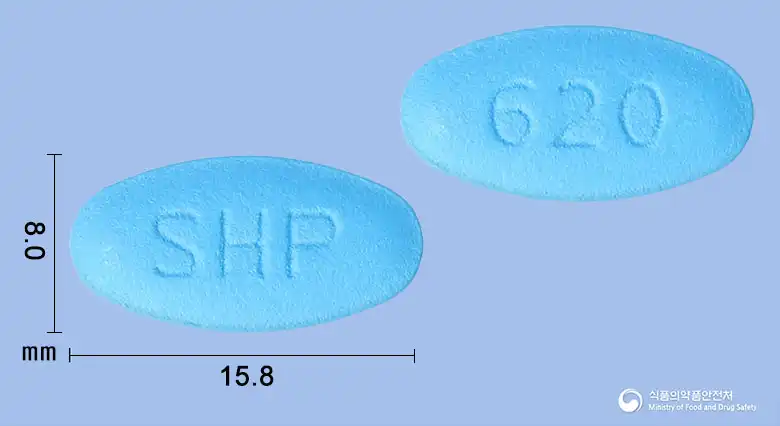
Blue oval film-coated tablet
Package unit
28 tablets/bottle, 56 tablets/bottle
Questions about this medicine
No questions yet.
For anything that needs medical judgment, consult a doctor or pharmacist.