한국어
 English
 日本語
 中文(简体)
 Viewing now
Semblix Tablet 20 mg (Ashimib Hydrochloride)
Asciminib Hydrochloride 21.62mg
Tablet · Prescription medication
Korea Novartis Co., Ltd.
MFDS item code 202202385 · Approved 2022.06.09 · Insurance code 653603520
Treatment of chronic-phase Philadelphia chromosome-positive chronic myeloid leukemia in adults
This medication is used for patients with newly diagnosed chronic Philadelphia chromosome positive chronic myeloid leukemia (Ph+ CML), as well as those who have been previously treated. Its effectiveness has been demonstrated based on the major molecular response rates and it aids in the treatment of chronic myeloid leukemia. Therefore, this medication is used for the treatment of adult patients with chronic phase Ph+ CML.
Recommended dosage The recommended daily dose of this medicine is 80mg. This medicine should be administered at the same time every day and taken orally as either 80mg once daily or 40mg twice daily at approximately 12-hour intervals. Patients wishing to change their regimen from 40mg twice daily to 80mg once daily should start the once-daily dose approximately 12 hours after the last twice-daily dose, and then continue taking 80mg once daily. Patients wishing to change their regimen from 80mg once daily to 40mg twice daily should start the twice-daily dose approximately 24 hours after the last once-daily dose, and then continue taking 40mg twice daily at approximately 12-hour intervals. Changes to the dosage regimen are at the physician's discretion based on the need for patient management. Treatment with this medicine should continue for as long as clinical benefit is observed or until unacceptable toxicity occurs. Method of administration This medicine should be taken on an empty stomach. Avoid food for at least 2 hours before taking this medicine and until 1 hour after taking it. This medicine should be swallowed whole and should not be broken, crushed, or chewed. Missed doses Once-daily regimen: If a dose of this medicine is missed by more than approximately 12 hours, skip that dose and take the next dose at the scheduled time. Twice-daily regimen: If a dose of this medicine is missed by more than approximately 6 hours, skip that dose and take the next dose at the scheduled time. Dose adjustment As shown in Table 1 and Table 2, dose adjustment of this medicine may be necessary based on individual safety and tolerability. If an adverse drug reaction is effectively managed, this medicine may be resumed as shown in Table 1 and Table 2. If the patient cannot tolerate a total daily dose of 40mg, permanently discontinue this medicine. Table 1. Dose adjustment Initial dose Dose reduction Resumption dose 80mg once daily 40mg once daily 80mg once daily 40mg twice daily 20mg twice daily 40mg twice daily Dose adjustment of this medicine for management of selected adverse drug reactions is shown in Table 2. Table 2. Dose adjustment of this medicine for selected adverse drug reactions Adverse drug reaction Recommended dose adjustment of this medicine Thrombocytopenia and/or neutropenia ANC1 <1 x 10⁹/L and/or PLT2 <50 x 109/L Withhold this medicine until recovery to ANC ≥1 x 10⁹/L and/or PLT ≥50 x 109/L. If recovery occurs: • Within 2 weeks: Resume this medicine at the initial dose. • After more than 2 weeks: Resume this medicine at a reduced dose. In the event of recurrent severe thrombocytopenia and/or neutropenia, withhold this medicine until recovery to ANC ≥1 x 10⁹/L and PLT ≥50 x 109/L, and then resume treatment at a reduced dose. Asymptomatic elevations in amylase and/or lipase >2 x ULN3 elevation Withhold this medicine until recovery to <1.5 x ULN. • If recovery occurs: Resume this medicine at a reduced dose. If the reaction recurs at the reduced dose, permanently discontinue this medicine. • If recovery does not occur: Permanently discontinue this medicine. Perform diagnostic tests to rule out pancreatitis. Nonhematologic adverse drug reactions Grade 3 or higher4 adverse reaction Withhold this medicine until recovery to Grade 1 or lower. • If recovery occurs: Resume this medicine at a reduced dose. • If recovery does not occur: Permanently discontinue this medicine. 1ANC: absolute neutrophil count; 2PLT: platelets; 3ULN: upper limit of normal. 4Based on the National Cancer Institute Common Terminology Criteria for Adverse Events (NCI CTCAE) v 4.03. Patients with hepatic impairment No dose adjustment is required for patients with mild, moderate, or severe hepatic impairment receiving this medicine. Patients with renal impairment No dose adjustment is required for patients with mild, moderate, or severe renal impairment receiving this medicine.
This drug contains lactose and should not be used by individuals with genetic disorders such as galactose intolerance, lactase deficiency, or glucose-galactose malabsorption. While using this medication, symptoms of myelosuppression can occur, leading to decreased platelet and neutrophil counts, thus regular blood tests should be conducted to monitor for this and adjust or discontinue the dosage if necessary. Pancreatic toxicity, such as pancreatitis or elevated pancreatic enzyme levels, may occur, so patients with pancreatic symptoms or a history of pancreatitis should be monitored more closely. There is a risk of QT interval prolongation in electrocardiograms, so the cardiac status should be checked before and during treatment, and hypokalemia or hypomagnesemia should be corrected prior to treatment. This medication may cause hypertension, so blood pressure should be monitored regularly and appropriate blood pressure management may be required if necessary. Patients at risk of cardiovascular diseases should be carefully monitored for cardiac-related abnormalities, and if severe cardiovascular issues arise, the drug dosage may be adjusted or discontinued. Allergic reactions may occur, so any signs of allergy should be reported to healthcare professionals immediately. Hepatitis B virus carriers should confirm their infection status before using this drug and closely monitor viral activity during and after treatment. Use of this medication during pregnancy may harm the fetus, so women of childbearing age should confirm their pregnancy status before treatment and should use effective contraception during treatment and for at least one week after the last dose. The safety and efficacy of this drug in pediatric patients have not been established, and it is advisable not to use it in patients under 18 years of age. Elderly patients can use it similarly to adults, although caution is required if they have kidney or liver dysfunction. In patients with impaired liver or kidney function, drug concentration may increase, so careful monitoring during administration is necessary. This medication may interact with other drugs, so caution should be taken when taking medications that affect or are affected by the CYP3A4 enzyme. This medication should be swallowed whole and must not be crushed, chewed, or broken.
Thrombocytopenia, neutropenia, anemia, pancreatitis, elevated serum lipase, elevated serum amylase, prolonged QT interval, hypertension, cardiovascular events, heart failure, hypersensitivity, reactivation of hepatitis B, musculoskeletal pain, fatigue, upper respiratory infection, headache, arthralgia, diarrhea, increased pancreatic enzymes, vomiting, nausea, abdominal pain, constipation, increased liver enzymes, elevated serum bilirubin, rash, pruritus, urticaria, edema, fever, elevated serum creatine phosphokinase, QT prolongation on electrocardiogram, T-wave abnormalities on electrocardiogram, pancytopenia, hypothyroidism, dyslipidemia, dizziness, blurred vision, dry eyes, palpitations, cough, pleural effusion, dyspnea, non-cardiac chest pain
Not everyone experiences these, and they can vary from person to person.
This medication should be stored in a tightly sealed container to protect it from air and moisture, and it is important to maintain the temperature below 25 degrees Celsius. Storing it this way will help preserve the drug's effectiveness over time.
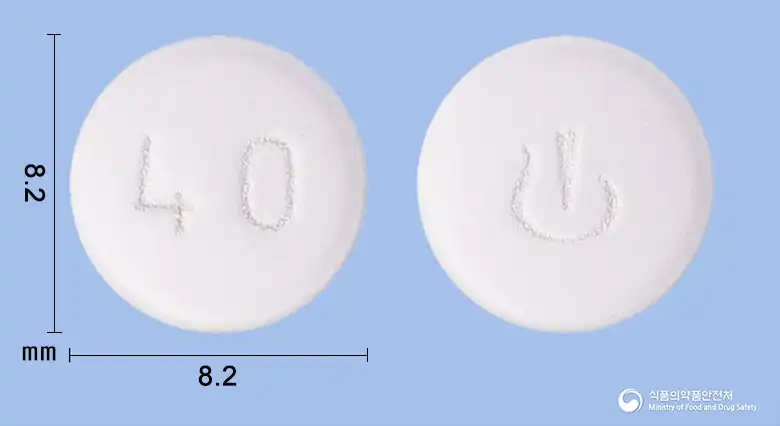
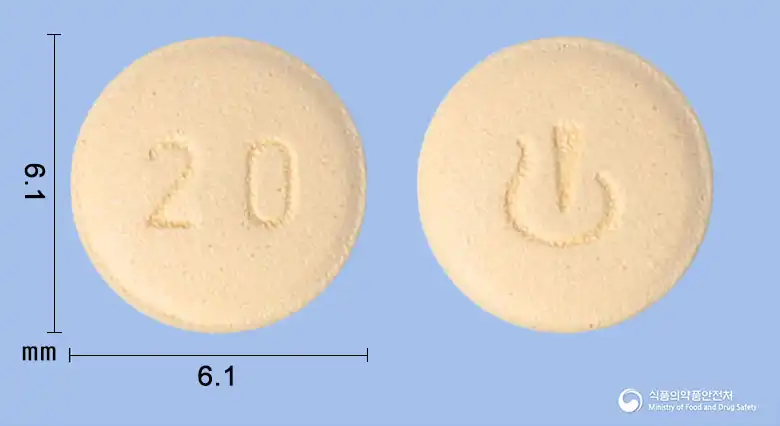
Light yellow, round, film-coated tablet with a convex surface on both sides
60 tablets/box [10 tablets/TPP x 6]
Even with the same ingredient, strength, dosage form and how it is taken can differ.
Even with the same ingredient, the dose and directions can differ by strength and dosage form. Talk to a doctor or pharmacist before switching from a medication you are already taking.
No questions yet.
For anything that needs medical judgment, consult a doctor or pharmacist.
This drug information is based on data provided by the Korea Ministry of Food and Drug Safety.
Consult a doctor or pharmacist for accurate dosage, administration, and usage instructions.