
 한국어
 English
 日本語
 中文(简体)
Dosage form image
Viewing nowTopra Tablet 5 mg (Tofacitinib Citrate)
Tofacitinib Citrate 8.078mg
Tablet · Prescription medication
HanKook Union Pharm Co., Ltd.
MFDS item code 202201982 · Approved 2022.05.12
Treatment of arthritis (including rheumatoid arthritis), ulcerative colitis, and ankylosing spondylitis
This medication is used when existing treatments do not show sufficient efficacy or are intolerable. Particular caution is required for elderly patients aged over 65, patients at high risk for cardiovascular disease, and those with a risk of malignancy. It is used in patients with severe or active arthritis, such as rheumatoid arthritis, psoriatic arthritis, or ankylosing spondylitis, especially suitable for adults who do not respond to DMARDs such as methotrexate. Additionally, it is also used to treat moderate to severe ulcerative colitis in patients who do not respond to or are intolerant to corticosteroids or biological agents. The principle is that this medication should not be used concomitantly with potent immunosuppressants and may be used alone or in combination with specific formulations. Therefore, this medication is primarily used for the treatment of moderate or worse conditions in adult patients who do not respond to existing treatments.
Rheumatoid arthritis, psoriatic arthritis, and ankylosing spondylitis: The recommended dose of this medicine is 5mg per dose, twice daily. Patients receiving the following medicines: -Strong CYP3A4 inhibitors (e.g., ketoconazole), or -Moderate CYP3A4 inhibitors and strong CYP2C19 inhibitors (e.g., fluconazole) 5 mg per dose, once daily In the following patients: -Patients with moderate or severe renal impairment -Patients with moderate hepatic impairment* [See section ‘5. General Precautions’] 5 mg per dose, once daily ALC less than 500 cells/mm3 (confirmed by repeat testing) Discontinue treatment ANC 500-1,000 cells/mm3 Temporarily interrupt treatment. When ANC exceeds 1,000 cells/mm3, resume this medicine at 5 mg per dose twice daily. ANC less than 500 cells/mm3 Discontinue treatment Hemoglobin decrease of more than 2 g/dL or hemoglobin level below 8.0 g/dL Temporarily interrupt treatment until the hemoglobin level returns to normal Ulcerative colitis: Administer 10 mg per dose twice daily for at least 8 weeks, then administer 5 mg or 10 mg twice daily according to treatment response. [See section ‘12. Information for Healthcare Professionals’] Use the lowest effective dose for maintenance therapy. Discontinue treatment if adequate therapeutic benefit is not observed after administering this medicine at 10 mg per dose twice daily for 16 weeks. Patients receiving the following medicines: -Strong CYP3A4 inhibitors (e.g., ketoconazole), or -Moderate CYP3A4 inhibitors and strong CYP2C19 inhibitors (e.g., fluconazole) If receiving this medicine at 10 mg per dose twice daily, reduce the dose to 5 mg per dose twice daily. If receiving this medicine at 5 mg per dose twice daily, reduce the dose to 5 mg once daily. In the following patients: -Patients with moderate or severe renal impairment -Patients with moderate hepatic impairment [See section ‘5. General Precautions’] If receiving this medicine at 10 mg per dose twice daily, reduce the dose to 5 mg per dose twice daily. If receiving this medicine at 5 mg per dose twice daily, reduce the dose to 5 mg once daily. ALC less than 500 cells/mm3 (confirmed by repeat testing) Discontinue treatment ANC 500-1,000 cells/mm3 If this medicine has been administered at 10 mg per dose twice daily, reduce the dose to 5 mg per dose twice daily. When ANC exceeds 1,000 cells/mm3, increase the dose again to 10 mg per dose twice daily according to clinical response. If this medicine has previously been administered at 5 mg per dose twice daily, temporarily interrupt treatment. When ANC exceeds 1,000 cells/mm3, resume this medicine at 5 mg per dose twice daily. ANC less than 500 cells/mm3 Discontinue treatment Hemoglobin decrease of more than 2 g/dL or hemoglobin level below 8.0 g/dL Temporarily interrupt treatment until the hemoglobin level returns to normal For patients with risk factors for venous thromboembolism (VTE), major adverse cardiovascular events (MACE), and malignancy, 10mg is not recommended for maintenance therapy, regardless of the availability of alternative treatments.
This drug modulates the immune system, which may increase the risk of infections. Serious infections such as pneumonia, tuberculosis, and herpes zoster may occur, so thorough monitoring for infections is necessary before and during treatment. If a serious infection occurs, discontinue this medication immediately. This medication may increase the risk of death due to cardiovascular issues in patients aged 50 and above, so caution is required for those at risk for heart disease. Additionally, it may increase the risk of cancer; therefore, patients with a history of cancer or smoking history should use it cautiously. If blood leukocyte or lymphocyte counts are low, taking this drug may increase the risk of infections, thus regular blood tests are necessary. There are also risks of thrombosis, including pulmonary embolism or deep vein thrombosis, so patients should promptly inform healthcare providers if thrombosis symptoms appear. For patients with liver or kidney dysfunction, dosage adjustments may be necessary, and it should not be administered in patients with severe liver disease. Women who are pregnant or could become pregnant should not take this medication. This drug contains lactose; therefore, patients with lactose intolerance should avoid this medication. Vaccination must be up to date before taking this medication, and it should not be administered concomitantly with live vaccines. While taking this medication, side effects like headache, dyspepsia, skin rash, and fatigue may occur, so any unusual symptoms should be discussed with healthcare providers. Regular blood tests and liver function tests are critical to monitor for abnormalities. This drug affects immune functions, so rapid response is necessary in case of infections or other adverse reactions.
Not everyone experiences these, and they can vary from person to person.
This medication should be stored in a tightly sealed container to prevent exposure to air or moisture. It is best stored at room temperature between 1 to 30 degrees Celsius.
White, round film-coated tablet
30 tablets/bottle
Even with the same ingredient, strength, dosage form and how it is taken can differ.
Tofacitinib Citrate 8.078mg
Tablet · Prescription medication
HanKook Union Pharm Co., Ltd.
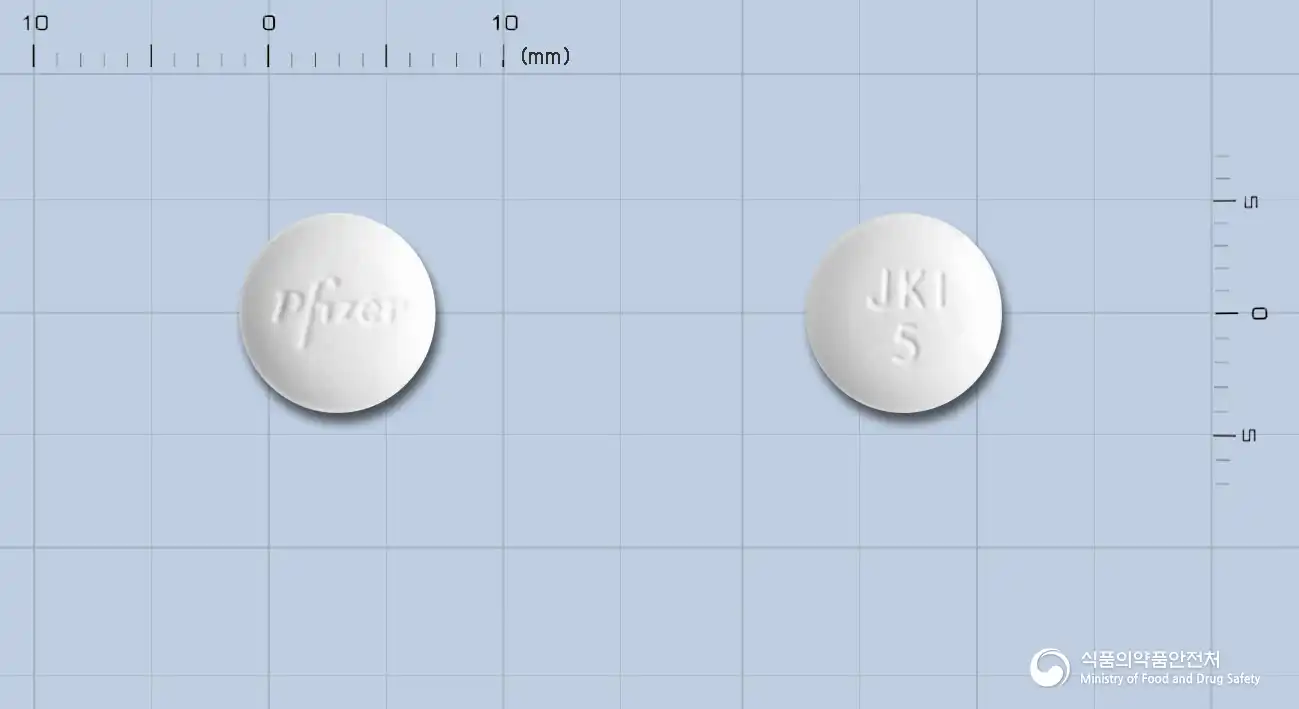
Tofacitinib Citrate 8.078mg
Tablet · Prescription medication
Pfizer Korea Co., Ltd.
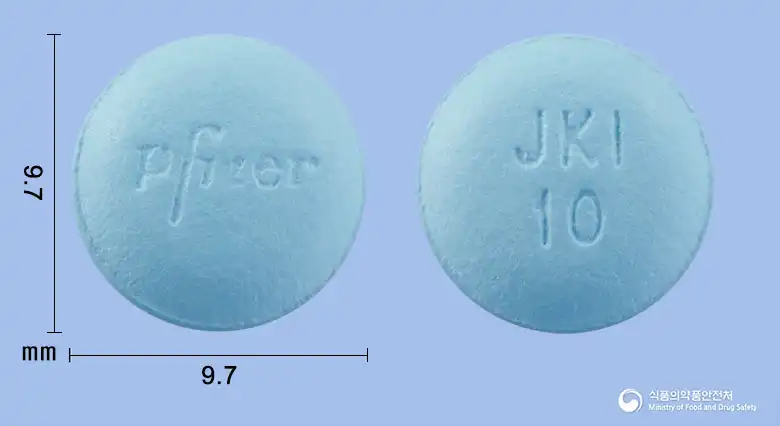
Tofacitinib Citrate 16.155mg
Tablet · Prescription medication
Pfizer Korea Co., Ltd.
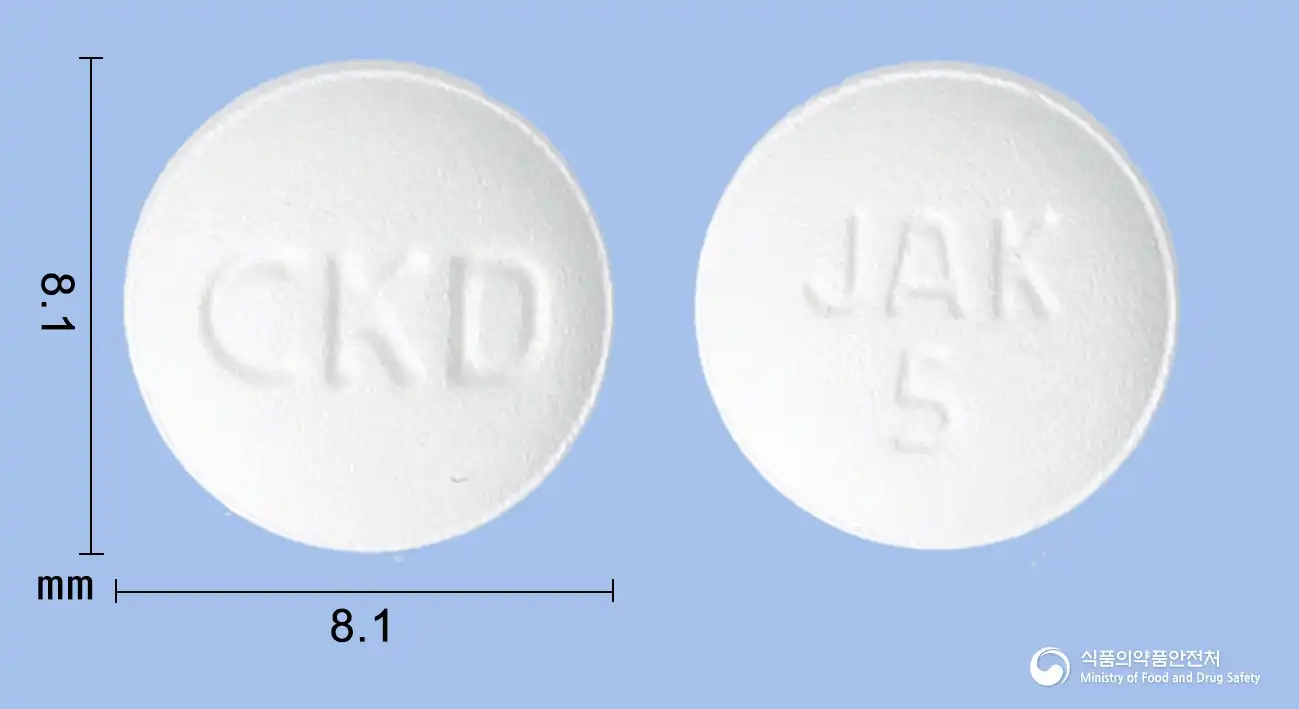
Tofacitinib Citrate
Tablet · Prescription medication
Jongkundang Co., Ltd.
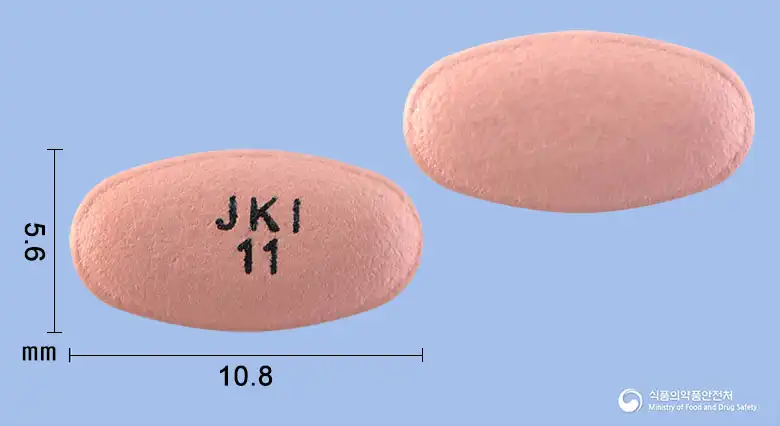
Tofacitinib Citrate 17.771mg
Tablet · Prescription medication
Pfizer Korea Co., Ltd.
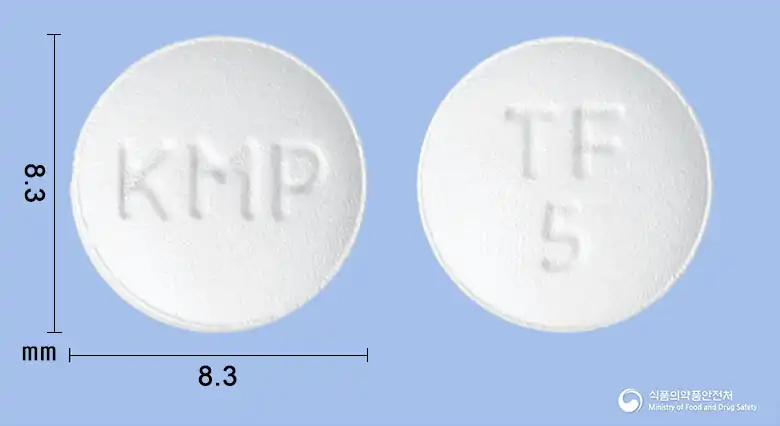
Tofacitinib Citrate 8.078mg
Tablet · Prescription medication
Genufarma Co., Ltd.
Tofacitinib Citrate 8.078mg
Tablet · Prescription medication
Hanpung Pharm Co., Ltd.
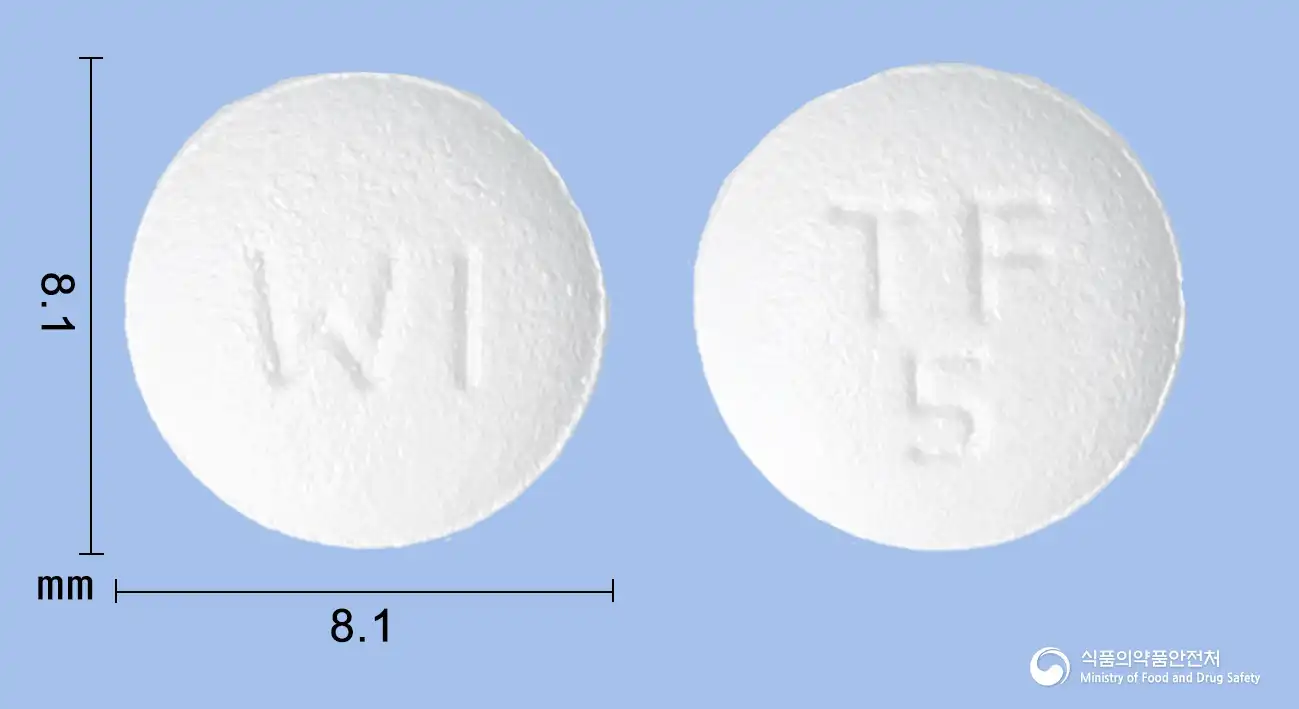
Tofacitinib Citrate 8.078mg
Tablet · Prescription medication
Hanmi Pharmaceutical Co., Ltd.
Even with the same ingredient, the dose and directions can differ by strength and dosage form. Talk to a doctor or pharmacist before switching from a medication you are already taking.
No questions yet.
For anything that needs medical judgment, consult a doctor or pharmacist.
This drug information is based on data provided by the Korea Ministry of Food and Drug Safety.
Consult a doctor or pharmacist for accurate dosage, administration, and usage instructions.