
 한국어
 English
 日本語
 中文(简体)
Dosage form image
Viewing nowOzempic Pre-filled Pen (Semaglutide)
Semaglutide 1.34mg
Prescription medication
Novo Nordisk Pharma Co., Ltd.
MFDS item code 202201737 · Approved 2022.04.28 · Insurance code 654400641,654400651
Control of type 2 diabetes and reduction of cardiovascular and renal disease risks.
This medication is used as an adjunct to diet and exercise in adults with type 2 diabetes who are not well controlled. It can be administered alone or in combination with other diabetes medications. Additionally, it is used to reduce the risk of major cardiovascular events such as cardiovascular death, myocardial infarction, and stroke in adults with type 2 diabetes and cardiovascular disease. In patients with type 2 diabetes and chronic kidney disease, it is administered to prevent the progression of kidney function deterioration and to reduce the risk of end-stage kidney disease and cardiovascular death. Thus, this medication helps improve patient health by lowering the risks of not only diabetes complications but also cardiovascular and renal-related complications.
The starting dose of this medication is 0.25 mg of semaglutide once weekly. After 4 weeks, the dose is increased to 0.5 mg once weekly. After at least 4 weeks of administration at this dose, if additional blood sugar control is needed, the dose may be increased to 1 mg once weekly. It is not recommended to exceed a dose of 1 mg once weekly. This medication should be administered once weekly and can be taken at any time of the day regardless of meals.
This medication should not be used in patients with type 1 diabetes or for the treatment of diabetic ketoacidosis. It is not a substitute for insulin, and caution is needed as patients who are insulin-dependent may develop diabetic ketoacidosis if they abruptly discontinue or reduce insulin when starting this medication. Those with hypersensitivity to any ingredients or additives of this medication should not use it. It is not recommended for patients with severe heart failure, and caution should be exercised in patients with impaired renal function as gastrointestinal side effects may lead to dehydration or worsening of kidney function. If symptoms of acute pancreatitis appear, the medication should be discontinued immediately, and patients with a history of pancreatitis should be particularly cautious. The risk of hypoglycemia increases when used in conjunction with sulfonylureas or insulin, thus dose adjustment of those medications should be considered when starting this therapy. Regular eye examinations are advised for patients with diabetic retinopathy as the risk of complications may increase during treatment. Women who are pregnant or planning to become pregnant should not use this medication, and it should be avoided in breastfeeding. Elderly patients or those with slightly decreased renal or liver function do not require dose adjustment, but it is not recommended for patients with end-stage kidney disease. This medication is administered by injection, and training on injection techniques is required before use; syringes should be replaced with a new one each time to prevent infection or side effects. When storing the medication, keep it refrigerated between 2°C and 8°C, avoiding freezing and direct light exposure, and use it within 6 weeks after opening. This medication may affect the absorption of oral medications, so caution is needed when taken with other oral drugs. Additionally, while this medication does not significantly affect driving or operating machinery, caution should be exercised if there is a risk of hypoglycemia. In cases of overdose, there is no specific antidote, and appropriate treatment should be based on symptoms, with long-term monitoring possible.
Not everyone experiences these, and they can vary from person to person.
Store this medication in a sealed container to avoid exposure to air, and keep it refrigerated between 2°C and 8°C, avoiding freezing. It is also advisable to store it in a dark place away from direct light.
A transparent liquid in a colorless, transparent cartridge attached to a dose-adjustable pre-filled pen.
1 pre-filled pen/box [pre-filled pen (1.5mL)], 1 pre-filled pen/box [pre-filled pen (3mL)]
Even with the same ingredient, strength, dosage form and how it is taken can differ.
Semaglutide 1.34mg
Prescription medication
Novo Nordisk Pharma Co., Ltd.
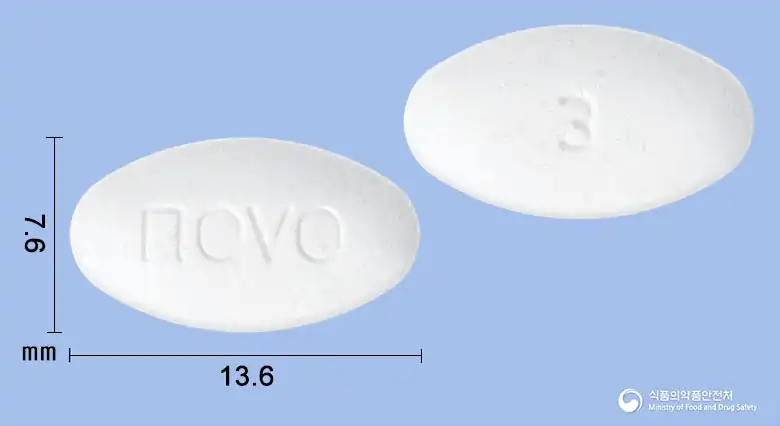
Semaglutide 14mg
Tablet · Prescription medication
Novo Nordisk Pharmaceuticals Ltd.
Semaglutide 9.6mg
Prescription medication
Novo Nordisk Pharma Ltd.
Semaglutide 6.8mg
Prescription medication
Novo Nordisk Pharmaceutical Ltd.
Semaglutide 4mg
Prescription medication
Novo Nordisk Pharmaceutical Co., Ltd.
Semaglutide 2mg
Prescription medication
Novo Nordisk Pharm Co., Ltd.
Semaglutide 2mg
Prescription medication
Novo Nordisk Pharmaceuticals Co., Ltd.
Even with the same ingredient, the dose and directions can differ by strength and dosage form. Talk to a doctor or pharmacist before switching from a medication you are already taking.
No questions yet.
For anything that needs medical judgment, consult a doctor or pharmacist.
This drug information is based on data provided by the Korea Ministry of Food and Drug Safety.
Consult a doctor or pharmacist for accurate dosage, administration, and usage instructions.