
 한국어
 English
 日本語
 中文(简体)
Summary
- Main use
- Treatment of splenomegaly and symptoms associated with myelofibrosis (including primary myelofibrosis) after ruxolitinib treatment
- Who takes it
- Adults
- Adult dose
- The recommended dosage of this drug is 400mg fedratinib once daily. Treatment with this drug should be initiated and monitored under the supervision of a physician experienced in the use of anticancer drugs. Patients receiving ruxolitinib therapy should gradually reduce the dose and discontinue ruxolitinib in accordance with its prescribing information before starting treatment with this drug. Before starting treatment with this drug and periodically during treatment, assess baseline thiamine (vitamin B1) levels, complete blood count, liver panel, amylase/lipase, blood urea nitrogen (BUN), and creatinine levels. In patients with thiamine deficiency, treatment with this drug should not be started until thiamine levels have returned to normal. In addition, starting treatment with this drug is not recommended in patients with a baseline platelet count < 50 x 109/L or an absolute neutrophil count < 1.0 x 10⁹/L. Do not open, crush, or chew the capsules. Swallow the capsules whole with water, if possible. This drug may be taken with or without food; however, administration with a high-fat meal may reduce the occurrence of nausea and vomiting, so administration after a meal is recommended. Prophylactic use of antiemetics is recommended during the first 8 weeks of treatment, and antiemetic treatment may be continued. If a dose is missed, take the regularly scheduled dose the following day. Do not take an additional dose to make up for the missed dose. Treatment with this drug may be continued for as long as the patient derives clinical benefit. Dose adjustment should be considered for hematologic or nonhematologic toxicity (Table 1). Discontinue treatment with this drug if the patient cannot tolerate a dose of 200mg once daily. Dose adjustment Dose adjustments for the management of hematologic toxicity, nonhematologic toxicity, and Wernicke encephalopathy are shown in Table 1 below. 1) Dose management according to thiamine levels If thiamine levels are low before starting treatment with this drug, they should be supplemented. All patients should receive prophylactic treatment with 100 mg oral thiamine daily during treatment, and thiamine levels should be assessed as clinically indicated. 2) Dose adjustment for concomitant use with strong CYP3A4 inhibitors If use of a strong CYP3A4 inhibitor is unavoidable, adjust the dose of this drug to 200mg. For safety, carefully monitor the patient's condition at least every 1 week. When concomitant use with a strong CYP3A4 inhibitor is discontinued, increase the dose of this drug to 300mg once daily for the first 2 weeks, then increase it to 400mg once daily if tolerated. Further dose adjustments may be necessary based on the results of safety and efficacy monitoring related to this drug. 3) Dose re-escalation If the adverse reaction to this drug that led to dose reduction is controlled with effective management and the toxicity resolves within 28 days, the dose may be increased by one dose level per month up to the initial dose level. Dose re-escalation is not recommended when the dose was reduced due to recurrence of Grade 4 nonhematologic toxicity, Grade 3 or higher elevations in ALT (alanine aminotransferase), AST (aspartate aminotransferase), or total bilirubin, or Grade 4 hematologic toxicity. Table 1. Dose reductions for the management of treatment-related hematologic and nonhematologic toxicity and Wernicke encephalopathy Hematologic toxicity Dose reduction Grade 3 thrombocytopenia with active bleeding (platelet count < 50 x 109/L (< 50 x 103/mm3)) or Grade 4 thrombocytopenia (platelet count < 25 x 109/L (< 25 x 103/mm3)) Interrupt treatment until recovery to Grade 2 (platelet count ≥ 50 x 109/L (≥ 50 x 103/mm3), < 75 x 109/L (< 75 x 103/mm3)) or lower, or to baseline levels. Resume treatment at a dose 100 mg/day lower than the last administered dose. Grade 4 neutropenia (absolute neutrophil count < 0.5 x 10⁹/L (< 500/μL)) Interrupt treatment until recovery to Grade 2 (absolute neutrophil count ≥ 1.0 x 10⁹/L (≥1000/μL), < 1.5 x 10⁹/L (< 1500/μL)) or lower, or to baseline levels. Resume treatment at a dose 100 mg/day lower than the last administered dose. Granulocyte growth factors may be used at the physician's discretion. Grade 3 or higher anemia requiring transfusion (hemoglobin < 8.0 g/dL) Interrupt treatment until recovery to Grade 2 (hemoglobin ≥ 8g/dL, < 10.0 g/dL) or lower, or to baseline levels. Resume treatment at a dose 100 mg/day lower than the last administered dose. Recurrence of Grade 4 hematologic toxicity Discontinue treatment at the physician's discretion. Nonhematologic toxicity Dose reduction Grade 3 or higher nausea, vomiting, or diarrhea that does not respond to supportive care within 48 hours Interrupt treatment until recovery to Grade 1 or lower, or to baseline levels. Resume treatment at a dose 100mg/day lower than the last administered dose. Grade 3 or higher elevations in ALT or AST (greater than 5 times to 20 times the upper limit of normal) or elevation in bilirubin (greater than 3 times to 10 times the upper limit of normal) Interrupt treatment until recovery to Grade 1 or lower (AST/ALT: greater than 1 times to less than 3 times the upper limit of normal; bilirubin: greater than 1 times to less than 1.5 times the upper limit of normal) or to baseline levels. Resume treatment at a dose 100 mg/day lower than the last administered dose. After dose reduction, monitor ALT, AST, and bilirubin (total and direct bilirubin) every 2 weeks for at least 3 months. Discontinue treatment if Grade 3 or higher toxicity recurs. Grade 3 or higher elevations in amylase and lipase (greater than 2 times to 5 times the upper limit of normal) Interrupt treatment until recovery to Grade 1 or lower (greater than 1 times to less than 1.5 times the upper limit of normal) or to baseline levels. Resume treatment at a dose 100 mg/day lower than the last administered dose. After dose reduction, monitor amylase and lipase every 2 weeks for at least 3 months. Discontinue treatment if Grade 3 or higher toxicity recurs. Other Grade 3 or higher nonhematologic toxicity Interrupt treatment until recovery to Grade 1 or lower, or to baseline levels. Resume treatment at a dose 100mg/day lower than the last administered dose. Management of thiamine levels and Wernicke encephalopathy Dose reduction Thiamine level below the normal range (74-222 nmol/L)* but at least 30 nmol/L, with no signs or symptoms of Wernicke encephalopathy Interrupt treatment with this drug. Administer oral thiamine at a dose of 100 mg/day until thiamine levels return to normal. Consider resuming treatment with this drug if thiamine levels are within the normal range*. Thiamine level below 30 nmol/L, with no signs or symptoms of Wernicke encephalopathy Interrupt treatment with this drug. Administer therapeutic-dose parenteral thiamine until thiamine levels return to normal*. Consider resuming treatment with this drug if thiamine levels are within the normal range*. Signs or symptoms of Wernicke encephalopathy, regardless of thiamine level Discontinue treatment with this drug and immediately administer therapeutic-dose parenteral thiamine. * The normal range for thiamine levels may vary depending on the assay method used by the laboratory. 4) Administration to patients with renal impairment For patients with severe renal impairment (Cockcroft‑Gault creatinine clearance 15-29 mL/min), reduce the dose to 200mg daily. No adjustment to the starting dose is required for patients with mild or moderate renal impairment (Cockcroft‑Gault creatinine clearance 30-89mL/min). Because of the potential for increased exposure, patients with pre-existing moderate renal impairment should undergo safety monitoring at least weekly, with dose adjustments based on adverse reactions. 5) Administration to patients with hepatic impairment No dose adjustment is required for patients with mild, moderate, or severe hepatic impairment.
Ingredients
- Importer
- BMS Pharmaceutical Korea Ltd.
Efficacy & effects
Treatment of splenomegaly and symptoms associated with myelofibrosis (including primary myelofibrosis) after ruxolitinib treatment
- Spleen enlargement
- symptoms
View approved original textHide original text
This medication is used to treat adults with primary myelofibrosis, myelofibrosis after polycythemia vera, and myelofibrosis after essential thrombocythemia, with symptoms or spleen enlargement. Please note that the effectiveness of this medication has not yet been proven in confirmatory studies.
How to take
Adult dose
The recommended dosage of this drug is 400mg fedratinib once daily. Treatment with this drug should be initiated and monitored under the supervision of a physician experienced in the use of anticancer drugs. Patients receiving ruxolitinib therapy should gradually reduce the dose and discontinue ruxolitinib in accordance with its prescribing information before starting treatment with this drug. Before starting treatment with this drug and periodically during treatment, assess baseline thiamine (vitamin B1) levels, complete blood count, liver panel, amylase/lipase, blood urea nitrogen (BUN), and creatinine levels. In patients with thiamine deficiency, treatment with this drug should not be started until thiamine levels have returned to normal. In addition, starting treatment with this drug is not recommended in patients with a baseline platelet count < 50 x 109/L or an absolute neutrophil count < 1.0 x 10⁹/L. Do not open, crush, or chew the capsules. Swallow the capsules whole with water, if possible. This drug may be taken with or without food; however, administration with a high-fat meal may reduce the occurrence of nausea and vomiting, so administration after a meal is recommended. Prophylactic use of antiemetics is recommended during the first 8 weeks of treatment, and antiemetic treatment may be continued. If a dose is missed, take the regularly scheduled dose the following day. Do not take an additional dose to make up for the missed dose. Treatment with this drug may be continued for as long as the patient derives clinical benefit. Dose adjustment should be considered for hematologic or nonhematologic toxicity (Table 1). Discontinue treatment with this drug if the patient cannot tolerate a dose of 200mg once daily. Dose adjustment Dose adjustments for the management of hematologic toxicity, nonhematologic toxicity, and Wernicke encephalopathy are shown in Table 1 below. 1) Dose management according to thiamine levels If thiamine levels are low before starting treatment with this drug, they should be supplemented. All patients should receive prophylactic treatment with 100 mg oral thiamine daily during treatment, and thiamine levels should be assessed as clinically indicated. 2) Dose adjustment for concomitant use with strong CYP3A4 inhibitors If use of a strong CYP3A4 inhibitor is unavoidable, adjust the dose of this drug to 200mg. For safety, carefully monitor the patient's condition at least every 1 week. When concomitant use with a strong CYP3A4 inhibitor is discontinued, increase the dose of this drug to 300mg once daily for the first 2 weeks, then increase it to 400mg once daily if tolerated. Further dose adjustments may be necessary based on the results of safety and efficacy monitoring related to this drug. 3) Dose re-escalation If the adverse reaction to this drug that led to dose reduction is controlled with effective management and the toxicity resolves within 28 days, the dose may be increased by one dose level per month up to the initial dose level. Dose re-escalation is not recommended when the dose was reduced due to recurrence of Grade 4 nonhematologic toxicity, Grade 3 or higher elevations in ALT (alanine aminotransferase), AST (aspartate aminotransferase), or total bilirubin, or Grade 4 hematologic toxicity. Table 1. Dose reductions for the management of treatment-related hematologic and nonhematologic toxicity and Wernicke encephalopathy Hematologic toxicity Dose reduction Grade 3 thrombocytopenia with active bleeding (platelet count < 50 x 109/L (< 50 x 103/mm3)) or Grade 4 thrombocytopenia (platelet count < 25 x 109/L (< 25 x 103/mm3)) Interrupt treatment until recovery to Grade 2 (platelet count ≥ 50 x 109/L (≥ 50 x 103/mm3), < 75 x 109/L (< 75 x 103/mm3)) or lower, or to baseline levels. Resume treatment at a dose 100 mg/day lower than the last administered dose. Grade 4 neutropenia (absolute neutrophil count < 0.5 x 10⁹/L (< 500/μL)) Interrupt treatment until recovery to Grade 2 (absolute neutrophil count ≥ 1.0 x 10⁹/L (≥1000/μL), < 1.5 x 10⁹/L (< 1500/μL)) or lower, or to baseline levels. Resume treatment at a dose 100 mg/day lower than the last administered dose. Granulocyte growth factors may be used at the physician's discretion. Grade 3 or higher anemia requiring transfusion (hemoglobin < 8.0 g/dL) Interrupt treatment until recovery to Grade 2 (hemoglobin ≥ 8g/dL, < 10.0 g/dL) or lower, or to baseline levels. Resume treatment at a dose 100 mg/day lower than the last administered dose. Recurrence of Grade 4 hematologic toxicity Discontinue treatment at the physician's discretion. Nonhematologic toxicity Dose reduction Grade 3 or higher nausea, vomiting, or diarrhea that does not respond to supportive care within 48 hours Interrupt treatment until recovery to Grade 1 or lower, or to baseline levels. Resume treatment at a dose 100mg/day lower than the last administered dose. Grade 3 or higher elevations in ALT or AST (greater than 5 times to 20 times the upper limit of normal) or elevation in bilirubin (greater than 3 times to 10 times the upper limit of normal) Interrupt treatment until recovery to Grade 1 or lower (AST/ALT: greater than 1 times to less than 3 times the upper limit of normal; bilirubin: greater than 1 times to less than 1.5 times the upper limit of normal) or to baseline levels. Resume treatment at a dose 100 mg/day lower than the last administered dose. After dose reduction, monitor ALT, AST, and bilirubin (total and direct bilirubin) every 2 weeks for at least 3 months. Discontinue treatment if Grade 3 or higher toxicity recurs. Grade 3 or higher elevations in amylase and lipase (greater than 2 times to 5 times the upper limit of normal) Interrupt treatment until recovery to Grade 1 or lower (greater than 1 times to less than 1.5 times the upper limit of normal) or to baseline levels. Resume treatment at a dose 100 mg/day lower than the last administered dose. After dose reduction, monitor amylase and lipase every 2 weeks for at least 3 months. Discontinue treatment if Grade 3 or higher toxicity recurs. Other Grade 3 or higher nonhematologic toxicity Interrupt treatment until recovery to Grade 1 or lower, or to baseline levels. Resume treatment at a dose 100mg/day lower than the last administered dose. Management of thiamine levels and Wernicke encephalopathy Dose reduction Thiamine level below the normal range (74-222 nmol/L)* but at least 30 nmol/L, with no signs or symptoms of Wernicke encephalopathy Interrupt treatment with this drug. Administer oral thiamine at a dose of 100 mg/day until thiamine levels return to normal. Consider resuming treatment with this drug if thiamine levels are within the normal range*. Thiamine level below 30 nmol/L, with no signs or symptoms of Wernicke encephalopathy Interrupt treatment with this drug. Administer therapeutic-dose parenteral thiamine until thiamine levels return to normal*. Consider resuming treatment with this drug if thiamine levels are within the normal range*. Signs or symptoms of Wernicke encephalopathy, regardless of thiamine level Discontinue treatment with this drug and immediately administer therapeutic-dose parenteral thiamine. * The normal range for thiamine levels may vary depending on the assay method used by the laboratory. 4) Administration to patients with renal impairment For patients with severe renal impairment (Cockcroft‑Gault creatinine clearance 15-29 mL/min), reduce the dose to 200mg daily. No adjustment to the starting dose is required for patients with mild or moderate renal impairment (Cockcroft‑Gault creatinine clearance 30-89mL/min). Because of the potential for increased exposure, patients with pre-existing moderate renal impairment should undergo safety monitoring at least weekly, with dose adjustments based on adverse reactions. 5) Administration to patients with hepatic impairment No dose adjustment is required for patients with mild, moderate, or severe hepatic impairment.
Precautions
This medication can cause serious brain disorders such as Wernicke's encephalopathy, so it is essential to check the vitamin B1 levels and nutritional status of the patient before treatment. Patients with vitamin B1 deficiency should not use this medication and must consistently take vitamin B1 supplements during treatment. Patients allergic to this medication should not be administered it. Blood-related side effects such as anemia, thrombocytopenia, and neutropenia can occur, so regular blood tests are necessary. Gastrointestinal disturbances may frequently occur, and if symptoms such as nausea, vomiting, or diarrhea appear, appropriate treatment and a possible adjustment of the medication dosage may be required. Liver dysfunction and elevated pancreatic enzyme levels have been reported, so regular liver function tests and pancreatic enzyme tests are recommended. Kidney function may be affected, so creatinine levels should be periodically checked. Patients at risk of cardiovascular disease require careful evaluation and monitoring before and after administration of this medication. There is a risk of thrombosis, so if thrombotic symptoms appear, the healthcare provider should be informed immediately and treatment should be received. There may be an increased risk of malignancy, so careful observation is necessary, especially for the elderly or smokers. Dizziness may occur during the use of this medication, so it is advisable to avoid driving or operating machinery. This medication may interact with other drugs that inhibit or induce certain enzymes, so patients taking other medications must inform their healthcare provider. Women of childbearing potential should avoid pregnancy and must use effective contraception during and for a certain period after treatment. Pregnant or nursing women should not use this medication, and nursing should be discontinued during and for a certain period post-treatment. Its safety and efficacy have not been established for children under 18 years of age. In case of overdose, immediate medical help should be sought, and supportive care should be provided; additional doses are prohibited. This medication should be kept out of reach of children and securely stored in its original container.
Side effects
- Wernicke's encephalopathy
- ataxia
- altered mental state
- ophthalmoplegia
- confusion
- memory impairment
- anemia
- thrombocytopenia
- neutropenia
- bleeding
Show 22 moreCollapse
- increased lipase
- increased amylase
- headache
- dizziness
- hypertension
- diarrhea
- vomiting
- nausea
- constipation
- dyspepsia
- increased ALT
- increased AST
- bone pain
- muscle cramps
- peripheral pain
- elevated serum creatinine
- dysuria
- fatigue
- asthenia
- weight gain
- urinary tract infection
- uveitis
Not everyone experiences these, and they can vary from person to person.
Storage
This medication should be stored in a tightly sealed container to prevent exposure to air or moisture. It is important to maintain the storage temperature between 1 degree and 30 degrees Celsius. This will help maintain the medication's effectiveness and safety over time.
Appearance and packaging
Appearance
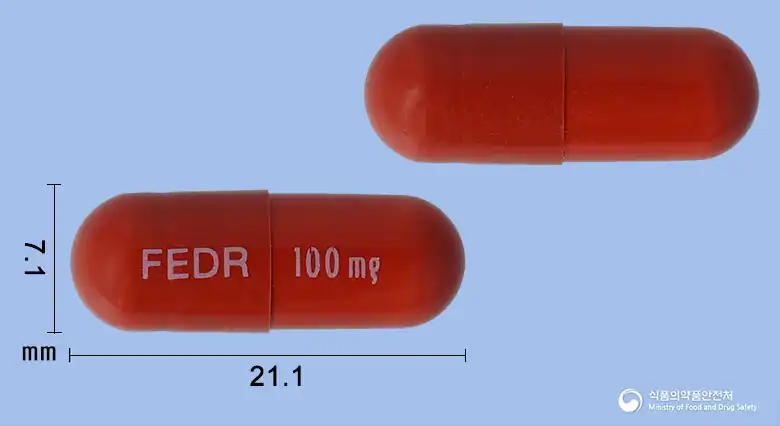
A hard capsule with a brownish-red upper and lower part containing white granules
Package unit
120 capsules/bottle
Questions about this medicine
No questions yet.
For anything that needs medical judgment, consult a doctor or pharmacist.