한국어
 English
 日本語
 中文(简体)
 Viewing now
Giselleca Tablet 200 mg (Filgotinib Maleate)
Filgotinib Maleate 254.48mg
Tablet · Prescription medication
Eisai Korea Co., Ltd.
MFDS item code 202201295 · Approved 2022.04.01 · Insurance code 621100280
Treatment of ulcerative colitis and rheumatoid arthritis
This medication is used in patients with rheumatoid arthritis and ulcerative colitis who do not adequately respond to or cannot tolerate existing therapies. It should be used cautiously, especially in patients over 65 years of age, those with high cardiovascular risk, or those at risk for malignancies. For rheumatoid arthritis, it can be administered alone or in combination with methotrexate to patients with moderate to severe active disease; however, it should not be used in conjunction with other biologics or Janus kinase inhibitors. For patients with ulcerative colitis, it is used in cases where there has been no response to existing therapy or where resistance has developed in moderate to severe active disease. This medication is used to effectively improve symptoms in these patients.
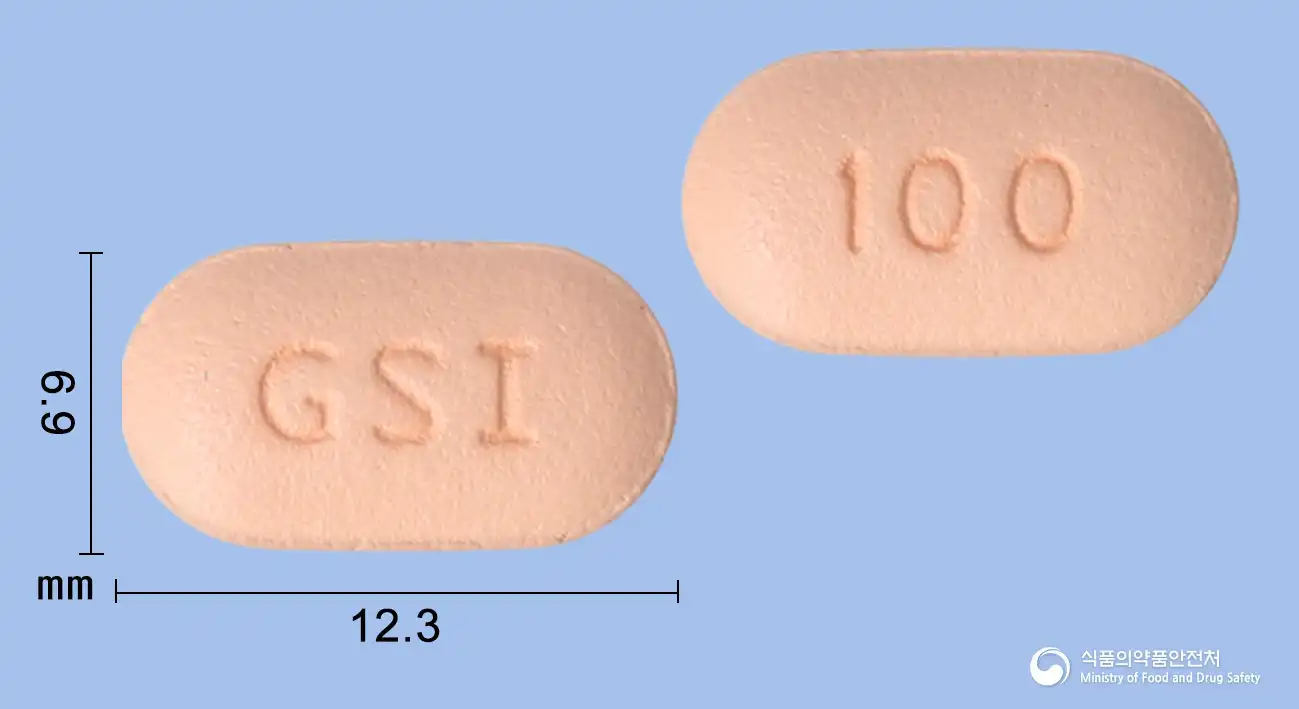
Rheumatoid arthritis The recommended dosage of this drug for adult patients with rheumatoid arthritis is 200 mg once daily. For adults at increased risk of venous thromboembolism (VTE), major adverse cardiovascular events (MACE), and malignancy, the recommended dosage of this drug is 100mg once daily; the dosage may be increased to 200mg once daily if disease control is inadequate. When this drug is administered long term, the lowest effective dose should be used. Ulcerative colitis Induction therapy The recommended dosage for induction therapy is 200 mg once daily. For patients with ulcerative colitis who do not show sufficient therapeutic benefit during the first 10 weeks of induction therapy, an additional 12 weeks of induction therapy (200 mg once daily) may be administered to provide further relief of symptoms (see “Precautions for Use – 12. Information for Healthcare Professionals”). If no therapeutic benefit is observed after 22 weeks of treatment, treatment with this drug should be discontinued. Maintenance therapy The recommended dosage for maintenance therapy is 200 mg once daily. For adults at increased risk of venous thromboembolism (VTE), major adverse cardiovascular events (MACE), and malignancy, the recommended dosage for maintenance therapy is 100mg once daily; the dosage may be increased to 200mg once daily if the disease worsens. When this drug is administered long term, the lowest effective dose should be used. Initiation or discontinuation of this drug based on laboratory value monitoring Guidance on initiating or discontinuing this drug based on laboratory value monitoring is provided in Table 1. If a patient develops a serious infection, treatment should be interrupted until the infection is controlled (see “Precautions for Use – 1. Warnings”). Table 1: Guidance for laboratory value monitoring Absolute neutrophil count (absolute neutrophil count, ANC) Do not initiate treatment if ANC is <1 × 10⁹ cells/L; if the patient is receiving treatment, discontinue treatment. Treatment may be resumed once ANC recovers to at least this level. Before treatment initiation and thereafter, follow routine patient care Absolute lymphocyte count (absolute lymphocyte count, ALC) Do not initiate treatment if ALC is <0.5 × 10⁹ cells/L; if the patient is receiving treatment, discontinue treatment. Treatment may be resumed once ALC recovers to at least this level. Hemoglobin (Haemoglobin, Hb) Do not initiate treatment if Hb is <8 g/dL; if the patient is receiving treatment, discontinue treatment. Treatment may be resumed once Hb recovers to at least this level. Lipid parameters Patients should be managed according to international clinical guidelines for hyperlipidemia. From 12 weeks after treatment initiation, follow international clinical guidelines for hyperlipidemia 2. Special populations 1) Older adults Rheumatoid arthritis The recommended dosage for patients aged 65 years or older with rheumatoid arthritis is 100mg once daily; the dosage may be increased to 200mg once daily if disease control is inadequate. When this drug is administered long term, the lowest effective dose should be used. Ulcerative colitis For patients aged 65 years or older with ulcerative colitis, the recommended dosage is 200 mg once daily for induction therapy and 100 mg once daily for maintenance therapy. If the disease worsens, the dosage may be increased to 200mg once daily. When this drug is administered long term, the lowest effective dose should be used. There is no experience with administration in patients aged 75 years or older. 2) Renal impairment No dosage adjustment is required in patients with mild renal impairment (creatinine clearance [creatinine clearance, CrCl] 60 mL/min or greater). For patients with moderate or severe renal impairment (CrCl 15 mL/min or greater and less than 60 mL/min), administration of 100 mg of this drug once daily is recommended. Administration of this drug in patients with end-stage renal disease (CrCl less than 15 mL/min) has not been studied; therefore, use in patients with end-stage renal disease is not recommended (see “Precautions for Use – 12. Information for Healthcare Professionals”). 3) Hepatic impairment No dosage adjustment is required in patients with mild or moderate hepatic impairment (Child‑Pugh A or B). Administration of this drug in patients with severe hepatic impairment (Child‑Pugh C) has not been studied; therefore, use in patients with severe hepatic impairment is not recommended (see “Precautions for Use – 12. Information for Healthcare Professionals”). 3. Method of administration This drug is administered orally, with or without food (see “Precautions for Use – 12. Information for Healthcare Professionals”). Whether this drug can be chewed, crushed, or divided has not been studied; swallowing it whole is recommended.
The safety and efficacy of this medicine have not been established in children under 18 years of age.
This medication carries the risk of serious infections; therefore, it should be used with caution in patients with chronic or recurrent infections, a history of tuberculosis exposure, or underlying diseases that make them susceptible to infections. During treatment, infection symptoms should be monitored closely, and treatment may need to be paused if an infection occurs. Elderly patients and those with diabetes have a higher risk of infection and require careful consideration. This medication may increase the risk of cardiovascular mortality; thus, it should be used cautiously in patients over 50 years of age with cardiovascular risk factors. Patients should undergo a tuberculosis screening before treatment, and it must not be administered to those with active tuberculosis. If latent tuberculosis patients are identified, they should start anti-tuberculosis treatment first and should be carefully monitored during treatment for tuberculosis symptoms. There is a risk of viral reactivation, especially shingles, and treatment should be suspended if shingles occurs. Due to the risk of malignancies, careful evaluation is needed before and after treatment in patients with a history of malignancy or risk factors. Hematological abnormalities such as neutropenia or lymphopenia may occur, so regular blood tests are necessary. Live vaccinations are not recommended, and it is best to complete vaccinations before treatment. There are risks of cardiovascular adverse reactions and thromboembolism, so patients with risk factors should avoid or use this medication cautiously. Combination with other immunosuppressants is not recommended, and combinations not evaluated in clinical trials should be avoided. Do not use in patients with hypersensitivity to this medication, serious infections, active tuberculosis, severe liver impairment, end-stage renal disease, patients with very low blood counts, pregnant or breastfeeding women, or those with lactose intolerance. Careful administration is required in patients with suspected infection, a history of tuberculosis, impaired immunity, older age, gastrointestinal perforation risk, abnormal blood counts, a history of interstitial lung disease, or thromboembolism risk. This medication may cause side effects such as nausea, infections, and dizziness, hence blood tests and lipid monitoring are necessary. Use during pregnancy is prohibited, and breastfeeding while using this medication should be avoided. Women of childbearing potential must use effective contraception during and after treatment for a certain period. Safety in pediatric patients under 18 years has not been established. Elderly patients may require dose adjustments, and using the minimum effective dose for long-term therapy is recommended. In the event of overdose, vital signs and clinical status should be monitored closely, and general supportive therapy should be administered. This medication should be stored out of reach of children, and transferring it to another container should be avoided.
Not everyone experiences these, and they can vary from person to person.
This medication should be stored in a tightly closed container to protect it from air and moisture. Additionally, it is best to keep the medication at room temperature between 1 degree and 30 degrees. Avoid excessive heat or cold to maintain the medication's effectiveness.
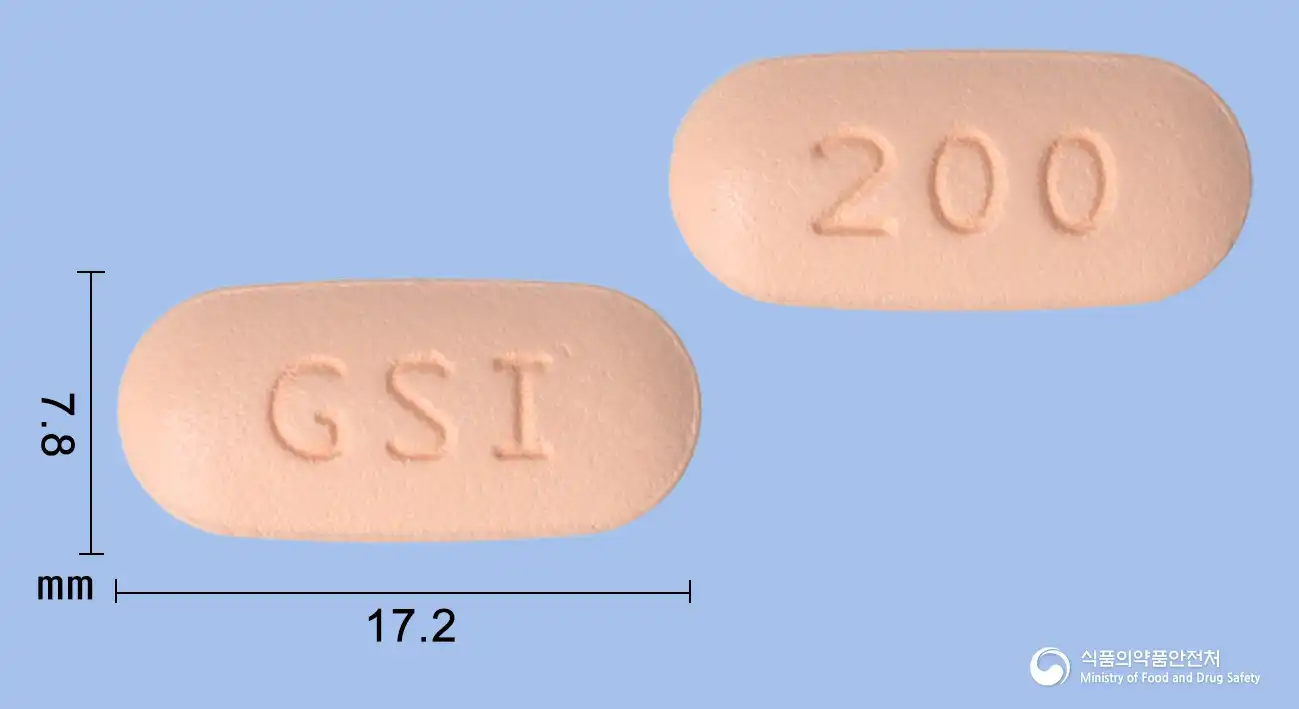
Beige rectangular film-coated tablet engraved with "GSI" on one side and "200" on the other side
30 tablets/bottle, 14 tablets/box [(14 tablets/blister x 1)]
Even with the same ingredient, strength, dosage form and how it is taken can differ.
Even with the same ingredient, the dose and directions can differ by strength and dosage form. Talk to a doctor or pharmacist before switching from a medication you are already taking.
No questions yet.
For anything that needs medical judgment, consult a doctor or pharmacist.
This drug information is based on data provided by the Korea Ministry of Food and Drug Safety.
Consult a doctor or pharmacist for accurate dosage, administration, and usage instructions.