
 한국어
 English
 日本語
 中文(简体)
Summary
- Main use
- Treatment of chronic hepatitis C in adults with prior treatment experience
- Who takes it
- Adults
- Adult dose
- The recommended dose of this medicine is 1 tablet, taken orally once daily with food. The recommended treatment duration is 12 weeks. If a dose is missed, advise the patient to take the tablet as soon as possible if it is within 18 hours of the usual dosing time. The patient should then take the next dose at the usual time. If more than 18 hours have passed, advise the patient to wait and take the next dose at the usual time. Instruct the patient not to take a double dose. If vomiting occurs within 4 hours of taking the medicine, advise the patient to take an additional tablet. If vomiting occurs more than 4 hours after administration, an additional dose is not needed. No dose adjustment of this medicine is needed regardless of the degree of renal impairment, including in patients undergoing dialysis. Because exposure to voxilaprevir is higher in patients with moderate or severe hepatic impairment (Child-Pugh B or C), this medicine is not recommended for these patients.
Ingredients
- Importer
- Gilead
Efficacy & effects
Treatment of chronic hepatitis C in adults with prior treatment experience
View approved original textHide original text
This medication is used as a treatment for adult patients with chronic hepatitis C virus (HCV) infection who have no or mild liver cirrhosis (Child-Pugh A). It is particularly effective for treating chronic HCV infected patients of genotypes 1 to 6 who have previously undergone HCV treatment containing an NS5A inhibitor. Additionally, it is used for chronic HCV patients of genotype 1a or 3 who have received treatment including sofosbuvir without an NS5A inhibitor. This medication effectively suppresses the virus in chronic HCV infected patients of various genotypes, helping to improve liver health. It is important to use as directed by a physician to ensure safe administration, and it provides a personalized treatment strategy based on treatment history. Therefore, this medication is used in the treatment of patients with chronic hepatitis C virus infection.
How to take
Adult dose
The recommended dose of this medicine is 1 tablet, taken orally once daily with food. The recommended treatment duration is 12 weeks. If a dose is missed, advise the patient to take the tablet as soon as possible if it is within 18 hours of the usual dosing time. The patient should then take the next dose at the usual time. If more than 18 hours have passed, advise the patient to wait and take the next dose at the usual time. Instruct the patient not to take a double dose. If vomiting occurs within 4 hours of taking the medicine, advise the patient to take an additional tablet. If vomiting occurs more than 4 hours after administration, an additional dose is not needed. No dose adjustment of this medicine is needed regardless of the degree of renal impairment, including in patients undergoing dialysis. Because exposure to voxilaprevir is higher in patients with moderate or severe hepatic impairment (Child-Pugh B or C), this medicine is not recommended for these patients.
Precautions
This drug should be used with caution in hepatitis virus infection patients co-infected with hepatitis B virus, as there is a risk of reactivation of the hepatitis B virus during treatment. Before starting treatment, it is essential to check for hepatitis B infection through blood tests, and liver function and viral status should be continuously monitored during and after treatment. For patients with severely impaired liver function, the use of this medication may be hazardous, and treatment should be ceased immediately if signs of cirrhosis or liver failure occur. Particularly, if taken with the cardiac medication amiodarone, heart rate may slow dangerously, so these two drugs should generally not be used together. If they must be taken together, the patient’s cardiac condition should be closely monitored in a hospital, and immediate medical attention should be sought if symptoms arise. This medication should not be taken with certain drugs such as rifampicin, and patients with genetic issues such as lactose intolerance should also avoid it. Common symptoms during treatment may include headache, fatigue, diarrhea, and nausea, but these are mostly mild. This medication has a high potential for drug interactions, therefore, inform healthcare professionals of any other medications being taken. There is insufficient data on the safety of this medication during pregnancy or breastfeeding, so consult a doctor before use. Safety for pediatric patients has not been established, while it can be used in the elderly without special dosage adjustment. Patients with poor kidney function can also use it without special dosage adjustment, but it is not recommended for patients with severe liver impairment. In case of overdose, there is no specific antidote, so general treatment and monitoring according to symptoms are required. This medication should be stored at a temperature between 1 to 30 degrees Celsius and kept out of reach of children.
Side effects
- HBV reactivation
- fulminant hepatitis
- liver failure
- death
- elevated aminotransferase levels
- elevated bilirubin levels
- symptomatic bradycardia
- presyncope
- syncope
- dizziness
Show 24 moreCollapse
- lightheadedness
- malaise
- weakness
- excessive fatigue
- shortness of breath
- chest pain
- confusion
- memory problems
- headache
- fatigue
- diarrhea
- nausea
- asthenia
- insomnia
- rash
- depressed mood
- elevated lipase
- elevated creatine kinase
- increased total bilirubin
- skin rash
- vesicles
- angioedema
- angioedema
- Stevens-Johnson syndrome
Not everyone experiences these, and they can vary from person to person.
Storage
This medication should be stored in a tightly sealed container to protect it from air and moisture, ideally at room temperature between 1 to 30 degrees Celsius. Storing it this way helps to safely maintain the effectiveness of the medication.
Appearance and packaging
Appearance
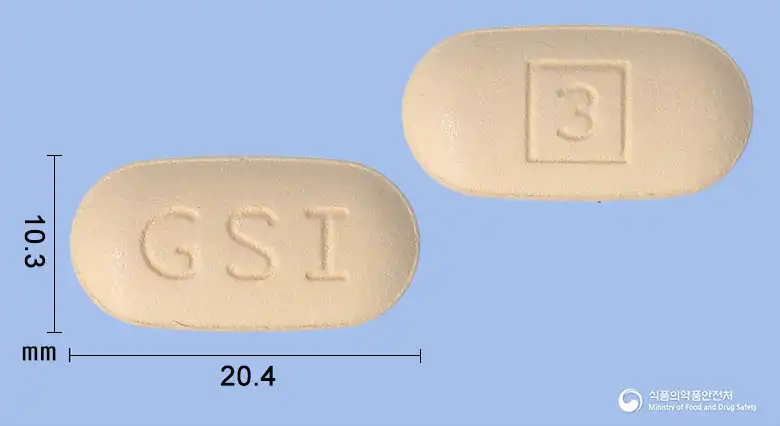
A beige oval film-coated tablet with “GSI” embossed on one side and “3” embossed on the other side
Package unit
28 tablets/bottle
Questions about this medicine
No questions yet.
For anything that needs medical judgment, consult a doctor or pharmacist.