
 한국어
 English
 日本語
 中文(简体)
Summary
- Main use
- Treatment of locally advanced or metastatic non-small cell lung cancer with MET exon 14 skipping
- Who takes it
- Adults
- Adult dose
- The recommended dosage is 450 mg (2 tablets) of tepotinib once daily (equivalent to 500 mg of tepotinib hydrochloride hydrate). Treatment should continue for as long as clinical benefit is observed. If a daily dose is missed, it may be taken as soon as remembered on the same day, unless the next dose is scheduled within 8 hours. The recommended dose reduction level for managing adverse reactions is 225 mg (1 tablet) once daily. Interstitial lung disease (ILD)/pneumonitis — all grades: Withhold treatment with this drug if ILD is suspected. Permanently discontinue treatment with this drug if ILD is confirmed. Increased ALT and/or AST without increased total bilirubin — Grade 3: Withhold treatment with this drug until ALT/AST return to baseline. If they return to baseline within 7 days, restart treatment with this drug at the same dose. Otherwise, restart treatment with this drug at a reduced dose. Increased ALT and/or AST without increased total bilirubin — Grade 4: Permanently discontinue treatment with this drug. Increased ALT and/or AST accompanied by increased total bilirubin, without cholestasis or hemolysis — ALT and/or AST greater than 3 times the ULN and total bilirubin greater than 2 times the ULN: Permanently discontinue treatment with this drug. Increased lipase or amylase — Grade 3: Withhold treatment with this drug until levels return to baseline or Grade 2. If they return to baseline or Grade 2 within 14 days, restart treatment with this drug at a reduced dose. Otherwise, permanently discontinue treatment with this drug. Increased lipase or amylase — Grade 4: Permanently discontinue treatment with this drug. Pancreatitis — Grade 3 or 4: Permanently discontinue treatment with this drug. Other adverse reactions — Grade 3 or higher: Reduce this drug to 225 mg until the adverse reaction resolves to Grade 2 or lower. Temporary interruption of treatment with this drug may be considered for up to 21 days. This drug is administered orally. Tablets should be taken with food and swallowed whole. For patients who have difficulty swallowing this drug, 1 or 2 tablets may be dispersed in 30mL of water (non-carbonated) as directed under Dosage and Administration. Do not use or add any other liquid. Place the tablets in a glass of water without crushing them, stir until the tablets disperse into small pieces (the tablets will not dissolve completely), and swallow within 1 hour. Rinse the glass with an additional 30mL of water to ensure no residue remains, and drink immediately. If administration through a nasogastric tube (minimum 8 French gauge) is required, disperse the tablets in 30mL of water (non-carbonated) as described above. Administer 30mL of liquid within 1 hour according to the instructions for use of the nasogastric tube. Immediately flush twice with 30mL each time to ensure no residue remains in the syringe.
Ingredients
- Importer
- Merck
Efficacy & effects
Treatment of locally advanced or metastatic non-small cell lung cancer with MET exon 14 skipping
- Locally advanced non-small cell lung cancer
- metastatic non-small cell lung cancer
View approved original textHide original text
This drug is used to treat patients with locally advanced or metastatic non-small cell lung cancer where MET exon 14 skipping has been confirmed. The effectiveness of this drug was confirmed through tumor response rates and duration of response in clinical trials. However, there is currently no direct evidence that it extends survival. This drug is a treatment method that may be expected to inhibit the growth of cancer cells and improve responses. Patients can help improve lesions through this drug.
How to take
Adult dose
The recommended dosage is 450 mg (2 tablets) of tepotinib once daily (equivalent to 500 mg of tepotinib hydrochloride hydrate). Treatment should continue for as long as clinical benefit is observed. If a daily dose is missed, it may be taken as soon as remembered on the same day, unless the next dose is scheduled within 8 hours. The recommended dose reduction level for managing adverse reactions is 225 mg (1 tablet) once daily. Interstitial lung disease (ILD)/pneumonitis — all grades: Withhold treatment with this drug if ILD is suspected. Permanently discontinue treatment with this drug if ILD is confirmed. Increased ALT and/or AST without increased total bilirubin — Grade 3: Withhold treatment with this drug until ALT/AST return to baseline. If they return to baseline within 7 days, restart treatment with this drug at the same dose. Otherwise, restart treatment with this drug at a reduced dose. Increased ALT and/or AST without increased total bilirubin — Grade 4: Permanently discontinue treatment with this drug. Increased ALT and/or AST accompanied by increased total bilirubin, without cholestasis or hemolysis — ALT and/or AST greater than 3 times the ULN and total bilirubin greater than 2 times the ULN: Permanently discontinue treatment with this drug. Increased lipase or amylase — Grade 3: Withhold treatment with this drug until levels return to baseline or Grade 2. If they return to baseline or Grade 2 within 14 days, restart treatment with this drug at a reduced dose. Otherwise, permanently discontinue treatment with this drug. Increased lipase or amylase — Grade 4: Permanently discontinue treatment with this drug. Pancreatitis — Grade 3 or 4: Permanently discontinue treatment with this drug. Other adverse reactions — Grade 3 or higher: Reduce this drug to 225 mg until the adverse reaction resolves to Grade 2 or lower. Temporary interruption of treatment with this drug may be considered for up to 21 days. This drug is administered orally. Tablets should be taken with food and swallowed whole. For patients who have difficulty swallowing this drug, 1 or 2 tablets may be dispersed in 30mL of water (non-carbonated) as directed under Dosage and Administration. Do not use or add any other liquid. Place the tablets in a glass of water without crushing them, stir until the tablets disperse into small pieces (the tablets will not dissolve completely), and swallow within 1 hour. Rinse the glass with an additional 30mL of water to ensure no residue remains, and drink immediately. If administration through a nasogastric tube (minimum 8 French gauge) is required, disperse the tablets in 30mL of water (non-carbonated) as described above. Administer 30mL of liquid within 1 hour according to the instructions for use of the nasogastric tube. Immediately flush twice with 30mL each time to ensure no residue remains in the syringe.
Precautions
This drug carries a risk of inflammation in the lungs or the occurrence of interstitial lung disease, so if respiratory symptoms such as shortness of breath or cough occur, immediate medical attention must be sought. It should not be used if there is an allergy to any of the components of this drug, and patients with lactose intolerance or specific genetic metabolic disorders should also refrain from using it. While taking this drug, side effects such as edema, nausea, diarrhea, liver function abnormalities, and changes in kidney function may occur, so regular monitoring of health status is necessary. Women who are pregnant or may become pregnant should ensure effective contraception and take a pregnancy test before taking this drug, as it could harm the fetus. This drug may be secreted into breast milk, so if breastfeeding, it should be discontinued while taking this medication. Elderly patients over 65 can use it without special dosage adjustments, but those with severely impaired kidney or liver function should consult a healthcare provider before use. In case of overdose, there is no specific antidote; the drug should be stopped immediately and treatment for symptoms received. This drug should be kept out of reach of children and stored in its original container, as transferring to another container may alter its quality.
Side effects
- Interstitial lung disease
- lung inflammation
- edema
- peripheral edema
- hypoalbuminemia
- nausea
- increased creatinine
- diarrhea
- vomiting
- increased alanine aminotransferase
Show 7 moreCollapse
- increased alkaline phosphatase
- increased aspartate aminotransferase
- increased amylase
- increased lipase
- increased liver enzymes
- increased ALT
- increased AST
Not everyone experiences these, and they can vary from person to person.
Storage
This drug may be sensitive to air or moisture, so it must be stored in a tightly sealed container. It is recommended to keep the storage temperature between 1 degree and 30 degrees Celsius. This will help maintain the drug's effectiveness and safety for a longer period.
Appearance and packaging
Appearance
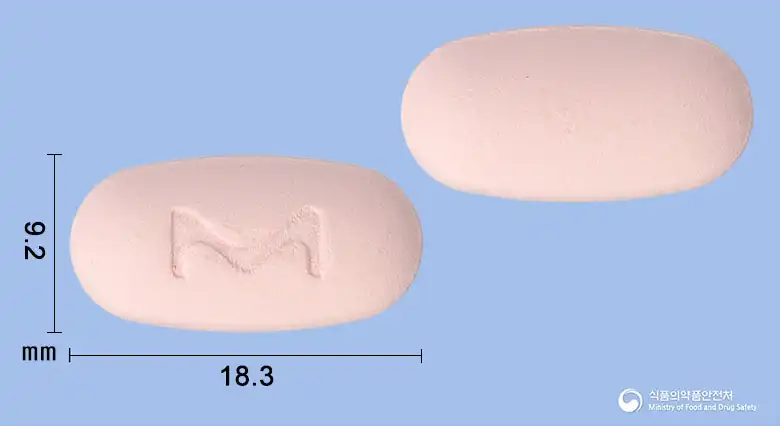
Pale pink, oval, biconvex film-coated tablet
Package unit
60 tablets/box [10 tablets/blister pack x 6]
Questions about this medicine
No questions yet.
For anything that needs medical judgment, consult a doctor or pharmacist.