
 한국어
 English
 日本語
 中文(简体)
Summary
- Main use
- Extended adjuvant treatment of hormone receptor-positive, HER2-positive early breast cancer
- Who takes it
- Adults
- Adult dose
- This medication is administered orally once daily with food at a dose of 240 mg (6 tablets) if the disease recurs or continuously for up to 1 year. To reduce the risk of diarrhea, a 2-week dose-escalation regimen according to [Table 1] may be considered as the initial daily dose regimen instead of starting at 240mg. Week 1 (days 1-7): 120 mg once daily (three 40 mg tablets) Week 2 (days 8-14): 160 mg once daily (four 40 mg tablets) Week 3 onward: 240mg once daily (six 40 mg tablets, recommended dose) If diarrhea occurs, treat with additional antidiarrheal agents, fluids, and electrolytes as clinically indicated. Treatment interruption and dose reduction of this medication may also be required to control diarrhea. If the dose-escalation regimen is not used, initiate antidiarrheal prophylaxis when this medication is first administered and continue it for the first 56 days of treatment. Instruct patients to take loperamide according to [Table 2] below, and titrate loperamide to achieve 1-2 bowel movements per day. Weeks 1-2 (days 1-14): 4 mg 3 times daily Weeks 3-8 (days 15-56): 4 mg 2 times daily Week 9 onward until discontinuation of this medication: 4 mg as needed (not to exceed 16mg per day; titrate to achieve 1-2 bowel movements per day) If diarrhea occurs despite antidiarrheal prophylaxis, treat with additional antidiarrheal agents, fluids, and electrolytes as clinically indicated. Treatment interruption and dose reduction of this medication may also be required to control diarrhea. Dose modification of this medication is recommended based on individual safety and tolerability. Management of certain adverse reactions may require treatment interruption and/or dose reduction according to [Table 3]–[Table 4 ]. Discontinue this medication in the following cases: • Patients with adverse reactions that persist without resolving to Grade 0-1 or baseline • Patients who experience toxicity resulting in a treatment delay of more than 3 weeks • Patients who do not tolerate this medication at 120 mg/day The dose may be adjusted as clinically indicated (e.g., unacceptable toxicity, persistent Grade 2 adverse drug reactions, etc.). Recommended starting dose: 240 mg daily (six 40 mg tablets) First dose reduction: 200 mg daily (five 40 mg tablets) Second dose reduction: 160 mg daily (four 40 mg tablets) Third dose reduction: 120 mg daily (three 40 mg tablets) Grade 1 diarrhea [increase of fewer than 4 bowel movements per day from baseline] Grade 2 diarrhea lasting 5 days or less [increase of 4-6 bowel movements per day from baseline] Grade 3 diarrhea lasting 2 days or less [increase of 7 or more bowel movements per day from baseline; incontinence; hospitalization indicated; limitation in routine self-care activities] Adjust antidiarrheal treatment Dietary modification Maintain fluid intake of ~2 L per day to prevent dehydration. After recovery to Grade 1 or lower or to baseline, start loperamide 4mg with each dose of this medication. Any grade with complicating features† Grade 2 diarrhea lasting more than 5 days‡ Grade 3 diarrhea lasting more than 2 days‡ Interrupt treatment with this medication. Dietary modification Maintain fluid intake of ~2 L per day to prevent dehydration. If diarrhea recovers to Grade 0-1 within 1 week, resume this medication at the same dose. If diarrhea recovers to Grade 0-1 after more than 1 week, resume this medication at a reduced dose (see Table 3). After recovery to Grade 1 or lower or to baseline, start loperamide 4mg with each dose of this medication. Grade 4 diarrhea [life-threatening consequences; urgent intervention indicated] Permanently discontinue this medication. Recurrence of Grade 2 or higher diarrhea at 120 mg/day Permanently discontinue this medication. Grade 3 ALT or AST (>5-20x ULN) or Grade 3 bilirubin (>3-10x ULN) Interrupt treatment with this medication until recovery to Grade 1 or lower. Evaluate other causes. If recovery to Grade 1 or lower occurs within 3 weeks, resume this medication at the next lower dose level. If Grade 3 ALT or AST or Grade 3 bilirubin recurs despite one dose reduction, permanently discontinue this medication. Grade 4 ALT or AST (>20x ULN) or Grade 4 bilirubin (>10x ULN) Permanently discontinue this medication. Evaluate other causes. Grade 3 If recovery to Grade 1 or lower or baseline occurs within 3 weeks after treatment interruption, restart this medication at one dose level lower. Grade 4 Permanently discontinue this medication. In patients with severe hepatic impairment (Child-Pugh C), reduce the starting dose of this medication to 80 mg. No dose modification is recommended for patients with mild to moderate hepatic impairment (Child-Pugh A or B). Proton pump inhibitors (PPIs): Avoid concomitant use with this medication. H2-receptor antagonists: Administer this medication at least 2 hours before the next dose of the H2-receptor antagonist or at least 10 hours after administration of the H2-receptor antagonist. Antacids: Administer this medication 3 hours apart from antacids.
Ingredients
- Importer
- BIXINK THERAPEUTICS CO., LTD.
Efficacy & effects
Extended adjuvant treatment of hormone receptor-positive, HER2-positive early breast cancer
View approved original textHide original text
This medicine is used as extended adjuvant therapy for adult early breast cancer patients who are positive for hormone receptors and HER2 receptors. It is administered alone to patients who received trastuzumab-based adjuvant therapy within one year after surgery, helping to enhance therapeutic effects. It reduces the risk of relapse and improves treatment outcomes. This product is particularly suitable for those requiring ongoing management after early breast cancer treatment and plays an important role in preventing the recurrence of cancer by extending the treatment period. It is appropriately used according to the patients' treatment plans, contributing to the cure of early breast cancer.
How to take
Adult dose
This medication is administered orally once daily with food at a dose of 240 mg (6 tablets) if the disease recurs or continuously for up to 1 year. To reduce the risk of diarrhea, a 2-week dose-escalation regimen according to [Table 1] may be considered as the initial daily dose regimen instead of starting at 240mg. Week 1 (days 1-7): 120 mg once daily (three 40 mg tablets) Week 2 (days 8-14): 160 mg once daily (four 40 mg tablets) Week 3 onward: 240mg once daily (six 40 mg tablets, recommended dose) If diarrhea occurs, treat with additional antidiarrheal agents, fluids, and electrolytes as clinically indicated. Treatment interruption and dose reduction of this medication may also be required to control diarrhea. If the dose-escalation regimen is not used, initiate antidiarrheal prophylaxis when this medication is first administered and continue it for the first 56 days of treatment. Instruct patients to take loperamide according to [Table 2] below, and titrate loperamide to achieve 1-2 bowel movements per day. Weeks 1-2 (days 1-14): 4 mg 3 times daily Weeks 3-8 (days 15-56): 4 mg 2 times daily Week 9 onward until discontinuation of this medication: 4 mg as needed (not to exceed 16mg per day; titrate to achieve 1-2 bowel movements per day) If diarrhea occurs despite antidiarrheal prophylaxis, treat with additional antidiarrheal agents, fluids, and electrolytes as clinically indicated. Treatment interruption and dose reduction of this medication may also be required to control diarrhea. Dose modification of this medication is recommended based on individual safety and tolerability. Management of certain adverse reactions may require treatment interruption and/or dose reduction according to [Table 3]–[Table 4 ]. Discontinue this medication in the following cases: • Patients with adverse reactions that persist without resolving to Grade 0-1 or baseline • Patients who experience toxicity resulting in a treatment delay of more than 3 weeks • Patients who do not tolerate this medication at 120 mg/day The dose may be adjusted as clinically indicated (e.g., unacceptable toxicity, persistent Grade 2 adverse drug reactions, etc.). Recommended starting dose: 240 mg daily (six 40 mg tablets) First dose reduction: 200 mg daily (five 40 mg tablets) Second dose reduction: 160 mg daily (four 40 mg tablets) Third dose reduction: 120 mg daily (three 40 mg tablets) Grade 1 diarrhea [increase of fewer than 4 bowel movements per day from baseline] Grade 2 diarrhea lasting 5 days or less [increase of 4-6 bowel movements per day from baseline] Grade 3 diarrhea lasting 2 days or less [increase of 7 or more bowel movements per day from baseline; incontinence; hospitalization indicated; limitation in routine self-care activities] Adjust antidiarrheal treatment Dietary modification Maintain fluid intake of ~2 L per day to prevent dehydration. After recovery to Grade 1 or lower or to baseline, start loperamide 4mg with each dose of this medication. Any grade with complicating features† Grade 2 diarrhea lasting more than 5 days‡ Grade 3 diarrhea lasting more than 2 days‡ Interrupt treatment with this medication. Dietary modification Maintain fluid intake of ~2 L per day to prevent dehydration. If diarrhea recovers to Grade 0-1 within 1 week, resume this medication at the same dose. If diarrhea recovers to Grade 0-1 after more than 1 week, resume this medication at a reduced dose (see Table 3). After recovery to Grade 1 or lower or to baseline, start loperamide 4mg with each dose of this medication. Grade 4 diarrhea [life-threatening consequences; urgent intervention indicated] Permanently discontinue this medication. Recurrence of Grade 2 or higher diarrhea at 120 mg/day Permanently discontinue this medication. Grade 3 ALT or AST (>5-20x ULN) or Grade 3 bilirubin (>3-10x ULN) Interrupt treatment with this medication until recovery to Grade 1 or lower. Evaluate other causes. If recovery to Grade 1 or lower occurs within 3 weeks, resume this medication at the next lower dose level. If Grade 3 ALT or AST or Grade 3 bilirubin recurs despite one dose reduction, permanently discontinue this medication. Grade 4 ALT or AST (>20x ULN) or Grade 4 bilirubin (>10x ULN) Permanently discontinue this medication. Evaluate other causes. Grade 3 If recovery to Grade 1 or lower or baseline occurs within 3 weeks after treatment interruption, restart this medication at one dose level lower. Grade 4 Permanently discontinue this medication. In patients with severe hepatic impairment (Child-Pugh C), reduce the starting dose of this medication to 80 mg. No dose modification is recommended for patients with mild to moderate hepatic impairment (Child-Pugh A or B). Proton pump inhibitors (PPIs): Avoid concomitant use with this medication. H2-receptor antagonists: Administer this medication at least 2 hours before the next dose of the H2-receptor antagonist or at least 10 hours after administration of the H2-receptor antagonist. Antacids: Administer this medication 3 hours apart from antacids.
Precautions
This medication may cause severe diarrhea during administration, which could lead to the risk of dehydration, hypotension, and renal dysfunction. Therefore, it is important to take antidiarrheal medication to prevent and manage diarrhea, especially continuously during the first 56 days after starting treatment. If severe diarrhea or dehydration is suspected, consult with healthcare professionals immediately, as intravenous treatment or adjustment of medication dosage may be necessary. Additionally, this medication can affect liver function; regular liver function tests are required before and during administration. If symptoms of liver dysfunction occur, inform healthcare professionals immediately. This medication may harm the fetus during pregnancy; therefore, women who are pregnant or may become pregnant must consult a doctor before use and should use effective contraception for at least one month during and after the treatment period. Patients with a hypersensitivity to this medication should not use it, and those with severe impairment of liver or kidney function should use it with caution. Caution is needed when driving or operating machinery, as fatigue, dizziness, and dehydration may occur. This medication can interact with other drugs; consult with a doctor or pharmacist when using it with antacids, certain antifungals, cardiac medications, etc. Nursing mothers should avoid breastfeeding during and for at least one month after using this medication. The incidence of adverse reactions may be higher in elderly patients, requiring careful monitoring during use. In cases of overdose, there is no specific antidote, so it is essential to notify healthcare professionals immediately and receive appropriate supportive care. This medication should be kept out of reach of children and should not be transferred to another container.
Side effects
- Diarrhea
- dehydration
- hypotension
- renal failure
- increased liver enzymes
- increased ALT
- increased AST
- miscarriage
- fetal demise
- fetal abnormalities
Show 24 moreCollapse
- nausea
- abdominal pain
- fatigue
- vomiting
- rash
- stomatitis
- decreased appetite
- muscle cramps
- dyspepsia
- nail disorders
- dry skin
- abdominal distension
- epistaxis
- weight loss
- urinary tract infection
- dry mouth
- dehydration
- muscle cramps
- epistaxis
- skin fissures
- erythema
- fatigue
- syncope
- dizziness
Not everyone experiences these, and they can vary from person to person.
Storage
This medication should be stored in a tightly sealed container to protect it from air and moisture. It is recommended to keep the medication at room temperature between 15 to 25 degrees Celsius, avoiding excessively hot or cold environments.
Appearance and packaging
Appearance
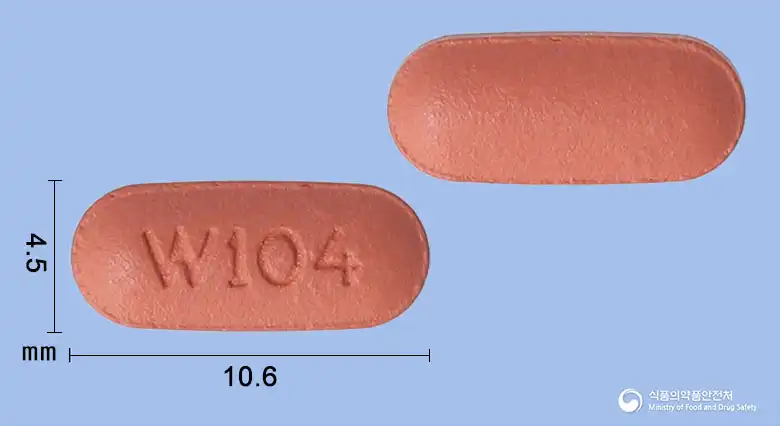
Red oval film-coated tablets
Package unit
Bottle - 180 tablets/bottle
Questions about this medicine
No questions yet.
For anything that needs medical judgment, consult a doctor or pharmacist.