
 한국어
 English
 日本語
 中文(简体)
Summary
- Main use
- Combination treatment for BRAF V600E-mutant metastatic colorectal cancer
- Who takes it
- Adults
- Adult dose
- The recommended dose of this drug is 300mg (four 75mg capsules) orally once daily. Continue treatment with this drug until disease progression or unacceptable toxicity occurs. Combination therapy with cetuximab and mFOLFOX6 (fluorouracil, leucovorin, oxaliplatin) Cetuximab and mFOLFOX6 are administered once every 2 weeks. The dose of cetuximab is 500mg/m². The mFOLXFOX6 regimen consists of oxaliplatin 85mg/m², leucovorin 400mg/m², and fluorouracil (5-FU) 400 mg/m² administered as a bolus intravenous infusion, followed by continuous intravenous infusion of 5-FU 2400 mg/m² over 46~48 hours. Combination therapy with cetuximab Cetuximab is administered once weekly. The initial dose is 400mg/m2, followed by a maintenance dose of 250mg/m2. This drug may be taken with or without food. If you miss a dose of this drug, do not take the missed dose if it is within 12 hours of the next scheduled dose. If you vomit after taking this drug, do not take an additional dose; continue with the next scheduled dose. If cetuximab is discontinued, discontinue this drug as well. First dose reduction: 225mg (three 75mg capsules) orally once daily Second dose reduction: 150mg (two 75mg capsules) orally once daily Subsequent adjustment: Permanently discontinue if 150mg (two 75mg capsules) of this drug once daily is not tolerated New primary cancer—noncutaneous RAS mutation-positive cancer: Permanently discontinue this drug. Hepatotoxicity—increased AST or ALT, Grade 2: Maintain the dose of this drug. If it does not improve within 4 weeks, withhold this drug until it improves to Grade 0~1 or to the pretreatment/baseline level, then resume at the same dose. Hepatotoxicity—increased AST or ALT, Grade 3 or 4: See Other Adverse Reactions at the bottom of the table. Uveitis—Grade 1~3: For Grade 1 or 2 uveitis that does not respond to specific ophthalmic therapy, or Grade 3 uveitis, withhold this drug for up to 6 weeks. If it improves, resume at the same or a reduced dose. If it does not improve, permanently discontinue this drug. Uveitis—Grade 4: Permanently discontinue this drug. QTc prolongation—QTcF >500ms and increase of ≤60ms from baseline: Withhold this drug until QTcF is ≤500ms. Then resume at a reduced dose. If it recurs more than once, permanently discontinue this drug. QTc prolongation—QTcF >500ms and increase of >60ms from baseline: Permanently discontinue this drug. Skin (excluding hand-foot skin reaction [HFSR])—Grade 2: If it does not improve within 2 weeks, withhold this drug until it is Grade 0~1. Then resume at the same dose. Skin (excluding hand-foot skin reaction [HFSR])—Grade 3: Withhold this drug until it is Grade 0~1. For the first occurrence, resume at the same dose. For recurrence, reduce the dose. Skin (excluding hand-foot skin reaction [HFSR])—Grade 4: Permanently discontinue this drug. Other adverse reactions (including bleeding and HFSR)—recurrent Grade 2 or first occurrence of Grade 3: Withhold this drug for up to 4 weeks. If it improves to Grade 0~1 or to the pretreatment/baseline level, resume at a reduced dose. If it does not improve, permanently discontinue this drug. Other adverse reactions (including bleeding and HFSR)—first occurrence of Grade 4: Permanently discontinue this drug or withhold it for up to 4 weeks. If it improves to Grade 0~1 or to the pretreatment/baseline level, resume at a reduced dose. If it does not improve, permanently discontinue this drug. Other adverse reactions (including bleeding and HFSR)—recurrent Grade 3: Consider permanently discontinuing this drug. Other adverse reactions (including bleeding and HFSR)—recurrent Grade 4: Permanently discontinue this drug. Do not coadminister this drug with strong or moderate CYP3A4 inhibitors. If concomitant use cannot be avoided, reduce the dose of this drug according to the recommendations below. When the CYP3A4 inhibitor is discontinued, resume the dose of this drug used before CYP3A4 inhibitor coadministration after 3-5 times the elimination half-life of the CYP3A4 inhibitor has elapsed. Current daily dose 300 mg: 150mg (two 75mg capsules) with a moderate CYP3A4 inhibitor; 75 mg with a strong CYP3A4 inhibitor Current daily dose 225 mg: 75 mg with a moderate CYP3A4 inhibitor; 75 mg with a strong CYP3A4 inhibitor Current daily dose 150 mg: 75 mg with a moderate CYP3A4 inhibitor; 75 mgb with a strong CYP3A4 inhibitor
Ingredients
- Importer
- ONO PHARMA KOREA CO.,LTD.
Efficacy & effects
Combination treatment for BRAF V600E-mutant metastatic colorectal cancer
View approved original textHide original text
This medication is used for the treatment of patients with metastatic colorectal cancer who have the BRAF V600E mutation. In particular, it enhances the treatment effect when combined with cetuximab and mFOLFOX6 in patients with prior treatment experience. This helps to suppress the progression of cancer and improves treatment outcomes in patients.
How to take
Adult dose
The recommended dose of this drug is 300mg (four 75mg capsules) orally once daily. Continue treatment with this drug until disease progression or unacceptable toxicity occurs. Combination therapy with cetuximab and mFOLFOX6 (fluorouracil, leucovorin, oxaliplatin) Cetuximab and mFOLFOX6 are administered once every 2 weeks. The dose of cetuximab is 500mg/m². The mFOLXFOX6 regimen consists of oxaliplatin 85mg/m², leucovorin 400mg/m², and fluorouracil (5-FU) 400 mg/m² administered as a bolus intravenous infusion, followed by continuous intravenous infusion of 5-FU 2400 mg/m² over 46~48 hours. Combination therapy with cetuximab Cetuximab is administered once weekly. The initial dose is 400mg/m2, followed by a maintenance dose of 250mg/m2. This drug may be taken with or without food. If you miss a dose of this drug, do not take the missed dose if it is within 12 hours of the next scheduled dose. If you vomit after taking this drug, do not take an additional dose; continue with the next scheduled dose. If cetuximab is discontinued, discontinue this drug as well. First dose reduction: 225mg (three 75mg capsules) orally once daily Second dose reduction: 150mg (two 75mg capsules) orally once daily Subsequent adjustment: Permanently discontinue if 150mg (two 75mg capsules) of this drug once daily is not tolerated New primary cancer—noncutaneous RAS mutation-positive cancer: Permanently discontinue this drug. Hepatotoxicity—increased AST or ALT, Grade 2: Maintain the dose of this drug. If it does not improve within 4 weeks, withhold this drug until it improves to Grade 0~1 or to the pretreatment/baseline level, then resume at the same dose. Hepatotoxicity—increased AST or ALT, Grade 3 or 4: See Other Adverse Reactions at the bottom of the table. Uveitis—Grade 1~3: For Grade 1 or 2 uveitis that does not respond to specific ophthalmic therapy, or Grade 3 uveitis, withhold this drug for up to 6 weeks. If it improves, resume at the same or a reduced dose. If it does not improve, permanently discontinue this drug. Uveitis—Grade 4: Permanently discontinue this drug. QTc prolongation—QTcF >500ms and increase of ≤60ms from baseline: Withhold this drug until QTcF is ≤500ms. Then resume at a reduced dose. If it recurs more than once, permanently discontinue this drug. QTc prolongation—QTcF >500ms and increase of >60ms from baseline: Permanently discontinue this drug. Skin (excluding hand-foot skin reaction [HFSR])—Grade 2: If it does not improve within 2 weeks, withhold this drug until it is Grade 0~1. Then resume at the same dose. Skin (excluding hand-foot skin reaction [HFSR])—Grade 3: Withhold this drug until it is Grade 0~1. For the first occurrence, resume at the same dose. For recurrence, reduce the dose. Skin (excluding hand-foot skin reaction [HFSR])—Grade 4: Permanently discontinue this drug. Other adverse reactions (including bleeding and HFSR)—recurrent Grade 2 or first occurrence of Grade 3: Withhold this drug for up to 4 weeks. If it improves to Grade 0~1 or to the pretreatment/baseline level, resume at a reduced dose. If it does not improve, permanently discontinue this drug. Other adverse reactions (including bleeding and HFSR)—first occurrence of Grade 4: Permanently discontinue this drug or withhold it for up to 4 weeks. If it improves to Grade 0~1 or to the pretreatment/baseline level, resume at a reduced dose. If it does not improve, permanently discontinue this drug. Other adverse reactions (including bleeding and HFSR)—recurrent Grade 3: Consider permanently discontinuing this drug. Other adverse reactions (including bleeding and HFSR)—recurrent Grade 4: Permanently discontinue this drug. Do not coadminister this drug with strong or moderate CYP3A4 inhibitors. If concomitant use cannot be avoided, reduce the dose of this drug according to the recommendations below. When the CYP3A4 inhibitor is discontinued, resume the dose of this drug used before CYP3A4 inhibitor coadministration after 3-5 times the elimination half-life of the CYP3A4 inhibitor has elapsed. Current daily dose 300 mg: 150mg (two 75mg capsules) with a moderate CYP3A4 inhibitor; 75 mg with a strong CYP3A4 inhibitor Current daily dose 225 mg: 75 mg with a moderate CYP3A4 inhibitor; 75 mg with a strong CYP3A4 inhibitor Current daily dose 150 mg: 75 mg with a moderate CYP3A4 inhibitor; 75 mgb with a strong CYP3A4 inhibitor
Precautions
This drug should not be used in patients with hypersensitivity to certain components. New primary cancers, hepatic toxicity, bleeding, ocular inflammation, cardiac arrhythmias, and risks to the fetus may occur during treatment, so caution is needed. Before treatment, it is essential to accurately confirm the BRAF V600E mutation status through testing. Regular skin examinations and observation for unusual signs are necessary, as skin cancer or non-skin cancers may occur. Abnormal liver function may occur, and liver function tests should be conducted regularly before and during treatment. Due to the risk of bleeding, if symptoms of bleeding appear, medical personnel should be notified immediately. Ocular inflammation may occur, and if there are changes in visual symptoms, an ophthalmological examination should be conducted immediately. There may be side effects related to heart rhythm, so patients with a history of heart disease should be observed carefully. This drug should not be administered to pregnant women as it can cause serious harm to the fetus, and fertile women should use effective non-hormonal contraception during and for a certain period after treatment. Breastfeeding women should avoid breastfeeding during and for a certain period after administration of this drug. Due to possible drug interactions, dosage adjustments or discontinuation may be needed when used in combination with certain medications, so consultation with healthcare providers is necessary. Elderly patients or those with impaired liver or kidney function should use this drug with caution, and recommended dosages for patients with severe liver or kidney impairment have not been established. In case of overdose, blood dialysis may not be effective, and immediate medical attention is required.
Side effects
Intestinal obstruction, fever, anemia, intestinal perforation, gastrointestinal perforation, increased lipase, neutropenia, diarrhea, peripheral neuropathy, nausea, fatigue, decreased appetite, vomiting, bleeding, abdominal pain, arthralgia, headache, neurotoxicity, constipation, rash, hair loss, dry skin, acneiform dermatitis, skin hyperpigmentation, pruritus, insomnia, decreased hemoglobin, leukopenia, increased glucose, increased creatinine, increased alanine aminotransferase, decreased albumin, increased aspartate aminotransferase, increased alkaline phosphatase, decreased potassium, decreased calcium, decreased magnesium, decreased sodium, lymphocytopenia, prolonged activated partial thromboplastin time, hypomagnesemia, hypokalemia, hyponatremia, pancreatitis, melanocytic nevus, skin papilloma, basal cell carcinoma, squamous cell carcinoma of the skin, keratoacanthoma, malignant melanoma in situ, skin cancer, new primary melanoma, iritis, iridocyclitis, uveitis, prolonged QTc interval, gastrointestinal bleeding, epistaxis, passage of blood in stool, rectal bleeding
Not everyone experiences these, and they can vary from person to person.
Storage
This medication should be stored in a tightly closed container protected from air and moisture. It is also recommended to store the medication at room temperature between 1°C and 30°C. Proper storage helps maintain the efficacy and safety of the medication.
Appearance and packaging
Appearance
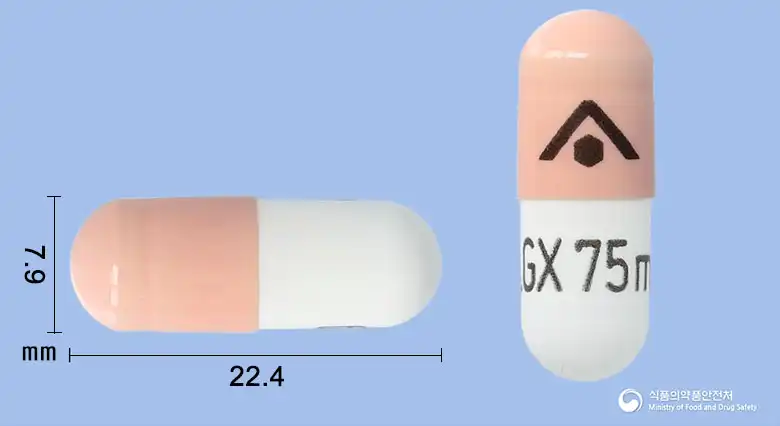
An opaque hard capsule with a beige upper part and a white lower part containing white to off-white powder or clumps.
Package unit
42 capsules/box [6 capsules/PTP x 7]
Questions about this medicine
No questions yet.
For anything that needs medical judgment, consult a doctor or pharmacist.