
 한국어
 English
 日本語
 中文(简体)
Summary
- Main use
- Treatment of adult multiple myeloma and relapsed or refractory diffuse large B-cell lymphoma
- Who uses it
- Adults
- Adult dosage
- This medicine should be taken with water at approximately the same time each day. Do not break or chew the tablets. If a dose is missed or delayed, take the next prescribed dose at the scheduled time of the next dose. If you vomit after taking this medicine, do not repeat the same dose; take the next dose at the scheduled time of the next dose. 1. Recommended dosage 1) Combination therapy with bortezomib and dexamethasone for the treatment of adults with multiple myeloma who have received one or more prior therapies: Take this medicine at a dose of 100mg once weekly on the first day of each week, in combination with the following: - Administer bortezomib 1.3mg/m2 subcutaneously once weekly on the first day of each week. Administer for 4 weeks, followed by a 1-week rest period. - Take oral dexamethasone at a dose of 20mg twice weekly on the first and second days of each week, in combination with this medicine. 2) Combination therapy with dexamethasone for the treatment of adults with relapsed or refractory multiple myeloma who have received at least two proteasome inhibitors, at least two immunomodulatory imide drugs, and at least one anti-CD38 antibody therapy across four prior treatment regimens: Take this medicine at a dose of 80 mg twice weekly on the first and third days of each week. Take oral dexamethasone at a dose of 20 mg twice weekly on the first and third days of each week, in combination with this medicine. 3) Treatment of adults with relapsed or refractory diffuse large B-cell lymphoma after two or more systemic therapies: Take this medicine at a dose of 60 mg twice weekly on the first and third days of each week. 2. Dose modifications Refer to Table 1 for the recommended dose reduction levels for adverse reactions to this medicine. Table 1: Dose reduction levels for adverse reactions Multiple myeloma (in combination with bortezomib and dexamethasone): Recommended starting dose once weekly 100 mg; first reduction once weekly 80 mg; second reduction once weekly 60mg; third reduction once weekly 40mg; fourth reduction discontinue treatment. Multiple myeloma (in combination with dexamethasone): Recommended starting dose 80 mg on the first and third days of each week (total 160 mg per week); first reduction once weekly 100 mg; second reduction once weekly 80 mg; third reduction once weekly 60 mg; fourth reduction discontinue treatment. Diffuse large B-cell lymphoma: Recommended starting dose 60 mg on the first and third days of each week (total 120 mg per week); first reduction 40 mg on the first and third days of each week (total 80 mg per week); second reduction once weekly 60 mg; third reduction once weekly 40 mg; fourth reduction discontinue treatment. Refer to Tables 2 and 3, respectively, for recommended dose modifications for hematologic adverse reactions in patients with multiple myeloma and diffuse large B-cell lymphoma. Table 2: Dose modification guidelines for hematologic adverse reactions in patients with multiple myeloma Thrombocytopenia, platelet count 25,000 to less than 75,000/mcL, all occurrences: Reduce this medicine by 1 dose level (see Table 1). Platelet count 25,000 to less than 75,000/mcL with concomitant bleeding, all occurrences: Interrupt treatment with this medicine. Resume treatment with this medicine at a dose reduced by 1 dose level after the bleeding has resolved (see Table 1). Administer platelets according to clinical guidelines. Platelet count less than 25,000/mcL, all occurrences: Interrupt treatment with this medicine. Monitor until the platelet count recovers to at least 50,000/mcL. Resume treatment with this medicine at a dose reduced by 1 dose level (see Table 1). Neutropenia, absolute neutrophil count from 0.5 to less than 1 x 10⁹/L without accompanying fever, all occurrences: Reduce this medicine by 1 dose level (see Table 1). Absolute neutrophil count less than 0.5 x 10⁹/L or febrile neutropenia, all occurrences: Interrupt treatment with this medicine. Monitor until the neutrophil count recovers to at least 1 x 10⁹/L. Resume treatment with this medicine at a dose reduced by 1 dose level (see Table 1). Anemia, hemoglobin less than 8 g/dL, all occurrences: Reduce this medicine by 1 dose level (see Table 1). Transfuse according to clinical guidelines. Life-threatening symptoms, all occurrences: Interrupt treatment with this medicine. Monitor until the hemoglobin level recovers to at least 8g/dL. Resume treatment with this medicine at a dose reduced by 1 dose level (see Table 1). Transfuse according to clinical guidelines. Table 3: Dose modification guidelines for hematologic adverse reactions in patients with diffuse large B-cell lymphoma Thrombocytopenia, platelet count 50,000 to less than 75,000/mcL, all occurrences: Withhold 1 dose of this medicine. Resume treatment with this medicine at the same dose level. Platelet count 25,000 to less than 50,000/mcL without bleeding, first occurrence: Interrupt treatment with this medicine. Monitor until the platelet count recovers to at least 50,000/mcL. Reduce this medicine by 1 dose level (see Table 1). Platelet count 25,000 to less than 50,000/mcL with concomitant bleeding, all occurrences: Interrupt treatment with this medicine. Monitor until the platelet count recovers to at least 50,000/mcL. Resume treatment with this medicine at a dose reduced by 1 dose level after the bleeding has resolved (see Table 1). Administer platelets according to clinical guidelines. Platelet count less than 25,000/mcL, all occurrences: Interrupt treatment with this medicine. Monitor until the platelet count recovers to at least 50,000/mcL. Resume treatment with this medicine at a dose reduced by 1 dose level (see Table 1). Administer platelets according to clinical guidelines. Neutropenia, absolute neutrophil count from 0.5 to less than 1 x 10⁹/L without accompanying fever, first occurrence: Interrupt treatment with this medicine. Monitor until the neutrophil count recovers to at least 1 x 10⁹/L. Restart treatment with this medicine at the same dose. Recurrence: Interrupt treatment with this medicine. Monitor until the neutrophil count recovers to at least 1 x 10⁹/L. Administer growth factors according to clinical guidelines. Resume treatment with this medicine at a dose reduced by 1 dose level (see Table 1). Absolute neutrophil count less than 0.5 x 10⁹/L or febrile neutropenia, all occurrences: Interrupt treatment with this medicine. Monitor until the neutrophil count recovers to at least 1 x 10⁹/L. Administer growth factors according to clinical guidelines. Resume treatment with this medicine at a dose reduced by 1 dose level (see Table 1). Anemia, hemoglobin less than 8 g/dL, all occurrences: Reduce this medicine by 1 dose level (see Table 1). Transfuse according to clinical guidelines. Life-threatening symptoms, all occurrences: Interrupt treatment with this medicine. Monitor until the hemoglobin level recovers to at least 8 g/dL. Resume treatment with this medicine at a dose reduced by 1 dose level (see Table 1). Transfuse according to clinical guidelines. Refer to Table 4 for recommended dose modifications for non-hematologic adverse reactions. Table 4: Dose modification guidelines for this medicine for non-hematologic adverse reactions Nausea and vomiting, Grade 1~2 nausea (decreased oral intake without significant weight loss, dehydration, or malnutrition) or Grade 1~2 vomiting (5 or fewer episodes per day), all occurrences: Continue use of this medicine and initiate additional antiemetic therapy. Grade 3 nausea (inadequate oral caloric and fluid intake) or Grade 3 or higher vomiting (6 or more episodes per day), all occurrences: Interrupt treatment with this medicine. Monitor until nausea or vomiting resolves to Grade 2 or lower or returns to baseline. Initiate additional antiemetic therapy. Resume treatment with this medicine at a dose reduced by 1 dose level (see Table 1). Diarrhea, Grade 2 (increase of 4 ~ 6 stools per day compared with baseline), first occurrence: Continue use of this medicine and initiate supportive care. Second and subsequent occurrences: Reduce this medicine by 1 dose level (see Table 1). Initiate supportive care. Grade 3 or higher (increase of 7 or more stools per day compared with baseline; hospitalization indicated), all occurrences: Interrupt treatment with this medicine and initiate supportive care. Monitor until diarrhea resolves to Grade 2 or lower. Resume treatment with this medicine at a dose reduced by 1 dose level (see Table 1). Weight loss and anorexia, weight loss of 10 ~ 20 % or anorexia or malnutrition associated with significant weight loss, all occurrences: Interrupt treatment with this medicine and initiate supportive care. Monitor until weight recovers to at least 90% of baseline body weight. Resume treatment with this medicine at a dose reduced by 1 dose level (see Table 1). Hyponatremia, sodium level 130 mmol/L or lower, all occurrences: Interrupt treatment with this medicine, evaluate, and provide supportive care. Monitor until the sodium level recovers to at least 130 mmol/L. Resume treatment with this medicine at a dose reduced by 1 dose level (see Table 1). Fatigue, Grade 2 lasting more than 7 days or Grade 3, all occurrences: Interrupt treatment with this medicine. Monitor until fatigue resolves to Grade 1 or baseline. Resume treatment with this medicine at a dose reduced by 1 dose level (see Table 1). Ocular toxicity, Grade 2 excluding cataracts, all occurrences: Perform an ophthalmologic evaluation. Interrupt treatment with this medicine and provide supportive care. Monitor until ocular symptoms resolve to Grade 1 or baseline. Resume treatment with this medicine at a dose reduced by 1 dose level (see Table 1). Grade 3 or higher excluding cataracts, all occurrences: Permanently discontinue use of this medicine. Perform an ophthalmologic evaluation. Other non-hematologic adverse reactions, Grade 3~4, all occurrences: Interrupt treatment with this medicine. Monitor until the reaction resolves to Grade 2 or lower; resume treatment with this medicine at a dose reduced by 1 dose level (see Table 1).
Ingredients
- Importer
- Antengene Medicine Co., Ltd.
Efficacy & effects
Treatment of adult multiple myeloma and relapsed or refractory diffuse large B-cell lymphoma
View approved original textHide original text
This medication is used in the treatment of patients with multiple myeloma and diffuse large B-cell lymphoma. Specifically, it is effective for adult patients with multiple myeloma who have received multiple prior therapies in combination with bortezomib and dexamethasone. It is also used in combination with dexamethasone for adult patients with relapsed or refractory multiple myeloma who have received four or more therapies. This medication is also applicable for the treatment of adult patients with diffuse large B-cell lymphoma who have relapsed or are unresponsive after two or more systemic therapies. Thus, this medication is effectively used in the treatment of various refractory hematologic malignancies.
Dosage and Administration
Adult dosage
This medicine should be taken with water at approximately the same time each day. Do not break or chew the tablets. If a dose is missed or delayed, take the next prescribed dose at the scheduled time of the next dose. If you vomit after taking this medicine, do not repeat the same dose; take the next dose at the scheduled time of the next dose. 1. Recommended dosage 1) Combination therapy with bortezomib and dexamethasone for the treatment of adults with multiple myeloma who have received one or more prior therapies: Take this medicine at a dose of 100mg once weekly on the first day of each week, in combination with the following: - Administer bortezomib 1.3mg/m2 subcutaneously once weekly on the first day of each week. Administer for 4 weeks, followed by a 1-week rest period. - Take oral dexamethasone at a dose of 20mg twice weekly on the first and second days of each week, in combination with this medicine. 2) Combination therapy with dexamethasone for the treatment of adults with relapsed or refractory multiple myeloma who have received at least two proteasome inhibitors, at least two immunomodulatory imide drugs, and at least one anti-CD38 antibody therapy across four prior treatment regimens: Take this medicine at a dose of 80 mg twice weekly on the first and third days of each week. Take oral dexamethasone at a dose of 20 mg twice weekly on the first and third days of each week, in combination with this medicine. 3) Treatment of adults with relapsed or refractory diffuse large B-cell lymphoma after two or more systemic therapies: Take this medicine at a dose of 60 mg twice weekly on the first and third days of each week. 2. Dose modifications Refer to Table 1 for the recommended dose reduction levels for adverse reactions to this medicine. Table 1: Dose reduction levels for adverse reactions Multiple myeloma (in combination with bortezomib and dexamethasone): Recommended starting dose once weekly 100 mg; first reduction once weekly 80 mg; second reduction once weekly 60mg; third reduction once weekly 40mg; fourth reduction discontinue treatment. Multiple myeloma (in combination with dexamethasone): Recommended starting dose 80 mg on the first and third days of each week (total 160 mg per week); first reduction once weekly 100 mg; second reduction once weekly 80 mg; third reduction once weekly 60 mg; fourth reduction discontinue treatment. Diffuse large B-cell lymphoma: Recommended starting dose 60 mg on the first and third days of each week (total 120 mg per week); first reduction 40 mg on the first and third days of each week (total 80 mg per week); second reduction once weekly 60 mg; third reduction once weekly 40 mg; fourth reduction discontinue treatment. Refer to Tables 2 and 3, respectively, for recommended dose modifications for hematologic adverse reactions in patients with multiple myeloma and diffuse large B-cell lymphoma. Table 2: Dose modification guidelines for hematologic adverse reactions in patients with multiple myeloma Thrombocytopenia, platelet count 25,000 to less than 75,000/mcL, all occurrences: Reduce this medicine by 1 dose level (see Table 1). Platelet count 25,000 to less than 75,000/mcL with concomitant bleeding, all occurrences: Interrupt treatment with this medicine. Resume treatment with this medicine at a dose reduced by 1 dose level after the bleeding has resolved (see Table 1). Administer platelets according to clinical guidelines. Platelet count less than 25,000/mcL, all occurrences: Interrupt treatment with this medicine. Monitor until the platelet count recovers to at least 50,000/mcL. Resume treatment with this medicine at a dose reduced by 1 dose level (see Table 1). Neutropenia, absolute neutrophil count from 0.5 to less than 1 x 10⁹/L without accompanying fever, all occurrences: Reduce this medicine by 1 dose level (see Table 1). Absolute neutrophil count less than 0.5 x 10⁹/L or febrile neutropenia, all occurrences: Interrupt treatment with this medicine. Monitor until the neutrophil count recovers to at least 1 x 10⁹/L. Resume treatment with this medicine at a dose reduced by 1 dose level (see Table 1). Anemia, hemoglobin less than 8 g/dL, all occurrences: Reduce this medicine by 1 dose level (see Table 1). Transfuse according to clinical guidelines. Life-threatening symptoms, all occurrences: Interrupt treatment with this medicine. Monitor until the hemoglobin level recovers to at least 8g/dL. Resume treatment with this medicine at a dose reduced by 1 dose level (see Table 1). Transfuse according to clinical guidelines. Table 3: Dose modification guidelines for hematologic adverse reactions in patients with diffuse large B-cell lymphoma Thrombocytopenia, platelet count 50,000 to less than 75,000/mcL, all occurrences: Withhold 1 dose of this medicine. Resume treatment with this medicine at the same dose level. Platelet count 25,000 to less than 50,000/mcL without bleeding, first occurrence: Interrupt treatment with this medicine. Monitor until the platelet count recovers to at least 50,000/mcL. Reduce this medicine by 1 dose level (see Table 1). Platelet count 25,000 to less than 50,000/mcL with concomitant bleeding, all occurrences: Interrupt treatment with this medicine. Monitor until the platelet count recovers to at least 50,000/mcL. Resume treatment with this medicine at a dose reduced by 1 dose level after the bleeding has resolved (see Table 1). Administer platelets according to clinical guidelines. Platelet count less than 25,000/mcL, all occurrences: Interrupt treatment with this medicine. Monitor until the platelet count recovers to at least 50,000/mcL. Resume treatment with this medicine at a dose reduced by 1 dose level (see Table 1). Administer platelets according to clinical guidelines. Neutropenia, absolute neutrophil count from 0.5 to less than 1 x 10⁹/L without accompanying fever, first occurrence: Interrupt treatment with this medicine. Monitor until the neutrophil count recovers to at least 1 x 10⁹/L. Restart treatment with this medicine at the same dose. Recurrence: Interrupt treatment with this medicine. Monitor until the neutrophil count recovers to at least 1 x 10⁹/L. Administer growth factors according to clinical guidelines. Resume treatment with this medicine at a dose reduced by 1 dose level (see Table 1). Absolute neutrophil count less than 0.5 x 10⁹/L or febrile neutropenia, all occurrences: Interrupt treatment with this medicine. Monitor until the neutrophil count recovers to at least 1 x 10⁹/L. Administer growth factors according to clinical guidelines. Resume treatment with this medicine at a dose reduced by 1 dose level (see Table 1). Anemia, hemoglobin less than 8 g/dL, all occurrences: Reduce this medicine by 1 dose level (see Table 1). Transfuse according to clinical guidelines. Life-threatening symptoms, all occurrences: Interrupt treatment with this medicine. Monitor until the hemoglobin level recovers to at least 8 g/dL. Resume treatment with this medicine at a dose reduced by 1 dose level (see Table 1). Transfuse according to clinical guidelines. Refer to Table 4 for recommended dose modifications for non-hematologic adverse reactions. Table 4: Dose modification guidelines for this medicine for non-hematologic adverse reactions Nausea and vomiting, Grade 1~2 nausea (decreased oral intake without significant weight loss, dehydration, or malnutrition) or Grade 1~2 vomiting (5 or fewer episodes per day), all occurrences: Continue use of this medicine and initiate additional antiemetic therapy. Grade 3 nausea (inadequate oral caloric and fluid intake) or Grade 3 or higher vomiting (6 or more episodes per day), all occurrences: Interrupt treatment with this medicine. Monitor until nausea or vomiting resolves to Grade 2 or lower or returns to baseline. Initiate additional antiemetic therapy. Resume treatment with this medicine at a dose reduced by 1 dose level (see Table 1). Diarrhea, Grade 2 (increase of 4 ~ 6 stools per day compared with baseline), first occurrence: Continue use of this medicine and initiate supportive care. Second and subsequent occurrences: Reduce this medicine by 1 dose level (see Table 1). Initiate supportive care. Grade 3 or higher (increase of 7 or more stools per day compared with baseline; hospitalization indicated), all occurrences: Interrupt treatment with this medicine and initiate supportive care. Monitor until diarrhea resolves to Grade 2 or lower. Resume treatment with this medicine at a dose reduced by 1 dose level (see Table 1). Weight loss and anorexia, weight loss of 10 ~ 20 % or anorexia or malnutrition associated with significant weight loss, all occurrences: Interrupt treatment with this medicine and initiate supportive care. Monitor until weight recovers to at least 90% of baseline body weight. Resume treatment with this medicine at a dose reduced by 1 dose level (see Table 1). Hyponatremia, sodium level 130 mmol/L or lower, all occurrences: Interrupt treatment with this medicine, evaluate, and provide supportive care. Monitor until the sodium level recovers to at least 130 mmol/L. Resume treatment with this medicine at a dose reduced by 1 dose level (see Table 1). Fatigue, Grade 2 lasting more than 7 days or Grade 3, all occurrences: Interrupt treatment with this medicine. Monitor until fatigue resolves to Grade 1 or baseline. Resume treatment with this medicine at a dose reduced by 1 dose level (see Table 1). Ocular toxicity, Grade 2 excluding cataracts, all occurrences: Perform an ophthalmologic evaluation. Interrupt treatment with this medicine and provide supportive care. Monitor until ocular symptoms resolve to Grade 1 or baseline. Resume treatment with this medicine at a dose reduced by 1 dose level (see Table 1). Grade 3 or higher excluding cataracts, all occurrences: Permanently discontinue use of this medicine. Perform an ophthalmologic evaluation. Other non-hematologic adverse reactions, Grade 3~4, all occurrences: Interrupt treatment with this medicine. Monitor until the reaction resolves to Grade 2 or lower; resume treatment with this medicine at a dose reduced by 1 dose level (see Table 1).
Precautions
This medication should not be used in patients who are allergic to certain components. The use of this medication may commonly result in side effects such as fatigue, nausea, decreased appetite, diarrhea, neuropathy, infections, weight loss, cataracts, and vomiting during treatment. Regular blood tests are necessary because platelet, lymphocyte, neutrophil, and hemoglobin levels may decrease in blood tests. Thrombocytopenia can increase the risk of bleeding, so caution is particularly needed, and dose adjustments or discontinuation may be necessary due to this. Neutropenia may increase the risk of infections, so prompt response is needed for any symptoms of infection. This medication can burden the gastrointestinal tract, leading to nausea, vomiting, diarrhea, decreased appetite, and weight loss, making symptom observation necessary. Hyponatremia, which is a decrease in blood sodium levels, may occur, so regular monitoring of electrolyte levels is necessary. If symptoms of infection occur, immediate consultation with a healthcare professional is required, as severe infections may develop. Neurologic side effects such as dizziness, changes in mental status, and fainting may occur, so immediate notification is required if these symptoms manifest. This medication may cause the occurrence or worsening of cataracts, thus regular monitoring of eye health is necessary. Women who are pregnant or planning to become pregnant should consult with a healthcare professional before starting this medication, and effective contraception should be used during treatment and for a certain period afterwards. If breastfeeding, nursing should be discontinued, and men who can father children should also practice contraception during treatment and for a certain period afterwards. Safety and efficacy for pediatric patients have not been established, so caution in use is required. Elderly individuals may have a higher incidence of adverse reactions, thus careful observation is necessary. There is limited experience administering this medication to patients with severely impaired kidney or liver function, so caution is required. In case of overdose, symptoms such as nausea, vomiting, diarrhea, dehydration, and confusion may appear, so immediate contact with medical institutions is necessary. This medication must be kept out of reach of children and stored in a sealed container in a cool place below 30 degrees Celsius.
Side effects
- Fatigue
- nausea
- decreased appetite
- diarrhea
- peripheral neuropathy
- upper respiratory infection
- weight loss
- cataracts
- vomiting
- thrombocytopenia
Show 31 moreCollapse
- lymphocytopenia
- hypophosphatemia
- anemia
- hyponatremia
- neutropenia
- constipation
- dyspnea
- fever
- pneumonia
- sepsis
- asthenia
- bronchitis
- dizziness
- visual impairment
- changes in mental status
- syncope
- hyperglycemia
- insomnia
- dehydration
- hypercreatininemia
- epistaxis
- hypokalemia
- taste disturbances
- headache
- edema
- abdominal pain
- urinary tract infection
- musculoskeletal pain
- hypotension
- hemorrhage
- cough
Not everyone experiences these, and they can vary from person to person.
Storage
This medication may be sensitive to air or moisture, so it must be stored in a sealed container. The temperature should be kept between 1 degree and 30 degrees Celsius for optimal effectiveness.
Appearance and packaging
Appearance
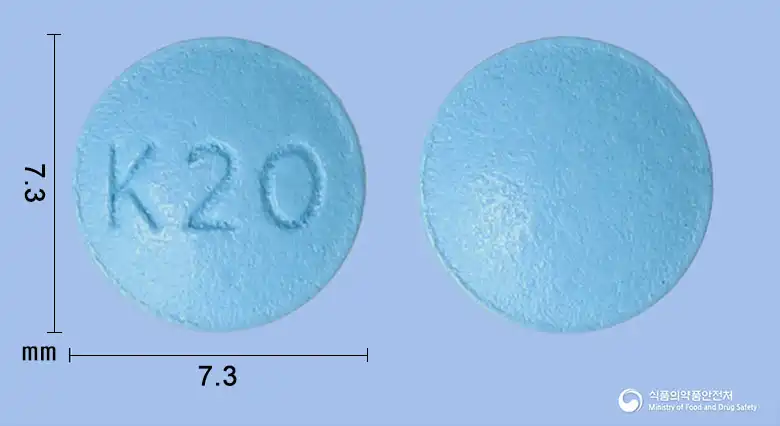
Blue round film-coated tablet
Package unit
16 tablets/box [4 tablets/PTP×4], 20 tablets/box [5 tablets/PTP×4], 24 tablets/box [6 tablets/PTP×4], 32 tablets/box [8 tablets/PTP×4]
Questions about this medicine
No questions yet.
For anything that needs medical judgment, consult a doctor or pharmacist.