
 한국어
 English
 日本語
 中文(简体)
Summary
- Main use
- Combination therapy for HR-positive, HER2-negative, PIK3CA-mutated advanced or metastatic breast cancer
- Who takes it
- Adults
- Adult dose
- The recommended dose of this medicine is 300mg (two 150mg film-coated tablets) taken orally once daily. This medicine must be taken immediately after food, and treatment should continue until disease progression or unacceptable toxicity occurs. This medicine should be taken at approximately the same time each day. This medicine must be swallowed whole (do not chew, crush, or split the tablets before swallowing); do not take tablets that are broken, cracked, or otherwise not intact. If a dose is missed, it may be taken within 9 hours of the usual dosing time, immediately after food. If more than 9 hours have passed, skip the dose for that day and take the next dose at the usual time the following day. If the patient vomits after taking this medicine, do not take an additional dose on that day; resume dosing at the usual time the following day. When used in combination with this medicine, the recommended dose of fulvestrant is 500mg per dose, administered by intramuscular injection on Days 1, 15, and 29, and once monthly thereafter. Starting dose: 300mg/day continuously, two 150mg tablets First dose reduction: 250mg/day continuously, one 200mg tablet and one 50mg tablet Second dose reduction: 200mg/day continuously, one 200mg tablet For pancreatitis, only the first dose reduction is permitted. Discontinue this medicine if the daily dose needs to be reduced to less than 200mg. Grade 1 (active skin toxicity involving <10% of body surface area): No dose adjustment of this medicine is required. Grade 2 (active skin toxicity involving 10-30% of body surface area): No dose adjustment of this medicine is required. Grade 3 (e.g., severe rash unresponsive to medication) (active skin toxicity involving >30% of body surface area): Temporarily withhold this medicine. If the cause is not a severe cutaneous adverse reaction, temporarily withhold this medicine until ≤ Grade 1. If the rash improves to ≤ Grade 1, resume treatment at the next lower dose level. Grade 4 (e.g., severe pemphigus, blistering, and skin exfoliation) (extensive superinfection requiring IV antibiotics, regardless of body surface area; life-threatening consequences): Permanently discontinue this medicine. The dose should be adjusted and managed according to fasting glucose (plasma/blood). (> ULN - 160 mg/dL) or (> ULN - 8.9 mmol/L): No dose adjustment of this medicine is required. (> 160 - 250 mg/dL) or (> 8.9 – 13.9 mmol/L): No dose adjustment of this medicine is required. If FG does not decrease to ≤160 mg/dL or 8.9 mmol/L within 21 days despite appropriate oral antidiabetic treatment, reduce the dose of this medicine by 1 dose level and follow the dose adjustment specific to the FG value. (> 250 - 500 mg/dL) or (>13.9 - 27.8 mmol/L): Temporarily withhold this medicine. If FG decreases to ≤160 mg/dL or 8.9 mmol/L within 3-5 days with appropriate antidiabetic treatment, resume this medicine at the next lower dose level. If FG does not decrease to ≤160 mg/dL or 8.9 mmol/L within 3-5 days despite appropriate antidiabetic treatment, consultation with a physician specializing in the treatment of hyperglycemia is recommended. If FG does not decrease to ≤160 mg/dL or 8.9 mmol/L within 21 days despite appropriate antidiabetic treatment, permanently discontinue this medicine. (> 500 mg/dL) or (> 27.8 mmol/L): Temporarily withhold this medicine. Initiate or intensify treatment with an appropriate antidiabetic medicine, and2[consider intravenous fluid replacement and appropriate treatment (interventions for electrolyte abnormalities/ketoacidosis/hyperosmolar abnormalities, etc.)]; retest within 24 hours and as clinically indicated. If FG decreases to ≤ 500 mg/dL or ≤ 27.8 mmol/L, follow the FG value-specific dose adjustment for ≤500 mg/dL. If FG is confirmed to be > 500 mg/dL or > 27.8 mmol/L, permanently discontinue this medicine. The starting dose of metformin is 500mg once daily. Depending on tolerability, metformin may be increased to 500mg twice daily, then to 500mg with breakfast and 1000mg with the evening meal, and thereafter may be further increased to 1000mg twice daily as needed. Insulin may be used for 1-2 days until hyperglycemia resolves. Grade 1: No dose adjustment of this medicine is required. Grade 2: Temporarily withhold until recovery to Grade 1 or lower, then resume at the same dose. Grade 3: Temporarily withhold until recovery to Grade 1 or lower, then resume treatment at the next lower dose level. Grade 4: Permanently discontinue this medicine. Grade 1 or 2: No dose adjustment is required. Grade 3: Temporarily withhold until recovery to Grade 1 or lower, then resume treatment at the next lower dose level. Grade 4: Permanently discontinue this medicine. For Grade 2 or 3 pancreatitis, withhold treatment until recovery to Grade 1 or lower, then resume this medicine at the next lower dose level. Only one dose reduction is permitted. If toxicity recurs, permanently discontinue this medicine. For Grade 2 elevation in total bilirubin, if recovery occurs within 14 days, temporarily withhold until recovery to Grade 1 or lower, then resume treatment at the same dose. If recovery occurs after 14 days, resume treatment at the next lower dose level.
Ingredients
- Importer
- Novartis Korea Ltd.
Efficacy & effects
Combination therapy for HR-positive, HER2-negative, PIK3CA-mutated advanced or metastatic breast cancer
- Advanced breast cancer
- metastatic breast cancer
View approved original textHide original text
This drug is used for patients with advanced or metastatic breast cancer who are postmenopausal, hormone receptor positive, HER2 negative, and have positive PIK3CA mutations. Specifically, it is administered in combination with fulvestrant when the disease has progressed after endocrine therapy to enhance treatment effect. This treatment helps suppress cancer cell growth and slow the progression of the disease, thus improving patient outcomes.
How to take
Adult dose
The recommended dose of this medicine is 300mg (two 150mg film-coated tablets) taken orally once daily. This medicine must be taken immediately after food, and treatment should continue until disease progression or unacceptable toxicity occurs. This medicine should be taken at approximately the same time each day. This medicine must be swallowed whole (do not chew, crush, or split the tablets before swallowing); do not take tablets that are broken, cracked, or otherwise not intact. If a dose is missed, it may be taken within 9 hours of the usual dosing time, immediately after food. If more than 9 hours have passed, skip the dose for that day and take the next dose at the usual time the following day. If the patient vomits after taking this medicine, do not take an additional dose on that day; resume dosing at the usual time the following day. When used in combination with this medicine, the recommended dose of fulvestrant is 500mg per dose, administered by intramuscular injection on Days 1, 15, and 29, and once monthly thereafter. Starting dose: 300mg/day continuously, two 150mg tablets First dose reduction: 250mg/day continuously, one 200mg tablet and one 50mg tablet Second dose reduction: 200mg/day continuously, one 200mg tablet For pancreatitis, only the first dose reduction is permitted. Discontinue this medicine if the daily dose needs to be reduced to less than 200mg. Grade 1 (active skin toxicity involving <10% of body surface area): No dose adjustment of this medicine is required. Grade 2 (active skin toxicity involving 10-30% of body surface area): No dose adjustment of this medicine is required. Grade 3 (e.g., severe rash unresponsive to medication) (active skin toxicity involving >30% of body surface area): Temporarily withhold this medicine. If the cause is not a severe cutaneous adverse reaction, temporarily withhold this medicine until ≤ Grade 1. If the rash improves to ≤ Grade 1, resume treatment at the next lower dose level. Grade 4 (e.g., severe pemphigus, blistering, and skin exfoliation) (extensive superinfection requiring IV antibiotics, regardless of body surface area; life-threatening consequences): Permanently discontinue this medicine. The dose should be adjusted and managed according to fasting glucose (plasma/blood). (> ULN - 160 mg/dL) or (> ULN - 8.9 mmol/L): No dose adjustment of this medicine is required. (> 160 - 250 mg/dL) or (> 8.9 – 13.9 mmol/L): No dose adjustment of this medicine is required. If FG does not decrease to ≤160 mg/dL or 8.9 mmol/L within 21 days despite appropriate oral antidiabetic treatment, reduce the dose of this medicine by 1 dose level and follow the dose adjustment specific to the FG value. (> 250 - 500 mg/dL) or (>13.9 - 27.8 mmol/L): Temporarily withhold this medicine. If FG decreases to ≤160 mg/dL or 8.9 mmol/L within 3-5 days with appropriate antidiabetic treatment, resume this medicine at the next lower dose level. If FG does not decrease to ≤160 mg/dL or 8.9 mmol/L within 3-5 days despite appropriate antidiabetic treatment, consultation with a physician specializing in the treatment of hyperglycemia is recommended. If FG does not decrease to ≤160 mg/dL or 8.9 mmol/L within 21 days despite appropriate antidiabetic treatment, permanently discontinue this medicine. (> 500 mg/dL) or (> 27.8 mmol/L): Temporarily withhold this medicine. Initiate or intensify treatment with an appropriate antidiabetic medicine, and2[consider intravenous fluid replacement and appropriate treatment (interventions for electrolyte abnormalities/ketoacidosis/hyperosmolar abnormalities, etc.)]; retest within 24 hours and as clinically indicated. If FG decreases to ≤ 500 mg/dL or ≤ 27.8 mmol/L, follow the FG value-specific dose adjustment for ≤500 mg/dL. If FG is confirmed to be > 500 mg/dL or > 27.8 mmol/L, permanently discontinue this medicine. The starting dose of metformin is 500mg once daily. Depending on tolerability, metformin may be increased to 500mg twice daily, then to 500mg with breakfast and 1000mg with the evening meal, and thereafter may be further increased to 1000mg twice daily as needed. Insulin may be used for 1-2 days until hyperglycemia resolves. Grade 1: No dose adjustment of this medicine is required. Grade 2: Temporarily withhold until recovery to Grade 1 or lower, then resume at the same dose. Grade 3: Temporarily withhold until recovery to Grade 1 or lower, then resume treatment at the next lower dose level. Grade 4: Permanently discontinue this medicine. Grade 1 or 2: No dose adjustment is required. Grade 3: Temporarily withhold until recovery to Grade 1 or lower, then resume treatment at the next lower dose level. Grade 4: Permanently discontinue this medicine. For Grade 2 or 3 pancreatitis, withhold treatment until recovery to Grade 1 or lower, then resume this medicine at the next lower dose level. Only one dose reduction is permitted. If toxicity recurs, permanently discontinue this medicine. For Grade 2 elevation in total bilirubin, if recovery occurs within 14 days, temporarily withhold until recovery to Grade 1 or lower, then resume treatment at the same dose. If recovery occurs after 14 days, resume treatment at the next lower dose level.
Precautions
This drug may cause severe allergic reactions during use; if symptoms such as difficulty breathing or skin rashes occur, discontinue use immediately. Serious skin reactions may occur, so consult a specialist if skin rashes, blisters, or red spots develop, and permanently discontinue use if symptoms are confirmed. Blood sugar may rise significantly, so diabetic patients or those with difficulty controlling blood sugar should regularly check their glucose levels and adjust treatment if necessary. If respiratory symptoms or pneumonia are suspected, stop taking the medication immediately and inform medical personnel; if pneumonia is confirmed, this drug should be discontinued. Gastrointestinal symptoms such as diarrhea, abdominal pain, or blood in stools may occur, so if symptoms are severe or persist, consult medical personnel; adjustments to the medication may be necessary. Pregnant women or women of childbearing age should confirm pregnancy status before taking this drug, as it may harm the fetus, and effective contraception should be used during treatment. There is a risk of jaw bone issues, so patients taking bisphosphonates or denosumab should consult medical personnel before starting this drug, and should immediately report symptoms like oral pain or swelling. Patients with hypersensitivity to this drug should not take it; any adverse symptoms during treatment must be reported to medical personnel immediately. This drug is effective only in patients with specific genetic mutations, so testing for gene suitability should be done before use. Interactions with other medications may occur, so inform medical personnel of any other medications currently being taken, as some drugs may need to be avoided or dosage adjusted. Pregnant or nursing women should avoid taking this drug, and nursing should be interrupted for at least one week after taking it. Safety and efficacy in children have not been confirmed, so it is not used in this population. Elderly patients may have a higher risk of side effects such as increased blood sugar, so caution is advised during use. This drug is not recommended for patients with severely impaired kidney function; patients with mild to moderate renal impairment can use it without special dosage adjustments. In the case of overdose, standard emergency treatment and supportive measures should be implemented; keep this drug out of reach of children and store it in the original container to prevent moisture.
Side effects
Anaphylactic reaction, shock, dyspnea, flushing, rash, fever, tachycardia, angioedema, Stevens-Johnson syndrome, erythema multiforme, toxic epidermal necrolysis, drug rash syndrome with eosinophilia and systemic symptoms, hyperglycemia, hyperglycemic hyperosmolar non-ketotic syndrome, ketoacidosis, pneumonia, acute interstitial pneumonia, interstitial lung disease, diarrhea, colitis, dehydration, acute kidney injury, jaw bone necrosis, anemia, lymphocytopenia, thrombocytopenia, blurred vision, dry eyes, nausea, stomatitis, vomiting, abdominal pain, dyspepsia, toothache, gingivitis, gum pain, cheilitis, pancreatitis, fatigue, mucosal inflammation, peripheral edema, fever, dry mucous membranes, edema, hypersensitivity reaction, urinary tract infection, weight loss, elevated serum creatinine, elevated gamma-glutamyl transferase, elevated ALT, elevated lipase, increased glycated hemoglobin, decreased appetite, hypokalemia, hypocalcemia, dehydration, muscle cramps, myalgia, headache, dysgeusia, insomnia, acute kidney injury, pneumonia, rash, hair loss, pruritus, dry skin, erythema, dermatitis, hands and feet erythema with sensory disturbances, erythema multiforme, Stevens-Johnson syndrome, hypertension, lymphedema, decreased lymphocyte count, decreased hemoglobin, prolonged activated partial thromboplastin time, decreased platelet count, elevated blood glucose, elevated creatinine, corrected calcium levels decreased, reduced blood sugar, decreased albumin, decreased potassium, decreased magnesium
Not everyone experiences these, and they can vary from person to person.
Storage
This drug should be stored in a tightly closed container to prevent exposure to air and moisture and should be kept in a cool place below 30 degrees Celsius to maintain its effectiveness.
Appearance and packaging
Appearance
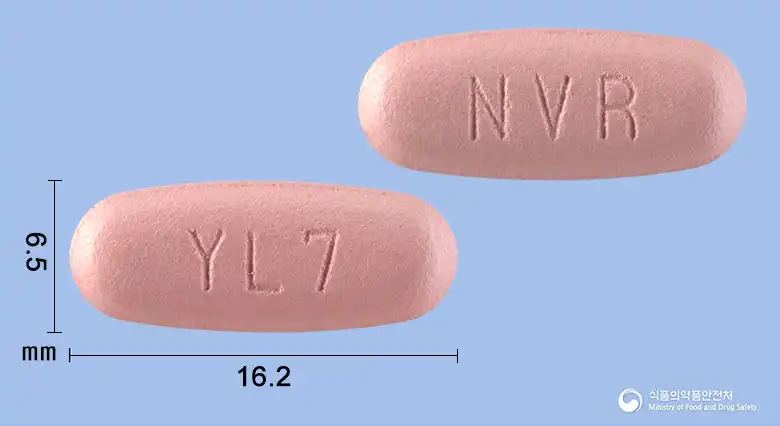
1. 50 mg: bright pink, round film-coated tablet 2. 150 mg: light red, oval film-coated tablet 3. 200 mg: bright red, oval film-coated tablet
Package unit
200 mg + 50 mg - 28 tablets/ptp [(200 mg 7 tablets + 50 mg 7 tablets)/ptp X 2], 200 mg + 50 mg - 56 tablets/ptp [(200 mg 7 tablets + 50 mg 7 tablets)/ptp X 4], 200 mg - 14 tablets/ptp [14 tablets/ptp X 1], 200 mg - 28 tablets/ptp [14 tablets/ptp X 2], 150 mg - 28 tablets/ptp [14 tablets/ptp X 2], 1
Questions about this medicine
No questions yet.
For anything that needs medical judgment, consult a doctor or pharmacist.