
 한국어
 English
 日本語
 中文(简体)
Summary
- Main use
- Monotherapy or combination therapy for EGFR mutation-positive advanced or metastatic non-small cell lung cancer
- Who takes it
- Adults
- Adult dose
- <Monotherapy> The recommended dose of this medicine is 240mg (80mg, 3 tablets) once daily. Take orally at the same time each day, with or without food. Continue treatment until disease progression or unacceptable toxicity occurs. <Combination therapy> When used in combination with amivantamab, the recommended dose of this medicine is 240mg (80mg, 3 tablets) once daily, with or without food. If administered on the same day, take this medicine before administering amivantamab. Refer to the prescribing information for amivantamab dosage information. Continue treatment until disease progression or unacceptable toxicity occurs. 1. Method of administration This medicine is administered orally and must be swallowed whole with water. Do not crush, split, or chew the tablets. If the patient is unable to swallow the tablets, they may be dispersed in water (non-carbonated water) before administration. Place 3 tablets, without crushing them, in approximately 50mL of water, stir well until dispersed, and drink immediately. Then add approximately 50mL of water to ensure no residue remains, and drink immediately. Do not use any other liquid. The same amount of water should be used when taking the lower dose (160mg [80mg, 2 tablets]). If administration through a nasogastric tube is required, use approximately 50mL of water to initially disperse the tablets as described above and approximately 50mL of water to rinse any residue for administration. The solution containing the dispersed medicine and the rinse solution must be administered within 30 minutes after placing the tablets in water. 2. Missed dose If a dose of this medicine is missed, take it as soon as possible if at least 12 hours remain until the next dose. 3. Dose modification Treatment interruption and/or dose reduction may be necessary based on each patient's safety and tolerability. <Monotherapy> If dose reduction is required, the reduced dose of this medicine is 160mg (80mg, 2 tablets) once daily. Table 1. Recommended dose modifications for monotherapy Pulmonary — Interstitial lung disease (ILD)/pneumonitis: Permanently discontinue this medicine. Skin — Rash, Grade 1: Initiate treatment for the rash (e.g., emollients, topical antibiotics, and topical steroids). Skin — Rash, Grade 2 or Grade 1 that does not improve after up to 2 weeks of treatment: Consider reducing the dose of this medicine and initiate or continue treatment for the rash (e.g., antibiotics, topical steroids). Skin — Rash, Grade 3 or Grade 2 that does not improve after up to 2 weeks of treatment: Temporarily withhold this medicine. Initiate or continue treatment for the rash (e.g., antibiotics, topical steroids) and consider adjunctive treatment (e.g., prednisone). Permanently discontinue this medicine if there is no improvement within 2 weeks. Gastrointestinal — Diarrhea, Grade 1: Administer an antidiarrheal agent (e.g., loperamide). Maintain adequate oral fluid intake during diarrhea. Gastrointestinal — Diarrhea, Grade 2: Administer an antidiarrheal agent (e.g., loperamide). Maintain adequate oral fluid intake during diarrhea and monitor the patient. Temporarily withhold this medicine if the diarrhea does not improve to Grade 1 within 24 hours. Resume this medicine at the same dose once the diarrhea recovers to Grade 1 or lower. If diarrhea of Grade 1 or higher recurs after initial improvement, consider dose reduction. Gastrointestinal — Diarrhea, Grade 3: Temporarily withhold this medicine. Treat the diarrhea and maintain adequate oral fluid intake; administer intravenous fluids or electrolytes if needed. Resume this medicine at a reduced dose once the diarrhea improves to Grade 1 or lower. Cardiac — QTc prolongation, Grade 3 or higher (>500msec): Temporarily withhold this medicine. Perform regular electrocardiograms until recovery to baseline. Permanently discontinue this medicine if there is no improvement to baseline or Grade 1 or lower within 3 weeks. Cardiac — QTc prolongation with signs/symptoms of a serious arrhythmia: Permanently discontinue this medicine. Cardiac — Decreased left ventricular ejection fraction, Grade 2 (40-45%): Temporarily withhold this medicine. Perform regular echocardiograms until recovery to baseline. This medicine may be resumed at the same or a reduced dose if the condition does not worsen to Grade 3 (<40%) within 3 weeks. Cardiac — Decreased left ventricular ejection fraction, Grade 3 (<40%) or symptomatic congestive heart failure: Permanently discontinue this medicine. Other — Adverse reactions of Grade 3 or higher: Withhold this medicine for up to 3 weeks. Other — Adverse reactions of Grade 3 or higher that improve to Grade 0-2 after withholding this medicine for up to 3 weeks: Resume this medicine at the same or a reduced dose. Other — Adverse reactions of Grade 3 or higher that do not improve to Grade 0-2 after withholding this medicine for up to 3 weeks: Permanently discontinue this medicine. <Combination therapy> Table 2. Recommended dose reduction steps for combination therapy First dose reduction: 160 mg once daily (80 mg, 2 tablets) Second dose reduction: 80 mg once daily (80mg, 1 tablet) Third dose reduction: Discontinue treatment Table 3. Recommended dose modifications for combination therapy Interstitial lung disease (ILD)/pneumonitis, all grades: If an adverse reaction is suspected, temporarily withhold this medicine and amivantamab; permanently discontinue both if the adverse reaction is confirmed. Venous thromboembolism (VTE), Grade 2-3: Temporarily withhold this medicine and amivantamab. Administer anticoagulants if needed. Once anticoagulant treatment is initiated, consider resuming this medicine and amivantamab at the same doses. Venous thromboembolism (VTE), Grade 4 or recurrence of Grade 2-3 despite anticoagulant treatment: Temporarily withhold this medicine and permanently discontinue amivantamab. Administer anticoagulants if needed. Once anticoagulant treatment is initiated, consider resuming this medicine at the same dose. Skin adverse reactions (including acneiform dermatitis, pruritus, and dry skin), Grade 1: Initiate supportive care. If there is no improvement after 2 weeks, consider reducing the dose of amivantamab and administer this medicine at the same dose. Skin adverse reactions (including acneiform dermatitis, pruritus, and dry skin), Grade 2: Initiate supportive care. If there is no improvement after 2 weeks, reduce the dose of amivantamab and administer this medicine at the same dose. Reassess every 2 weeks; if there is no improvement, reduce the dose of this medicine according to Table 2 until the reaction is Grade 1 or lower, and consider resuming treatment at the previous dose. Skin adverse reactions (including acneiform dermatitis, pruritus, and dry skin), Grade 3: Temporarily withhold this medicine and amivantamab, and initiate supportive care. Once the reaction recovers to Grade 2 or lower, resume this medicine at the same dose or consider dose reduction, and resume amivantamab at a reduced dose. If there is no improvement within 2 weeks, permanently discontinue this medicine and amivantamab. Skin adverse reactions (including acneiform dermatitis, pruritus, and dry skin), Grade 4 (including severe blistering, bullae, and exfoliative skin disorders): Initiate supportive care and permanently discontinue amivantamab. Withhold this medicine until recovery to Grade 2 or lower or baseline. Once the reaction recovers to Grade 2 or lower, consider resuming this medicine at a reduced dose. Other, Grade 3-4: Temporarily withhold this medicine and amivantamab until recovery to Grade 1 or baseline. Resume this medicine and amivantamab at reduced doses or resume this medicine as monotherapy. Consider permanently discontinuing combination therapy if recovery does not occur within 4 weeks.
Ingredients
- Manufacturer
- Yuhan Corporation
Efficacy & effects
Monotherapy or combination therapy for EGFR mutation-positive advanced or metastatic non-small cell lung cancer
- Locally advanced non-small cell lung cancer
- metastatic non-small cell lung cancer
View approved original textHide original text
This medicine is used to treat patients with locally advanced or metastatic non-small cell lung cancer (NSCLC) with EGFR gene mutations. It is effective as first-line treatment for patients with EGFR exon 19 deletions or exon 21 (L858R) substitutions and is also beneficial for patients previously treated with EGFR-TKI who are positive for the EGFR T790M mutation. Additionally, it is used in combination with Amivantamab for first-line treatment in patients with this mutation. This drug targets specific gene mutations to suppress cancer progression and enhance therapeutic effects. Therefore, it is used in the treatment of EGFR mutation non-small cell lung cancer.
How to take
Adult dose
<Monotherapy> The recommended dose of this medicine is 240mg (80mg, 3 tablets) once daily. Take orally at the same time each day, with or without food. Continue treatment until disease progression or unacceptable toxicity occurs. <Combination therapy> When used in combination with amivantamab, the recommended dose of this medicine is 240mg (80mg, 3 tablets) once daily, with or without food. If administered on the same day, take this medicine before administering amivantamab. Refer to the prescribing information for amivantamab dosage information. Continue treatment until disease progression or unacceptable toxicity occurs. 1. Method of administration This medicine is administered orally and must be swallowed whole with water. Do not crush, split, or chew the tablets. If the patient is unable to swallow the tablets, they may be dispersed in water (non-carbonated water) before administration. Place 3 tablets, without crushing them, in approximately 50mL of water, stir well until dispersed, and drink immediately. Then add approximately 50mL of water to ensure no residue remains, and drink immediately. Do not use any other liquid. The same amount of water should be used when taking the lower dose (160mg [80mg, 2 tablets]). If administration through a nasogastric tube is required, use approximately 50mL of water to initially disperse the tablets as described above and approximately 50mL of water to rinse any residue for administration. The solution containing the dispersed medicine and the rinse solution must be administered within 30 minutes after placing the tablets in water. 2. Missed dose If a dose of this medicine is missed, take it as soon as possible if at least 12 hours remain until the next dose. 3. Dose modification Treatment interruption and/or dose reduction may be necessary based on each patient's safety and tolerability. <Monotherapy> If dose reduction is required, the reduced dose of this medicine is 160mg (80mg, 2 tablets) once daily. Table 1. Recommended dose modifications for monotherapy Pulmonary — Interstitial lung disease (ILD)/pneumonitis: Permanently discontinue this medicine. Skin — Rash, Grade 1: Initiate treatment for the rash (e.g., emollients, topical antibiotics, and topical steroids). Skin — Rash, Grade 2 or Grade 1 that does not improve after up to 2 weeks of treatment: Consider reducing the dose of this medicine and initiate or continue treatment for the rash (e.g., antibiotics, topical steroids). Skin — Rash, Grade 3 or Grade 2 that does not improve after up to 2 weeks of treatment: Temporarily withhold this medicine. Initiate or continue treatment for the rash (e.g., antibiotics, topical steroids) and consider adjunctive treatment (e.g., prednisone). Permanently discontinue this medicine if there is no improvement within 2 weeks. Gastrointestinal — Diarrhea, Grade 1: Administer an antidiarrheal agent (e.g., loperamide). Maintain adequate oral fluid intake during diarrhea. Gastrointestinal — Diarrhea, Grade 2: Administer an antidiarrheal agent (e.g., loperamide). Maintain adequate oral fluid intake during diarrhea and monitor the patient. Temporarily withhold this medicine if the diarrhea does not improve to Grade 1 within 24 hours. Resume this medicine at the same dose once the diarrhea recovers to Grade 1 or lower. If diarrhea of Grade 1 or higher recurs after initial improvement, consider dose reduction. Gastrointestinal — Diarrhea, Grade 3: Temporarily withhold this medicine. Treat the diarrhea and maintain adequate oral fluid intake; administer intravenous fluids or electrolytes if needed. Resume this medicine at a reduced dose once the diarrhea improves to Grade 1 or lower. Cardiac — QTc prolongation, Grade 3 or higher (>500msec): Temporarily withhold this medicine. Perform regular electrocardiograms until recovery to baseline. Permanently discontinue this medicine if there is no improvement to baseline or Grade 1 or lower within 3 weeks. Cardiac — QTc prolongation with signs/symptoms of a serious arrhythmia: Permanently discontinue this medicine. Cardiac — Decreased left ventricular ejection fraction, Grade 2 (40-45%): Temporarily withhold this medicine. Perform regular echocardiograms until recovery to baseline. This medicine may be resumed at the same or a reduced dose if the condition does not worsen to Grade 3 (<40%) within 3 weeks. Cardiac — Decreased left ventricular ejection fraction, Grade 3 (<40%) or symptomatic congestive heart failure: Permanently discontinue this medicine. Other — Adverse reactions of Grade 3 or higher: Withhold this medicine for up to 3 weeks. Other — Adverse reactions of Grade 3 or higher that improve to Grade 0-2 after withholding this medicine for up to 3 weeks: Resume this medicine at the same or a reduced dose. Other — Adverse reactions of Grade 3 or higher that do not improve to Grade 0-2 after withholding this medicine for up to 3 weeks: Permanently discontinue this medicine. <Combination therapy> Table 2. Recommended dose reduction steps for combination therapy First dose reduction: 160 mg once daily (80 mg, 2 tablets) Second dose reduction: 80 mg once daily (80mg, 1 tablet) Third dose reduction: Discontinue treatment Table 3. Recommended dose modifications for combination therapy Interstitial lung disease (ILD)/pneumonitis, all grades: If an adverse reaction is suspected, temporarily withhold this medicine and amivantamab; permanently discontinue both if the adverse reaction is confirmed. Venous thromboembolism (VTE), Grade 2-3: Temporarily withhold this medicine and amivantamab. Administer anticoagulants if needed. Once anticoagulant treatment is initiated, consider resuming this medicine and amivantamab at the same doses. Venous thromboembolism (VTE), Grade 4 or recurrence of Grade 2-3 despite anticoagulant treatment: Temporarily withhold this medicine and permanently discontinue amivantamab. Administer anticoagulants if needed. Once anticoagulant treatment is initiated, consider resuming this medicine at the same dose. Skin adverse reactions (including acneiform dermatitis, pruritus, and dry skin), Grade 1: Initiate supportive care. If there is no improvement after 2 weeks, consider reducing the dose of amivantamab and administer this medicine at the same dose. Skin adverse reactions (including acneiform dermatitis, pruritus, and dry skin), Grade 2: Initiate supportive care. If there is no improvement after 2 weeks, reduce the dose of amivantamab and administer this medicine at the same dose. Reassess every 2 weeks; if there is no improvement, reduce the dose of this medicine according to Table 2 until the reaction is Grade 1 or lower, and consider resuming treatment at the previous dose. Skin adverse reactions (including acneiform dermatitis, pruritus, and dry skin), Grade 3: Temporarily withhold this medicine and amivantamab, and initiate supportive care. Once the reaction recovers to Grade 2 or lower, resume this medicine at the same dose or consider dose reduction, and resume amivantamab at a reduced dose. If there is no improvement within 2 weeks, permanently discontinue this medicine and amivantamab. Skin adverse reactions (including acneiform dermatitis, pruritus, and dry skin), Grade 4 (including severe blistering, bullae, and exfoliative skin disorders): Initiate supportive care and permanently discontinue amivantamab. Withhold this medicine until recovery to Grade 2 or lower or baseline. Once the reaction recovers to Grade 2 or lower, consider resuming this medicine at a reduced dose. Other, Grade 3-4: Temporarily withhold this medicine and amivantamab until recovery to Grade 1 or baseline. Resume this medicine and amivantamab at reduced doses or resume this medicine as monotherapy. Consider permanently discontinuing combination therapy if recovery does not occur within 4 weeks.
Precautions
This drug may cause serious pulmonary-related side effects such as interstitial lung disease or lung inflammation, so symptoms such as dyspnea, cough, or fever should be closely monitored during treatment. If such respiratory symptoms occur, treatment should be stopped immediately and appropriate treatment should be received. Additionally, there is a risk of venous thromboembolism when used in conjunction with other medications, so particularly careful monitoring is required during the first 4 months of treatment. Rapid diagnosis and treatment are necessary if thrombotic symptoms are suspected, and treatment may be temporarily halted or permanently discontinued depending on the severity. It should not be administered to patients with a history of severe allergic reactions to the active ingredient or excipients. Caution should be exercised in patients with risk factors for interstitial lung disease or lung inflammation, and it should only be administered if the benefits of treatment are judged to outweigh the risks. While on treatment, various side effects such as skin rash, itching, diarrhea, fatigue, and loss of appetite may occur, so symptoms should be carefully monitored. Cardiovascular-related side effects including QT interval prolongation and decreased left ventricular ejection fraction have been reported, necessitating regular monitoring of ECG and cardiac function. Ocular toxicity may also occur, so if symptoms such as dry eyes, pain or blurred vision appear, immediate consultation with an ophthalmologist is essential. Liver function abnormalities may appear, so regular liver function tests should be performed, and if abnormalities are found, dosing should be adjusted. Pregnant women should not be treated due to risks to the fetus, and both fertile women and men must use effective contraception during and for 3 weeks after treatment. This medication's safety has not been established in patients with severely impaired liver or kidney function, so caution is warranted. Due to potential drug interactions, careful monitoring is required when used in conjunction with medications that affect CYP3A4 enzymes. There are no specific dosing restrictions for children and the elderly; however, caution should be exercised due to the possibility of adverse reactions. No specific antidote is available for overdose; therefore, supportive treatment based on symptoms is necessary. Finally, this medication should be stored out of reach of children and care should be taken not to transfer it to other containers.
Side effects
- Interstitial lung disease
- lung inflammation
- dyspnea
- cough
- fever
- venous thromboembolism
- deep vein thrombosis
- pulmonary embolism
- rash
- paresthesia
Show 78 moreCollapse
- pruritus
- diarrhea
- nail toxicity
- fatigue
- decreased appetite
- anemia
- stomatitis
- vomiting
- headache
- dizziness
- dry skin
- muscle spasm
- myalgia
- nausea
- constipation
- pneumonia
- infusion-related reactions
- musculoskeletal pain
- edema
- bleeding
- ocular toxicity
- COVID-19
- fever
- conjunctivitis
- dyspnea
- insomnia
- abdominal pain
- hemorrhoids
- edema
- fever
- thrombocytopenia
- decreased hemoglobin
- leukopenia
- neutropenia
- tumor bleeding
- hematuria
- conjunctival hemorrhage
- passage of blood in stool
- hemoptysis
- pulmonary hemorrhage
- gingival bleeding
- cerebral hemorrhage
- nasal bleeding
- hemorrhagic stroke
- subdural hemorrhage
- anal bleeding
- vaginal bleeding
- gastrointestinal bleeding
- intra-abdominal bleeding
- cutaneous bleeding
- ocular bleeding
- alveolar bleeding
- ear bleeding
- tongue bleeding
- hemothorax
- upper gastrointestinal bleeding
- rectal bleeding
- vulvar bleeding
- subcutaneous bleeding
- oral bleeding
- iris vascular bleeding
- laryngeal bleeding
- asthenia
- somnolence
- malaise
- wet cough
- upper respiratory tract cough syndrome
- allergic cough
- exertional dyspnea
- age-related dyspnea
- dry eyes
- keratitis
- blurred vision
- visual impairment
- decreased vision
- non-infectious conjunctivitis
- conjunctival injection
- insomnia
Not everyone experiences these, and they can vary from person to person.
Storage
This medication should be stored in a tightly closed container to protect it from air and moisture. It's crucial to maintain a storage temperature between 1°C and 30°C to preserve drug efficacy and safety.
Appearance and packaging
Appearance
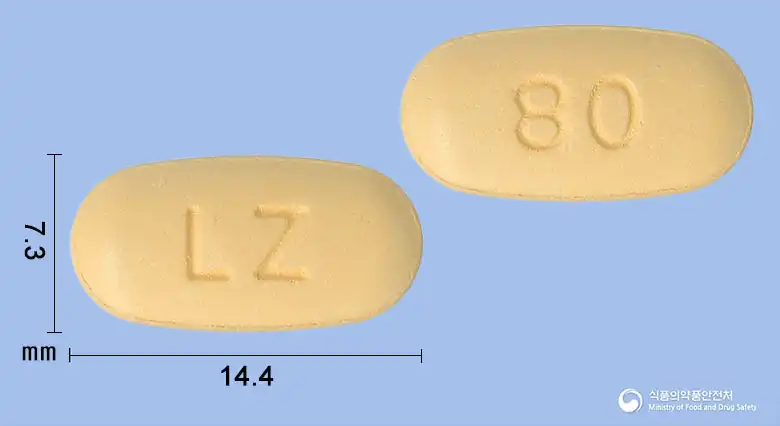
Yellow oval film-coated tablets
Package unit
For domestic use - 84 tablets/box [21 tablets/PTP x 4]
Questions about this medicine
No questions yet.
For anything that needs medical judgment, consult a doctor or pharmacist.