
 한국어
 English
 日本語
 中文(简体)
Summary
- Main use
- Treatment of hormone-sensitive metastatic and high-risk non-metastatic castration-resistant prostate cancer
- Who takes it
- Adults
- Adult dose
- The recommended dose of this drug is 240mg (four 60mg tablets) orally once daily. The tablets should be swallowed whole with water. This drug may be taken with or without food. If the patient experiences grade 3 or higher toxicity or an intolerable adverse reaction, withhold treatment until symptoms improve to grade 1 or lower or return to baseline. If necessary, restart at the same dose or a reduced dose (180mg or 120mg). If the patient misses a dose of this drug, take it as soon as possible on the same day and resume the usual schedule the following day. If a dose is missed, do not take an extra dose to make up for it. 1. Patients with renal impairment No specific renal impairment study has been conducted for this drug. Based on a population pharmacokinetic analysis using clinical study data from patients with castration-resistant prostate cancer (CRPC) and healthy subjects, no significant difference in systemic exposure was observed between subjects with previously mild to moderate renal impairment (eGFR between 30~89 mL/min/1.73m2) and subjects with normal renal function (eGFR of 90mL/min/1.73m2 or greater). No dose adjustment is necessary in patients with mild to moderate renal impairment. No data are available for patients with severe renal impairment or end-stage renal disease (eGFR≤ 29 mL/min/1.73m2). 2. Patients with hepatic impairment A specific hepatic impairment study compared systemic exposure to apalutamide and N-desmethyl apalutamide in patients with mild and moderate hepatic impairment (Child-Pugh class A or B, respectively) and healthy subjects with normal hepatic function. Systemic exposure to apalutamide and N-desmethyl apalutamide was similar in patients with mild or moderate hepatic impairment and subjects with normal hepatic function. No dose adjustment is necessary in patients with mild or moderate hepatic impairment. No data are available for patients with severe hepatic impairment (Child-Pugh class C). 3. Alternative methods of administration 1) Dispersing the tablets in water for administration with a non-carbonated beverage or soft food For patients who cannot swallow the tablets whole, the recommended dose of this drug (four 60mg tablets) may be dispersed in non-carbonated water and mixed with one of the following non-carbonated beverages or soft foods (orange juice, green tea, applesauce, drinkable yogurt, or additional water): 1. Place the entire prescribed dose of this drug in a cup. Do not crush or split the tablets. 2. Add approximately 4 teaspoons (20mL) of non-carbonated water to ensure the tablets are completely submerged. 3. Wait 2 minutes until the tablets disperse, then stir the mixture. 4. Add 6 teaspoons (30mL) or 2 tablespoons (30mL) of a non-carbonated beverage or soft food (orange juice, green tea, applesauce, drinkable yogurt, or additional water) and stir the mixture. 5. Swallow the mixture immediately. 6. Rinse the cup with enough water to take the entire dose, then drink immediately. Do not store the mixture of this drug with a non-carbonated beverage or soft food for later use. 2) Administration of tablets through a nasogastric tube This drug (four 60mg tablets) may be administered through an 8 French or larger nasogastric tube (NG tube) as follows: 1. Place the entire prescribed dose of this drug in a syringe (use a syringe of at least 50mL) and fill the syringe with 20mL of non-carbonated water. 2. Wait 10 minutes, then shake vigorously until fully dispersed. 3. Administer immediately through the nasogastric tube. 4. Refill the syringe with non-carbonated water. Repeat until no tablet residue remains in the syringe or nasogastric tube.
Ingredients
- Importer
- Janssen Korea Ltd.
Efficacy & effects
Treatment of hormone-sensitive metastatic and high-risk non-metastatic castration-resistant prostate cancer
- Hormone-sensitive metastatic prostate cancer
- high-risk non-metastatic castration-resistant prostate cancer
View approved original textHide original text
This medication is used in combination with androgen deprivation therapy for patients with hormone-sensitive metastatic prostate cancer to enhance therapeutic efficacy. It is also utilized for the treatment of high-risk non-metastatic castration-resistant prostate cancer. In other words, it is a medication that helps to inhibit the progression of prostate cancer and improve symptoms.
How to take
Adult dose
The recommended dose of this drug is 240mg (four 60mg tablets) orally once daily. The tablets should be swallowed whole with water. This drug may be taken with or without food. If the patient experiences grade 3 or higher toxicity or an intolerable adverse reaction, withhold treatment until symptoms improve to grade 1 or lower or return to baseline. If necessary, restart at the same dose or a reduced dose (180mg or 120mg). If the patient misses a dose of this drug, take it as soon as possible on the same day and resume the usual schedule the following day. If a dose is missed, do not take an extra dose to make up for it. 1. Patients with renal impairment No specific renal impairment study has been conducted for this drug. Based on a population pharmacokinetic analysis using clinical study data from patients with castration-resistant prostate cancer (CRPC) and healthy subjects, no significant difference in systemic exposure was observed between subjects with previously mild to moderate renal impairment (eGFR between 30~89 mL/min/1.73m2) and subjects with normal renal function (eGFR of 90mL/min/1.73m2 or greater). No dose adjustment is necessary in patients with mild to moderate renal impairment. No data are available for patients with severe renal impairment or end-stage renal disease (eGFR≤ 29 mL/min/1.73m2). 2. Patients with hepatic impairment A specific hepatic impairment study compared systemic exposure to apalutamide and N-desmethyl apalutamide in patients with mild and moderate hepatic impairment (Child-Pugh class A or B, respectively) and healthy subjects with normal hepatic function. Systemic exposure to apalutamide and N-desmethyl apalutamide was similar in patients with mild or moderate hepatic impairment and subjects with normal hepatic function. No dose adjustment is necessary in patients with mild or moderate hepatic impairment. No data are available for patients with severe hepatic impairment (Child-Pugh class C). 3. Alternative methods of administration 1) Dispersing the tablets in water for administration with a non-carbonated beverage or soft food For patients who cannot swallow the tablets whole, the recommended dose of this drug (four 60mg tablets) may be dispersed in non-carbonated water and mixed with one of the following non-carbonated beverages or soft foods (orange juice, green tea, applesauce, drinkable yogurt, or additional water): 1. Place the entire prescribed dose of this drug in a cup. Do not crush or split the tablets. 2. Add approximately 4 teaspoons (20mL) of non-carbonated water to ensure the tablets are completely submerged. 3. Wait 2 minutes until the tablets disperse, then stir the mixture. 4. Add 6 teaspoons (30mL) or 2 tablespoons (30mL) of a non-carbonated beverage or soft food (orange juice, green tea, applesauce, drinkable yogurt, or additional water) and stir the mixture. 5. Swallow the mixture immediately. 6. Rinse the cup with enough water to take the entire dose, then drink immediately. Do not store the mixture of this drug with a non-carbonated beverage or soft food for later use. 2) Administration of tablets through a nasogastric tube This drug (four 60mg tablets) may be administered through an 8 French or larger nasogastric tube (NG tube) as follows: 1. Place the entire prescribed dose of this drug in a syringe (use a syringe of at least 50mL) and fill the syringe with 20mL of non-carbonated water. 2. Wait 10 minutes, then shake vigorously until fully dispersed. 3. Administer immediately through the nasogastric tube. 4. Refill the syringe with non-carbonated water. Repeat until no tablet residue remains in the syringe or nasogastric tube.
Precautions
This medication should be discontinued in patients who have experienced seizures and should not be administered to patients with a history of seizures. It is contraindicated in pregnant women and women of childbearing potential, as well as in individuals with allergies to the medication or its components. Common side effects include arthritis, fatigue, skin rash, hypertension, and facial flushing. Additionally, adverse reactions such as hypothyroidism, hypercholesterolemia, hypertriglyceridemia, ischemic heart disease, and cerebrovascular disorders may occur, necessitating regular monitoring. During treatment, there may be an increased risk of falls and fractures, so patients should be carefully observed, and bone protective therapy should be considered if necessary. Due to the risk of cardiovascular and cerebrovascular diseases, risk factors such as hypertension, diabetes, and dyslipidemia should be well managed. If severe skin reactions occur, the medication should be discontinued immediately, and consultation with a healthcare professional is required. If symptoms of interstitial lung disease appear, immediate evaluation and treatment are necessary. This medication may interact with other drugs, so if the patient is taking other medications, they should inform their healthcare provider and be monitored closely. Men who have sexual relations with pregnant women or women of childbearing potential should use effective contraception during the treatment period and for 3 months after administration. This medication is not intended for use in children and can be used in the elderly without special dose adjustment. In the event of overdose, usage should be stopped immediately, and supportive treatment should be received according to symptoms, keeping it out of reach of children. Medications should be stored in the original container to prevent quality degradation and misuse.
Side effects
Seizures, arthritis, fatigue, rash, hypertension, facial flushing, arthralgia, muscle spasms, pruritus, taste disturbance, ischemic cerebral vascular disorders, hypercholesterolemia, hypertriglyceridemia, ischemic heart disease, diarrhea, hypothyroidism, weight loss, falls, fractures, decreased appetite, restless legs syndrome, interstitial lung disease, eosinophilia with systemic symptoms related to drug reaction, Stevens-Johnson syndrome, toxic epidermal necrolysis
Not everyone experiences these, and they can vary from person to person.
Storage
This medication should be stored in a tightly closed container to prevent exposure to air and moisture. It is important to maintain a temperature between 1 degree and 30 degrees Celsius.
Appearance and packaging
Appearance
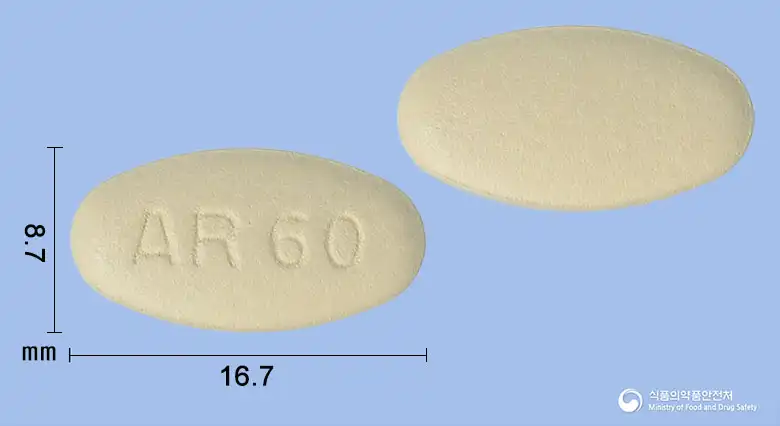
Light green to gray-green oblong film-coated tablets
Package unit
120 tablets (24 tablets * 5 PTP/box)
Questions about this medicine
No questions yet.
For anything that needs medical judgment, consult a doctor or pharmacist.