
 한국어
 English
 日本語
 中文(简体)
 Viewing now
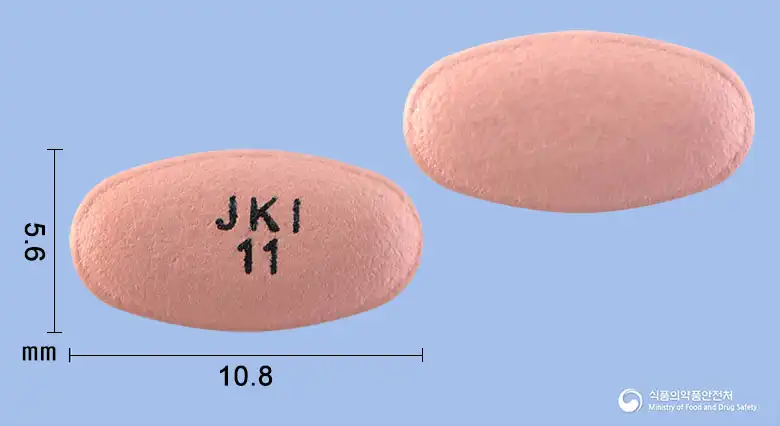
Janssen XR Extended-Release Tablet 11 mg (Tofacitinib Citrate)
Tofacitinib Citrate 17.771mg
Tablet · Prescription medication
Pfizer Korea Co., Ltd.
MFDS item code 202008536 · Approved 2020.12.07 · Insurance code 648903570
Treatment of rheumatoid arthritis, psoriatic arthritis, and ankylosing spondylitis
This medication is used in patients over 65 years of age and in cardiovascular high-risk groups who do not adequately respond to or cannot tolerate existing therapies. It is primarily used for the treatment of moderate to severe active autoimmune diseases such as rheumatoid arthritis, psoriatic arthritis, and ankylosing spondylitis. It is particularly applicable to adult patients who do not respond to methotrexate or other non-biologic antirheumatic agents and can be used either alone or in combination, but not with potent immunosuppressants. Such treatment helps effectively improve symptoms in patients.
To ensure accurate dosing, swallow this medicine whole; do not crush, split, or chew it. This medicine may be taken orally with or without food. Patients taking Xeljanz tablets 5 mg twice daily may switch to Xeljanz XR extended-release tablets 11 mg once daily beginning the day after their last dose of Xeljanz tablets 5 mg. Patients taking Xeljanz XR extended-release tablets 11 mg once daily may switch to Xeljanz tablets 5 mg twice daily beginning the day after their last dose of Xeljanz XR extended-release tablets 11 mg. Xeljanz XR extended-release tablets 11 mg once daily have been demonstrated to be pharmacokinetically equivalent to Xeljanz tablets 5 mg twice daily. The recommended dose for rheumatoid arthritis, psoriatic arthritis, and ankylosing spondylitis is 11 mg once daily. Adults: Administer Xeljanz XR extended-release tablets 11mg once daily. Patients receiving a strong CYP3A4 inhibitor (e.g., ketoconazole), or a moderate CYP3A4 inhibitor and a strong CYP2C19 inhibitor (e.g., fluconazole): Reduce the dose to Xeljanz tablets 5 mg once daily. Patients with moderate or severe renal impairment, or moderate hepatic impairment: Reduce the dose to Xeljanz tablets 5 mg once daily. ALC less than 500 cells/mm3 (confirmed by repeat testing): Discontinue treatment. ANC 500-1,000 cells/mm3: Temporarily interrupt treatment; when ANC is greater than 1,000 cells/mm3, resume treatment with Xeljanz XR extended-release tablets 11mg once daily. ANC less than 500 cells/mm3: Discontinue treatment. Decrease in hemoglobin of more than 2 g/dL or hemoglobin level less than 8.0 g/dL: Temporarily interrupt treatment until the hemoglobin level normalizes. Do not initiate treatment with this medicine in patients with an absolute lymphocyte count (ALC) less than 500 cells/mm3, an absolute neutrophil count (ANC) less than 1,000 cells/mm3, or a hemoglobin level less than 9 g/dL.
This medication may increase the risk of serious infections, so latent tuberculosis testing and infection status must be confirmed before administration. If infection occurs, this medication should be discontinued immediately and appropriate treatment should be initiated. Elderly patients over 65 years or those with cardiovascular risk factors should use this medication with caution, and particularly, the 10mg dosage should not be used for safety. There may also be an increased risk of malignant tumors, so patients with a history of cancer or smoking should be administered carefully. There is also a possibility of thrombosis, so if symptoms of thrombosis appear, this medication should be discontinued immediately and a healthcare professional consulted. Patients with impaired liver or kidney function require dosage adjustment, and it should not be administered to patients with severe liver dysfunction. Lymphocyte, neutrophil, and hemoglobin levels should be monitored regularly, and if abnormalities are found, dosage adjustment or discontinuation should be considered. This medication must not be used in combination with other potent immunosuppressants or biologics. Pregnant women or those who may become pregnant should not take this medication, and vaccinations should be brought up to date prior to administration. Additionally, this medication contains sorbitol, so caution is needed in certain patients. During treatment with this medication, careful observation for symptoms of infection, thrombosis, skin abnormalities, and respiratory distress is essential.
Not everyone experiences these, and they can vary from person to person.
This medication can be sensitive to air or moisture, so it should be stored in a tightly closed container. It's important to maintain the storage temperature between 1 and 30 degrees Celsius at room temperature to preserve the medication’s efficacy.
Pink oval tablet with a hole on one side
30 tablets/bottle
Even with the same ingredient, strength, dosage form and how it is taken can differ.
Viewing nowTofacitinib Citrate 17.771mg
Tablet · Prescription medication
Pfizer Korea Co., Ltd.
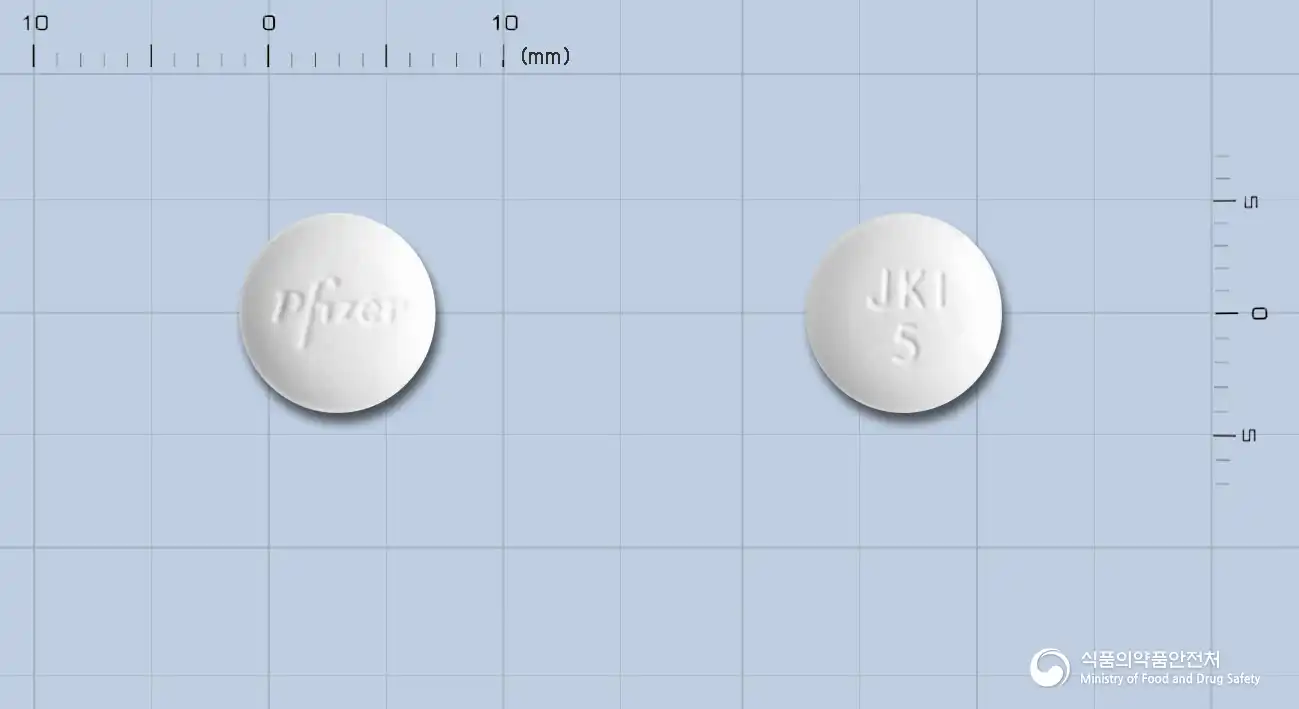
Tofacitinib Citrate 8.078mg
Tablet · Prescription medication
Pfizer Korea Co., Ltd.
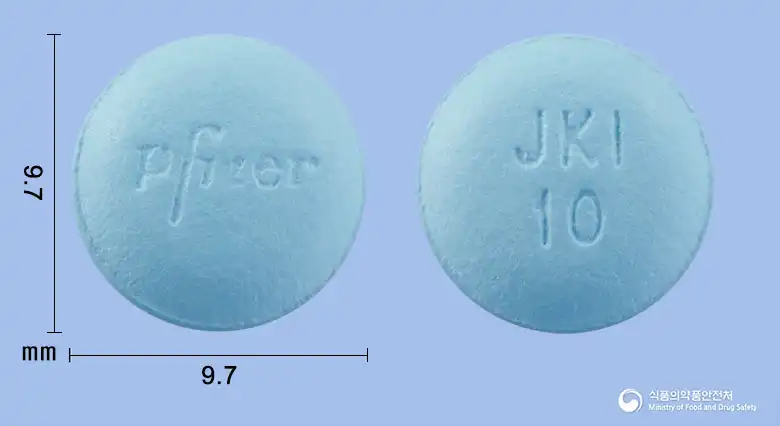
Tofacitinib Citrate 16.155mg
Tablet · Prescription medication
Pfizer Korea Co., Ltd.
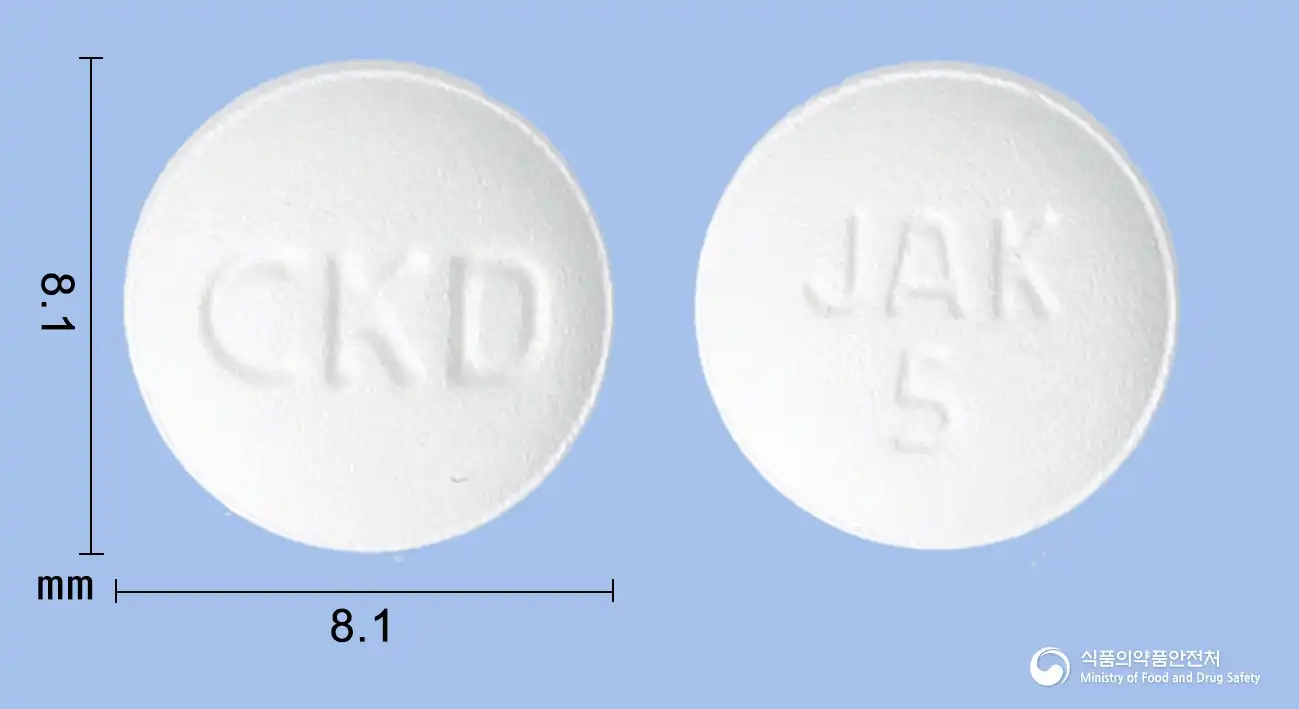
Tofacitinib Citrate
Tablet · Prescription medication
Jongkundang Co., Ltd.
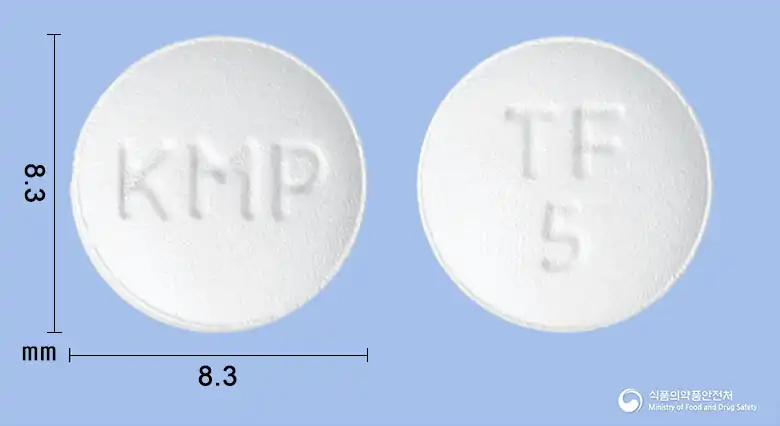
Tofacitinib Citrate 8.078mg
Tablet · Prescription medication
Genufarma Co., Ltd.
Tofacitinib Citrate 8.078mg
Tablet · Prescription medication
Hanpung Pharm Co., Ltd.
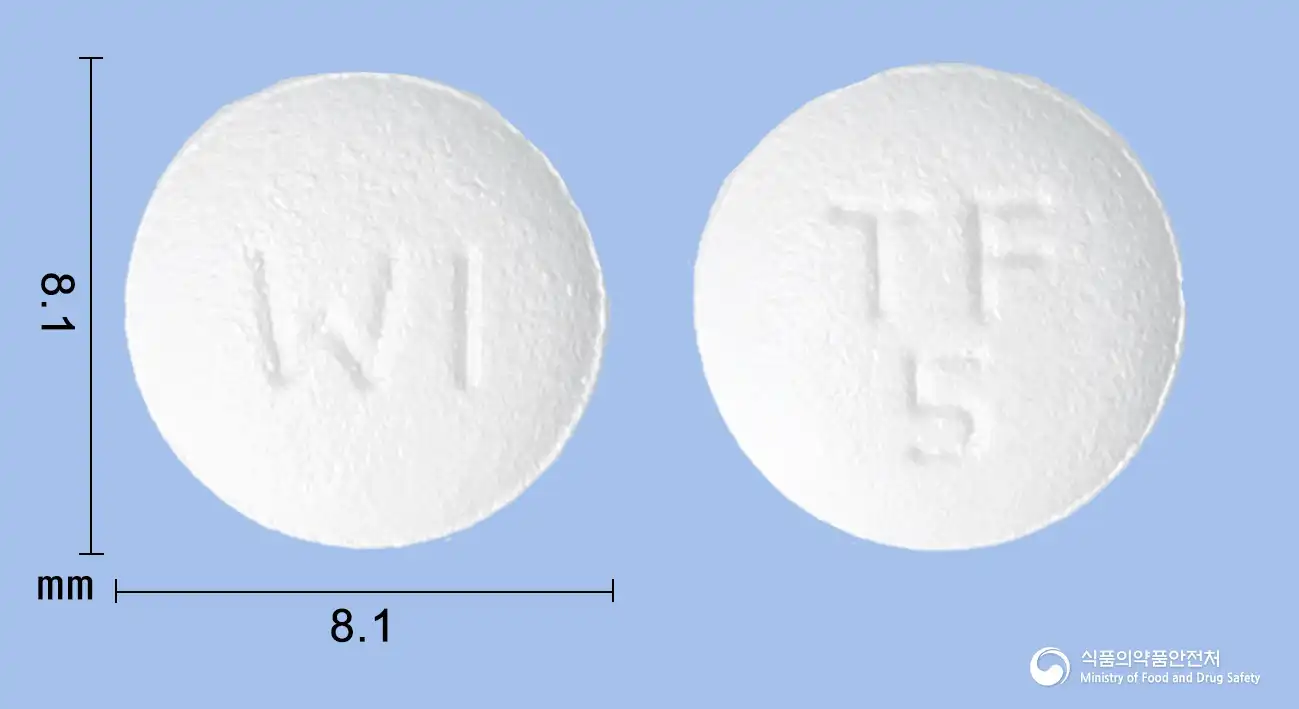
Tofacitinib Citrate 8.078mg
Tablet · Prescription medication
Hanmi Pharmaceutical Co., Ltd.
Tofacitinib Citrate 8.078mg
Tablet · Prescription medication
Kukje Pharmaceutical Co., Ltd.
Even with the same ingredient, the dose and directions can differ by strength and dosage form. Talk to a doctor or pharmacist before switching from a medication you are already taking.
No questions yet.
For anything that needs medical judgment, consult a doctor or pharmacist.
This drug information is based on data provided by the Korea Ministry of Food and Drug Safety.
Consult a doctor or pharmacist for accurate dosage, administration, and usage instructions.