
 한국어
 English
 日本語
 中文(简体)
Dosage form image
Viewing nowJelpatinib Tablet 5mg (Tofacitinib)
Tofacitinib 5mg
Tablet · Prescription medication
Bivocron Pharmaceutical Co., Ltd.
MFDS item code 202006205 · Approved 2020.09.07
This product's status changed to Expired on 2025.09.07. It may no longer be sold, so consult a doctor or pharmacist before taking it.
Treatment of arthritis (rheumatoid or psoriatic), ankylosing spondylitis, and ulcerative colitis
This medication is used for adult patients aged 18 and older who have had no response to or cannot tolerate existing treatments. The main indications include moderate to severe active rheumatoid arthritis, psoriatic arthritis, ankylosing spondylitis, and moderate to severe active ulcerative colitis. This medication can usually be administered in combination with methotrexate or other non-biological disease-modifying antirheumatic drugs, and monotherapy is also applicable in some cases. However, it should not be used in conjunction with biological disease-modifying antirheumatic drugs or strong immunosuppressants. Special caution is required for patients over 65 years old, those at high risk for cardiovascular diseases, and patients at risk for malignant tumors. This medication is used to improve the symptoms of patients who do not respond to existing treatments.
Do not initiate this drug in adult patients with an absolute lymphocyte count (ALC) below 500 cells/mm3, an absolute neutrophil count (ANC) below 1,000 cells/mm3, or a hemoglobin level below 9 g/dL. Rheumatoid arthritis, psoriatic arthritis, and ankylosing spondylitis: The recommended dose is 5mg twice daily. Patients receiving a strong CYP3A4 inhibitor (e.g., ketoconazole), or a moderate CYP3A4 inhibitor and a strong CYP2C19 inhibitor (e.g., fluconazole): 5 mg once daily Patients with moderate or severe renal impairment or moderate hepatic impairment: 5 mg once daily ALC below 500 cells/mm3 (confirmed by repeat testing): Discontinue treatment ANC 500-1,000 cells/mm3: Temporarily interrupt treatment. When the ANC exceeds 1,000 cells/mm3, resume this drug at 5 mg twice daily. ANC below 500 cells/mm3: Discontinue treatment A decrease in hemoglobin of more than 2 g/dL or a level below 8.0 g/dL: Temporarily interrupt treatment until the hemoglobin level returns to normal Ulcerative colitis: Administer 10 mg twice daily for at least 8 weeks, then administer 5 mg or 10 mg twice daily according to treatment response. Use the lowest effective dose for maintenance treatment. Discontinue treatment if adequate therapeutic benefit is not achieved after administering this drug at 10 mg twice daily for 16 weeks. Patients receiving a strong CYP3A4 inhibitor (e.g., ketoconazole), or a moderate CYP3A4 inhibitor and a strong CYP2C19 inhibitor (e.g., fluconazole): If receiving this drug at 10 mg twice daily, reduce the dose to 5 mg twice daily. If receiving this drug at 5 mg twice daily, reduce the dose to 5 mg once daily. Patients with moderate or severe renal impairment or moderate hepatic impairment: If receiving this drug at 10 mg twice daily, reduce the dose to 5 mg twice daily. If receiving this drug at 5 mg twice daily, reduce the dose to 5 mg once daily. ALC below 500 cells/mm3 (confirmed by repeat testing): Discontinue treatment ANC 500-1,000 cells/mm3: If receiving this drug at 10 mg twice daily, reduce the dose to 5 mg twice daily. When the ANC exceeds 1,000 cells/mm3, increase the dose back to 10 mg twice daily according to clinical response. If previously receiving this drug at 5 mg twice daily, temporarily interrupt treatment. When the ANC exceeds 1,000 cells/mm3, resume this drug at 5 mg twice daily. ANC below 500 cells/mm3: Discontinue treatment A decrease in hemoglobin of more than 2 g/dL or a level below 8.0 g/dL: Temporarily interrupt treatment until the hemoglobin level returns to normal A maintenance dose of 10mg is not recommended for patients with risk factors for venous thromboembolism (VTE), major adverse cardiovascular events (MACE), and malignancy, regardless of the availability of alternative treatments. For patients receiving 5 mg tablets or an equivalent weight-based dose twice daily who are also receiving a strong cytochrome P450 (CYP) 3A4 inhibitor (e.g., ketoconazole), and for patients receiving one or more concomitant medications that cause both moderate CYP3A4 inhibition and strong CYP2C19 inhibition (e.g., fluconazole), the total daily dose of this drug should be reduced to one 5 mg film-coated tablet once daily or the equivalent weight-based dose once daily.
Do not initiate this drug in pediatric patients with an absolute lymphocyte count (ALC) below 750 cells/mm3, an absolute neutrophil count (ANC) below 1,200 cells/mm3, or a hemoglobin level below 10 g/dL.
This medication carries a high risk of serious infections; if symptoms of infection appear, administration should be stopped immediately and treatment should be sought. Before and during treatment, latent tuberculosis testing should be carried out, and if latent tuberculosis is confirmed, treatment should start after controlling it. Patients over 65 years old or those at risk for cardiovascular conditions should be particularly cautious about using this medication and should use it only when necessary. This medication carries a risk of thrombosis; if symptoms of thrombosis occur, it should be discontinued immediately, and medical attention should be sought. It should not be administered to specific patient groups such as pregnant women or those with lactose intolerance. During treatment, regular blood tests, liver function tests, and lipid tests should be performed, and if any abnormal findings are detected, dose adjustment or discontinuation may be necessary. Live vaccines should be avoided during treatment, and vaccinations should be completed in advance. Due to risks of infection, malignancy, and cardiovascular adverse reactions, immediate consultation with a physician is recommended if symptoms occur. Additionally, patients with liver impairment, kidney impairment, or weakened immune systems must discuss with their doctor before use.
Not everyone experiences these, and they can vary from person to person.
This medication should be stored in a closed container to prevent exposure to air or moisture, ideally at a temperature between 1 and 30 degrees Celsius. By doing so, the medication can maintain its effectiveness for a longer period.
White round film-coated tablet
30 tablets - 30 tablets/bottle
Even with the same ingredient, strength, dosage form and how it is taken can differ.
Tofacitinib 5mg
Tablet · Prescription medication
Bivocron Pharmaceutical Co., Ltd.
Tofacitinib 5mg
Tablet · Prescription medication
Hana Pharmaceutical Co., Ltd.
Tofacitinib 5mg
Tablet · Prescription medication
Samik Pharmaceutical Co., Ltd.
Tofacitinib 5mg
Tablet · Prescription medication
Lightpharmtech Co., Ltd.
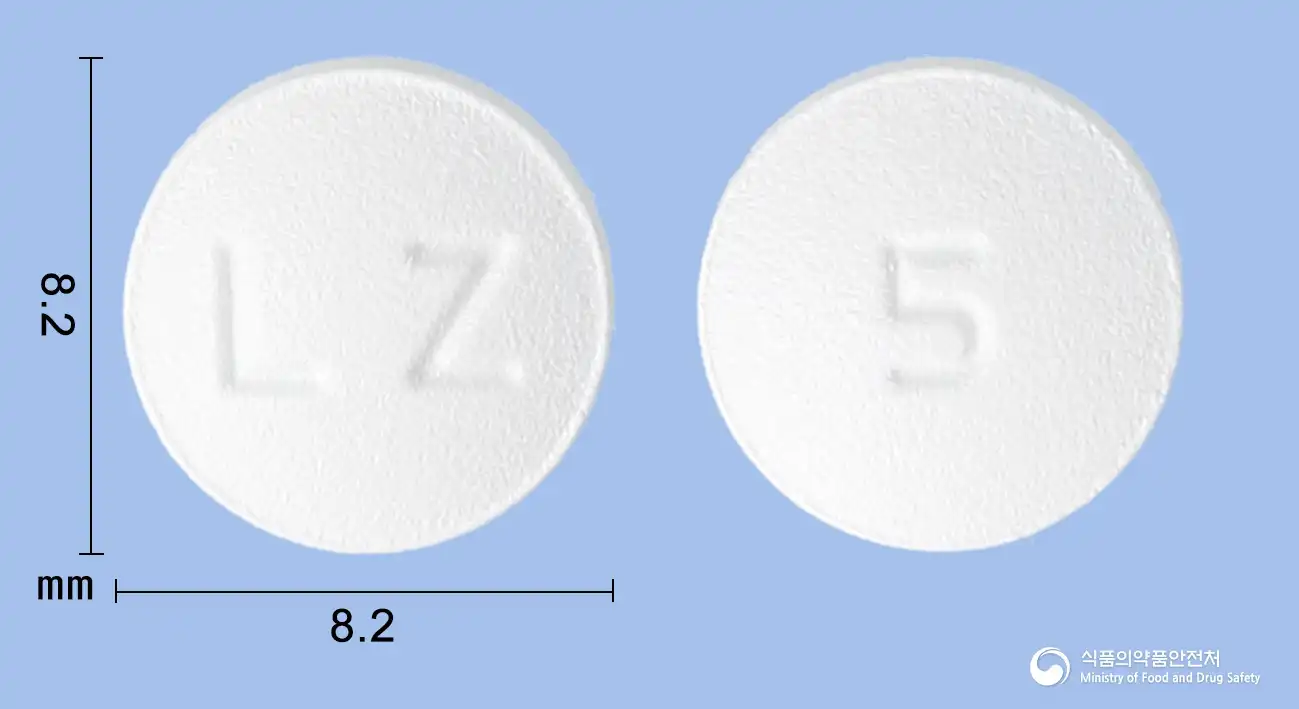
Tofacitinib 5mg
Tablet · Prescription medication
Il-Yang Pharmaceutical Co., Ltd.
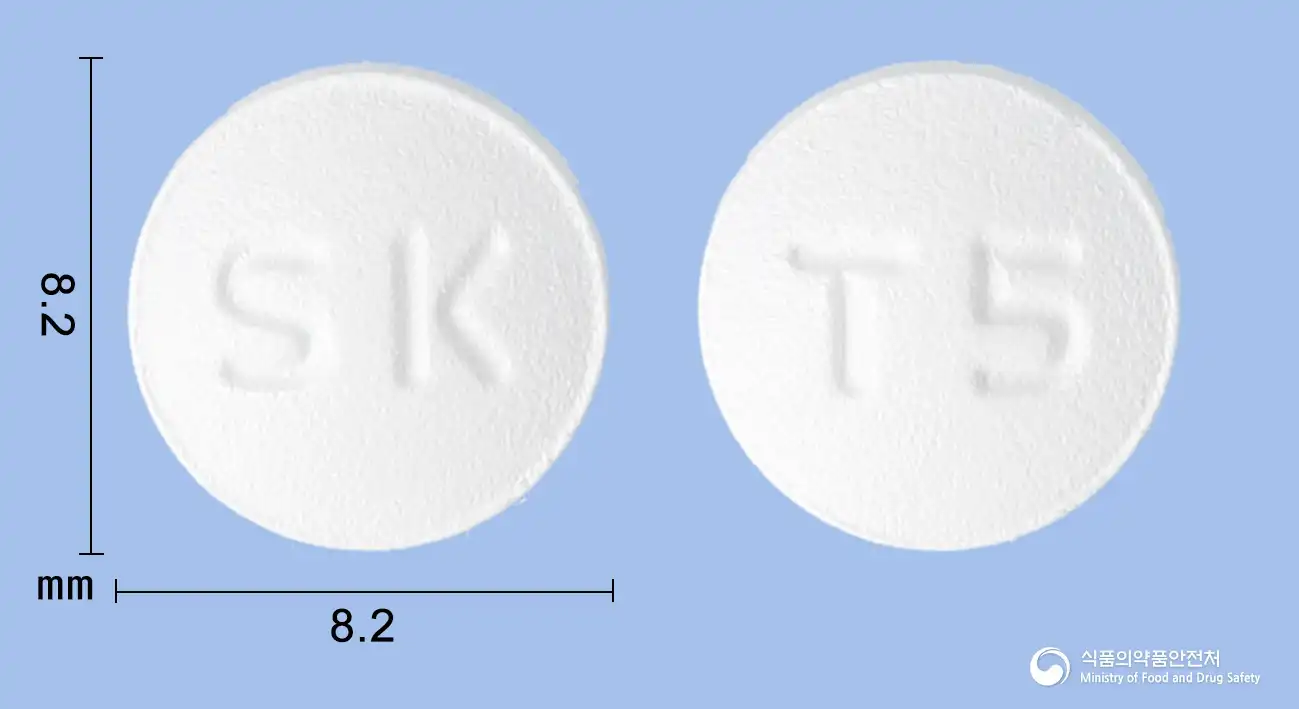
Tofacitinib 5mg
Tablet · Prescription medication
SK Chemicals Co., Ltd.
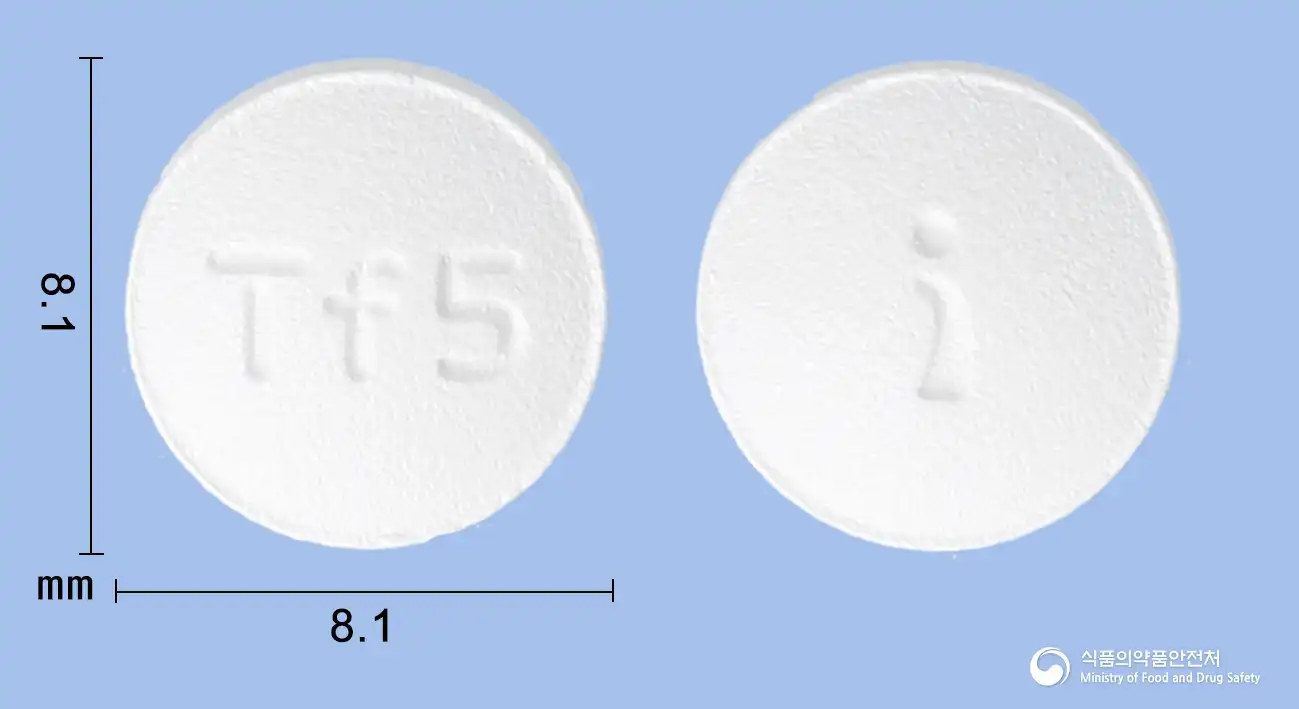
Tofacitinib 5mg
Tablet · Prescription medication
Unimed Pharmaceutical Co., Ltd.
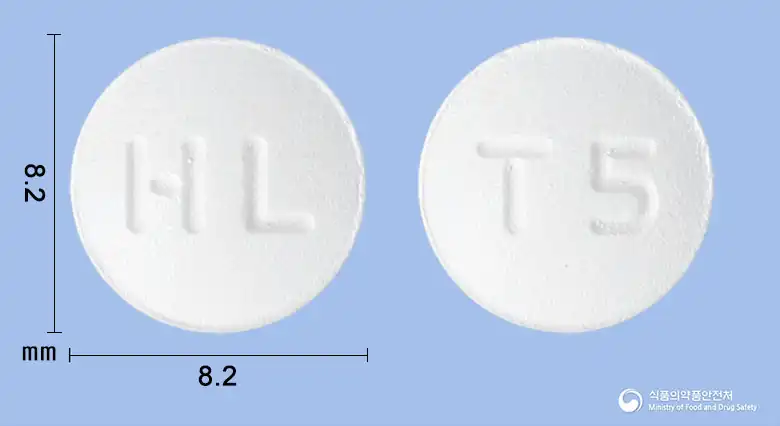
Tofacitinib 5mg
Tablet · Prescription medication
Hanlim Pharmaceutical Co., Ltd.
Even with the same ingredient, the dose and directions can differ by strength and dosage form. Talk to a doctor or pharmacist before switching from a medication you are already taking.
No questions yet.
For anything that needs medical judgment, consult a doctor or pharmacist.
This drug information is based on data provided by the Korea Ministry of Food and Drug Safety.
Consult a doctor or pharmacist for accurate dosage, administration, and usage instructions.