Medication info
Rozlytrec Capsule 200 mg (Entrectinib)

Rozlytrec Capsule 200 mg (Entrectinib)

Prescription medicationHard capsuleOral
Ingredient · strength
Entrectinib›200mg / 1 capsule
Manufacturer / importer
Roche Korea Co., Ltd.
Appearance
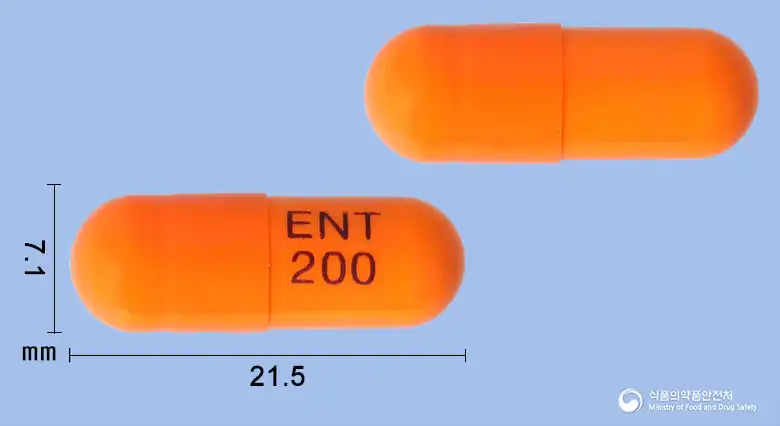
An opaque orange hard capsule containing a white-yellowish-pink or light yellow powder or granular powder.
Packaging
For domestic use - 90 capsules/bottle
Approval status
Active

MFDS item code 202002808 · Approved 2020.04.21 · Insurance code 645001490

Summary

Main use
Treatment of NTRK fusion-positive solid tumors and ROS1-positive non-small cell lung cancer
Who takes it
Adults · Children
Adult dose
This medicine may be administered with or without food. Swallow the capsule whole; do not open or dissolve it. The recommended dose of this medicine in adults is 600 mg orally once daily. It is recommended that this medicine be administered until disease progression or unacceptable toxicity occurs. If a scheduled dose of this medicine is missed, it may be taken unless the next dose is scheduled within 12 hours. If vomiting occurs immediately after taking this medicine, the dose may be taken again. For the management of adverse reactions, this medicine may be temporarily withheld, the dose reduced, or treatment discontinued based on the prescribing physician’s assessment of patient safety or tolerability. In adults, the dose of this medicine may be reduced up to 2 times based on tolerability. Starting dose: 600mg once daily First dose reduction: 400mg once daily Second dose reduction: 200mg once daily If the patient does not tolerate a dose of 200 mg once daily, this medicine should be permanently discontinued. Anemia or neutropenia Grade 3 or Grade 4: Withhold this medicine until recovery to ≤ Grade 2 or baseline. Resume treatment at the same or a reduced dose, as clinically indicated. Cognitive impairment intolerable Grade ≥ 2: Withhold this medicine until recovery to ≤ Grade 1 or baseline. Resume treatment at the same or a reduced dose, as clinically indicated. Cognitive impairment Grade 3: Withhold this medicine until recovery to ≤ Grade 1 or baseline. Resume treatment at a reduced dose. Cognitive impairment Grade 4: Discontinue treatment, as clinically appropriate, if severe, intolerable, or prolonged. Aminotransferase elevation Grade 3: Withhold this medicine until recovery to ≤ Grade 1 or baseline. If resolved within 4 weeks, resume treatment at the same dose. If the adverse reaction does not resolve within 4 weeks, permanently discontinue treatment. For recurrent Grade 3 events that resolve within 4 weeks, resume treatment at a reduced dose. Aminotransferase elevation Grade 4: Withhold this medicine until recovery to ≤ Grade 1 or baseline. If resolved within 4 weeks, resume treatment at a reduced dose. If the adverse reaction does not resolve within 4 weeks, permanently discontinue treatment. Permanently discontinue treatment for recurrent Grade 4 events. Increase in total bilirubin to > 2 times ULN, with an increase in ALT or AST to > 3 times ULN, without cholestasis or hemolysis: Permanently discontinue this medicine. Hyperuricemia symptomatic or Grade 4: Initiate urate-lowering medication. Withhold this medicine until signs or symptoms improve. Resume treatment at the same or a reduced dose. Congestive heart failure Grade 2 or Grade 3: Withhold this medicine until recovery to ≤ Grade 1. Resume treatment at a reduced dose. Congestive heart failure Grade 4: Withhold this medicine until recovery to ≤ Grade 1. Resume treatment at a reduced dose or discontinue, as clinically appropriate. QT interval prolongation QTc 481 ~ 500 ms: Withhold this medicine until recovery to baseline. Resume treatment at the same dose. QT interval prolongation QTc > 500 ms: Withhold this medicine until the QTc interval returns to baseline. If factors contributing to QT prolongation are identified and corrected, resume treatment at the same dose. If no other factors contributing to QT prolongation are identified, resume treatment at a reduced dose. Torsade de pointes, polymorphic ventricular tachycardia, signs/symptoms of serious arrhythmia: Permanently discontinue this medicine. Other clinically significant adverse reactions Grade 3 or Grade 4: Withhold this medicine until the adverse reaction resolves or improves to Grade 1 or baseline. If resolved within 4 weeks, resume treatment at the same or a reduced dose. If the adverse reaction does not resolve within 4 weeks, consider permanent discontinuation. Permanently discontinue treatment for recurrent Grade 4 events. In adults, concomitant use of this medicine with strong or moderate CYP3A inhibitors should be avoided or limited to 14 days or less. If concomitant use of a strong or moderate CYP3A inhibitor cannot be avoided, reduce the dose of this medicine to 100 mg once daily when used with a strong CYP3A inhibitor and to 200 mg once daily when used with a moderate CYP3A inhibitor. After discontinuing concomitant use of a strong or moderate CYP3A inhibitor, the dose of this medicine administered before initiation of the strong or moderate CYP3A inhibitor may be resumed. A washout period may be required for CYP3A4 inhibitors with a long half-life. Concomitant administration of CYP3A inducers with this medicine should be avoided in adult and pediatric patients. No dose adjustment of this medicine is required in patients ≥ 65 years of age. Based on population pharmacokinetic analyses, no dose adjustment is required in patients with mild or moderate renal impairment. The safety and efficacy of this medicine have not been studied in patients with severe renal impairment. The safety and efficacy of this medicine have not been established in patients with hepatic impairment (see Precautions for Use 11. Patients with Hepatic Impairment).
Child dose
Pediatric patients aged 12 years and older with NTRK gene fusion solid tumors: In pediatric patients able to swallow capsules, the recommended dose of this medicine is 300 mg/m2 orally once daily. Body surface area (BSA) 0.81-1.10 m2: dose 300 mg once daily Body surface area (BSA) 1.11-1.50 m2: dose 400 mg once daily Body surface area (BSA) ≥ 1.51m2: dose 600 mg once daily Pediatric patients aged 12 years and older: The dose of this medicine may be reduced up to 2 times based on tolerability. Starting dose 300 mg: First dose reduction 200 mg once daily; second dose reduction 100 mg once daily Starting dose 400 mg: First dose reduction 300 mg once daily; second dose reduction 200 mg once daily for 5 days each week * Starting dose 600 mg: First dose reduction 400 mg once daily; second dose reduction 200 mg once daily *5 days each week: Monday, Wednesday, Friday, Saturday, Sunday In some patients, an intermittent dosing schedule may be needed to achieve the recommended reduced total weekly pediatric dose. If the patient cannot tolerate the lowest reduced dose, permanently discontinue this medicine. Avoid concomitant use of strong or moderate CYP3A inhibitors in pediatric patients. Pediatric patients must be able to swallow the capsules whole. The patient's dose is based on body surface area (mg/m2), and the maximum daily dose is 600 mg (see Table 1 for pediatric dosing).

Ingredients

Importer
Roche Korea Co., Ltd.

Efficacy & effects

Treatment of NTRK fusion-positive solid tumors and ROS1-positive non-small cell lung cancer

  • Solid tumors
  • locally advanced solid tumors
  • metastatic solid tumors
  • severe morbidity from surgical resection
  • progressive solid tumors after existing therapy
  • ROS1 positive locally advanced non-small cell lung cancer
  • metastatic non-small cell lung cancer
View approved original text

This drug is used for the treatment of solid tumors in adults and children aged 12 years and older with NTRK gene fusion. It is particularly effective in cases where the cancer is locally advanced or metastatic and is difficult to completely remove surgically, as well as in solid tumors that have not responded to existing treatments. Additionally, it is used to treat locally advanced or metastatic non-small cell lung cancer (NSCLC) in adults that is ROS1 positive. This drug mainly works by targeting specific genetic mutations in cancer cells to inhibit tumor growth. Clinical trials have proven the overall response rate, and studies related to patient survival are currently ongoing. Therefore, this drug is used for the treatment of solid tumors and non-small cell lung cancer with specific genetic mutations.

How to take

Adult dose

This medicine may be administered with or without food. Swallow the capsule whole; do not open or dissolve it. The recommended dose of this medicine in adults is 600 mg orally once daily. It is recommended that this medicine be administered until disease progression or unacceptable toxicity occurs. If a scheduled dose of this medicine is missed, it may be taken unless the next dose is scheduled within 12 hours. If vomiting occurs immediately after taking this medicine, the dose may be taken again. For the management of adverse reactions, this medicine may be temporarily withheld, the dose reduced, or treatment discontinued based on the prescribing physician’s assessment of patient safety or tolerability. In adults, the dose of this medicine may be reduced up to 2 times based on tolerability. Starting dose: 600mg once daily First dose reduction: 400mg once daily Second dose reduction: 200mg once daily If the patient does not tolerate a dose of 200 mg once daily, this medicine should be permanently discontinued. Anemia or neutropenia Grade 3 or Grade 4: Withhold this medicine until recovery to ≤ Grade 2 or baseline. Resume treatment at the same or a reduced dose, as clinically indicated. Cognitive impairment intolerable Grade ≥ 2: Withhold this medicine until recovery to ≤ Grade 1 or baseline. Resume treatment at the same or a reduced dose, as clinically indicated. Cognitive impairment Grade 3: Withhold this medicine until recovery to ≤ Grade 1 or baseline. Resume treatment at a reduced dose. Cognitive impairment Grade 4: Discontinue treatment, as clinically appropriate, if severe, intolerable, or prolonged. Aminotransferase elevation Grade 3: Withhold this medicine until recovery to ≤ Grade 1 or baseline. If resolved within 4 weeks, resume treatment at the same dose. If the adverse reaction does not resolve within 4 weeks, permanently discontinue treatment. For recurrent Grade 3 events that resolve within 4 weeks, resume treatment at a reduced dose. Aminotransferase elevation Grade 4: Withhold this medicine until recovery to ≤ Grade 1 or baseline. If resolved within 4 weeks, resume treatment at a reduced dose. If the adverse reaction does not resolve within 4 weeks, permanently discontinue treatment. Permanently discontinue treatment for recurrent Grade 4 events. Increase in total bilirubin to > 2 times ULN, with an increase in ALT or AST to > 3 times ULN, without cholestasis or hemolysis: Permanently discontinue this medicine. Hyperuricemia symptomatic or Grade 4: Initiate urate-lowering medication. Withhold this medicine until signs or symptoms improve. Resume treatment at the same or a reduced dose. Congestive heart failure Grade 2 or Grade 3: Withhold this medicine until recovery to ≤ Grade 1. Resume treatment at a reduced dose. Congestive heart failure Grade 4: Withhold this medicine until recovery to ≤ Grade 1. Resume treatment at a reduced dose or discontinue, as clinically appropriate. QT interval prolongation QTc 481 ~ 500 ms: Withhold this medicine until recovery to baseline. Resume treatment at the same dose. QT interval prolongation QTc > 500 ms: Withhold this medicine until the QTc interval returns to baseline. If factors contributing to QT prolongation are identified and corrected, resume treatment at the same dose. If no other factors contributing to QT prolongation are identified, resume treatment at a reduced dose. Torsade de pointes, polymorphic ventricular tachycardia, signs/symptoms of serious arrhythmia: Permanently discontinue this medicine. Other clinically significant adverse reactions Grade 3 or Grade 4: Withhold this medicine until the adverse reaction resolves or improves to Grade 1 or baseline. If resolved within 4 weeks, resume treatment at the same or a reduced dose. If the adverse reaction does not resolve within 4 weeks, consider permanent discontinuation. Permanently discontinue treatment for recurrent Grade 4 events. In adults, concomitant use of this medicine with strong or moderate CYP3A inhibitors should be avoided or limited to 14 days or less. If concomitant use of a strong or moderate CYP3A inhibitor cannot be avoided, reduce the dose of this medicine to 100 mg once daily when used with a strong CYP3A inhibitor and to 200 mg once daily when used with a moderate CYP3A inhibitor. After discontinuing concomitant use of a strong or moderate CYP3A inhibitor, the dose of this medicine administered before initiation of the strong or moderate CYP3A inhibitor may be resumed. A washout period may be required for CYP3A4 inhibitors with a long half-life. Concomitant administration of CYP3A inducers with this medicine should be avoided in adult and pediatric patients. No dose adjustment of this medicine is required in patients ≥ 65 years of age. Based on population pharmacokinetic analyses, no dose adjustment is required in patients with mild or moderate renal impairment. The safety and efficacy of this medicine have not been studied in patients with severe renal impairment. The safety and efficacy of this medicine have not been established in patients with hepatic impairment (see Precautions for Use 11. Patients with Hepatic Impairment).

Child dose

Pediatric patients aged 12 years and older with NTRK gene fusion solid tumors: In pediatric patients able to swallow capsules, the recommended dose of this medicine is 300 mg/m2 orally once daily. Body surface area (BSA) 0.81-1.10 m2: dose 300 mg once daily Body surface area (BSA) 1.11-1.50 m2: dose 400 mg once daily Body surface area (BSA) ≥ 1.51m2: dose 600 mg once daily Pediatric patients aged 12 years and older: The dose of this medicine may be reduced up to 2 times based on tolerability. Starting dose 300 mg: First dose reduction 200 mg once daily; second dose reduction 100 mg once daily Starting dose 400 mg: First dose reduction 300 mg once daily; second dose reduction 200 mg once daily for 5 days each week * Starting dose 600 mg: First dose reduction 400 mg once daily; second dose reduction 200 mg once daily *5 days each week: Monday, Wednesday, Friday, Saturday, Sunday In some patients, an intermittent dosing schedule may be needed to achieve the recommended reduced total weekly pediatric dose. If the patient cannot tolerate the lowest reduced dose, permanently discontinue this medicine. Avoid concomitant use of strong or moderate CYP3A inhibitors in pediatric patients. Pediatric patients must be able to swallow the capsules whole. The patient's dose is based on body surface area (mg/m2), and the maximum daily dose is 600 mg (see Table 1 for pediatric dosing).

Precautions

This drug may cause a heart condition called congestive heart failure in patients with weakened heart function, so heart pump function must be evaluated before starting treatment. During treatment, careful observation for symptoms such as shortness of breath or swelling is necessary, and any emergence of symptoms should lead to immediate consultation with medical staff. Additionally, this drug may affect cognitive functions such as memory decrease, confusion, and hallucinations, so it is advised to avoid driving or operating machinery if these symptoms occur. There may be an increased risk of fractures, so if there is pain or deformity in the bones, immediate medical examination is required. QT interval related to heart rhythm may be prolonged, thus regular monitoring of heart conditions is necessary, and it should be avoided in patients at risk. Pregnant women should not use this drug as it may harm the fetus, and women of childbearing age must use effective contraception during treatment and for some time afterward. Patients with allergies to this drug or lactose intolerance should not use it. This drug contains certain dyes, so patients allergic to them should take caution. Various side effects such as infections, anemia, weight gain, dizziness, nausea, diarrhea may occur during treatment, and any unusual symptoms must be reported to medical staff. Moreover, this drug may interact with other medications, so any drugs currently being taken should be reported to medical staff. Pregnant women, nursing mothers, elderly patients, and patients with impaired kidney or liver function should consult a physician before using this drug, and regular monitoring is necessary for safe use. In case of overdose, immediate medical supervision is required and there is no antidote for this drug. Store this drug in a sealed container away from children, keeping it in its original container to avoid moisture.

Side effects

  • Congestive heart failure
  • confusion
  • altered mental state
  • memory impairment
  • hallucinations
  • fractures
  • QT interval prolongation
  • urinary tract infection
  • lung infection
  • anemia
Show 140 more
  • neutropenia
  • weight gain
  • hyperuricemia
  • decreased appetite
  • dehydration
  • tumor lysis syndrome
  • dizziness
  • dysgeusia
  • paresthesia
  • cognitive impairment
  • peripheral sensory neuropathy
  • headache
  • ataxia
  • sleep disorders
  • mood disorders
  • syncope
  • blurred vision
  • QT prolongation on electrocardiogram
  • myocarditis
  • hypotension
  • dyspnea
  • cough
  • pleural effusion
  • constipation
  • diarrhea
  • nausea
  • vomiting
  • abdominal pain
  • dysphagia
  • increased AST
  • increased ALT
  • rash
  • arthralgia
  • myalgia
  • muscle weakness
  • increased creatinine in blood
  • urinary retention
  • fatigue
  • edema
  • pain
  • fever
  • altered state of consciousness
  • attention deficit
  • amnesia
  • change in mental state
  • delirium
  • disorientation
  • brain fog
  • attention deficit hyperactivity disorder
  • visual hallucinations
  • auditory hallucinations
  • psychiatric disorders
  • mental disorders
  • neuralgia
  • peripheral neuropathy
  • sensory hyperesthesia
  • sensory loss
  • balance disorders
  • gait disturbances
  • vertigo
  • orthostatic dizziness
  • facial edema
  • fluid retention
  • generalized edema
  • localized edema
  • peripheral edema
  • peripheral swelling
  • back pain
  • cervical pain
  • musculoskeletal chest pain
  • musculoskeletal pain
  • limb pain
  • bronchitis
  • lower respiratory infection
  • pneumonia
  • airway infection
  • upper respiratory infection
  • acute right heart failure
  • chronic right heart failure
  • decreased ejection fraction
  • pulmonary edema
  • decreased neutrophil count
  • pelvic fracture
  • ankle fracture
  • avulsion fracture
  • bursitis
  • cartilage damage
  • clavicle fracture
  • compression fracture
  • femoral neck fracture
  • femur fracture
  • fibula fracture
  • foot fracture
  • sacral fracture
  • hand fracture
  • hip fracture
  • humerus fracture
  • iliac fracture
  • jaw fracture
  • joint injury
  • limb fractures
  • lower limb fractures
  • lumbar spine fracture
  • osteoporotic fracture
  • pathologic fracture
  • pelvic fracture
  • rib fracture
  • vertebral compression fracture
  • spinal fracture
  • spinal anterior displacement
  • sternum fracture
  • stress fracture
  • synovial membrane rupture
  • thoracic vertebra fracture
  • tibia fracture
  • ulna fracture
  • wrist fracture
  • maculopapular rash
  • pruritic rash
  • erythematous rash
  • papular rash
  • diplopia
  • visual impairment
  • weakness
  • orthostatic hypotension
  • hypersomnia
  • insomnia
  • drowsiness
  • anxiety
  • emotional instability
  • mood disorder
  • restlessness
  • depressed mood
  • sense of relief
  • altered mood
  • mood swings
  • irritability
  • depression
  • persistent depressive disorder
  • psychomotor retardation

Not everyone experiences these, and they can vary from person to person.

Storage

This drug must be stored in a sealed container to protect it from air and moisture. It is recommended to maintain a storage temperature between 1 degree Celsius and 30 degrees Celsius.

Appearance and packaging

Appearance

An opaque orange hard capsule containing a white-yellowish-pink or light yellow powder or granular powder.

Package unit

For domestic use - 90 capsules/bottle

Same-ingredient medicines

Even with the same ingredient, strength, dosage form and how it is taken can differ.

Even with the same ingredient, the dose and directions can differ by strength and dosage form. Talk to a doctor or pharmacist before switching from a medication you are already taking.

Questions about this medicine

No questions yet.

For anything that needs medical judgment, consult a doctor or pharmacist.

Related searches

Search tags

Suggested searches

This drug information is based on data provided by the Korea Ministry of Food and Drug Safety.
Consult a doctor or pharmacist for accurate dosage, administration, and usage instructions.