
 한국어
 English
 日本語
 中文(简体)
Dosage form image
Viewing nowDonggu Apixaban Tablets 5 mg
Apixaban 5mg
Tablet · Prescription medication
Donggu Bio Pharmaceutical Co., Ltd.
MFDS item code 202002446 · Approved 2020.04.07
This product's status changed to Expired on 2025.04.07. It may no longer be sold, so consult a doctor or pharmacist before taking it.
Prevention of stroke and embolism; treatment of venous thrombosis and pulmonary embolism and prevention of recurrence; prevention of postoperative thrombosis
This medication is used for the prevention of venous thromboembolism in adult patients following hip or knee replacement surgery. It also plays a role in reducing the risk of stroke and systemic embolism in patients with non-valvular atrial fibrillation. In addition, it is effective in treating deep vein thrombosis and pulmonary embolism, as well as reducing the risk of recurrence. This medication is effective in preventing and treating thrombotic conditions.
This medicine should be taken with water, with or without food. If a patient forgets to take a dose, they should take this medicine as soon as they remember and continue taking it twice daily as before. 1. Adults 1) Prevention of venous thromboembolism in adult patients who have undergone hip or knee replacement surgery The recommended dose is 2.5 mg of this medicine taken orally twice daily. The first dose should be taken between 12 ~ 24 hours after surgery. The recommended duration of treatment in patients who have undergone hip replacement surgery is 32 ~ 38 days. The recommended duration of treatment in patients who have undergone knee replacement surgery is 10 ~ 14 days. 2) Reduction of the risk of stroke and systemic embolism in patients with nonvalvular atrial fibrillation The recommended dose is 5 mg of this medicine taken orally twice daily. However, for patients with nonvalvular atrial fibrillation who have at least 2 of the following characteristics, the recommended dose is 2.5 mg of this medicine taken orally twice daily; age≥80 years, body weight ≤60kg, or serum creatinine ≥1.5 mg/dL (133 micromole/L). Treatment should be continued long term. There is limited experience with coadministration of the recommended dose of this medicine with antiplatelet agents after hemostasis has been achieved in patients with nonvalvular atrial fibrillation who have acute coronary syndrome and/or have undergone percutaneous coronary intervention. (Refer to ‘5. General Precautions, 1) Interactions with other drugs that affect hemostasis’ and ‘12. Clinical Trial Information, 2) Reduction of the risk of stroke and systemic embolism in patients with nonvalvular atrial fibrillation, AUGUSTUS trial’ under Precautions for Use.) 3) Treatment of deep vein thrombosis and pulmonary embolism The recommended dose of this medicine for the treatment of acute deep vein thrombosis and pulmonary embolism is 10mg taken orally twice daily for 7 days, followed by 5mg taken orally twice daily. 4) Reduction of the risk of recurrent deep vein thrombosis and pulmonary embolism The recommended dose is 2.5mg of this medicine taken orally twice daily, and treatment should be started after completing at least 6 months of treatment with this medicine or another anticoagulant. 2. Switching medications When switching from parenteral anticoagulant treatment to this medicine or from this medicine to a parenteral anticoagulant, the switch can be made at the time of the next scheduled dose. 1) Switching from vitamin K antagonist treatment to this medicine To switch from vitamin K antagonist treatment to this medicine, discontinue warfarin or another vitamin K antagonist and start this medicine when the International Normalized Ratio (INR) is less than 2.0. 2) Switching from this medicine to vitamin K antagonist treatment To switch from this medicine to vitamin K antagonist treatment, continue taking this medicine for 2 days after starting the vitamin K antagonist. After 2 days of concomitant treatment with this medicine and a vitamin K antagonist, measure the INR just before the scheduled dose of this medicine and continue concomitant treatment with this medicine and the vitamin K antagonist until the INR is 2.0 or higher. 3. Renal impairment Since there is no clinical experience in patients on dialysis or in patients with creatinine clearance less than 15 mL/min, use of this medicine is not recommended. 1) Prevention of venous thromboembolism in adult patients who have undergone hip or knee replacement surgery No dose adjustment is necessary in patients with mild or moderate renal impairment. Limited clinical experience in patients with severe renal impairment (creatinine clearance 15-29 mL/min) indicates that blood concentrations of this medicine are increased in these patients; therefore, this medicine should be administered with caution in these patients. 2) Reduction of the risk of stroke and systemic embolism in patients with nonvalvular atrial fibrillation No dose adjustment is necessary in patients with mild or moderate renal impairment. However, patients with serum creatinine ≥1.5 mg/dL (133 micromole/L) who are aged ≥ 80 years or have a body weight ≤ 60kg should receive 2.5 mg of this medicine twice daily. Patients with severe renal impairment (creatinine clearance 15-29 mL/min) should receive 2.5 mg of this medicine twice daily, regardless of age or body weight. 3) Treatment of deep vein thrombosis and pulmonary embolism/ Reduction of the risk of recurrent deep vein thrombosis and pulmonary embolism No dose adjustment is necessary in patients with mild or moderate renal impairment. Limited clinical experience in patients with severe renal impairment (creatinine clearance 15-29 mL/min) indicates that blood concentrations of this medicine are increased in these patients; therefore, this medicine should be administered with caution in these patients. 4. Hepatic impairment This medicine should not be administered to patients with liver disease associated with coagulopathy and a clinically significant risk of bleeding. No dose adjustment is necessary in patients with mild or moderate hepatic impairment (Child Pugh A or B), but this medicine should be administered with caution. Use of this medicine is not recommended in patients with severe hepatic impairment. Patients with hepatic ALT/AST greater than 2 times the upper limit of normal or total bilirubin levels ≥1.5 times the upper limit of normal were excluded from clinical trials; therefore, caution should be exercised when administering this medicine to these patients. Liver function tests should be performed before starting this medicine. 5. Patients unable to swallow tablets For patients unable to swallow tablets, this medicine may be crushed immediately before use, mixed with water or a beverage such as applesauce, and administered orally. This medicine may also be crushed, mixed with 60mL of water, and administered through a nasogastric tube.
This medication is a drug that prevents blood from clotting excessively, preventing the formation of clots. However, bleeding may occur during the period of taking this medication, so careful observation for bleeding symptoms is necessary. If severe bleeding occurs, medication should be discontinued immediately. Patients with allergies to any of its components, current severe bleeding, or blood coagulation disorders should not take this medication. Additionally, patients with recent gastrointestinal ulcers, intracranial hemorrhage, history of spinal or brain surgery, vascular abnormalities, or cancers with a high risk of bleeding should also not take this medication. Special caution is needed when used in patients with significantly impaired renal function or liver dysfunction. Furthermore, caution should be exercised when taken together with serotonin reuptake inhibitors, non-steroidal anti-inflammatory drugs, or aspirin, as the risk of bleeding may increase. Patients undergoing spinal or epidural anesthesia may be at risk for hematoma formation, so appropriate timing for stopping or resuming the medication should be observed before and after taking this medication. This medication may interact with various drugs, so special caution is needed when taken with certain antifungals, antivirals, anticonvulsants, or some anti-inflammatory pain medications. It is not recommended for use during pregnancy, and breastfeeding women should also either stop breastfeeding or discontinue this medication. Common side effects include bleeding, bruising, nosebleeds, and hematomas, while rare side effects may include severe bleeding or allergic reactions. Before undergoing surgery or invasive procedures, this medication should be discontinued for a certain period to reduce the risk of bleeding, keeping in mind that the risk of thrombosis may increase during the discontinuation period. In the event of overdose, the risk of bleeding significantly increases, necessitating immediate consultation with medical personnel, and up to now, there is no specific antidote to counteract this medication. While taking this medication generally does not have a significant effect on driving or operating machinery, caution should be exercised if bleeding symptoms or dizziness occur.
Hemorrhage, contusion, nosebleed, hematoma, anemia, thrombocytopenia, hypersensitivity, allergic edema, anaphylactic reaction, intracerebral hemorrhage, ocular hemorrhage, hypotension, intraperitoneal hemorrhage, nasal hemorrhage, hemoptysis, airway hemorrhage, nausea, gastrointestinal hemorrhage, hemorrhoidal hemorrhage, oral hemorrhage, bloody stools, rectal hemorrhage, gum hemorrhage, retroperitoneal hemorrhage, increased transaminases, increased aspartate aminotransferase, increased gamma-glutamyltransferase, abnormal liver function tests, increased serum alkaline phosphatase, increased serum bilirubin, skin rash, muscle hemorrhage, hematuria, abnormal vaginal bleeding, urogenital hemorrhage, bleeding at the administration site, positive occult blood, post-procedural hemorrhage, wound secretion, incision site hemorrhage, traumatic hemorrhage, post-procedural hemorrhage, incision site hemorrhage, hepatitis, biliary disorders, fractures, ligament disorders, coronary artery surgery, post-surgical hemorrhage, traumatic hematoma, hypernatremia, metabolic acidosis, systemic weakness, dehydration, sepsis, acute renal failure, urinary retention, neurological ischemia, renal dysfunction, uterine hemorrhage, vaginal bleeding, conjunctivitis, visual disturbances, unspecified adenocarcinoma, kidney cancer, gallbladder duct adenocarcinoma, aortic valve dysfunction, aortic stenosis, arterial stenosis, pericardial effusion, angina, syndrome of inappropriate antidiuretic hormone secretion, supraventricular tachycardia, cardiac arrest, colitis, gastroesophageal reflux, gastritis, hematemesis, anal fissure, heart failure, asthenia, death, deterioration of condition, fever, drowsiness, convulsions, polyneuropathy, headache, hemiplegia, dizziness, hemiparesis, coma, soft tissue inflammation, subarachnoid hemorrhage, intracranial hemorrhage, vitreous hemorrhage, emphysema, pleural effusion, falls, surgical intervention, eating disorders, atrial fibrillation, vomiting, colitis, diarrhea, esophagitis, benign gastrointestinal neoplasm, gastrointestinal hemorrhage, gastroenteritis, dental diseases, anal fissure, orthostatic hypotension, leg pain, peripheral edema, fatigue, insomnia, loss of appetite, migraine, hemiparesis, pruritic rash, maculopapular rash, congestion, flushing, pneumonia, dyspnea, palpitations, constipation, abdominal pain, dyspepsia, pruritus, chest pain
Not everyone experiences these, and they can vary from person to person.
This medication should be stored in a tightly sealed container to protect it from exposure to air and light. The storage temperature should be maintained at room temperature between 1 and 30 degrees Celsius. This helps to maintain the effectiveness and safety of the medication.
A pink, oval-shaped, biconvex film-coated tablet
10 tablets/box [10 tablets/PPT X 1], 60 tablets/box [10 tablets/PPT X 6]
Even with the same ingredient, strength, dosage form and how it is taken can differ.
Apixaban 5mg
Tablet · Prescription medication
Donggu Bio Pharmaceutical Co., Ltd.
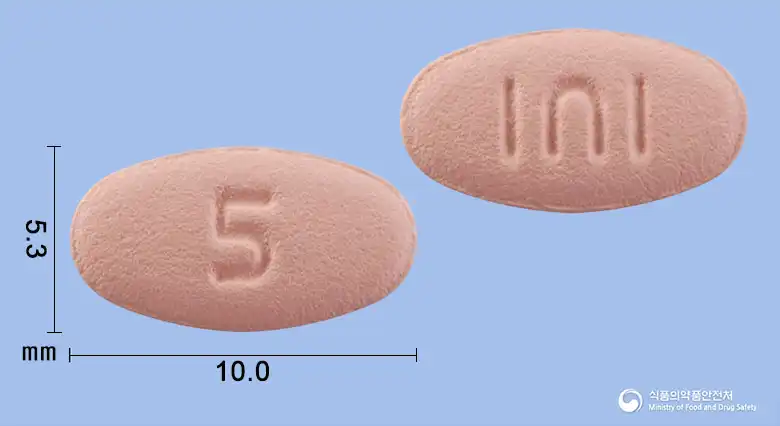
Apixaban 5mg
Tablet · Prescription medication
Bivagon Pharmaceutical Co., Ltd.
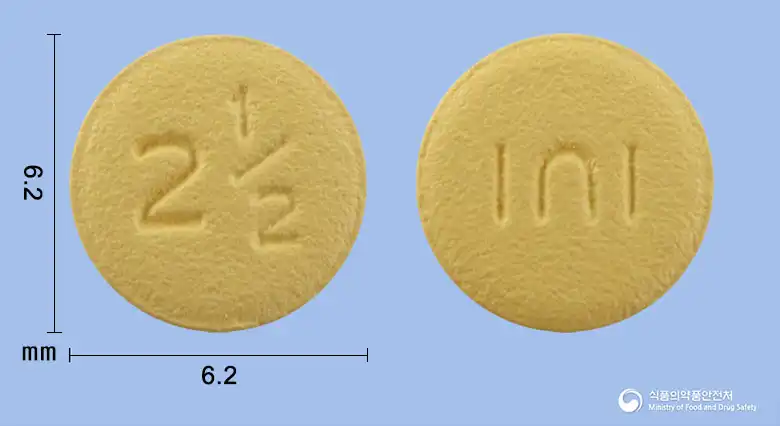
Apixaban 2.5mg
Tablet · Prescription medication
Vivozon Pharmaceuticals Co., Ltd.
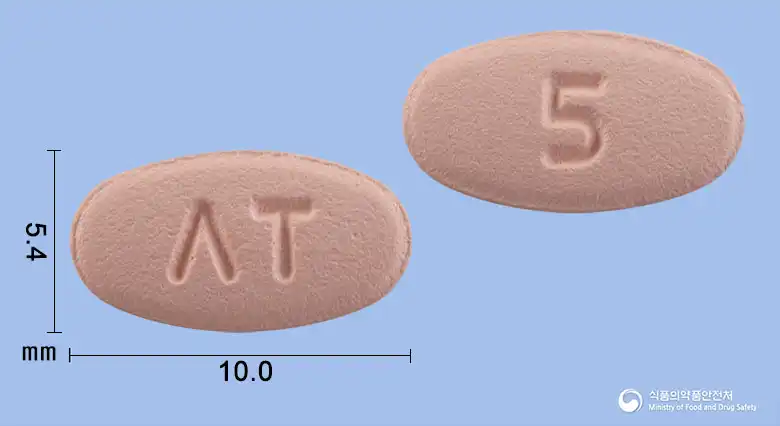
Apixaban 5mg
Tablet · Prescription medication
HuTex Pharmaceuticals Co., Ltd.
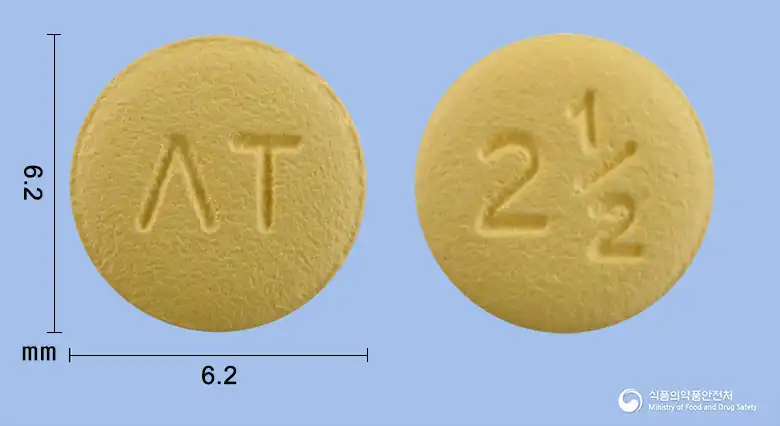
Apixaban 2.5mg
Tablet · Prescription medication
Korea HuTechs Pharmaceutical Co., Ltd.
Apixaban 5mg
Tablet · Prescription medication
Jinyang Pharmaceutical Co., Ltd.
Apixaban 2.5mg
Tablet · Prescription medication
Jinyang Pharmaceutical Co., Ltd.
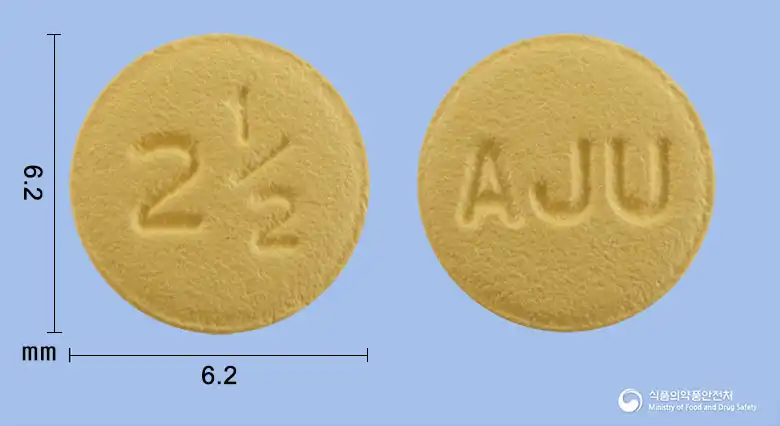
Apixaban 2.5mg
Tablet · Prescription medication
Ajou Pharmaceuticals Co., Ltd.
Even with the same ingredient, the dose and directions can differ by strength and dosage form. Talk to a doctor or pharmacist before switching from a medication you are already taking.
No questions yet.
For anything that needs medical judgment, consult a doctor or pharmacist.
This drug information is based on data provided by the Korea Ministry of Food and Drug Safety.
Consult a doctor or pharmacist for accurate dosage, administration, and usage instructions.