
 한국어
 English
 日本語
 中文(简体)
 Viewing now
Lanexas Extended-Release Tablet 750 mg (Lanorelaxine)
Ranolazine 750mg
Tablet · Prescription medication
Korea Menarini Co., Ltd.
MFDS item code 202001784 · Approved 2020.03.16
Combination symptomatic treatment of stable angina inadequately controlled or intolerant to first-line treatment
This medication is used in combination therapy to alleviate symptoms in patients with stable angina who are not sufficiently controlled by primary beta-blockers or calcium channel blockers, or who are intolerant to them.
1. Adults The recommended initial dose of this medicine is 375 milligrams twice daily. After 2 - 4 weeks, increase the dose to 500 milligrams twice daily; depending on the patient's response to treatment, the dose may be increased to a maximum of 750 milligrams twice daily. If the patient experiences treatment-related adverse reactions (e.g., dizziness, nausea, or vomiting), a dose reduction to 500 milligrams or 375 milligrams twice daily may be required. If symptoms do not resolve after dose reduction, treatment should be discontinued. 2. Method of administration Swallow this medicine whole; do not split, crush, or chew it. This medicine may be taken with food or on an empty stomach. 3. Administration to special populations 1) Patients receiving CYP3A4 and P-gp inhibitors Careful dose titration is recommended for patients treated with moderate CYP3A4 inhibitors (e.g., diltiazem, fluconazole, erythromycin) or P-gp inhibitors (e.g., verapamil, cyclosporine). Do not coadminister with strong CYP3A4 inhibitors (see Precautions for Use, ‘1. Do not administer to the following patients’, ‘2. Administer with caution to the following patients’, and ‘5. Interactions’). 2) Older adults Dose titration in older adults should be performed carefully and cautiously. Exposure to ranolazine may be increased in older adults due to age-related decreases in renal function. The incidence of adverse reactions was higher in older adults (see Precautions for Use, ‘3. Adverse Reactions’). 3) Patients with renal impairment Careful dose titration is recommended in patients with mild to moderate renal impairment (creatinine clearance 30 - 80 mL/min) (see Precautions for Use, ‘12. Information for Healthcare Professionals’). Do not administer this medicine to patients with severe renal impairment (creatinine clearance < 30 mL/min) (see Precautions for Use, ‘1. Do not administer to the following patients’). 4) Patients with hepatic impairment Careful dose titration is recommended in patients with mild hepatic impairment (see Precautions for Use, ‘12. Information for Healthcare Professionals’). Do not administer this medicine to patients with moderate or severe hepatic impairment (see Precautions for Use, ‘1. Do not administer to the following patients’).
This medication should not be used in patients who are allergic to the active ingredient or any excipients. Patients with severely impaired kidney function or moderate to severe liver impairment should not use this medication. Caution should be taken to avoid co-administration with specific strong medications due to an increased risk of side effects. Patients who are genetically unable to break down lactose should not be administered this medication. Elderly patients, underweight patients, and patients with slightly impaired liver or kidney function should use this medication carefully as its concentration may increase. Various side effects such as dizziness, headache, indigestion, skin rash, etc., may occur during the use of this medication. Particularly, the elderly or patients with impaired kidney function may experience side effects more frequently, so caution is needed. This medication may affect heart rhythm; therefore, patients with heart-related conditions or those taking related medications should consult their physician. Pregnant or breastfeeding women are advised not to use this medication. The safety and efficacy in children have not been confirmed, so it should not be used in this population. In case of overdose, symptoms such as dizziness, nausea, and vomiting may appear; immediate medical attention should be sought. Caution is required when driving or operating machinery as dizziness or blurred vision may occur.
Not everyone experiences these, and they can vary from person to person.
This medication should be stored in a tightly closed container to protect it from air and moisture. It is essential to maintain the storage temperature between 1 and 30 degrees Celsius. This will ensure that the medication remains effective and safe to use.
Light green, oval, biconvex extended-release film-coated tablet, with '750' engraved on one side.
30 tablets/box [(15 tablets/PTP*2)], 60 tablets/box [(20 tablets/PTP*3)]
Even with the same ingredient, strength, dosage form and how it is taken can differ.
Viewing nowRanolazine 750mg
Tablet · Prescription medication
Korea Menarini Co., Ltd.
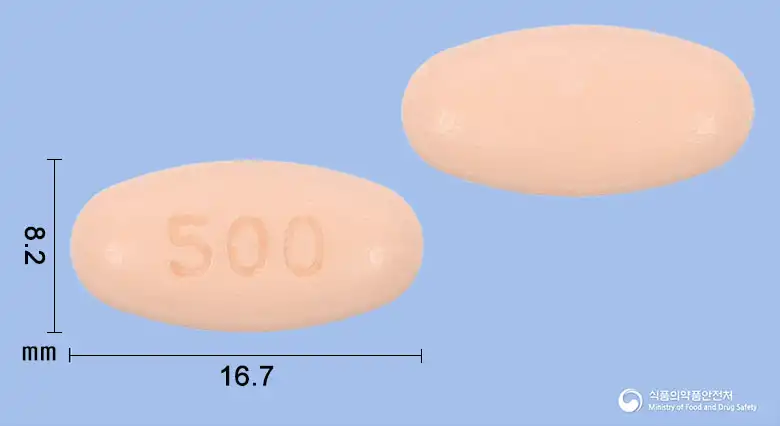
Ranolazine 500mg
Tablet · Prescription medication
Korea Menarini Co., Ltd.

Ranolazine 375mg
Tablet · Prescription medication
Korea Menarini Co., Ltd.
Even with the same ingredient, the dose and directions can differ by strength and dosage form. Talk to a doctor or pharmacist before switching from a medication you are already taking.
No questions yet.
For anything that needs medical judgment, consult a doctor or pharmacist.
This drug information is based on data provided by the Korea Ministry of Food and Drug Safety.
Consult a doctor or pharmacist for accurate dosage, administration, and usage instructions.